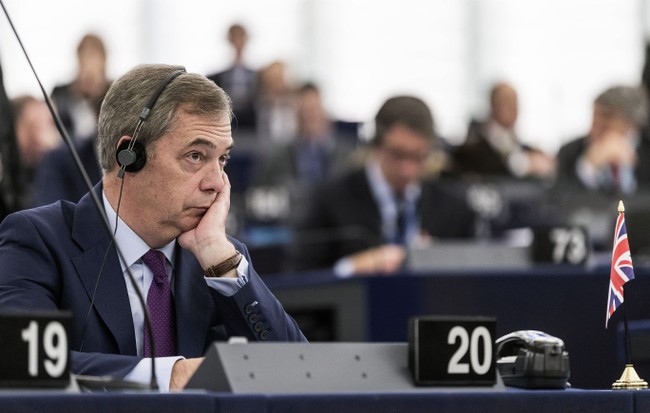
![Brandon Gill’s Takedown of Jack Smith is an Absolute Must See [WATCH]](https://www.lifezette.com/wp-content/uploads/2025/12/2025.12.30-09.27-lifezette-69539b0dacba8.jpg "Brandon Gill’s Takedown of Jack Smith is an Absolute Must See [WATCH]")

The House Judiciary Committee convened a hearing to question former Special Counsel Jack Smith about his investigation into President Donald Trump, with Republican members focusing on Smith’s use of phone records and nondisclosure orders involving senior Republican lawmakers.
Committee Chairman Rep. Jim Jordan of Ohio criticized Smith’s investigation as politically motivated, arguing that it amounted to a misuse of prosecutorial power.
Jordan highlighted Smith’s decision to obtain phone records connected to then–House Speaker Kevin McCarthy of California shortly after McCarthy assumed the speakership.
Warning: Account balances and purchasing power no longer tell the same story. Know in 2 minutes if your retirement is working for you.
According to Jordan, Smith secured McCarthy’s phone records just 16 days after he became Speaker, covering a two-month period beginning on Election Day in November 2020 and extending through Jan. 7, 2021.
Jordan emphasized the timing and scope of the request, framing it as evidence that the investigation extended beyond individuals accused of wrongdoing and into the leadership of the Republican Party during a critical period following the 2020 election.
Rep. Brandon Gill of Texas expanded on that line of questioning, confronting Smith directly about seeking toll records tied to McCarthy, who at the time was the highest-ranking Republican official in the country.
This Could Be the Most Important Video Gun Owners Watch All Year
Gill questioned the legal justification for targeting the Speaker of the House and raised constitutional concerns related to congressional protections.
“You were collecting months’ worth of phone data on the Republican Speaker of the House, leader of the opposition, right after he got sworn in as Speaker, all around the time of a major vote,” Gill said.
He added that he believed the move constituted “a flagrant violation of the Speech and Debate Clause.”
Gill also focused on Smith’s use of nondisclosure orders, which prevented McCarthy and the public from learning that the records had been obtained.
Gill noted that Smith cited “flight risk” as one of the reasons included in the nondisclosure order, a point Gill challenged during the hearing.
Gill pressed Smith on how the Speaker of the House could plausibly be considered a flight risk, given the public nature of the position and the constant visibility associated with it.
Smith responded by suggesting that the nondisclosure order did not apply solely to the phone’s subscriber, attempting to broaden the rationale for the order.
Gill rejected that explanation and accused Smith of misleading the court to secure secrecy surrounding the records.
“You were using clearly false information to secure a non-disclosure order to hide from Speaker McCarthy and the American people the fact that you were spying on his toll records!” Gill said.
McCarthy later commented on the issue, expressing anger over the implication that he could be considered a flight risk.
He noted that his whereabouts were known around the clock due to his role and security requirements, calling the justification for the nondisclosure order unreasonable.
Gill further stated during the hearing that McCarthy was not the only lawmaker whose records were sought.
He said Smith also pursued toll records for nine U.S. Senators and one House member in May 2023, and that those requests similarly included nondisclosure orders.
Gill argued that these actions were taken even though there was no plan to charge those lawmakers and despite acknowledged concerns about infringing on the Speech and Debate Clause.
According to Gill, Smith’s approach demonstrated a disregard for constitutional protections afforded to members of Congress.
He asserted that the investigation extended into legislative activity without sufficient legal basis and that lawmakers’ rights were compromised in the process.
Read the full article here






![Erika Kirk Leaves Court In Tears As Witness Recalls Horrifying Moment Charlie Kirk Was Shot [WATCH]](https://www.lifezette.com/wp-content/uploads/2025/12/2025.12.04-12.11-lifezette-69317a7a25d1e.jpg "Erika Kirk Leaves Court In Tears As Witness Recalls Horrifying Moment Charlie Kirk Was Shot [WATCH]")