![Tim Walz Goes Full Insurrection Mode, Threatens Tom Homan with Civil War Talk: Glenn Beck [WATCH]](https://www.lifezette.com/wp-content/uploads/2024/08/2024.08.14-02.43-lifezette-66bcc2aaf2183.jpg "Tim Walz Goes Full Insurrection Mode, Threatens Tom Homan with Civil War Talk: Glenn Beck [WATCH]")

Conservative commentator Glenn Beck criticized Minnesota Gov. Tim Walz for invoking Civil War-era references during recent remarks, warning that the language crosses from political rhetoric into what he described as historically loaded and dangerous territory.
Beck addressed Walz’s comments during a broadcast segment in which he played and analyzed excerpts of the governor’s remarks referencing Fort Sumter and abolitionist John Brown.
Beck opened his analysis by signaling the seriousness of the moment.
Warning: Account balances and purchasing power no longer tell the same story. Know in 2 minutes if your retirement is working for you.
“This is really important. What he said, listen,” Beck said before playing Walz’s remarks.
Walz’s comments were made in the context of discussions about federal immigration enforcement and communications with federal officials, including Border Czar Tom Homan.
In the excerpt highlighted by Beck, Walz suggested that escalating tensions could resemble pivotal moments from American history.
“At this point in time, I told Tom, I’m going to give you the benefit of the doubt, but unless I see a reduction in these folks on the streets, I’m going to have to say that to my folks,” Walz said.
This Could Be the Most Important Video Gun Owners Watch All Year
“So look, we all think we all want to avoid that, but I think the reality has sunk in this week. If you thought you could pass this by, and you thought there was nothing there, I mean, is this a Fort Sumter John Brown moment, where are we at on this? And we’re doing everything right. And I have said it time and time again, the way you win this is…”
Beck interrupted the clip to respond directly to the governor’s framing.
“Stop, stop. We’re doing everything right. Is this a Fort Sumter, John Brown moment, what is this?” Beck said.
Beck then explained the historical context of Walz’s references, emphasizing their significance.
“Okay, let me just for for those who don’t remember history because it was boring when you were taught Fort Sumter happened in 1861 and that was South Carolina, saying, get them,” Beck said.
“The feds, federal government had Fort Sumter. They used an organized force against the federal government and attacked Fort Sumter. That was the beginning of the Civil War.”
Beck argued that invoking Fort Sumter carries specific implications.
“Okay, so when he says, Is this a Fort Sumter moment, he’s implicitly saying, this is the opening shot of an organized resistance against federal authority. That matters,” Beck said.
“Once you start talking about Fort Sumter, you’re not talking about protest or dissent or civil resistance. You’re talking about insurrection.”
Beck went on to draw attention to Walz’s reference to John Brown, describing it as equally concerning.
“And by the way, Tim, that puts you as a confederate. It just doesn’t put you on their good side, the winning side, that makes you a confederate,” Beck said.
“Then he follows that with, is this Fort Sumter, is this a John Brown moment?”
Beck detailed John Brown’s historical role and reputation.
“John Brown now, because we’re so historically illiterate, we think, Oh, well, John Brown was an abolitionist,” Beck said.
“Yeah, he was an abolitionist that even Abraham Lincoln distanced himself from.”
Beck described Brown as someone willing to abandon democratic processes.
“He was an abolitionist and he was morally his moral conviction was everything that motivated him, but he was willing to use legal force, I mean lethal force,” Beck said.
“He did not believe in the democratic or constitutional process anymore.”
Beck continued by outlining Brown’s violent actions and their impact.
“First he was a hero, and then they realized this guy is out of control, because he he led raids and killings and he terrified people, even people on his own side,” Beck said.
“And all he did now listen to this, all that John Brown actually did in the end, was accelerate the polarization, not reconciliation, polarization that was used as fire in the Civil War.”
Beck said Abraham Lincoln distanced himself from Brown due to his actions.
“Abraham Lincoln, not an apologist. Distanced himself because John Brown was blood soaked,” Beck said.
“Okay? He became a symbol of what not to do. He was a he’s a warning sign, not a model.”
According to Beck, invoking Brown carries modern implications.
“So when, when Walz invokes John Brown, he’s normalizing political violence,” Beck said.
“Violence is acceptable because it’s righteous.”
Beck rejected that interpretation of history.
“History says otherwise,” he said.
“John Brown’s violence didn’t free the slaves. It didn’t build consensus, it didn’t strengthen the rule of law, it didn’t protect any of the innocents.”
Beck concluded by warning about the broader message of Walz’s rhetoric.
“So there’s the governor of Minnesota recasting federal law enforcement as an occupying enemy, elevating resistance over law suggesting violence is historically justified,” Beck said.
“That’s not civil rights rhetoric, that’s pre Civil War rhetoric.”
He added a final caution about the consequences of such language.
“And history is really clear. Pre Civil War sometimes will lead to civil war,” Beck said.
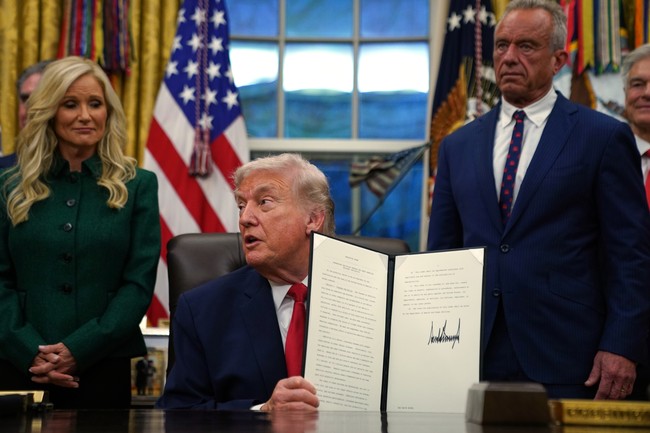
“This is the talk of an insurrectionist, really dangerous. And by the way, Trump yesterday called Alex Pretti an agitator and perhaps an insurrectionist. That’s kind of important language as well.”
WATCH:
Read the full article here


![Watch Radical Bill Ayers and Princeton Professor Trash America During Independence Weekend Event: ‘F**k USA’ [WATCH]](https://www.rvmnews.com/wp-content/uploads/2026/07/2026.07.06-11.31-rvmnews-6a4b9216eef10.jpg "Watch Radical Bill Ayers and Princeton Professor Trash America During Independence Weekend Event: ‘F**k USA’ [WATCH]")
![Holiday Celebration Erupts as Milwaukee Cop Hit During Fireworks Incident [WATCH]](https://www.rvmnews.com/wp-content/uploads/2024/09/2024.09.11-02.14-rvmnews-66e1a5bd887b7.jpg "Holiday Celebration Erupts as Milwaukee Cop Hit During Fireworks Incident [WATCH]")