

Do you know how easy it is to bake your own bread?
I didn’t, and now I do. And I want to share this knowledge with you.
Want homemade sandwich bread? Just replace the water with milk or half and half and add melted butter and a tablespoon of sugar.
Once you know, it will be harder to go back to the chemical-infused grain product the big, industrialized food manufacturers tell us is “bread.”
Especially since the real thing — what everyone understood as “bread” for all of human history until about 100 years ago — is cheaper, more nutritious, and doesn’t taste like Styrofoam.
Sourdough … for the rest of us
And don’t worry — we’re not going to ruin the fun by approaching it like neurotic, fussy “homesteading” influencers obsessed with buying shiny new equipment to make old-fashioned techniques “authentic.”
You’re not going to need a kitchen scale or a digital probe thermometer. You’re going to make something delicious and wholesome just the way your great-grandmother did, and she didn’t use any of these modern techno crutches.
With that out of the way, let’s talk about sourdough. I didn’t want to use the word before clearing the conceptual brush, because it’s contaminated with “lifestyle” associations. People imagine a complex “artisan” process that can only be achieved by some irritating guy from Minneapolis who talks in upspeak on YouTube.
A few months ago I wrote about cooking from scratch, by hand, without relying on gadgetry and GPS-style “turn by turn” directions. In that piece, I said I was going to learn to bake bread from a natural sourdough starter all by hand, with no scales, no metric-graduated beakers, and no obsessive feeding schedule.
I’ve done it. And it turned out as I thought it would. My hands now know what the right dough consistency feels like. My eyes can tell if the loaf has risen for long enough that it can be baked. The only tools I have relied on were cup measures and a glance at the clock so I know about how long the dough has been fermenting (rising). I don’t need directions or scales or thermometers because I own the knowledge in my hands and mind through direct practice.
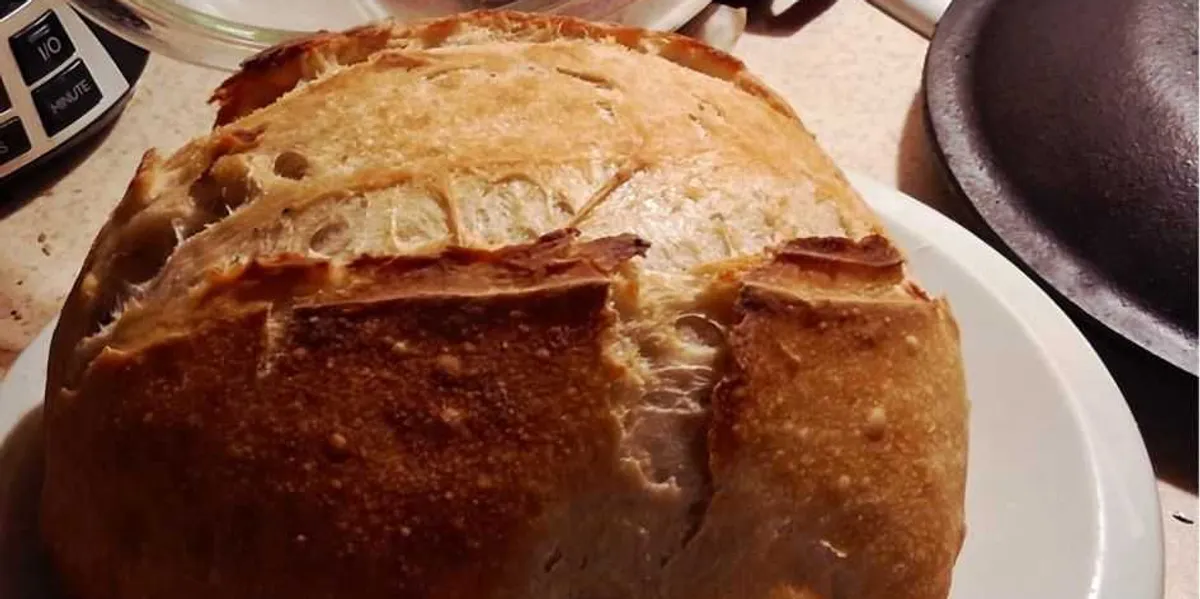
The duds? Only about two or three loaves. My problem? Using a starter that was too weak; I hadn’t let it fully develop in the beginning culture stage before I started baking with it. Once I sorted that out, I ended up with this hearty specimen:
Josh Slocum
You’re going to make a loaf that good, and you’ll have it down by memory in one month.
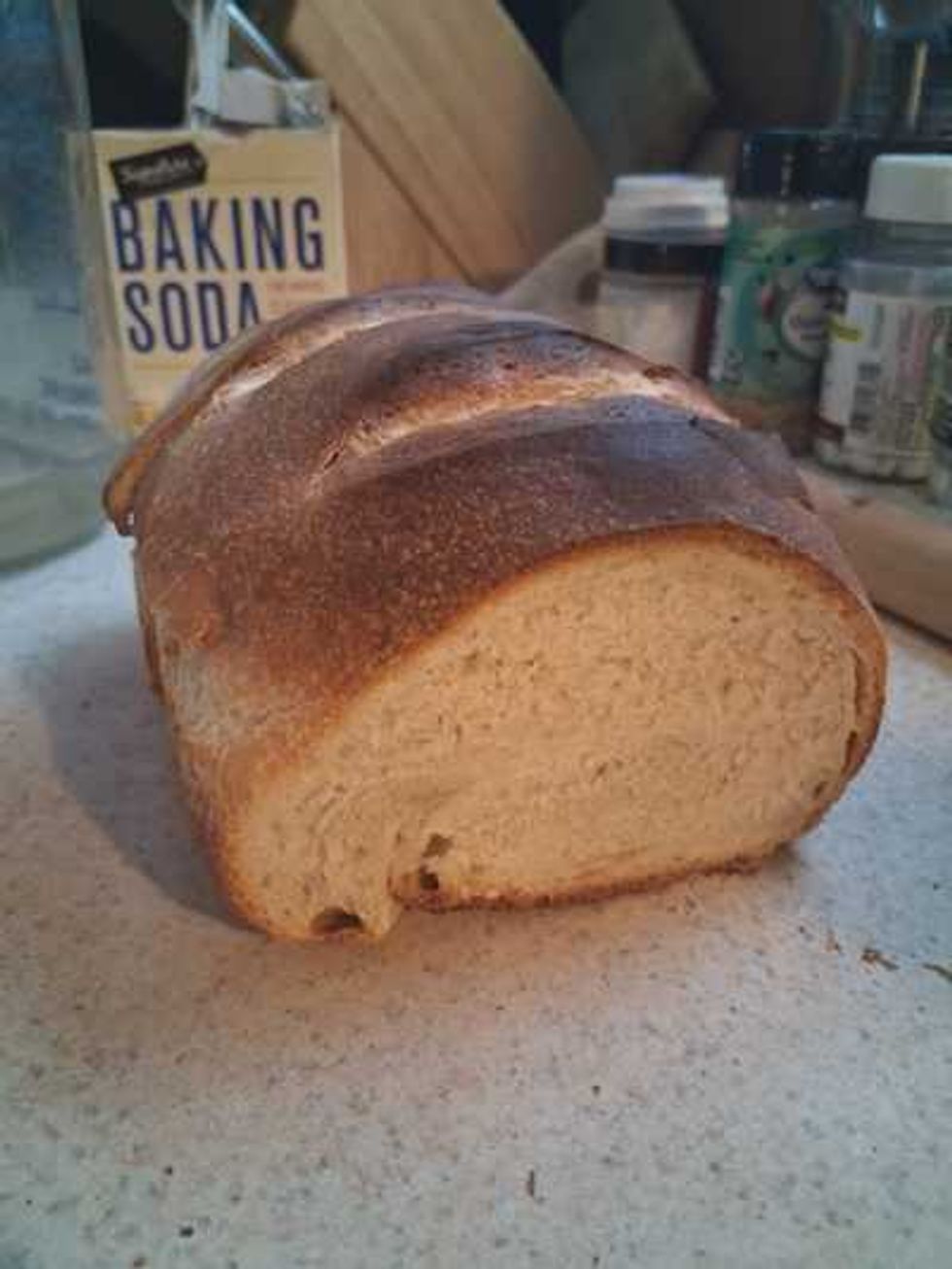
Then you’ll branch out into other kinds of bread. Want homemade sandwich bread? Just replace the water with milk or half and half and add melted butter and a tablespoon of sugar. That’s all I did. Here’s the result from my first try:
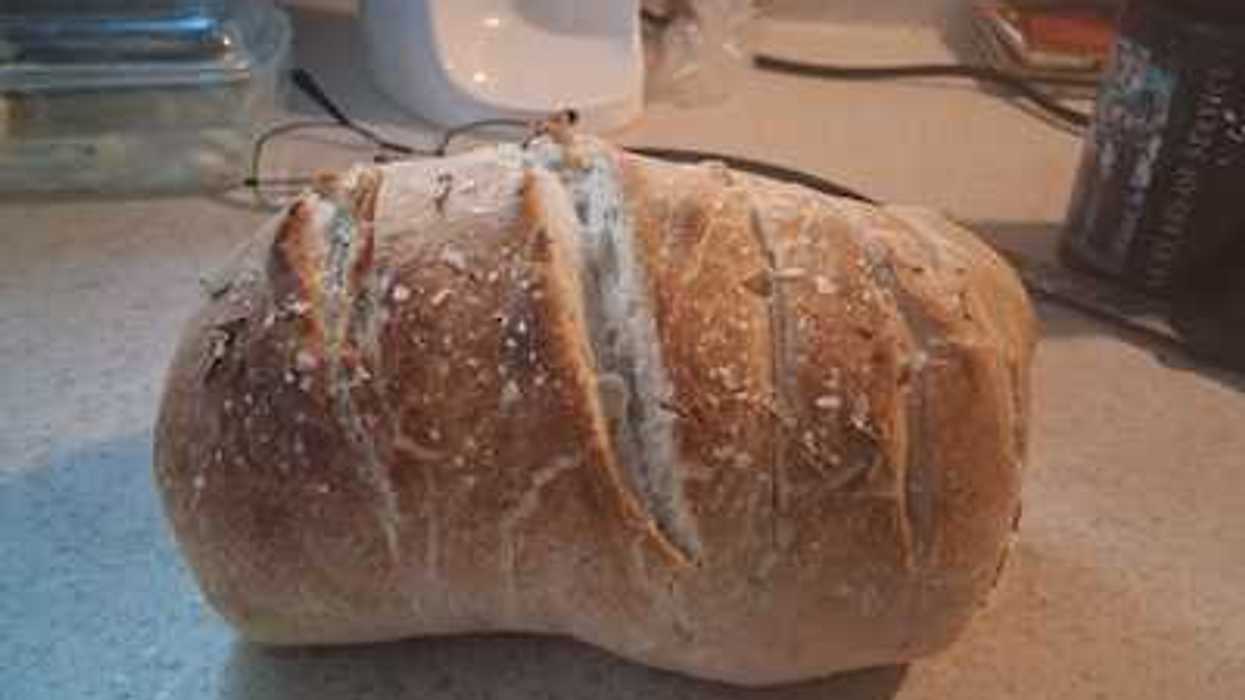
Then I wanted something fancier, something like the loaves I’ve been paying $9 for at a local bakery that does it the old-fashioned way with nothing but flour, water, culture, and salt. I just added olive oil and rosemary and put fancy salt on top:
Want to do it yourself?
As I mentioned, I’m not going to give you a recipe. At least, not in the modern-day sense of a set of precisely calibrated steps and measurements designed to produce the exact same outcome every time.
Instead I’m going to give you a basic outline that forces you to absorb the process physically and by instinct, rather than just memorizing turn-by-turn directions. If you’re not afraid of plunging your hands directly into the dough and making practice loaves until you get it right, you’ll be baking like this in a few weeks.
For the starter
You’re not going to buy a starter from any of those online marketplaces. You’re going to make your own. The yeast comes from the rye flour and from the air.
Ingredients
- Stone-ground whole rye flour. Yes, whole, and yes, rye, even if you don’t plan to make rye loaves. Rye is packed with natural yeast and bacteria that make starters get off the ground quicker than white flour.
- Water
- A jar
Method:
Take about a cup of whole rye flour and add enough room-temperature water to make a thick paste. And I do mean “paste” — something with the consistency of the stuff you remember using in school for papier-mâché volcanoes.
But don’t get neurotic. If it’s thinner or thicker than my paste, it’s still going to work.
Mix it well in the jar. Then take a rubber band and put it around the outside of the jar at the level where the starter is now. This is so you can see rise over time. Cover that jar loosely with a towel, cheesecloth, or a loose lid and put it in the oven with the light on. Leave it for 24 hours. Then discard half of it and add the same amount of rye flour and water back in, mix, and leave for another day.
You’re going to do this for at least seven days. After the first few days, you’ll see some bubbles. It’s not ready yet. Keep discarding and feeding. You may even notice it smells a little off the first few days. That’s normal.
By day seven (or a bit longer), you’ll notice that the starter smells sour, in a pleasant way, and yeasty. That’s what you want. At that point, you should also be seeing it double in size between feedings. If it’s not doing that, keep going with daily feedings.
Now you’ve got a stable starter. Stick it in the fridge. You can keep using rye to feed it for baking, or you can feed it white flour and convert it. I just use whatever flour I have handy because I don’t mind my loaves having mixed grains.
Your first loaf
So far we have used rye flour and water. Now to add our two final ingredients: white bread flour and salt.
Again, that’s white bread flour, not all-purpose. Bread flour has a higher protein ratio, which you need for building structure and rise.
First, take your starter out of the fridge and feed it flour and water. Put it in your oven with the light on. This gives it the perfect 80 degrees F temperature that it likes. Colder than that and it takes forever. Significantly hotter than that, and you may kill the yeast.
Wait for it to double in size, three to four hours.
Take it out and mix about a half-cup of starter into about a cup and a half of room-temperature water. Put the jar of starter back in the fridge. You only need to keep about a tablespoon of it — that will inoculate all the flour the next time you feed it for baking.
In a large bowl, put in about four and a half cups of bread flour and two teaspoons of salt. Mix the salt through the flour. Now add your wet mixture of water and starter. Stir or use your hands to mix until it all comes together and there are no more dry flour spots. It will be rough and shaggy.
RELATED: Cooking is easy; it’s our modern anxiety that makes it hard
 The Print Collector/Getty Images
Knead? No need
Guess what? You’re not going to knead. The reason most people knead is because we have used commercial yeast since it became available in the 1860s. Commercial yeast rises in just hours, too short a time for the yeast to build the bread structure, so you have to do it by hand to develop the gluten.
Not so with sourdough, using this method. Time is going to do everything kneading does and more.
Cover the dough and put it in a cold room or cellar if you have one. Somewhere between 40 and 50 degrees F. Let it sit 18-24 hours.
This is cold fermentation, which gives you the tang of sourdough, and it makes the bread more nutritious and long-lasting before it goes stale. If you don’t have a cold room, let your dough ferment for a few hours on the counter, then put it in the refrigerator overnight.
At the end of fermentation, you are ready to bake. Preheat a Dutch oven in your oven at 450 degrees for 45 minutes. Shape your dough into a ball or loaf, and put it in the Dutch oven. Cover, put back in the oven, and bake for 30 minutes, still at 450.
Remove the lid, turn the oven down to 400, then bake for about 10 to 15 more minutes to get a golden crust.
You have made bread that is miles above the plastic grotesquerie sold at grocery stores, for almost no money and for very little effort. No scales; no precise measuring. This is how your ancestors and all humans made bread for thousands of years before the late 19th century.
If your first few loaves aren’t great, keep going.
Don’t forget to slather it in butter.
Read the full article here