
I’ve written a lot about the problems in academia in general, and the disaster modern scientific disciplines face due to the corruption of institutions and scientific journals.
Obviously, I am hardly alone in my concern about this problem, and I’m glad to see that Colin Wright (you should follow him!) and Kevin McCaffree have come up with a novel approach to combatting the rot in academic journals.
A Way to Challenge the Groupthink of Scholarly Journalshttps://t.co/I33rVXz9nA
— Colin Wright (@SwipeWright) May 27, 2026
We are repeatedly told that peer review ensures high-quality academic research. How many times have you heard that the paper was “peer reviewed,” only to discover that it was gobbledygook or even fraudulent?
All peer review means is that a group of people, often selected by the paper’s authors, agrees it should be published. It assures nothing, yet puts a credentialed stamp of approval on what might be slop, or establishes as true what might be quite debatable.
A better approach is to publish research and also publish alternative points of view. Critiques that can point out the weaknesses of a finding or the mistakes the author made.
That’s what “Peer Review” articles do. Rather than having peers review things behind closed doors to endorse research, actual articles by critics get published along with opportunities for the original authors to respond.
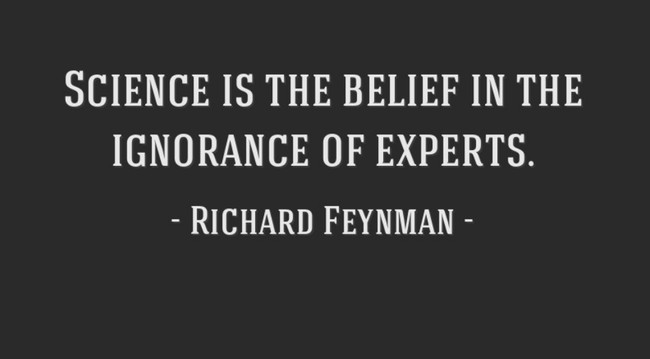
We’re often told that science is “self-correcting.” But science isn’t like a thermostat regulating your home’s temperature. It’s a human institution run by fallible human beings. Scientists and scholars are susceptible to career incentives, moral fads, groupthink and fear. When those pressures capture journals or entire fields, peer review can become less a filter for error than a credentialing system for fashionable nonsense.
Modern prepublication peer review became common in the mid-20th century. At its best, peer review improves papers before publication and screens out weak work, but its usefulness depends on the quality and independence of a field’s “expert” reviewers. If reviewers have the same blind spots as the editors and authors, then a process meant to remove flaws and bias can instead facilitate them.
Decades of studies on publication bias, replication failures and political bias in the social sciences have shown that peer-reviewed papers are often less reliable than the public assumes. John Ioannidis’s famous 2005 paper, “Why Most Published Research Findings Are False,” remains disturbing because its basic insight about the fallibility of medical research remains true. In fields that rely heavily on narrative or qualitative methods, or that touch on politicized topics (as much social science does), ideology influences which questions are asked and which conclusions are professionally acceptable.
The idea is genius, if not likely to fundamentally change the flaws of the modern “publish or perish” culture, or the dominance of ideological fads in academic disciplines.
But, as with critiques of Pravda Media, the cumulative effect will erode the prestige of fundamentally corrupt institutions. And prestige is the currency of academia, from which all other good things flow.
This problem is growing more serious. Across swaths of the humanities, social sciences, medicine and biology, some narratives have become taboo. Papers presenting contrary evidence or dissenting viewpoints are rejected without comment. Letters to the editor, which are supposed to provide a quick way to respond to flawed work, are ignored or unavailable. The result is an ideologically biased literature that’s presented as an expert consensus and cited by journalists, courts, school boards, medical associations, government agencies and lawmakers to justify policies that affect millions of people.
The most obvious answer is better peer review. But ideologically captured fields have little incentive to correct themselves. As a result, objections to progressive orthodoxy are relegated to social-media threads, blog posts and newspaper opinion sections.
This is where the myth of “self-correcting” science becomes a problem. People assume the system will fix itself, but first someone has to notice the problem and create a mechanism for correction.
That is what we have done. As an editor-in-chief and a member of the editorial advisory board of Theory and Society, an interdisciplinary journal published by Springer Nature, we are proud to announce a first-of-its-kind article type called “Peer Review.” The purpose is to avoid procedural traps that can prevent legitimate criticism from being published and to recover what peer review was supposed to be: serious, good-faith analysis by experts seeking clarity and truth.
What makes this powerful is that real peer review shouldn’t be about putting stamps of approval on research, good or bad; it should be about fostering inquiry and the shared search for truth.
That’s important for both good and bad research. A scientist or academic might be doing his job perfectly without ensuring perfect research outcomes or arguments, because the world itself is more complicated and diverse than any group of academics could possibly capture.
Science becomes self-correcting only when scholars create the institutional mechanisms that make it possible. Our new Peer Review format is one such mechanism. Now it’s time for academics to use it.
Publication should mark the beginning of academic scrutiny, not the end of it.
The standard peer-review process implies that a conclusion has been reached rather than that an inquiry has begun. Wright and McCaffree are blazing a trail that should have been standard from the beginning. Good on them.
Editor’s Note: Do you enjoy HotAir’s conservative reporting that takes on the radical left and woke media? Support our work so that we can continue to bring you the truth.
Join HotAir VIP and use promo code FIGHT to receive 60% off your membership.
Read the full article here


![100% Tax on Relief for Biden’s Political Prisoners [WATCH]](https://www.lifezette.com/wp-content/uploads/2026/05/2026.05.28-19.21-lifezette-6a1895b5656ad.jpg "100% Tax on Relief for Biden’s Political Prisoners [WATCH]")