![DHS Rolls Out New Self Deportation Plan After Historic Supreme Court Decision [WATCH]](https://www.rvmnews.com/wp-content/uploads/2026/06/2026.06.29-09.04-rvmnews-6a42351e408b4.jpg "DHS Rolls Out New Self Deportation Plan After Historic Supreme Court Decision [WATCH]")

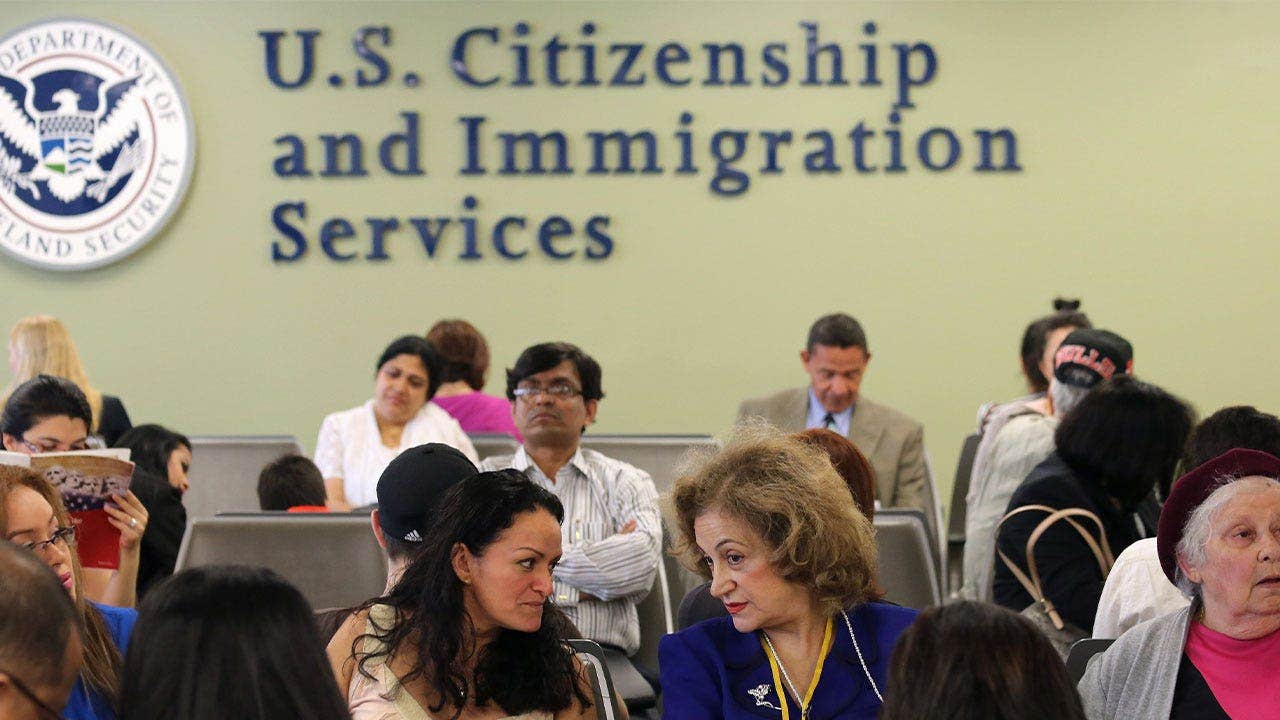
The Department of Homeland Security has announced a voluntary departure assistance program for Haitian and Syrian nationals affected by a recent Supreme Court decision allowing the Trump administration to move forward with ending Temporary Protected Status (TPS) for those countries, as reported by Trending Politics News.
The announcement follows the U.S. Supreme Court’s June 25 decision in Mullin v. Doe, in which the justices ruled 6-3 that the Temporary Protected Status statute generally prevents courts from reviewing decisions by the Secretary of Homeland Security to designate or terminate TPS for individual countries.
The ruling overturned lower court orders that had blocked the administration from ending TPS protections for Haitian and Syrian nationals.
Temporary Protected Status was established by Congress in 1990 as a humanitarian immigration program administered by the Department of Homeland Security.
Here’s What They’re Not Telling You About Your Retirement
The program allows eligible nationals of designated countries who are already present in the United States to remain in the country temporarily and receive work authorization for a specified period.
TPS designations are made when the Secretary of Homeland Security determines that conditions in a foreign country, including armed conflict, environmental disasters, or other extraordinary and temporary circumstances, make it unsafe for nationals to return or prevent the country from adequately receiving returning citizens.
The protections are temporary and generally last between six and eighteen months before being reviewed for possible extension.
TPS protects recipients from deportation during the designated period but does not provide lawful permanent resident status or a direct path to U.S. citizenship.
This Could Be the Most Important Video Gun Owners Watch All Year
Justice Samuel Alito, writing for the majority, stated that the administration had offered a race-neutral explanation for ending the TPS designations and noted its consistent position regarding the program’s prior implementation.
Following the Supreme Court’s decision, Homeland Security Secretary Markwayne Mullin outlined a voluntary departure program for individuals whose TPS protections will be terminated.
During an appearance on CNN’s “State Of The Union,” Mullin encouraged affected individuals to pursue permanent legal status if they qualify or participate in the department’s voluntary return program.
“Either try to fill out the paperwork and be here underneath a permanent status or we’ll help you get back to your country. We’ll actually give you a plane ticket, plus roughly $2,100 to help you re-establish when you get there, but temporary protective status, according to the courts and in its name itself, is not permanent status,” he said.
According to DHS, the program includes a one-way airline ticket to the recipient’s home country along with approximately $2,100 in financial assistance per person to help with re-establishment after arrival.
Department officials said the assistance is available to individuals who voluntarily choose to depart the United States rather than remain after their TPS protections expire.
The Supreme Court’s ruling affects approximately 350,000 Haitian nationals and about 6,100 Syrian nationals who currently reside in the United States under Temporary Protected Status.
DHS said implementation of the program will proceed in accordance with the legal timeline established following the court’s decision. Current TPS protections remain in effect until the official termination dates are finalized and take effect.
Individuals who qualify for another form of immigration relief may still pursue those options independently of the voluntary departure program.
Those who neither obtain another lawful immigration status nor participate in voluntary departure could become subject to standard immigration enforcement proceedings after their TPS protections expire.
The Supreme Court’s decision represents a significant development in the administration’s broader immigration policy and restores the Department of Homeland Security’s authority to move forward with terminating TPS designations that had previously been blocked by lower court rulings.
The Real MOU: What Trump’s Iran Agreement Actually Says – Truth Thursday | EP 677
The opinions expressed by contributors and/or content partners are their own and do not necessarily reflect the views of LifeZette. Contact us for guidelines on submitting your own commentary.
Read the full article here

![Michelle Pfeiffer Remembers Feeling ‘Humiliated’ After Her ‘Grease 2’ Audition That Changed Everything [WATCH]](https://www.boredtrashpanda.com/wp-content/uploads/2026/06/2026.06.29-14.37-boredtrashpanda-6a428344ec3df.jpg "Michelle Pfeiffer Remembers Feeling ‘Humiliated’ After Her ‘Grease 2’ Audition That Changed Everything [WATCH]")
![Supreme Court Hands Republicans a Massive Midterm Campaign Victory [WATCH]](https://www.lifezette.com/wp-content/uploads/2026/09/2026.09.07-06.05-lifezette-6a9e543323795.jpg "Supreme Court Hands Republicans a Massive Midterm Campaign Victory [WATCH]")
![Harvard’s 300-Year Treason Empire Finally Meets Its Match [WATCH]](https://www.lifezette.com/wp-content/uploads/2025/04/2025.04.14-08.34-lifezette-67fcc8832e46c.jpg "Harvard’s 300-Year Treason Empire Finally Meets Its Match [WATCH]")


![The Crushing Squeeze on Iran is ‘One of the Most Powerful One-Two Punches’ Ever Used [WATCH]](https://www.lifezette.com/wp-content/uploads/2026/04/2026.04.21-09.20-lifezette-69e7417105acc.jpg "The Crushing Squeeze on Iran is ‘One of the Most Powerful One-Two Punches’ Ever Used [WATCH]")