



The strongest publicly downloadable large language models are, by the composite measure of Artificial Analysis’ Intelligence Index, GLM-5.2, MiniMax-M3, DeepSeek V4 Pro, and Kimi K2.6. They are all Chinese. They are all products of heavily capitalized laboratories. They are all released under permissive licenses and commonly described as open. They are open in the sense that you can download the weights, run them on your own machines, fine-tune them, build products on top of them. They are not open in the sense that you can see how they were made. The training data and code, the recipes that would allow you to reproduce or audit the process remain, for the most part, undisclosed. The door is ajar. The room behind it is dark.
The Open Source Initiative draws a hard line on the terminology. An open-source AI system, by the OSI’s definition, must provide data information, code, and parameters sufficient to use, study, modify, and share the system. Open weights, by contrast, expose only the final product of training: the numerical parameters of a finished network. This situation is the difference between publishing a cookbook and selling a frozen dinner with the ingredient list printed on the box. Both let you eat. Only one lets you cook.
A mechanism for ecosystem capture, price disruption, and geopolitical positioning.
If you are deploying a model for enterprise search or code generation, you may want the frozen dinner: functional, affordable, and available without a subscription to someone else’s kitchen. DeepSeek V4 Pro, at four cents per task on certain benchmarks, is more than 20 times cheaper than GPT 5.5 and more than 40 times cheaper than Claude Opus 4.8. At those prices, the question of whether you can inspect the training data seems academic.
The models themselves are marvels of a particular kind of engineering. GLM-5.2 runs 744 billion total parameters with 40 billion active per token, using a design known as mixture-of-experts that allows a model to be enormous in capacity but economical in use, like a city that keeps most of its lights off at any given moment. DeepSeek V4 Pro pushes to 1.6 trillion total parameters. They process a million tokens of context, which means they can hold an entire codebase or a small library’s worth of documents in working memory. They reason in configurable modes: think a little, think a lot, or do not think at all.
The user chooses; the machine adjusts. In 2024, a chat interface invited you to ask a question. In 2026, it asks a subtler one: How much cognition should the system spend here?
When free isn’t
There is a historical analogy for open models: free software. Eric Raymond wrote about cathedrals and bazaars. Yochai Benkler wrote about commons-based peer production. Christopher Kelty described free software communities as recursive publics, groups organized around the capacity to build and maintain the very infrastructure that makes the group possible. These frameworks still illuminate something about the open-model ecosystem, where quantization hobbyists, inference-engine maintainers, and downstream fine-tuners extend the value of released weights in public, for reputation and for the pleasure of the work itself.
RELATED: Google got conformist. Now we’ll pay the price.
sesame/Getty Images
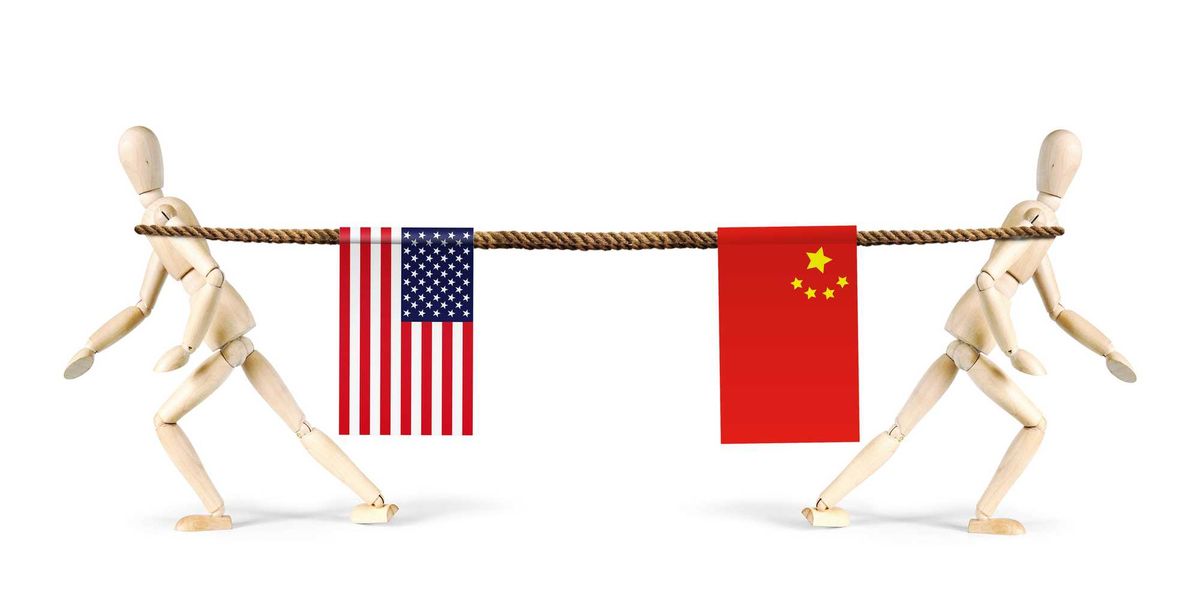
But the analogy fractures at the point that matters most. The volunteers in the original bazaar outperformed the cathedrals. The 2026 open-model ecosystem is about cathedrals distributing their products through the bazaar. DeepSeek reportedly closed a funding round exceeding $7 billion. Moonshot AI raised about $2 billion. Alibaba continues to invest in its Qwen line while weaving those models into commerce and robotics. These are not volunteer collectives. They are industrial actors pursuing what might be called strategic openness: releasing weights as a mechanism for ecosystem capture, price disruption, and geopolitical positioning. The U.S.-China Economic and Security Review Commission has argued that China has effectively gone all in on an open-model strategy, using open publication and aggressive pricing to accelerate adoption and further iteration. The plan is working.
The central paradox of this domain is that openness can simultaneously broaden participation at the edges and concentrate power at the center. Aaron Shaw and Benjamin Mako Hill observed this pattern in peer production years ago: As collaborative systems scale, they tend toward oligarchy. Open models exhibit the same dynamic at the level of an industry. Anyone can download the weights; almost no one can produce them. The foundry becomes more rarefied even as the open web grows more participatory, and the gap between using a model and understanding it widens.
The cookbook stays secret
Meanwhile, the projects that are open in the older, stricter sense continue their work at a lower altitude. Ai2’s OLMo program publishes training data, training code, intermediate checkpoints, and reproducible recipes. OLMo sits at the top of every openness index and near the bottom of every capability leaderboard. This performance is not a coincidence. Full transparency is expensive in ways that go beyond compute, requiring a willingness to be audited, to be reproduced, to be shown wrong. The labs chasing benchmark supremacy have not shown much appetite for that form of exposure.
Thus the word “open” now describes two diverging projects. One is about capability access: the right to run a powerful model without paying rent to a proprietary API. The other is about knowledge access: the right to know where a model came from, what it was trained on, and why it behaves the way it does. These two meanings coexisted comfortably when the best open models were also the most transparent ones. They no longer do. The frozen dinner is excellent. The cookbook is secret.
The coming years may belong to open weights as infrastructure, especially in coding, agentic work, and enterprise use. The deeper contest, the one that will determine what “open” means, is only beginning.
Read the full article here




![MS NOW Crew Rescued by Border Patrol After Blunder in the Texas Desert [WATCH]](https://www.lifezette.com/wp-content/uploads/2026/09/2026.09.13-05.52-lifezette-6aa63a3b20664.jpg "MS NOW Crew Rescued by Border Patrol After Blunder in the Texas Desert [WATCH]")
![Sophie Cunningham Proudly Owns Sex Symbol Label During an Awkward Interview Segment [WATCH]](https://www.boredtrashpanda.com/wp-content/uploads/2026/08/2026.08.28-13.05-boredtrashpanda-6a91878d0e8d5.jpg "Sophie Cunningham Proudly Owns Sex Symbol Label During an Awkward Interview Segment [WATCH]")