



A 50-foot bronze statue of the pagan god Prometheus is rising out of the Texas dirt near SpaceX’s Starbase, holding a torch over the launch site that is supposed to carry mankind toward the stars. The symbolism is not exactly subtle.
Prometheus, the Greek Titan who stole fire from the gods and gave it to humanity, has long represented man’s acquisition of knowledge and technological power. The French classical foundry Atelier Missor, which is behind the project, says the completed statue will stand at Starbase “holding high the torch of the West.” The statue is apparently not a SpaceX commission or some monument Elon Musk ordered for himself. Atelier Missor reportedly financed the project itself and is assembling it on private land near Starbase as a tribute to technological progress.
It is tempting to love the whole thing. After decades of public art that seems deliberately designed to be ugly, alienating, or incomprehensible, here are artists building an enormous, muscular figure from classical mythology. Atelier Missor is openly hostile to the abandonment of monumental Western art, and its founders have sculpted Hercules, Joan of Arc, and Napoleon while talking without embarrassment about beauty, heroism, civilization, and great men. Its website declares that “gigantic titanium statues” will “guide us to a beautiful future,” while the atelier describes itself as a classical foundry “on its way to building a new Rome.”
You are not the beginning of the world. You are an heir.
Good. I would rather live in a civilization that builds rockets and enormous bronze statues than one that tears its statues down and lectures its children about the shamefulness of their inheritance. Atelier Missor’s revolt against deliberately ugly public art is refreshing, and SpaceX is doing things that would have sounded like science fiction not very long ago.
But if Prometheus is going to hold the “torch of the West,” we ought to ask whether he is carrying the right torch. He represents an important strand of Western civilization, perhaps one of the dominant strands of the modern West, but he does not represent the whole thing.
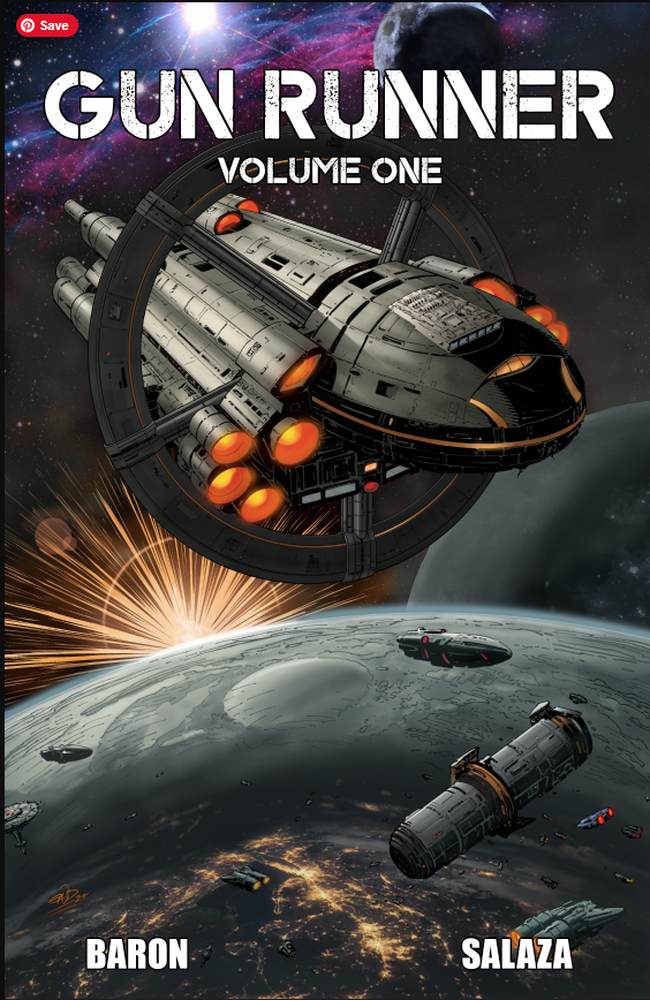
There is also something unmistakably Randian about the spectacle, and not merely in the philosophical sense. The enormous idealized body, the heroic pose, the industrial backdrop, and the celebration of human power all recall the visual world associated with Ayn Rand’s novels, especially the iconic cover art created by illustrator Nick Gaetano for editions of “Atlas Shrugged,” “The Fountainhead,” and “Anthem.” Those images helped give Rand’s books a visual identity built around monumental human figures, architecture, industry, and individual striving. Put Prometheus beside a launch complex, and the resemblance is hard to miss.
Ayn Rand would have recognized the type
The resemblance gets stranger once you actually open the books.
The protagonist of Rand’s “Anthem,” Equality 7-2521, lives in a suffocating collectivist society where individual achievement has been suppressed. He secretly studies science, rediscovers electric light, defies the ruling authorities, escapes into the wilderness, discovers the word “I,” and chooses a new name for himself: Prometheus.
Prometheus is central to Rand’s treatment of the heroic individual. The Ayn Rand Institute’s discussion of “Anthem” describes the character’s discovery of the individual self as the foundation for his rejection of collectivism and embrace of egoism. He comes to regard his own reason, judgment, will, and happiness as authoritative rather than looking outside himself for sanction.
Now the visual resemblance takes on a philosophical dimension too. A colossal, idealized male figure stands beside rockets, holding mankind’s stolen fire aloft while a technological enterprise reaches beyond the Earth. It is not hard to see why this imagery feels so natural to a culture rediscovering the appeal of heroic individualism, industrial power, and men who refuse to be told that something cannot be done.
RELATED: The rockets are still blowing up. So why is Elon laughing on his SpaceX earnings call?
Joshua Lott/Washington Post/Getty Images
That does not make the comparison an insult. Rand understood something real about civilization that our managerial class has spent decades trying to suppress. Societies need exceptional people. Progress often depends on stubborn men and women who ignore the consensus, refuse to accept that something cannot be done, and build the thing anyway. Bureaucracies rarely invent the future, and committees are not known for producing cathedrals, transcontinental railroads, moon landings, or reusable rockets.
The problem comes when one virtue becomes an entire philosophy of civilization. The West is not reducible to heroic individual will, however badly we may need more of it.
The old stories were more suspicious of fire
There is something especially strange about turning Prometheus into an uncomplicated symbol of technological optimism, because the Greeks themselves did not tell his story that way.
Yes, Prometheus gives humanity fire. In “Prometheus Bound,” he also claims credit for teaching mankind numbers, writing, medicine, navigation, mining, and other useful arts. In the surviving text, fire becomes more than warmth. It becomes the foundation of civilization itself.
But then Prometheus gets chained to a rock, which is a fairly important part of the story and one that tends not to make the inspirational posters.
In Hesiod’s telling, Zeus’ response to the theft of fire includes Pandora and the suffering that follows her arrival among mankind. The Prometheus myth was never simply an ancient Greek version of “move fast and break things.” It wrestled with power, rebellion, knowledge, suffering, and the possibility that acquiring a new capability does not automatically give mankind the wisdom to use it.
The Greeks were hardly alone in associating technological power with rebellion and danger. Genesis contains a curious detail that is easy to pass over. Cain, after murdering Abel and going into exile, becomes a builder of cities. A few generations later, his descendants are credited with some of the basic technologies of civilization. Genesis 4 associates Jabal with livestock and tents, Jubal with musical instruments, and Tubal-cain with the forging of bronze and iron.
The biblical text does not say that metallurgy or music are evil. Scripture is much too interesting for such a simple lesson. But it does place the rapid development of civilization inside the line of Cain, alongside violence, pride, and Lamech’s boast that he has killed a man for wounding him.
The ancient Book of Enoch makes the connection darker still. There, rebellious heavenly beings descend to mankind and teach forbidden knowledge, including the working of metals and the manufacture of weapons. The resemblance to Prometheus is hard to miss. In both stories, beings who rebel against the heavenly order hand mankind powers he did not previously possess, and those powers do not arrive without consequences.
These traditions are not telling identical stories, but they are asking a remarkably similar question: What happens when man’s technical ability races ahead of his moral ability?
Later Western writers understood the problem perfectly well. Mary Shelley did not subtitle her novel “Frankenstein; or, The Modern Prometheus” because Victor Frankenstein was an uncomplicated civilizational hero. He is brilliant enough to acquire a power humanity previously lacked, but not wise enough to understand what he is unleashing.
That seems like a fairly relevant warning for a civilization simultaneously developing artificial intelligence, editing genes, building autonomous weapons, attempting to settle other planets, and giving increasingly powerful machines control over more of ordinary life.
The question is not whether man should have fire. Obviously he should. The question is whether possession of the fire makes him wise enough to decide what ought to be burned.
The West is something we inherited
I have a particular bias here. Part of my work with Chapter House is devoted to putting old books back into the hands of families and students, which means I spend an unreasonable amount of time thinking about phrases like “the Western canon” and “Western civilization.”
The more time I spend with those books, the less satisfying it becomes to define the West by any single principle. It is not merely individualism. It is not merely Christianity. It is not merely Greek reason, Roman law, technological progress, free markets, republican government, or the heroic individual. It is the long and often uncomfortable argument among all of them.
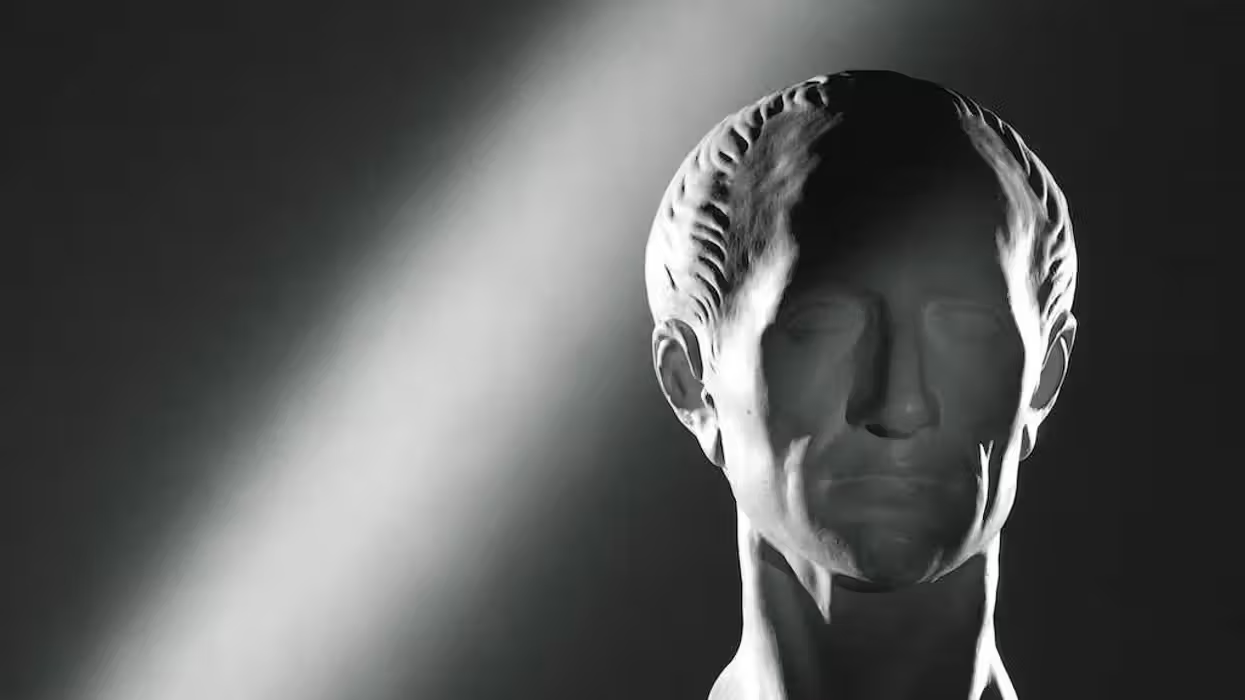
RELATED: Will America need a Caesar?
 chudakov2/iStock/Getty Images
That is why recovering Western civilization cannot mean taking the modern cult of progress, stripping away the diversity consultants, and giving it bigger muscles. That is still modernity, only with much better aesthetics.
The reaction that produced this new fascination with classical statues, technological power, masculinity, conquest, great men, and civilizational vitality is understandable. Western societies spent decades teaching ambitious young men to be less ambitious, powerful nations to apologize for exercising power, artists to sneer at beauty, and institutions to regard excellence with suspicion. Naturally, a counterculture emerged that likes Roman statues, rockets, weightlifting, the conquest of Mars, and men who actually accomplish things.
There are much worse rebellions.
At its worst, however, the Promethean vision says that human will, liberated from artificial constraints and armed with sufficient technology, can conquer whatever stands in its way. The Randian variation substitutes the heroic individual for the managerial bureaucracy, which is often an enormous improvement, but it still leaves unanswered the most important question a civilization can ask: Toward what?
The civilization that produced SpaceX also produced Socrates. It produced Roman law, monasteries, universities, cathedrals, families, guilds, constitutional government, and a Christian moral order that insisted there were things even kings were not permitted to do. Western civilization honors the man who acts, but it also asks what he owes. It honors reason while recognizing limits, admires strength while asking strength to serve something beyond itself, and celebrates individual genius while reminding the genius that he inherited a world he did not create.
A civilization composed entirely of Howard Roarks would probably erect some spectacular buildings. I am less certain anyone would want to live there.
There is an irony here because Atelier Missor founder Missor Movahed’s own conversion to classical art contains exactly the humility missing from a purely Promethean worldview. As he has told the story, he was a nihilistic young man until an encounter with the monuments of Paris forced him to confront the achievements of generations before him. Standing beneath the Vendome Column, he felt as though Napoleon were asking him who he was to judge centuries and millennia of civilization.
That is a profoundly anti-Randian insight. You are not the beginning of the world. You are an heir.
Yet the monument now chosen to carry the “torch of the West” is the great mythological rebel who steals divine power and hands it to mankind. That tension is more interesting than either condemning the statue or worshipping it.
Keep the statue. Remember the warning.
Prometheus should stay at Starbase. In fact, it is hard to imagine a more appropriate place for him.
Rockets are controlled fire, and spaceflight is mankind refusing to accept one of the oldest boundaries nature imposed upon us. SpaceX’s entire reason for existence is bound up with looking at supposedly immovable technological constraints and asking why they cannot be moved. A gigantic Prometheus standing beside Starbase makes almost too much sense.
But perhaps he belongs there as something richer than a mascot.
Build the rockets. Cast the bronzes. Raise monuments again. Recover the confidence that allowed Western civilization to build ships, cities, cathedrals, laboratories, railroads, skyscrapers, and spacecraft. Reject the dreary managerial philosophy that mistakes timidity for wisdom and decline for virtue.
Just do not confuse the power to build with the wisdom to know what ought to be built. Human beings need ambition, courage, invention, and the occasional madman who refuses to take no for an answer, but they also need inheritance, duty, restraint, and a moral order capable of telling that madman when the answer really should be no.
Prometheus gave man fire. The West spent the next several thousand years arguing about what man should do with it.
The fire alone is not our civilization. That argument is.
Read the full article here