


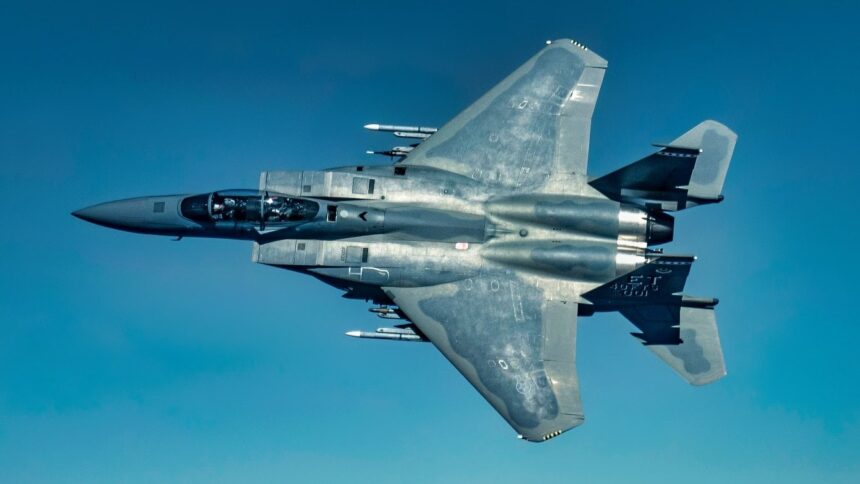

Despite the United States military’s commitment to its fifth-generation stealth warplane fleet (consisting of the Lockheed F-22 Raptor and the F-35 Lightning II), the Air Force still needs many more of the newer fourth-generation F-15EX Eagle IIs.
At least that’s what the Air Force thinks.
F-15EX Eagle II. Image Credit: Creative Commons.
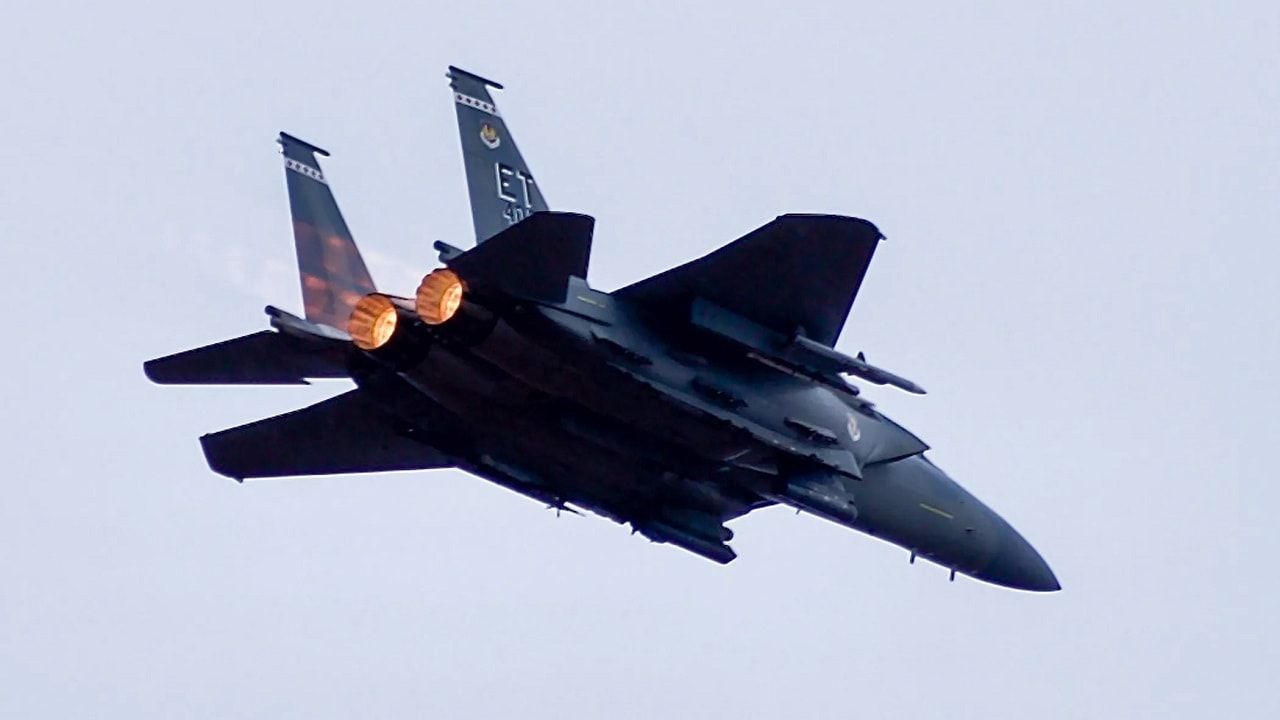
F-15EX Eagle II. Image Credit: Creative Commons.
This comes as the Air Force is supposed to be more fully transitioning away from its fourth-generation fleet in favor of fifth-generation stealth warplanes (while preparing for the inevitable sixth-generation F-47 warplane).
A Massive Problem
But earlier this year, the Air Force increased its planned order of 129 F-15EX Eagle II fighters to 267, more than doubling the program’s size.
These new planes will replace the aging F-15E Strike Eagles that were supposed to be replaced by the F-35s.
A new Pentagon assessment says the larger F-15EX program increases production cost and has greater technology demands than originally considered.
This move, according to the Pentagon report, will complicate production for the Air Force — further burdening the already strained service as it must reduce those logistical burdens.
The newest version of the F-15 family, Boeing’s F-15EX Eagle II, combines the basic F-15 airframe with more advanced technological accouterments–including an advanced electronic warfare (EW) system.
The Air Force has also given the F-15EX Eagle II a far greater weapons capacity than its predecessor.
These new warplanes are considered fourth-generation-plus, combining the basic characteristics of the fourth generation with many of the fifth generation’s advances.
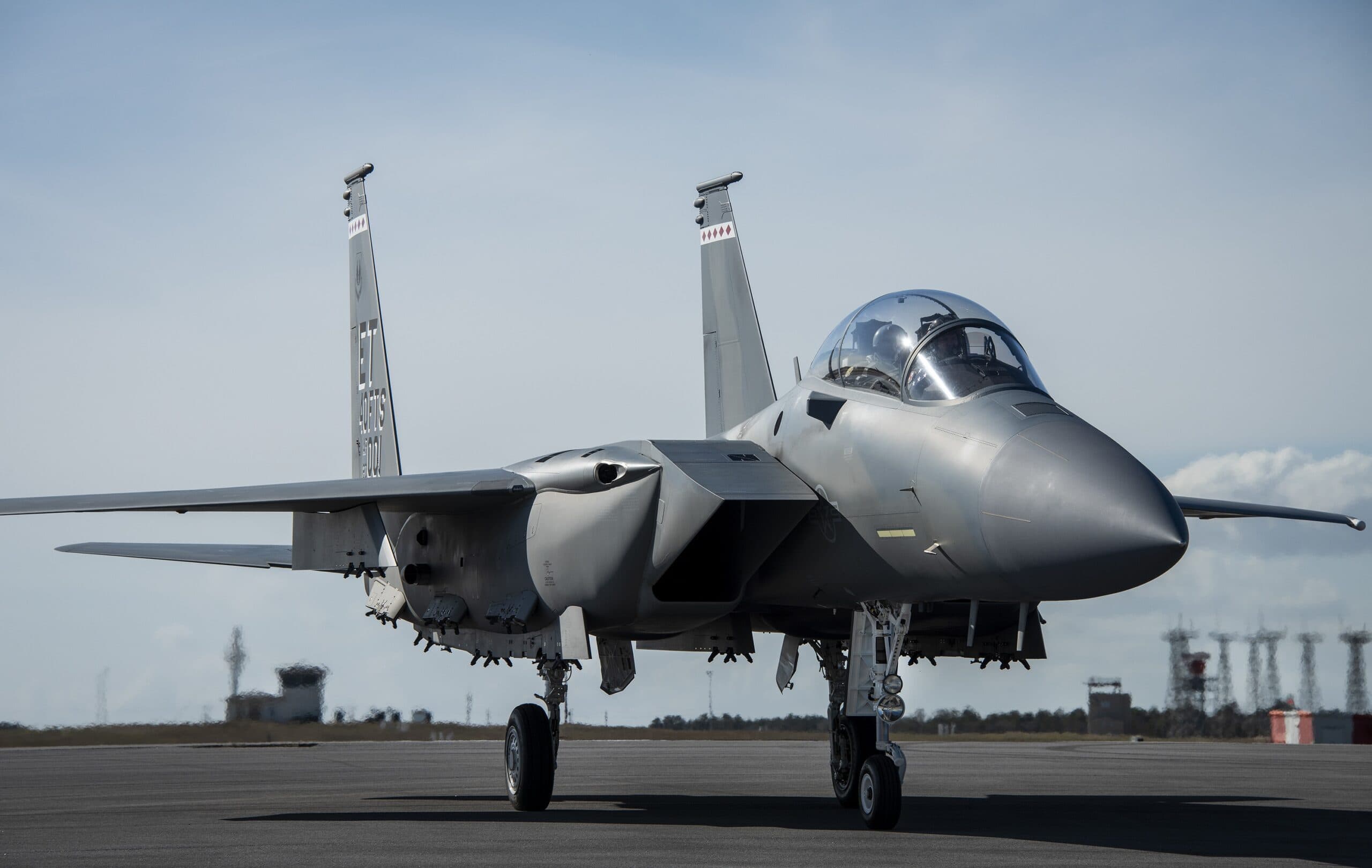
F-15EX Eagle II. Image Credit: Creative Commons.
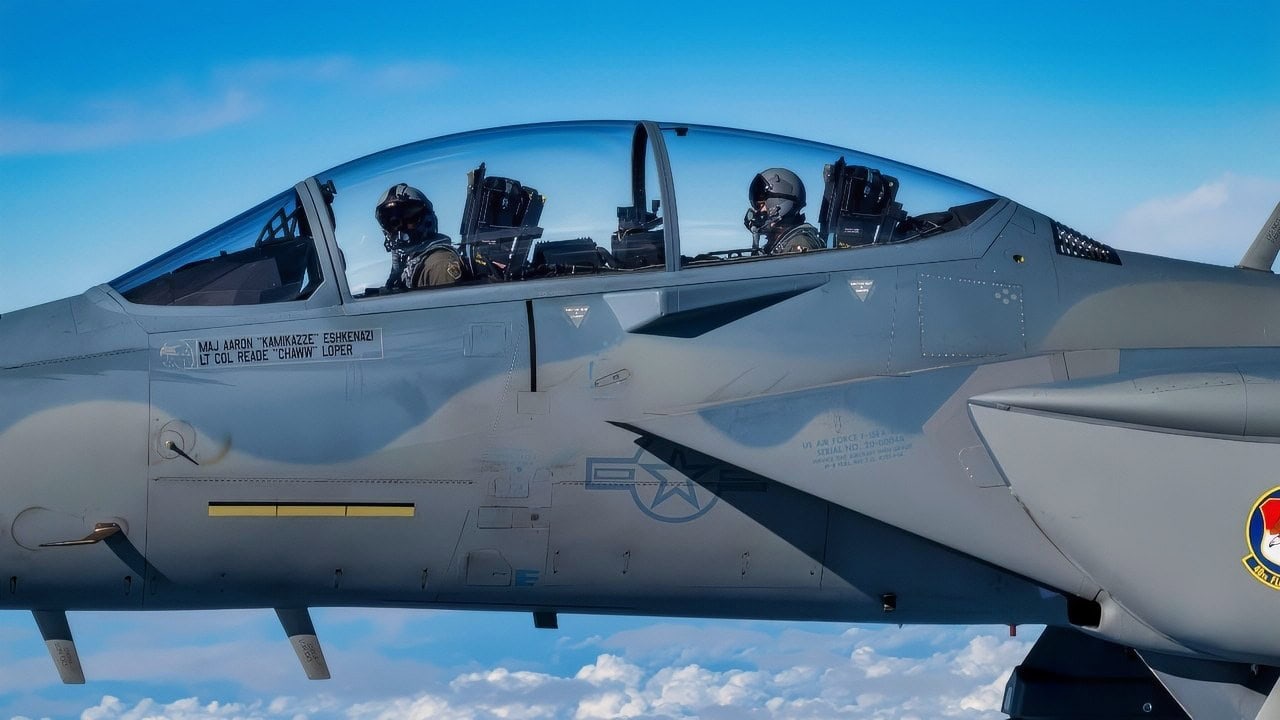
The F-15EX isn’t stealth, but it brings speed and massive payload—built for homeland defense, standoff strikes, and teaming with F-35s and drones.
These F-15EX birds can conduct precision-strike missions, achieve air superiority, and still carry more weapons than the stealth warplanes whose weapons must generally be carried internally while operating in their lowest-observable configurations.
With the increased order of F-15EX Eagle IIs, the Pentagon worries the system could become obsolete as the world moves well into the era of fifth-generation stealth planes (and even sixth-generation planes).
The caustic Pentagon report would likely require a major technological reset because some of the underlying components for the F-15EX will no longer be available by the time the later aircraft in the order are built.
The Big Problem: That Big Price Tag and Delays
One of the biggest concerns is cost. The F-15EX Eagle II comes in at $94 million per plane.
Few acquisition specialists are certain of the F-15EX program’s ultimately cost.
Experts hope to complete final budget assessments for the 2028 budget request. And production itself is already under severe pressure.
The Pentagon identified serious shortages involving several components, including large-area cockpit displays and low-profile heads-up displays produced by Elbit.
There are also complications with the supply chain for the General Electric F110 engines and Collins Aerospace cartridges used in the aircraft’s ejection systems.
What’s more, there are already delays in the existing order of new F-15EXs.
Boeing was supposed to deliver all 12 Lot Three planes. Instead, the Department of War believes it will receive only about six by the end of the year.
Plus, Lot Four of the F-15EX production line has slipped.
That delay will cost the Air Force two years.
That delay vastly complicates the Air Force’s plan to station the Eagle IIs at Kadena Air Base in Okinawa, Japan, replacing the aging F-15C/D warplanes that began leaving the Pacific facility in 2022.
The first F-15EX arrived at Kadena on August 28. Yet, the larger tranche of planes won’t be available until next year.
Strategic Gaps Forming
Because of these delays and the retirements of the older F-15C/Ds, Kadena is creating complex workarounds and scheduling patches to keep the facility operating until the F-15EXs promised to the facility become available.
In other words, the F-15EXs are costing more.
They are being delayed longer. Risk becoming less relevant to the modern battlefield when they are ultimately deployed.
Oh, and the F-15EX Eagle IIs might not be numerous enough to fully replace the capabilities lost when the older F-15 iterations are fully retired (which they already are, with insufficient replacements lined up, creating massive strategic gaps).
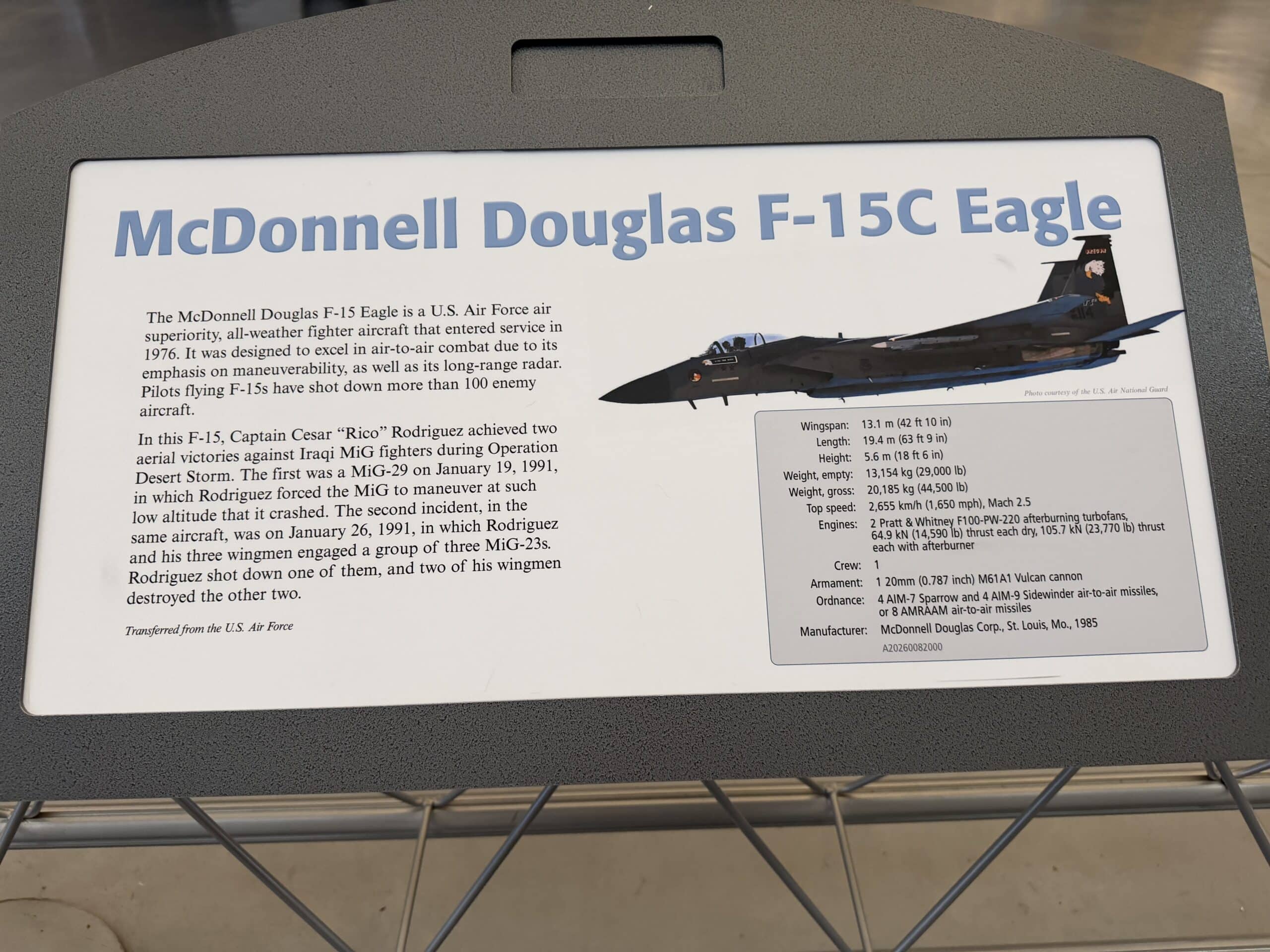
F-15C Smithsonian 19FortyFive Photo
Interestingly, the Pentagon’s reporting on the risks associated with the F-15EX program does not advocate canceling purchases of the system.
Instead, the report merely highlights the very many risks of the program.
The F-15EX seems like a redundancy.
The F-35s were supposed to replace the fourth-generation fleet.
Instead, the Air Force has opted to purchase the F-35s while trying to maintain some fourth-generation warplane capability.
So either the Pentagon has lost its mind or the F-35s aren’t as useful as their exorbitant price tag suggests.
About the Author: Brandon J. Weichert
Brandon J. Weichert is the Senior National Security Editor at 19FortyFive.com. He also manages The Weichert Brief on Substack. Weichert also hosts “National Security Talk” on Rumble. He is the author of four bestselling national security books, the most recent of which is A Disaster of Our Own Making: How the West Lost Ukraine (Encounter Books). Follow him via Twitter/X @WeTheBrandon.