


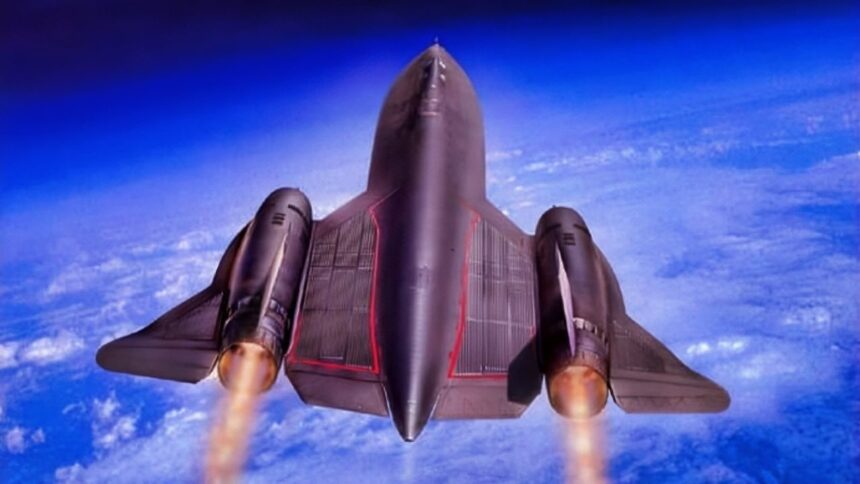

Summary and Key Points: The Lockheed SR-71 Blackbird could outrun anything an enemy fired at it, and that was the whole point of the airplane. The machine was only as good as the two people strapped inside it, though, and the Air Force went to remarkable lengths to be certain those two could survive a job with more in common with spaceflight than with flying. Blackbird crews passed the same physical tests NASA gave its astronauts. They trained for months in altitude chambers. They wore pressure suits built by the company that outfitted the space program, because at their cruising altitude, an unprotected human body has only seconds to live. Earning one of those seats meant surviving a selection process copied from the astronaut corps, a training pipeline measured in years, and a flight environment so hostile that the airplane was the least of the dangers.
No One Advertised for the Job: SR-71 Blackbird Pilot
The Air Force never posted a want ad for Blackbird pilots, because it did not have to.
Crews had to volunteer, and the bar screened out all but a sliver of an already elite pool of experienced aviators.
Colonel Richard Graham flew the SR-71, later commanded the wing, and wrote SR-71 Revealed and other authoritative accounts of how the program worked, and his description of selection is exact.
A board met at Beale Air Force Base in California whenever the squadron commander decided a new crew was due, usually every six months, to fill seats that would open seven to nine months later.
The wing’s key officers sat around a table, and every folder, drawn from a stack of five to ten applicants per seat, got read and argued over in detail.
One part of the process had no equal elsewhere in the Air Force. The serving SR-71 crews at Beale reviewed each applicant’s file and weighed in, and an endorsement from a current crewmember carried real weight, because these were the men who would trust the newcomer with their lives and their airplane.
SR-71. SR-71 photo taken at the National Air and Space Museum. Taken by 19FortyFive on 10/1/2022.
Candidates who cleared the board came to Beale for a week of interviews and evaluation, and the scrutiny never let up. Graham recalled one applicant who had a few too many at the Officers’ Club on his final night and spent it running down SR-71 crews for wearing their hair too long.
He did not get in. Neither did another who turned belligerent.
The board’s rule was simple: invite the people it wanted, then look hard for a reason to say no.
An Astronaut’s Physical, Passed Without Waivers
Prospective crews had to clear an astronaut-grade physical, a gauntlet far beyond a routine flight exam, before the program would even consider them. No story shows the bar better than Brian Shul’s. Shul had been shot down over Southeast Asia near the end of the Vietnam War, burned so badly he was not expected to live, and he clawed his way back through a year in the burn center at Fort Sam Houston and roughly fifteen surgeries.
The fire had burned him down to 119 pounds from 180 before his body began to fight back.
Years later, he applied to fly the Blackbird, walked into the astronaut physical, and passed it without waivers, posting one of the highest scores the instructors had recorded, out of a body that had been half burned away.
He went on to fly more than 2,000 hours in the fastest airplane ever built, across four years at the controls of the Blackbird.
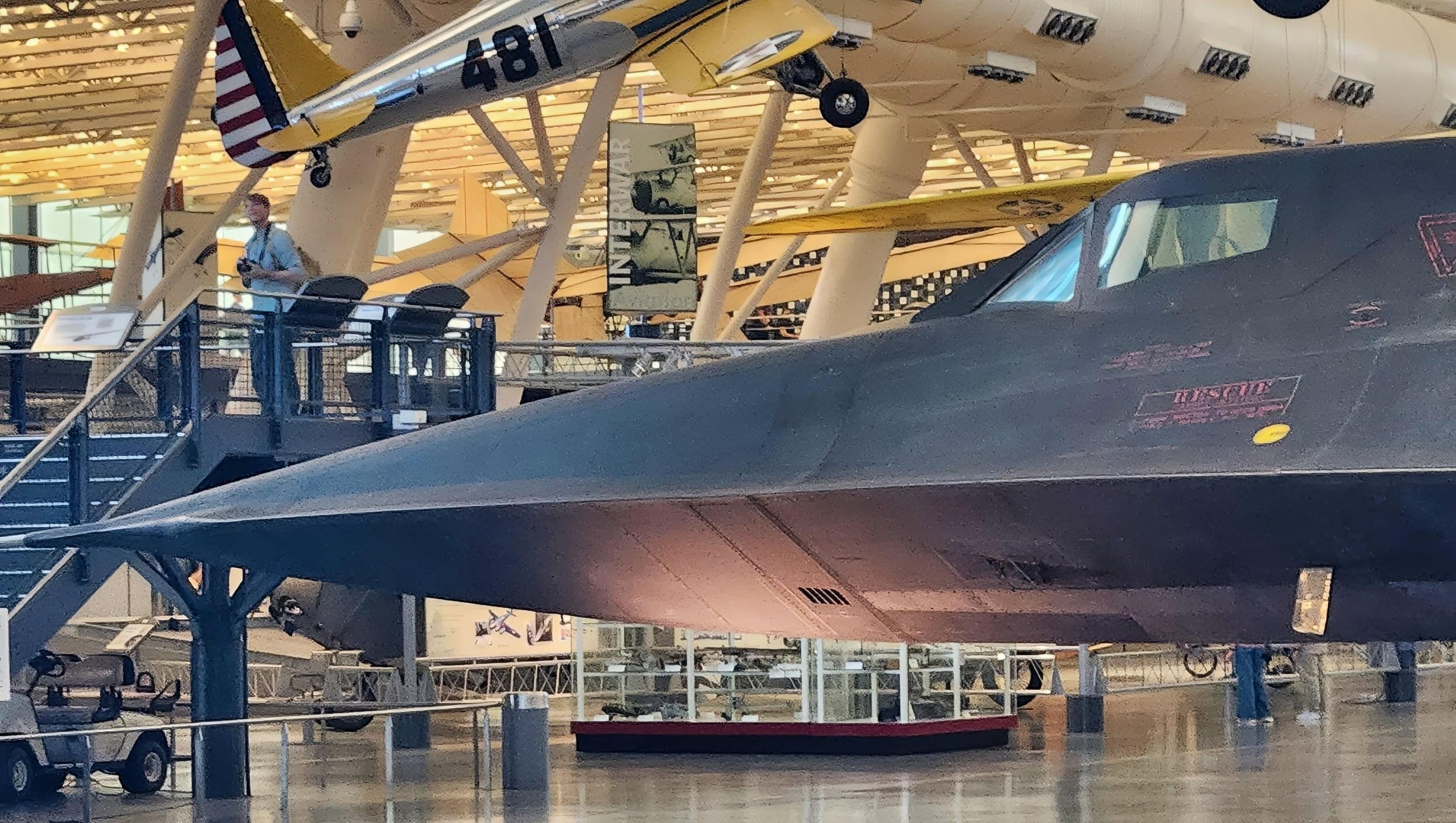
SR-71 Blackbird at Smithsonian. Image Credit: 19FortyFive.com
The exam was that hard for a reason. The Blackbird flew where the human body cannot survive on its own, and the Air Force had to know that a candidate’s heart, lungs, and circulation could withstand the strain of altitude, the pressure suit, and a high-altitude emergency without failing.
A Blackbird seat was one of the few flying jobs on earth that demanded a spacefarer’s constitution.
Learning to Fly at the Edge of Space
Passing selection only opened the door, because a new crewmember still had a long road before flying the airplane for real. Most of that road ran through survival, not stick-and-rudder work.
Crews were fitted for and trained in David Clark full-pressure suits, the same pressurized suits worn by high-altitude and early space crews.
Those suits mattered so much that Beale’s Physiological Support Division once loaned several to NASA for the first Space Shuttle flights, until the shuttle’s own safety systems were proven out. Training piled on altitude-chamber runs to drill the crews on the effects of extreme altitude and the right moves during decompression, a program that, for the closely related U-2, ran several months on its own.
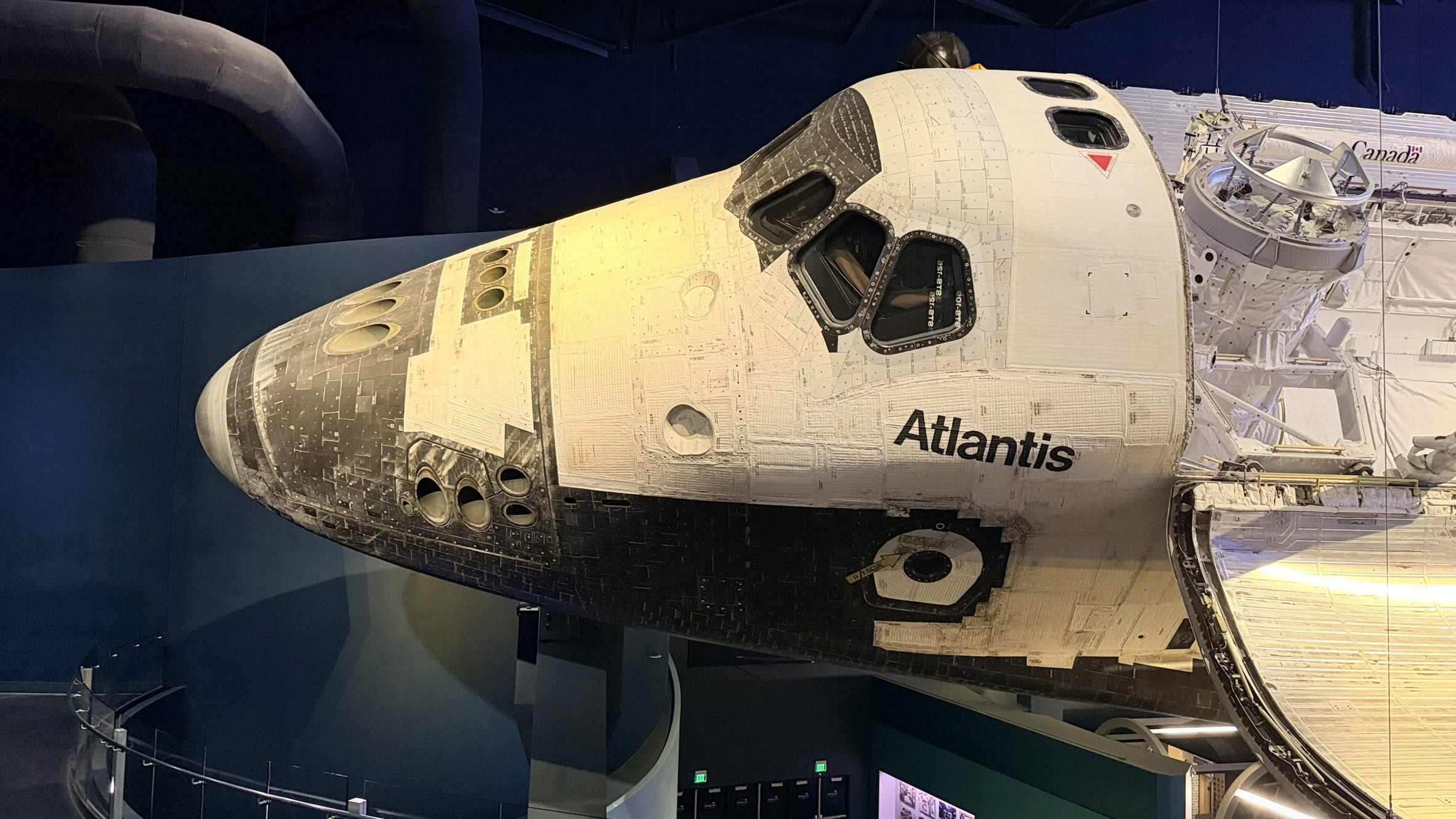
Space Shuttle Atlantic from NASA’s Kennedy Space Center. Image Taken by 19FortyFive.com on 6/28/2026.
The routine around every flight was its own ordeal. Crews began their medical checks about ninety minutes before takeoff, ate a high-protein meal in a dining room the support division reserved for Blackbird and U-2 fliers, and then climbed into the rear-entry suit while technicians worked it over like a second skin, checking every seal, zipper, and hose.
Before the climb, the crew breathed pure oxygen to flush nitrogen from the blood and head off decompression sickness, the same bends a diver risks surfacing too fast. Count the months of lead time built into selection and add the training that followed, and the road from a pilot’s first application to his first operational mission could stretch toward two years.
The reason for all of it became obvious the instant a crew reached altitude.
Up where the Blackbird cruised, the outside air runs about 56 degrees below zero Celsius, far too thin to breathe or to hold pressure, and above a line called the Armstrong limit, the pressure drops so low that exposed body fluids start to boil.
The suit was not for comfort. It was the only thing between the crew and death, which is why training circled back to it again and again.
Two People, One Machine
The SR-71 Blackbird took a crew of two, and the workload left no other option.
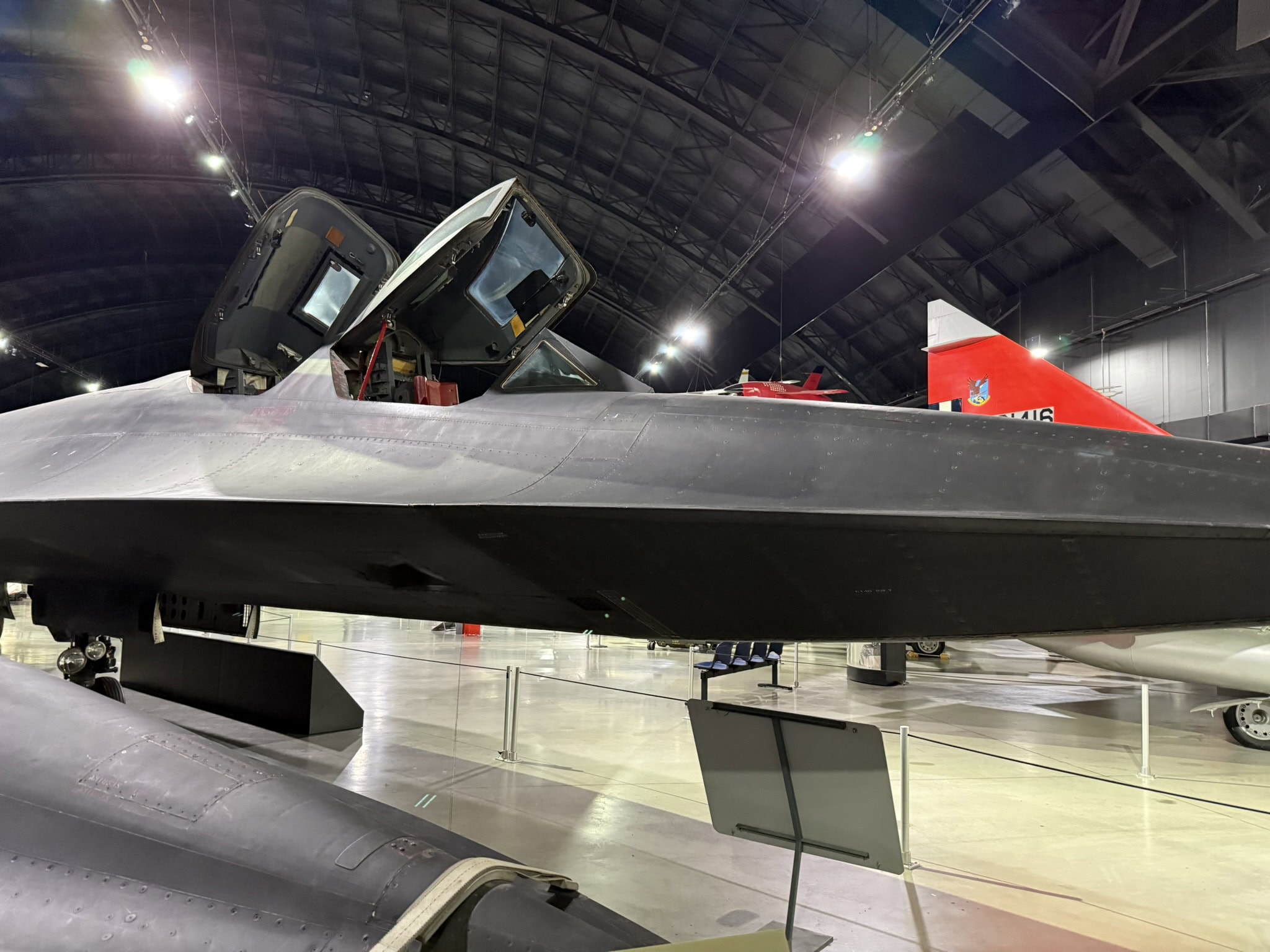
SR-71 at National Museum of the Air Force.
Up front sat the pilot, flying the jet and nursing its temperamental engines. Behind him sat the Reconnaissance Systems Officer, the RSO, who ran the navigation, sensors, defensive gear, and cameras that were the reason for the whole mission. The two moved as one, and the airplane’s speed left no room for a mixed signal between them.
At Mach 3, the Blackbird ate a mile every second and a half, so navigation and timing had to be planned and flown to a standard nothing else in the sky demanded, and a sloppy turn could throw the jet miles off track or across a border it had no clearance to cross.
The pilot rode in an airframe that grew several inches longer as it heated in flight and managed inlets that could choke during a violent event called an unstart, slamming both men against the canopy.
Each trusted the other with a job no single person could handle alone at those speeds. In the crews’ own telling, it felt less like flying a fast jet than like running a crewed spacecraft that never left the atmosphere.
When the Missiles Came, the Answer Was Always Speed
Every piece of it — the selection, the physical, the training, the teamwork — was finally tested when an enemy tried to kill them, and the airplane’s answer was always the same word: faster.
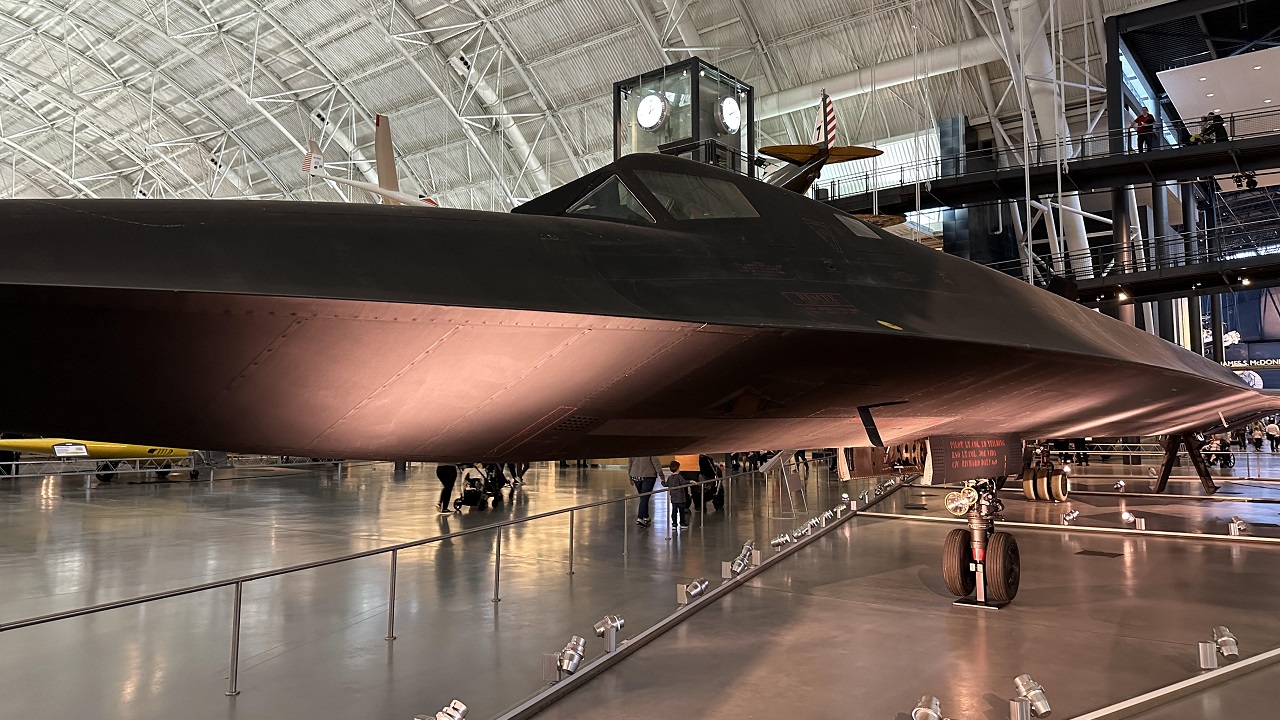
SR-71. SR-71 photo taken at the National Air and Space Museum. Taken by 19FortyFive on 10/1/2022.
The most famous case belongs to Shul, over Libya in 1986, and he recounted it in his memoir Sled Driver. Deep into a run across hostile ground, his RSO called out missile launch signals, most likely SA-2 and SA-4 batteries climbing toward them. Shul did the one thing the airplane was built to do. He pushed the speed up and worked out whether the Blackbird could reach its turn before the missiles reached its altitude, then held course and bet both their lives on the jet, running near 2,100 miles per hour at 85,000 feet.
They won the race to the turn and ran for the Mediterranean, and only when his backseater suggested easing off did Shul realize he still had the throttles jammed full forward.
SR-71 Blackbird Was Pure Speed and the Pilot Mattered
That was the tactic for the entire program. Neither the SR-71 nor its A-12 forerunner was ever lost to enemy fire across their whole operational lives, despite thousands of missiles fired at them, because at speed and altitude nothing an enemy launched could climb fast enough or high enough to catch them. The Blackbird did not juke missiles with hard turns.

A-12 Oxcart. Image Credit: Creative Commons.
It beat them by flying higher and faster than they could reach, which turned raw performance into armor. That performance only counted because two exhaustively chosen, brutally trained people were in the seats to use it, holding steady while a weapon built to kill them burned itself out in the thin air below.
The airplane’s heat and speed made the escape possible, and the crew turned it into survival, mission after mission, at the edge of space.
No wonder we take so many pictures of the SR-71 Blackbird when we visit museums. As you can see in this article with these photos, we can’t help but be impressed each time we see it.
About the Author: Harry J. Kazianis
Harry J. Kazianis (@Grecianformula) was the former Senior Director of National Security Affairs at the Center for the National Interest (CFTNI), a foreign policy think tank founded by Richard Nixon based in Washington, DC. Harry has over a decade of experience in think tanks and national security publishing. His ideas have been published in the NY Times, The Washington Post, The Wall Street Journal, CNN, and many other outlets. He has held positions at CSIS, the Heritage Foundation, the University of Nottingham, and several other institutions related to national security research and studies. He is the former Executive Editor of the National Interest and the Diplomat. He holds a Master’s degree focusing on international affairs from Harvard University.

![Liberal Plant Attempts to Attack Ramaswamy’s Success, Vivek Claps Back [WATCH]](https://www.lifezette.com/wp-content/uploads/2024/09/2024.09.26-02.16-lifezette-66f56cd7cb522.jpg "Liberal Plant Attempts to Attack Ramaswamy’s Success, Vivek Claps Back [WATCH]")


![Dolly Parton Airport? Nashville Board Clears 1st Hurdle with Unanimous Rule Change Vote [WATCH]](https://www.boredtrashpanda.com/wp-content/uploads/2026/07/2026.07.08-17.27-boredtrashpanda-6a4e8891f0bdc.jpg "Dolly Parton Airport? Nashville Board Clears 1st Hurdle with Unanimous Rule Change Vote [WATCH]")
