
WHAT YOU NEED TO KNOW
- Germany will become an additional production hub for scarce munitions used by American weapons when U.S. manufacturers face overwhelming demand.
- MBDA plans to begin producing PAC-3 MSE Patriot interceptors at its Schrobenhausen plant later this year.
- German and American officials will examine which Tomahawk cruise missile components Germany could supply.
- Germany has ordered 35 F-35 aircraft, with Berlin defense officials considering additional planes.
Germany and the United States have signed an agreement designed to make Germany an additional production hub for scarce munitions used by American weapons.
Under the arrangement, German workers could produce those munitions when firms in the United States are overwhelmed by demand.
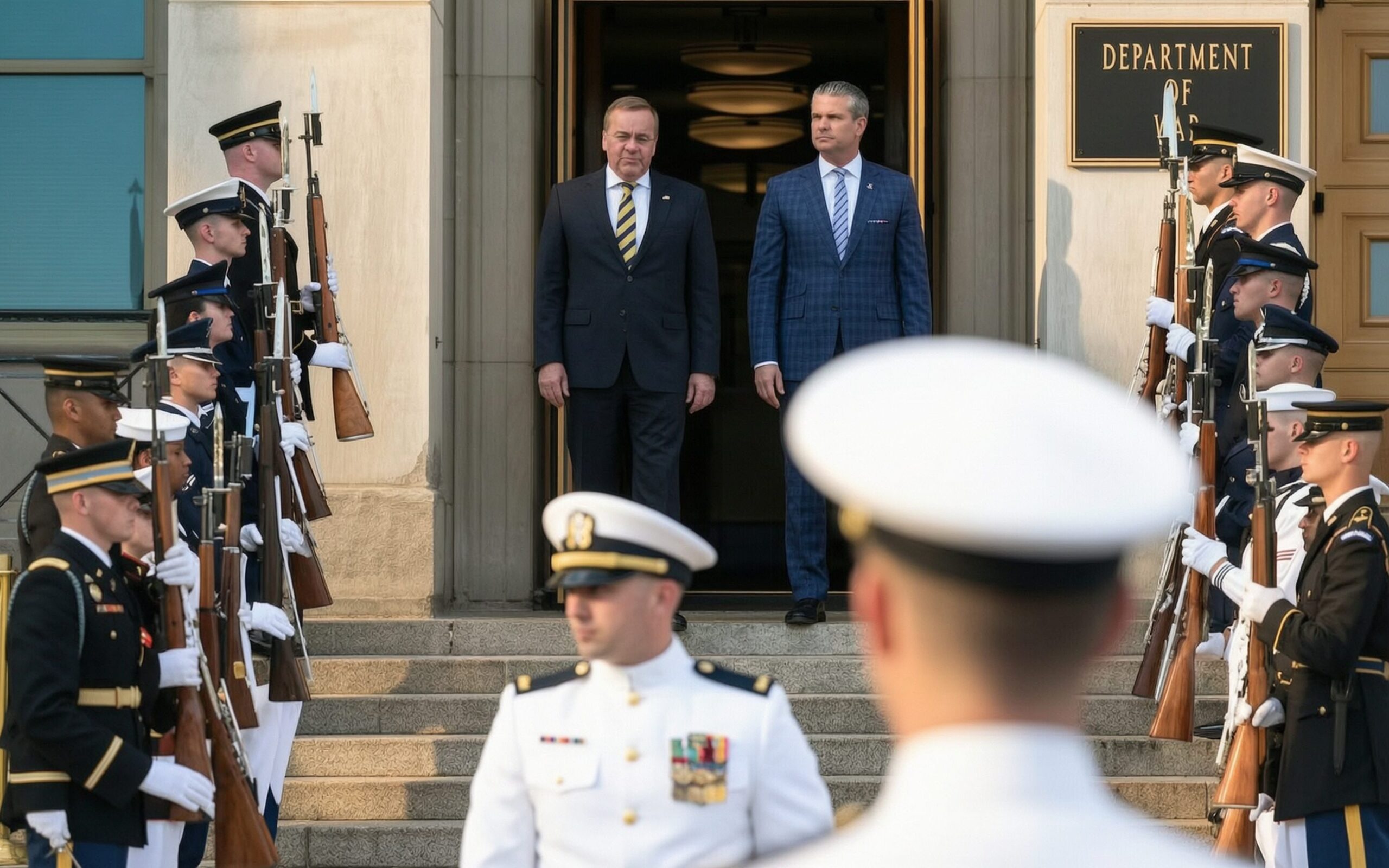
German Defense Minister Boris Pistorius and U.S. War Secretary Pete Hegseth announced the pact Tuesday during Pistorius’s Pentagon visit.
German officials have been seeking practical anchors in the transatlantic defense relationship amid President Trump’s recurring criticism of NATO and Europe.
Gold. Upgraded. Buy real gold from $1. Store it in America. Sell it with one click.
Hegseth presented the agreement as linking defense acquisition reform in both countries.
“When we align the two, you expand opportunities for joint development, production, licensed manufacturing and expanded maintenance and sustainment capacities — exactly what allied countries should be doing,” he said.
Germany’s branch of pan European missile manufacturer MBDA already produces older PAC-2 Patriot air defense interceptors.
Production of the newer PAC-3 MSE interceptor is scheduled to start at the company’s plant in Schrobenhausen later this year, Pistorius told reporters.
This Could Be the Most Important Video Gun Owners Watch All Year
Officials from both nations will also examine which Tomahawk cruise missile components Germany could supply.
Berlin wants Tomahawks and Typhon launchers for its emerging “deep precision strike” complex, though manufacturing timelines are longer than German defense leaders want to wait.
Image Credit: DoW
Patriot interceptors and Tomahawk cruise missiles have emerged as leading examples of scarce weaponry.
European countries sent much of their Patriot inventories to Ukraine to help Kyiv counter Russian missiles and attack drones, leaving those nations racing to replenish their own arsenals.
American forces have reportedly reduced the Pentagon’s Tomahawk inventory considerably during the war against Iran.
The missile’s precision and 1,000 mile range have made it difficult to obtain for European countries such as Germany, which wants to create a long range strike capability.
Berlin is keeping other medium and long range options available while developing an upgraded version of the German and Swedish Taurus missile.
Germany also belongs to a European group pursuing a domestically developed alternative called ELSA.
German officials are also considering the Anthem cruise missile from U.S. company Covenant and potential cooperation with Ukraine, Pistorius said in Washington. Those possibilities sit alongside Berlin’s interest in Tomahawk missiles and the upgraded Taurus weapon.
The new German industrial initiative with Washington could irritate European autonomy advocates, particularly in France.
Paris has watched Berlin leave joint weapons development programs in recent years for faster American purchases, including Boeing’s P-8 maritime surveillance aircraft and Lockheed Martin’s F-35 fighter jets.
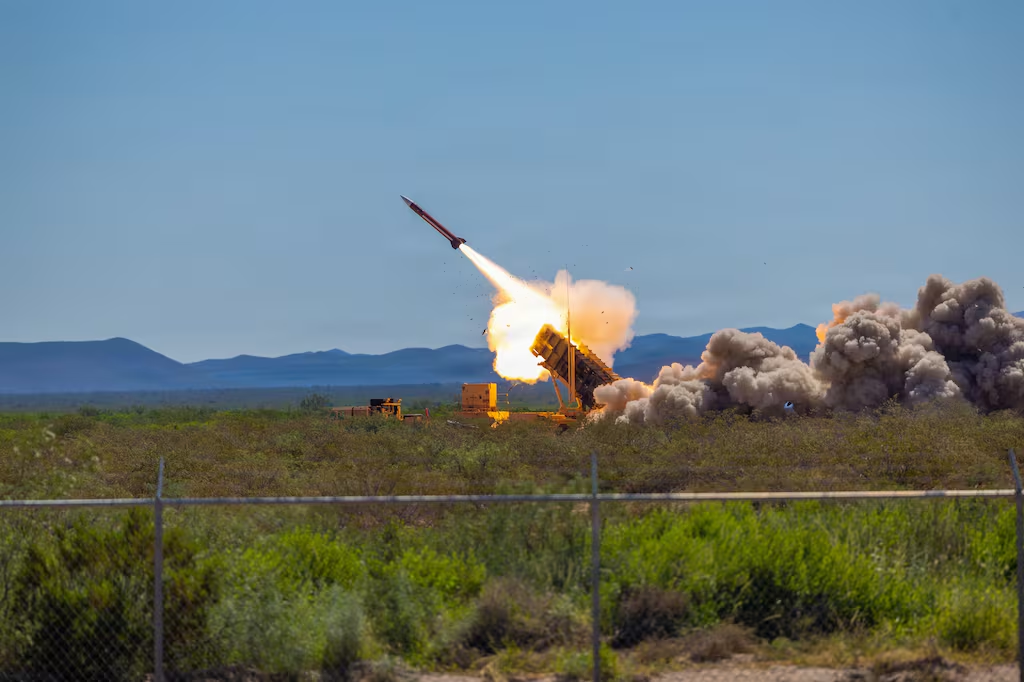
Image Credit: DoW
Some French officials viewed those purchases as weakening bilateral projects to develop next generation aircraft for the same missions.
France has repeatedly objected to spending European money on American weapons built under license, arguing that EU funds should expand European industrial capacity instead.
Sebastien Lecornu, who was Armed Forces Minister at the time and is now prime minister, said in February 2025 that such licensed production would be a “historic mistake.”
The French government has contrasted German Patriot interceptor production with investment in the French and Italian SAMP/T system, whose design authority remains in Europe.
At the Pentagon, Hegseth concentrated on the agreement’s mechanics, while Pistorius supplied the geopolitical case.
Pistorius said the West may be confronting its greatest threat since the height of the Cold War, citing Russia’s war against Ukraine, nuclear modernization, Arctic presence and militarization of space.
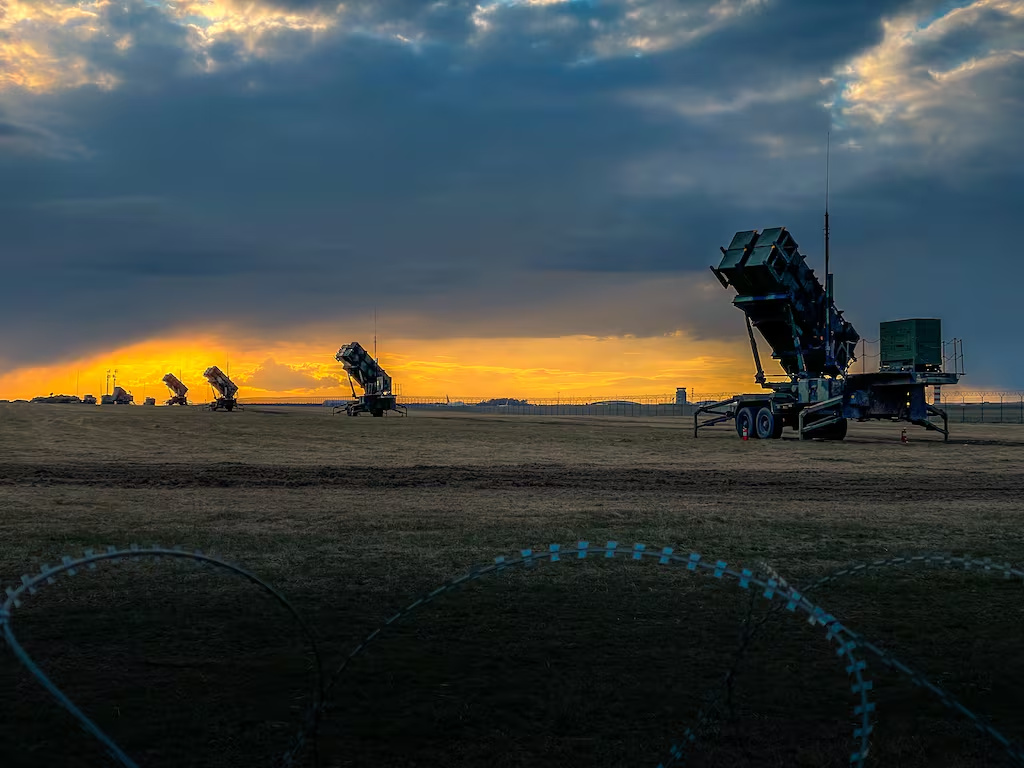
Image Credit: DoW
“Russia will remain the biggest threat to Euro-Atlantic security in the foreseeable future,” Pistorius said.
After his meeting with Hegseth, the German minister was scheduled to meet U.S. lawmakers and local defense company executives, according to the German Ministry of Defense.
Pistorius’s trip is set to conclude Friday with a ceremony marking the handover of Germany’s first F-35 from the production line at Lockheed Martin’s Fort Worth, Texas, plant.
Germany has ordered 35 aircraft, and defense officials in Berlin are considering more.
Gold is the oldest answer. SoundMoney makes owning it as easy as the apps you already use.
The opinions expressed by contributors and/or content partners are their own and do not necessarily reflect the views of LifeZette. Contact us for guidelines on submitting your own commentary.
Read the full article here