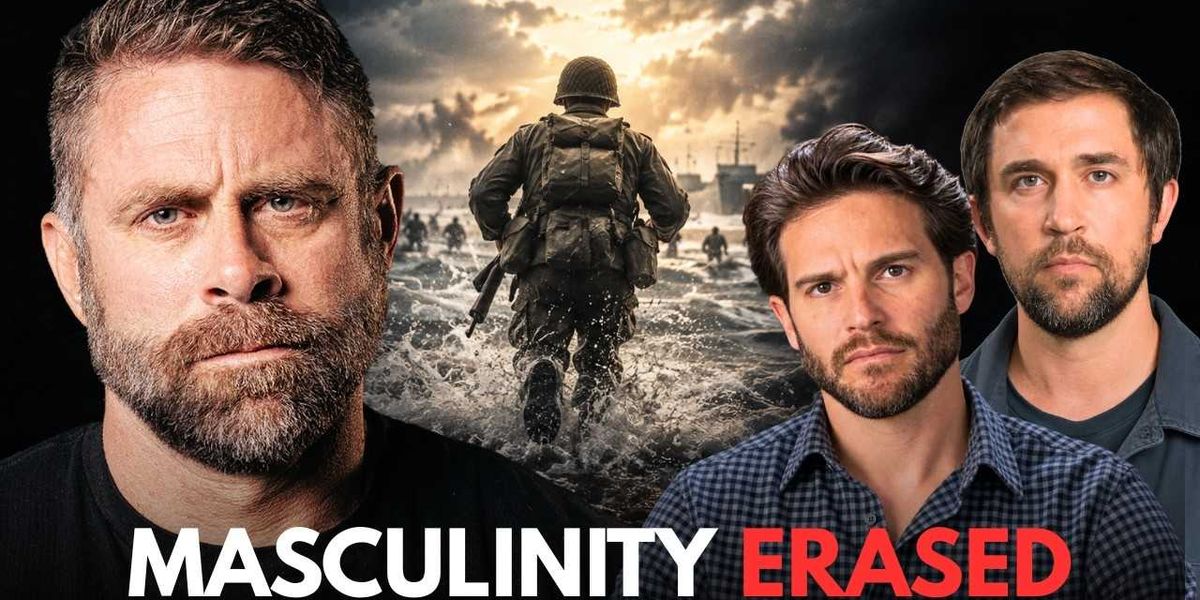

When Nick Freitas engages with young men, they often have the same complaint: The culture made them the scapegoat for its ills — and now they feel lost and don’t know what to do about it.
While he doesn’t deny young men’s predicament or blame them for it, Freitas does put the responsibility to do something about it on their shoulders.
The truth, he says, is that the institutions that shape the culture deliberately broke young men’s spirits by convincing society that masculinity was “bad, evil, toxic, horrible, and [needs] to be repressed” and then turned around and sold the young men they villainized toxic escapes, like social media, gaming, and pornography.
The path to a fulfilling life is still there, though — but it’s theirs to find and take.
On this episode of “Rufo & Lomez,” Freitas and fellow BlazeTV hosts Chris Rufo and Jonathan Keeperman talk through why so many young men have checked out — and why reclaiming faith, family, and responsibility is the way back.
It’s both “confusing and horrific” for young men, he adds, to try to make it in a world where they’re “emasculated” in order to be more acceptable to a culture that will reject them regardless.
The message so many young men receive today, says Freitas, is: “By the way, even after you’ve been emasculated, nobody’s going to want to sleep with you … corporations don’t want to hire you either.”
“So once you understand that they have legitimate grievances that are truly unique to their experience, well, now we can start to talk about, OK, how do we deal with this?” he continues.
Dealing with it, however, begins with rejecting the “escapes” offered by the same institutions that villainized men in the first place. Doomscrolling social media, pornography, and video gaming, for example, may offer temporary relief, but they ultimately prevent men from finding the fulfilling path they desire.
“One of the big things that I tell men is that look, I get my identity first and foremost through my Christianity. Why? Because it’s eternal. … I always have identity, meaning, and purpose. I never lose it, and it cannot be taken away from me,” says Freitas.
When the culture inevitably condemns a Christ-centered identity, it’s men’s job to say “screw the culture” and continue to “pursue” what is godly, he continues.
“Ultimately, if young men choose to do that en masse, the culture will follow,” Freitas says. “The reason why there’s been such a push not just to diminish men but to elevate women is because it’s the only way you can’t get self-correction.”
Choosing the righteous path, however, is no easy thing.
“There’s pain involved in doing that,” Freitas acknowledges.
“You will be punished in society for doing that, but the more people who do it and the more critical mass you reach, the more things shift.”
Already, the tides have begun to turn.
Freitas cites an NBC News Decision Desk Poll of 18- to 29-year-olds that compared Trump and Harris voters on what they consider a successful life.
“The number-one thing for young men that voted for Trump was having a family; it was number six for women,” says Freitas.
Male Harris voters, however, placed family in 10th place, while female Harris voters put it in second-to-last place.
“That really gives me encouragement,” says Freitas.
To hear more, watch the episode above.
Want more from Rufo & Lomez?
To enjoy more of the news through the anthropological lens of Christopher Rufo and Lomez, subscribe to BlazeTV — the largest multi-platform network of voices who love America, defend the Constitution, and live the American dream.
Read the full article here