
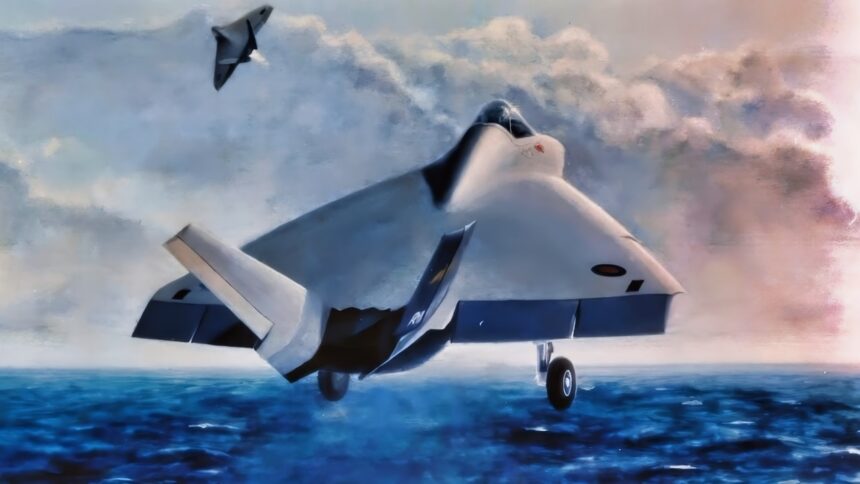

Summary and Key Points: Boeing’s X-32 is best remembered as the loser, the gap-mouthed jet that lost the Joint Strike Fighter competition to Lockheed Martin’s X-35 in 2001 and cleared the way for the F-35. That reputation leaves out a lot. Boeing built the X-32 to be simple and cheap in a program everyone knew would be expensive, with a one-piece composite delta wing that held more internal fuel than an F-35A. The production F-32 Boeing planned would have looked very different, with a new wing, twin tails, a bubble canopy, and reshaped intakes. Its stealth-compromising intake and weaker short-takeoff system still helped cost it the contest, but the deeper question is whether the F-35’s troubles would have been any different.
The Boeing X-32 Debate Won’t Go Away
On September 18, 2000, an unusual-looking aircraft took its first flight from Boeing’s Plant in Palmdale, California.
Known for its somewhat unsightly chin-mounted air intake and stubby fuselage, the X-32 would go on to make history, though perhaps not as Boeing intended.
It was designed to compete in the Joint Strike Fighter (JSF) competition, one of the most ambitious aviation programs in U.S. history, which aimed to develop a next-generation strike aircraft for the USAF and its international allies.
By now, most people know the story of the JSF competition. Lockheed, with its more conventional-looking aircraft, delivered better overall performance and relegated the X-32 to the dustbin of history.
Today, the aircraft gets heavily derided, but was it really all that bad? While it may not have been better than Lockheed’s X-35, the X-32 still had several strengths that often get overlooked.
Simple and Cost-Effective
When designing the X-32, Boeing engineers wanted the aircraft to be as simple and cheap as possible.
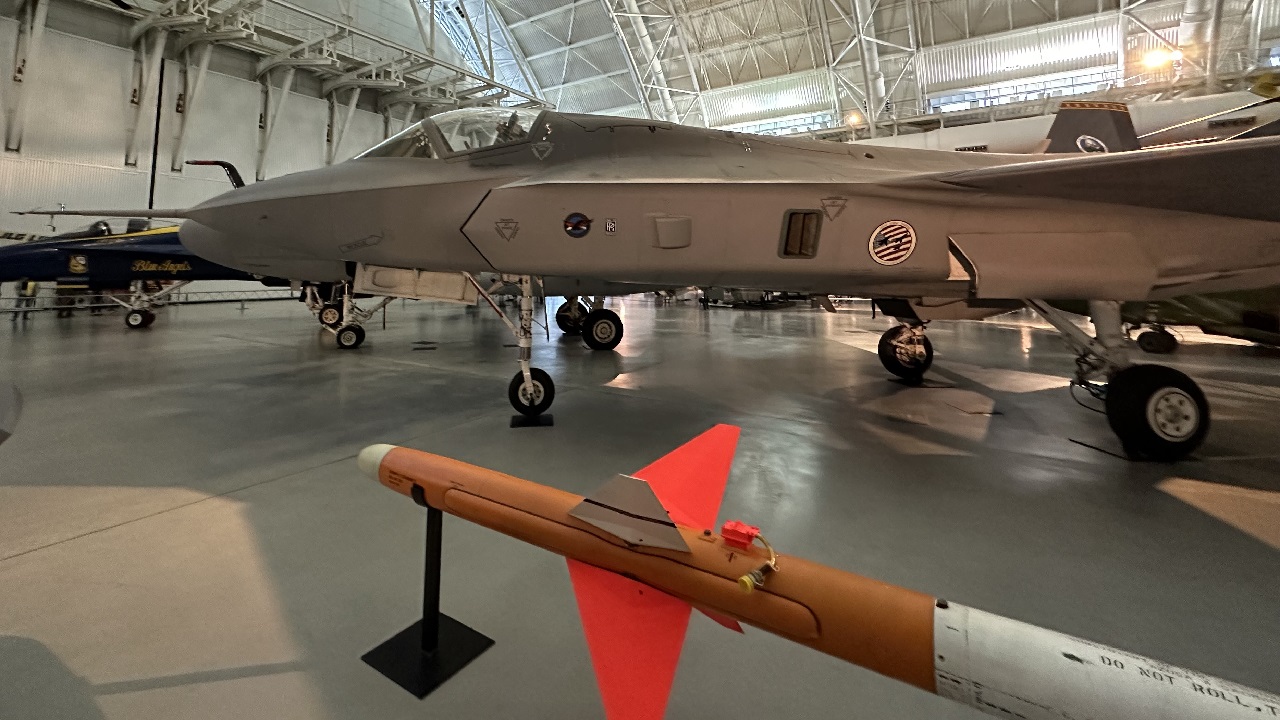
Boeing X-32 Fighter image taken by 19FortyFive back in July 2025.
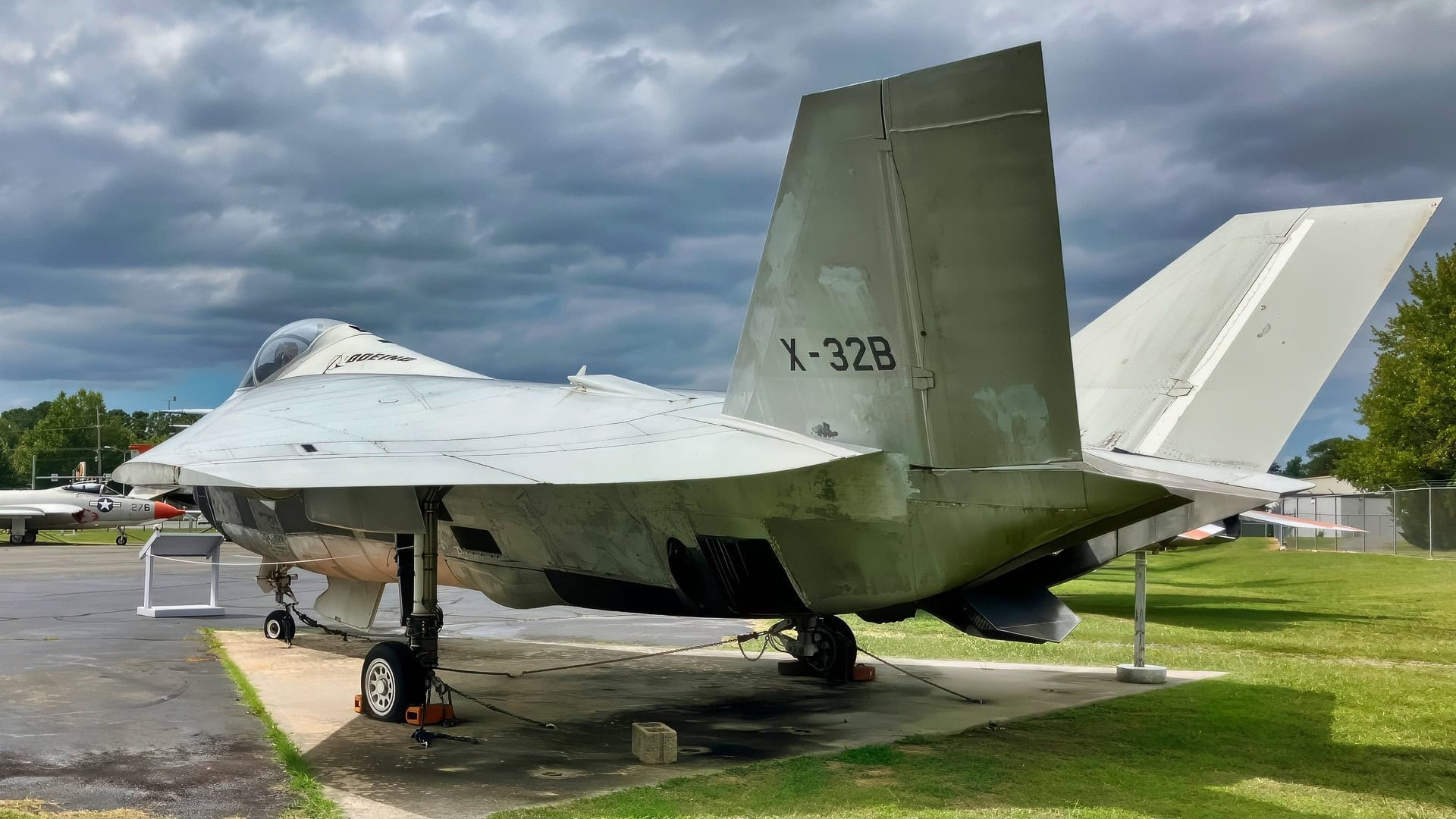
Boeing X-32 Stealth Fighter in Maryland. Image taken by 19FortyFive.com staff back in 2025.
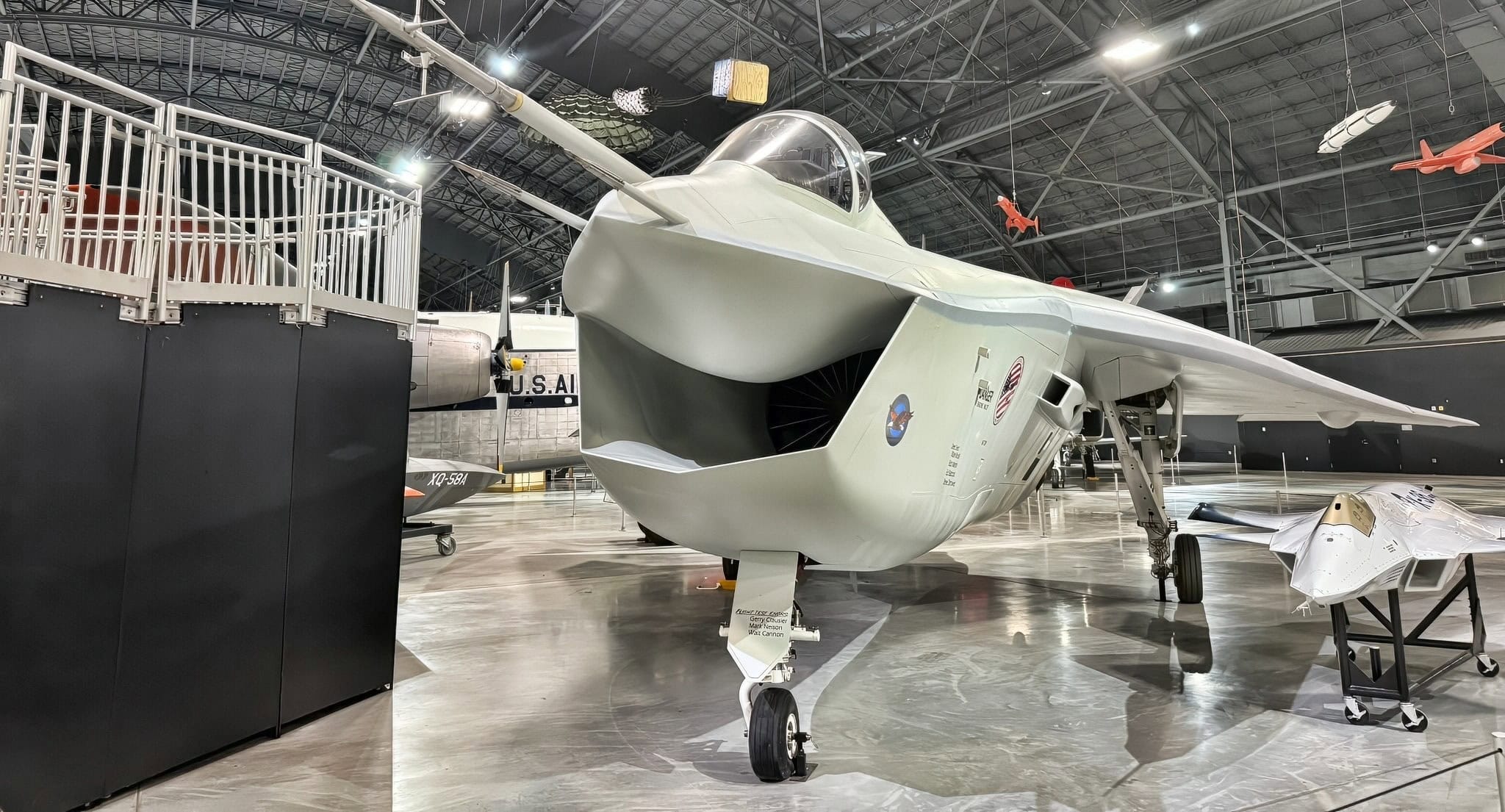
Boeing X-32 Fighter image taken by 19FortyFive back in July 2025.
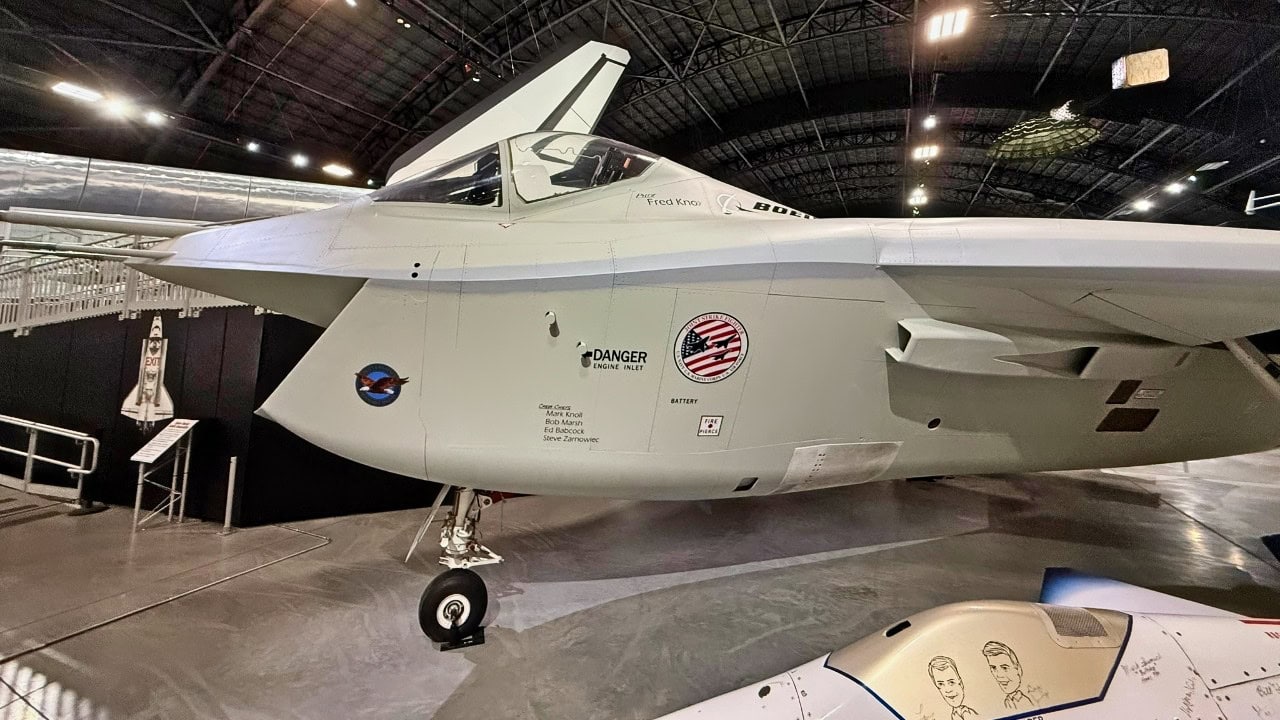
Boeing X-32 Fighter image taken by 19FortyFive back in July 2025.
They knew that with the advanced avionics and stealth coatings, the JSF would be expensive to operate and maintain.
The V/STOL variant for the Marines was designed to share as much commonality as possible with the conventional take-off version, and Boeing used low-cost carbon fiber composites in its construction.
Commenting on some of the X-32’s rare advantages over the X-35, former Navy test pilot David Tussey said, “Probably cheaper.
The X-32 took a less complex design, more manufacturable approach.” Tussey also added that the simpler design could have made it more survivable in combat.
Efficient Airframe Design
Another neat aspect of the X-32 was its airframe design.
The original prototype was built around a large one-piece carbon fiber delta wing structure.
This design was not only simple to manufacture, but the large wing structure also provided substantial internal fuel volume.
It allowed the X-32 to carry around 20,000 lbs of internal fuel, potentially giving it a longer range than the F-35, which can only carry around 18,250 lbs of internal fuel.
After Navy feedback, however, Boeing redesigned the airframe with a more conventional layout and canted twin tails for better control during carrier operations.
Unfortunately, this redesigned X-32B came too late to affect the JSF competition.
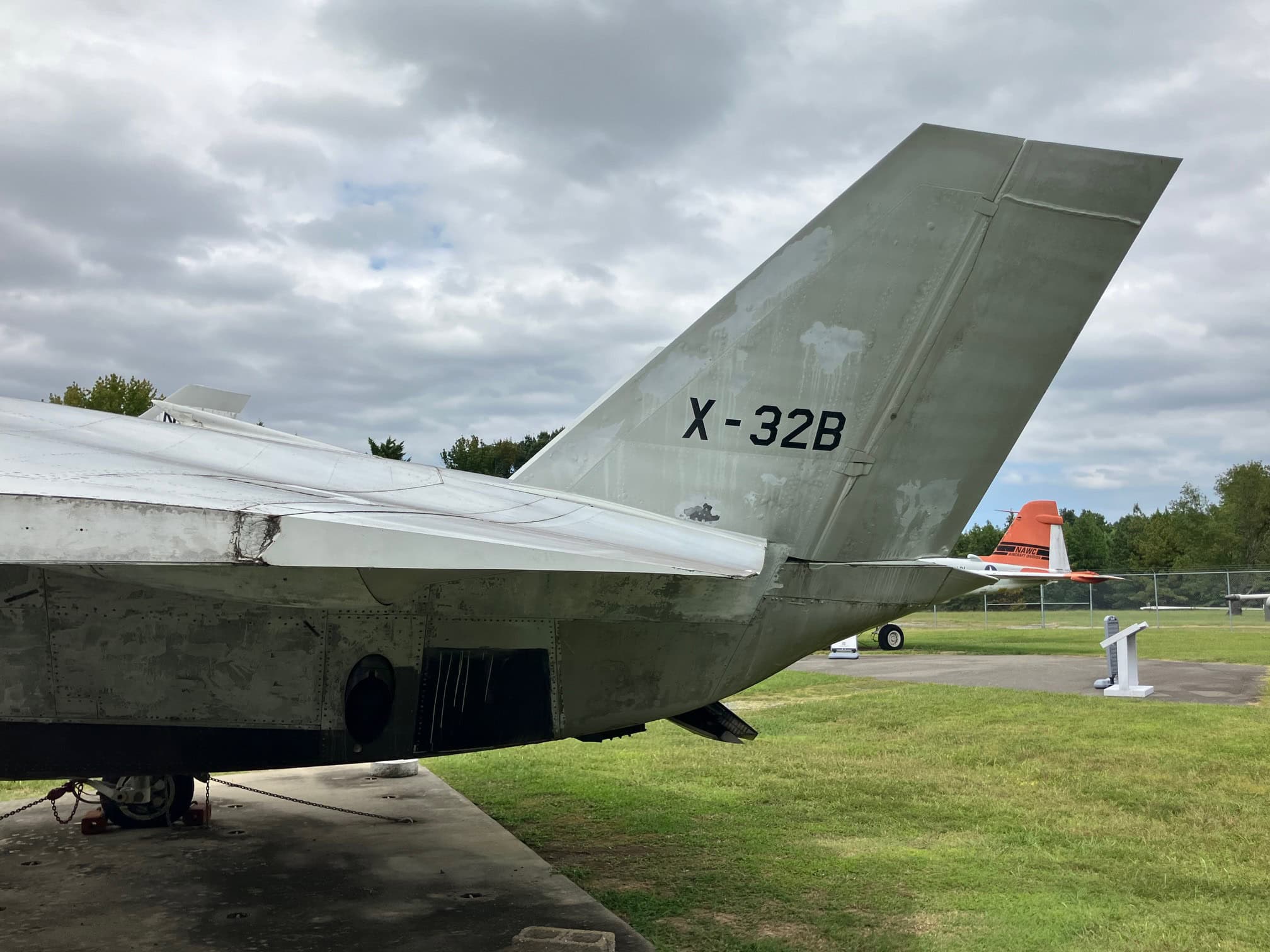
X-32B Outside in the Elements. 19FortyFive.com Image.
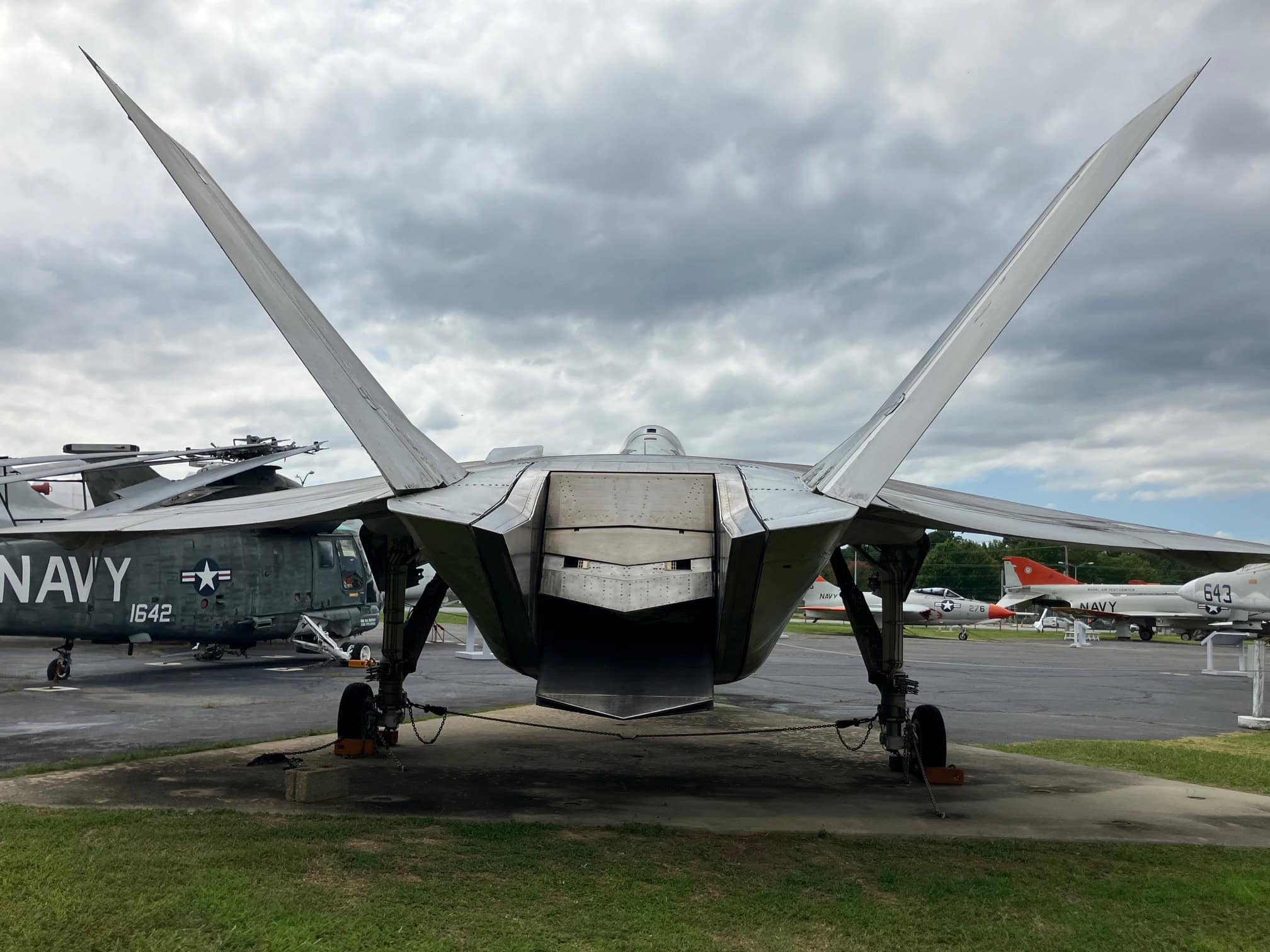
Boeing X-32B. 19FortyFive.com Image.
Good Flight Performance
Although the X-35 generally performed better, the X-32’s flight characteristics weren’t bad either.
When describing the X-32’s flight characteristics, Navy test pilot Phillip “Rowdy” Yates compared its handling to the F-18 Hornet.
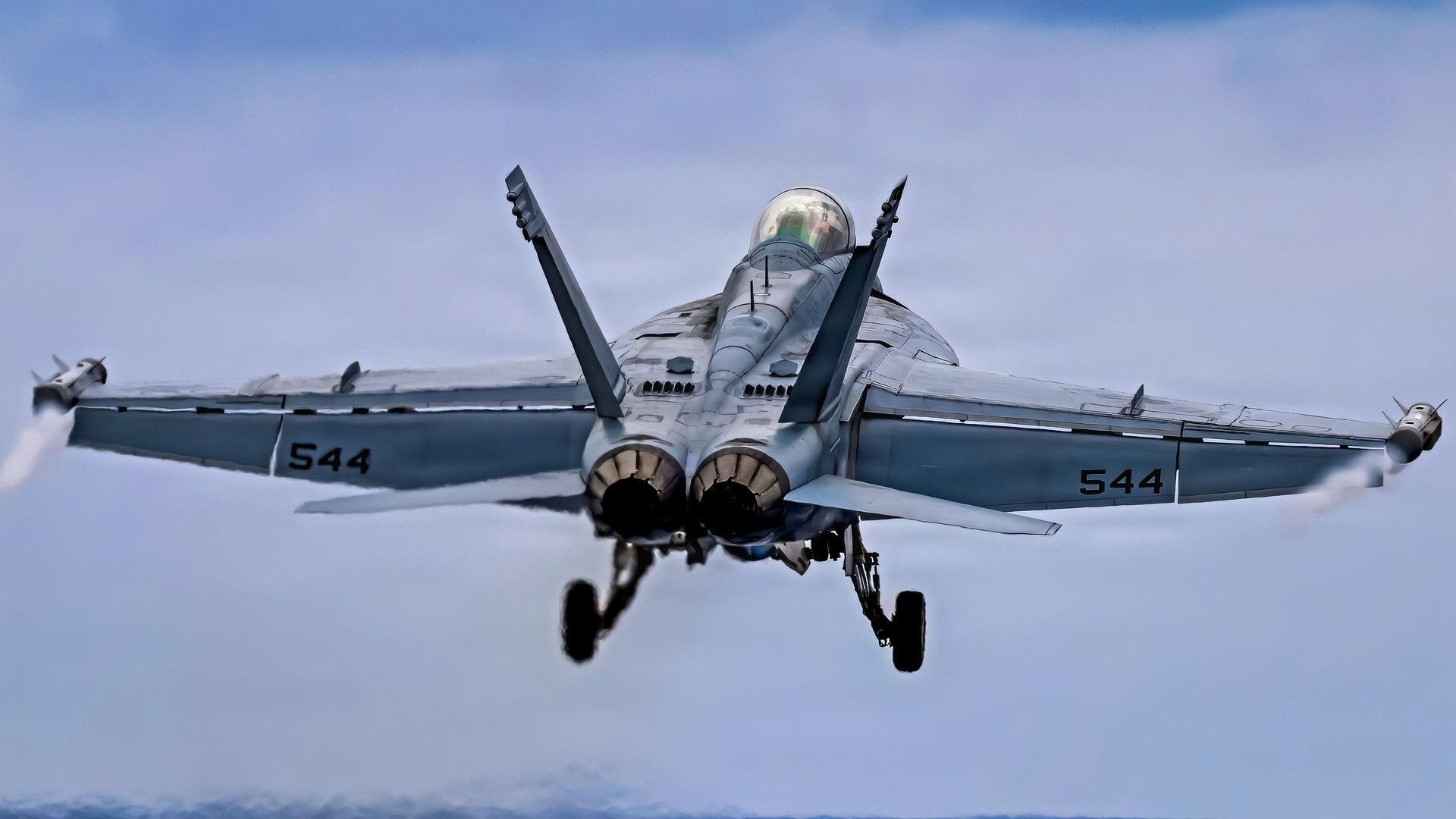
PACIFIC OCEAN (March 31, 2026) –U.S. Navy Capt. William Mathis, commanding officer of the Nimitz-class aircraft carrier USS Theodore Roosevelt (CVN 71), pilots a E/A-18G Growler assigned to Electronic Attack Squadron (VAQ) 129, March 31, 2026. Theodore Roosevelt, flagship of Carrier Strike Group (CSG) 9, is underway conducting exercises to bolster strike group readiness and capability in the U.S. 3rd Fleet area of operations. (U.S. Navy Photo by Mass Communication Specialist 2nd Class Ryan Holloway)
Boeing’s designers derived a lot of the X-32 control laws from the F-18,” Yates said. “So to some extent it was just like flying an F-18.
There were differences, of course, but either because it was like the F-18 or because of the time I spent in the simulator, it seemed familiar.
I thought, ‘Okay, I know what I’ve got here.’” Powered by a single Pratt & Whitney JSF119 engine, both variants completed 144 combined test flights and performed well at both high and low angles of attack, reportedly excelling in all tests. Ultimately, however, the X-35 performed better in the air.
The Controversial STOVL System
The Direct-lift STOVL system was both a boon and a curse to the X-32.
Unlike the X-35B, which used a separate lift fan, the X-32 used a direct lift system that redirected engine thrust for short takeoff and vertical landing operations.
The main advantage was that it was much simpler than Lockheed’s separate lift-fan system and would have been easier and cheaper to maintain.
The downside, however, is that it didn’t perform as well as the X-35.
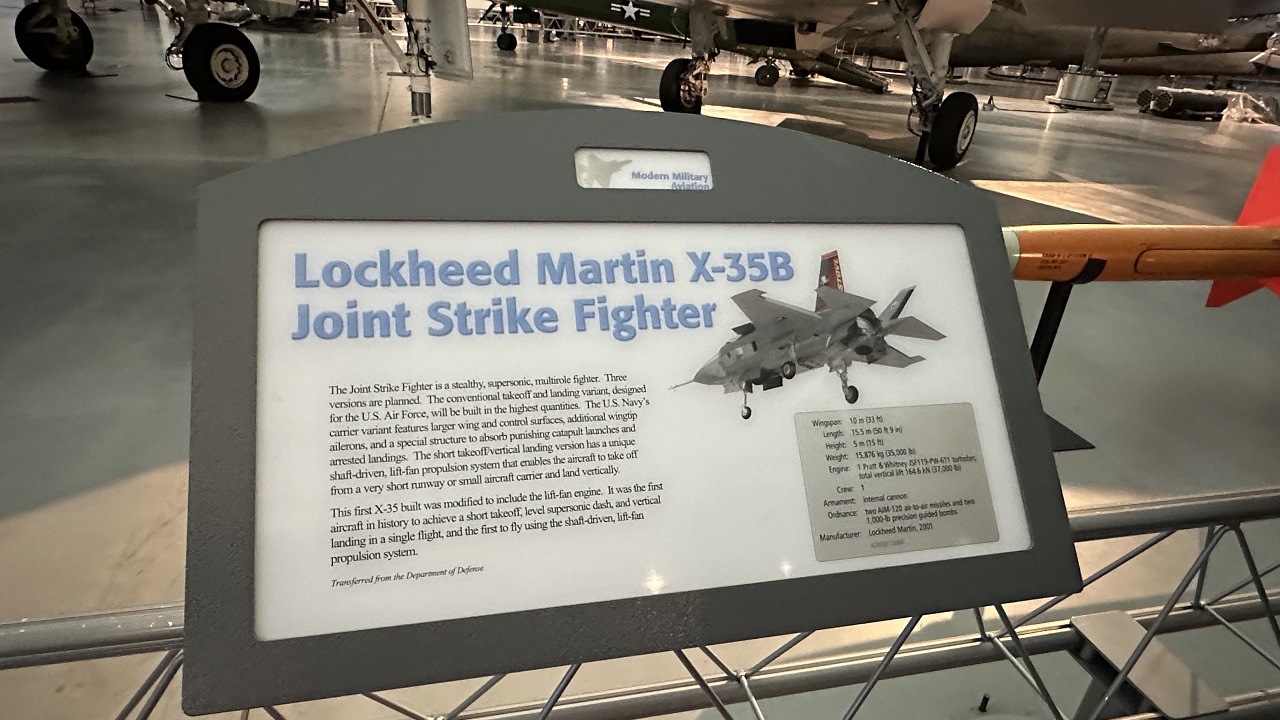
X-35B Joint Strike Fighter. Image taken on October 1, 2022 at National Air and Space Museum.
X-35B Joint Strike Fighter. Image taken on October 1, 2022 at National Air and Space Museum.
In its STOVL configuration, the X-35 generated more thrust and better lift than the X-32’s thrust-vectored engine approach.
The X-32’s STOVL system also required large chin-mounted intakes, which, beyond their aesthetic appeal (or lack thereof), exposed the engine’s compressor blades to radar waves, with massive knock-on effects on its stealth potential.
An Aircraft With Potential
The world never got to see what the production F-32 would have looked like.
While that may be for the best, the production model, of which only conceptual images were made, and the prototype were two very different beasts.
We already discussed the wing change Boeing proposed for better carrier performance, but that was only one of many sweeping changes that would have been implemented in the final product (TWZ has an excellent analysis of the production F-32).
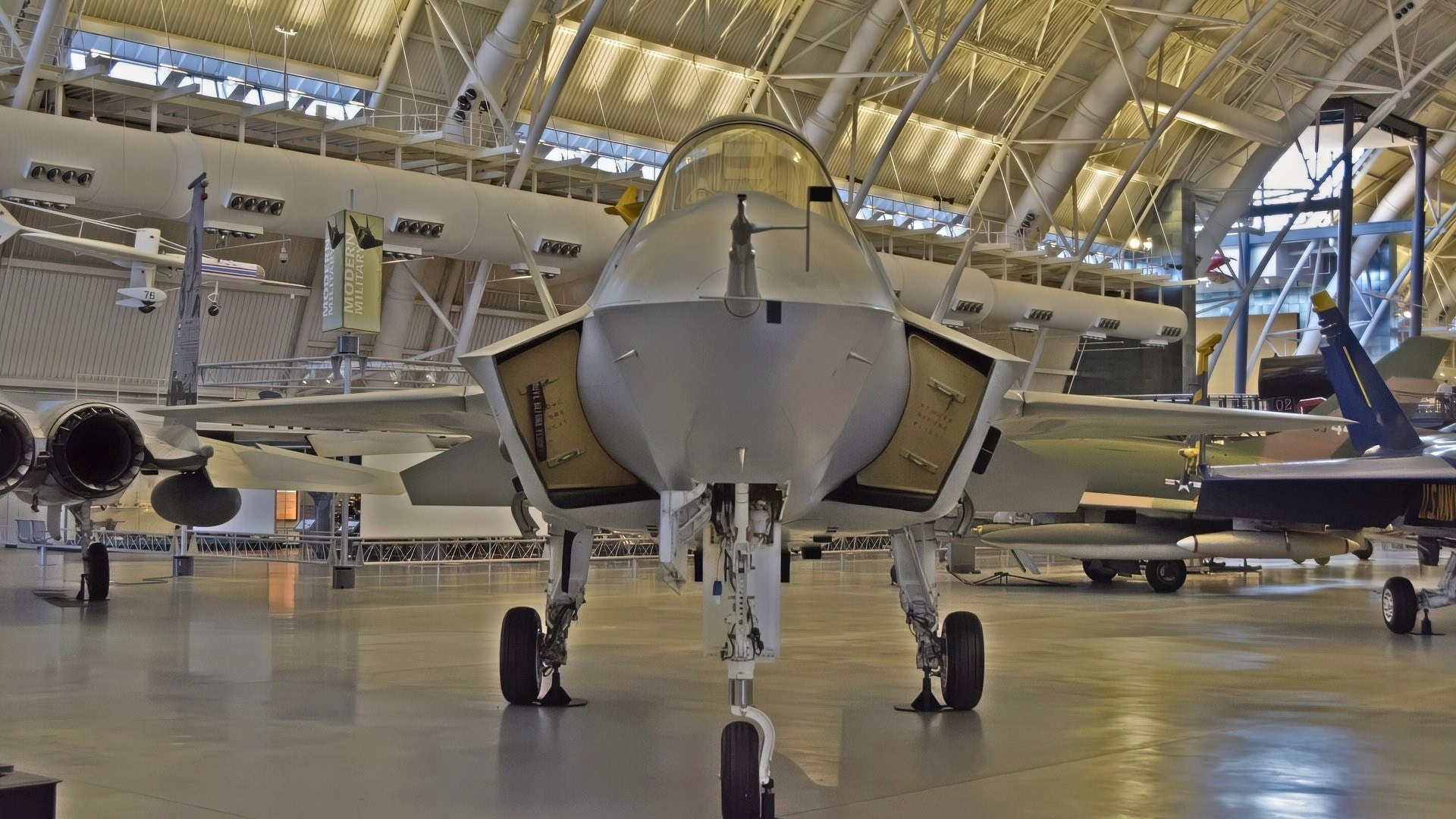
X-35. 19Fortyfive.com field visit.
The aircraft’s nose was redesigned to accommodate its radar, its canopy was changed into a more standard bubble configuration, and the intakes were also redesigned with a slight underbite and to look less ‘gaping.’
The Stealth Fighter That Never Was
Regardless of its qualities, the X-32 lost the JSF competition.
The decision to develop the X-35 into the F-35 was probably the right call, even given the controversy surrounding the aircraft.
Had the X-32 been chosen instead, the JSF program probably would have played out the same.
Although Boeing designed the aircraft to be cheaper to manufacture, the main roadblocks for the F-35 were not the airframe, but its avionics and stealth coatings, both of which were delayed.
Had the X-32 been built, it likely would have been as controversial as the F-35, if not more so thanks to its unsightly appearance.
About the Author: Isaac Seitz
Isaac Seitz, a Defense Columnist, graduated from Patrick Henry College’s Strategic Intelligence and National Security program. He has also studied Russian at Middlebury Language Schools and has worked as an intelligence Analyst in the private sector.