
WHAT YOU NEED TO KNOW
- More than 100 energy innovation exhibits are appearing at the Pentagon during a three day War Department expo.
- Golden Dome power requirements include directed energy systems, advanced sensors, radar and high energy microwave systems.
- TRISO fuel, Janus, ANPI and VALKRE support domestic nuclear capabilities for installations, Earth and space.
- The War Department is aligning funding programs to move useful private sector technology into warfighters’ hands.
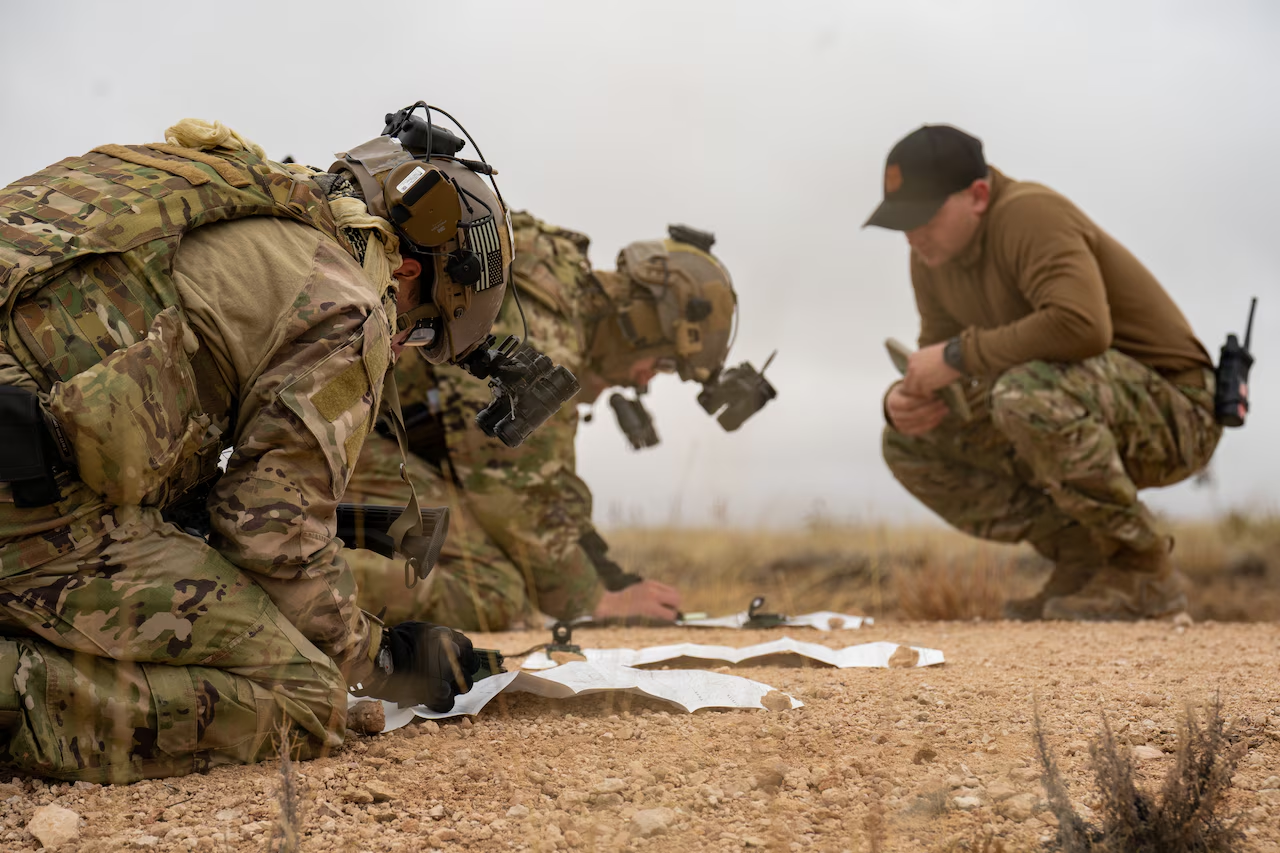
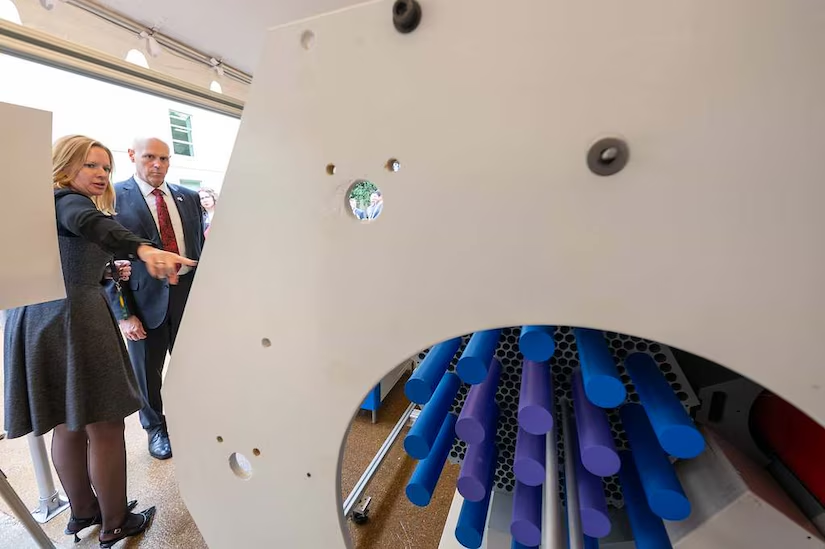
More than 100 energy innovation exhibits are on display at the Pentagon for three days, bringing Army, Navy and Air Force projects together. The lineup includes the Army’s Tactical Microgrid Standard, a Navy system using microwaves to beam limitless power from space and the Air Force’s METEOR power system.
The Energy Sentry expo began today with a focus on securing energy for forces abroad and installations inside the United States. The event treats operational and installation energy as parts of the same military challenge.
Dale R. Marks, assistant secretary of war for energy, installations and environment, rejected the old division between those missions. “For too long, defense planners operated under a false construct,” he said, adding that the seam between installation and operational energy has become irrelevant.
Marks said American adversaries do not distinguish between a microgrid in Georgia and a generator in the Pacific. They could target domestic grids powering control centers, logistics hubs and deployment platforms rather than confronting warfighters on a distant battlefield.
Gold. Upgraded. Buy real gold from $1. Store it in America. Sell it with one click.
“Our installations are warfighting platforms, and we have to treat them that way. … If the power at home is vulnerable, our force projection is compromised before a single boot hits the ground,” Marks said.
The expo highlights War Department and military service efforts to confront energy security threats at home and abroad. Marks identified four central focus areas: Golden Dome for America, nuclear capabilities, space and energy superiority.
Image Credit: DoW
Golden Dome will require substantial power for directed energy systems, advanced sensors, high energy microwave systems and advanced radar. “We’re delivering the energy backbone for [the] Golden Dome,” Marks added.
This Could Be the Most Important Video Gun Owners Watch All Year
Directed energy systems can lower the cost per shot and increase magazine depth, but Marks described them as “power-hungry.” The War Department must meet that demand for Golden Dome to succeed across its sensors, radar and interceptors.
“Energy is the lifeblood of the entire Golden Dome kill chain,” Marks said. He identified the Army’s Tactical Microgrid Standard and the Navy’s Common Operational Resilience and Energy Storage as two systems that can help support the initiative.
The department is also accelerating development of tristructural isotropic particle fuel, known as TRISO, for advanced reactors. The effort supports a domestic nuclear fuel supply chain and Army and Air Force nuclear power programs at military installations.
The Army’s Janus program seeks commercially owned and operated nuclear microreactors at domestic installations. The Air Force effort is called the Advanced Nuclear Power for Installations program, or ANPI.
“We’re ensuring that we never rely on a strategic competitor for our nuclear fuel,” Marks said. The department is also working with NASA on the Versatile Autonomous Kilowatt-Class Reactor Experiment project, called VALKRE, for nuclear reactor technology used on Earth and in space.
Marks said VALKRE supports President Donald J. Trump’s national initiative for American space nuclear power. He also described a shift toward maneuvering orbital forces that require space logistics and refueling capabilities.
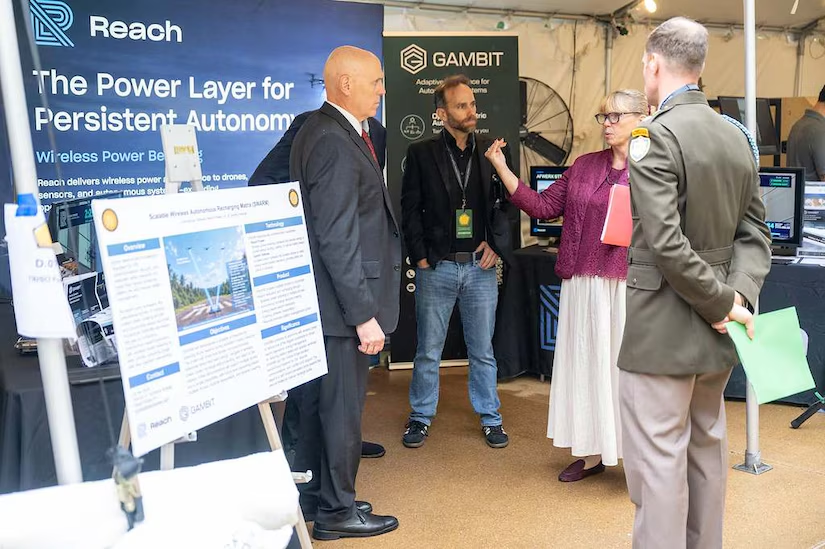
Image Credit: DoW
Two Navy technologies at the expo address power in space and power delivered from space. They are the Assured Space Power Initiative and an exhibit demonstrating limitless power from space, which Marks said could deliver energy to the farthest reaches of Earth.
Wireless energy transmission across space and ground could resupply remote sensors, unmanned aerial vehicles and isolated units. Marks said commanders also need real time, energy informed information for effective decisions.
Tactical microgrids, vehicle centric power systems and fast forming microgrids can continue operating when supply chains are disrupted. At installations, the department is pairing microgrids with long duration energy storage and cyber protections intended to help bases withstand cyberattacks or physical disruption.
The War Department is also trying to move private sector technology through the difficult period between laboratory success and a fully funded acquisition program. Marks cited four funding efforts, including the Operational Energy Capital Improvement Fund, Operational Energy Prototyping Fund, Strategic Environmental Research and Development Program and Environmental Security Technology Certification Program.
“These programs ensure that energy innovation reaches the warfighter,” Marks said. He emphasized that limited funds must support technology troops can deploy, operate and sustain even when supply chains become unreliable.
Marks said operators are being integrated into development and deployment from Day 1. The process brings innovators, industry and operators together while keeping the test brutally simple: “Will we deploy with this?”
Gold is the oldest answer. SoundMoney makes owning it as easy as the apps you already use.
The opinions expressed by contributors and/or content partners are their own and do not necessarily reflect the views of LifeZette. Contact us for guidelines on submitting your own commentary.
Read the full article here