
Many of the cartridge and bullet improvements we see today are incremental gains in the unrelenting effort to improve and fine-tune our shooting tools. But when the .220 Swift was introduced in 1935, it was light years ahead of every other standardized cartridge. At 4100 fps with a 48-grain jacketed soft-point bullet, it was more than 1000 fps faster than the nearest production round. This gave varmint shooters unmatched trajectory and the ability to strike down coyotes and groundhogs from unbelievable distances.
After a run of nearly 30 years, the .220 Swift began to fade into shadows of other .224 cartridges, and there are few rifles being chambered for it today. The factory introduction of the formerly wildcatted 22 Creedmoor, however, has sparked claims that we are just hewing another stone wheel. The .220 Swift already did everything the 22 Creedmoor does, critics say, and did it better. Taking a closer look at how the old Swift stacks up against the modern Creedmoor is both testament to just what an advancement the Swift was — and a master class in what good case design and bullet efficiency does for us today.
.220 Swift
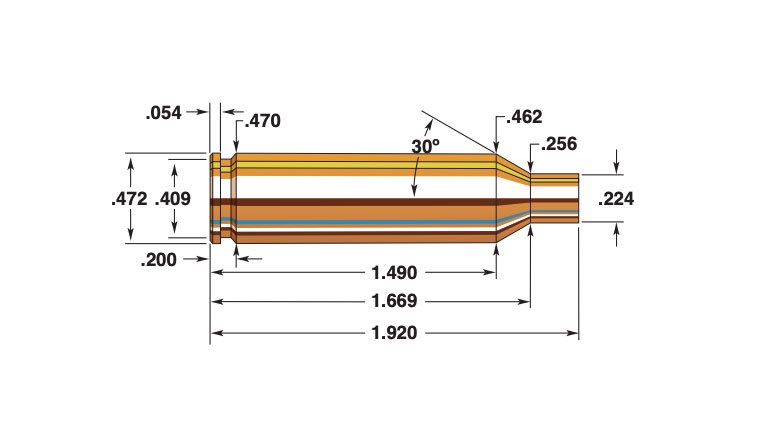
The .220 Swift was brought to market in 1935 as a result of Winchester’s efforts to produce a hyper-speed, 22 Swift cartridge. Efforts had already been underway to improve upon cartridges like the .22 Savage Hi Power and .22 Hornet by necking down the .250-3000 Savage case. This wildcat, often known as the 22 Varminter or 22 Wotkyns Original Swift, remained popular until 1965 when it was standardized as the .22/250 Remington.
Winchester took a different approach. They selected the 6mm Lee Navy, an obsolete cartridge from 1895, as the parent case for what became the .220 Winchester Swift. The Lee Navy case had the appropriate capacity to allow great velocity and, to make it a plug-and-play fit with their standard Model 54 bolt face, Winchester widened the rim to .473 inches — same as the .30/06.
The .220 Swift was rolled out, chambered in 26-inch barrels with a 1:14-twist, and produced 4100 fps of muzzle velocity with Winchester’s standard 48-grain load. It was chambered by Winchester until 1964, and was still chambered by manufacturers such as Ruger and Sako for decades longer. It was, and is, an excellent varmint cartridge, and notable figures like Frank Glaser contributed to it’s fame by killing wolves, moose, and grizzlies with it. Many accredit the demise of the .220 Swift to the rise of the .22/250, but former OL shooting editor Jack O’Connor wrote, in 1963, that it was the .222 Remington that put the great Swift under.
.220 Swift Specs
- Parent Case: 6mm Lee Navy
- Case Capacity: 47 Grains H2O
- Shoulder: 21 degrees
- Max COAL: 2.680 inches
- SAAMI Twist Rate: 1:14 inches
- Bullet Weight: 34 to 60 grains
- Powders: Fast-medium — CFE223, Varget, StaBall Match, Accurate 2520
.220 Swift Today
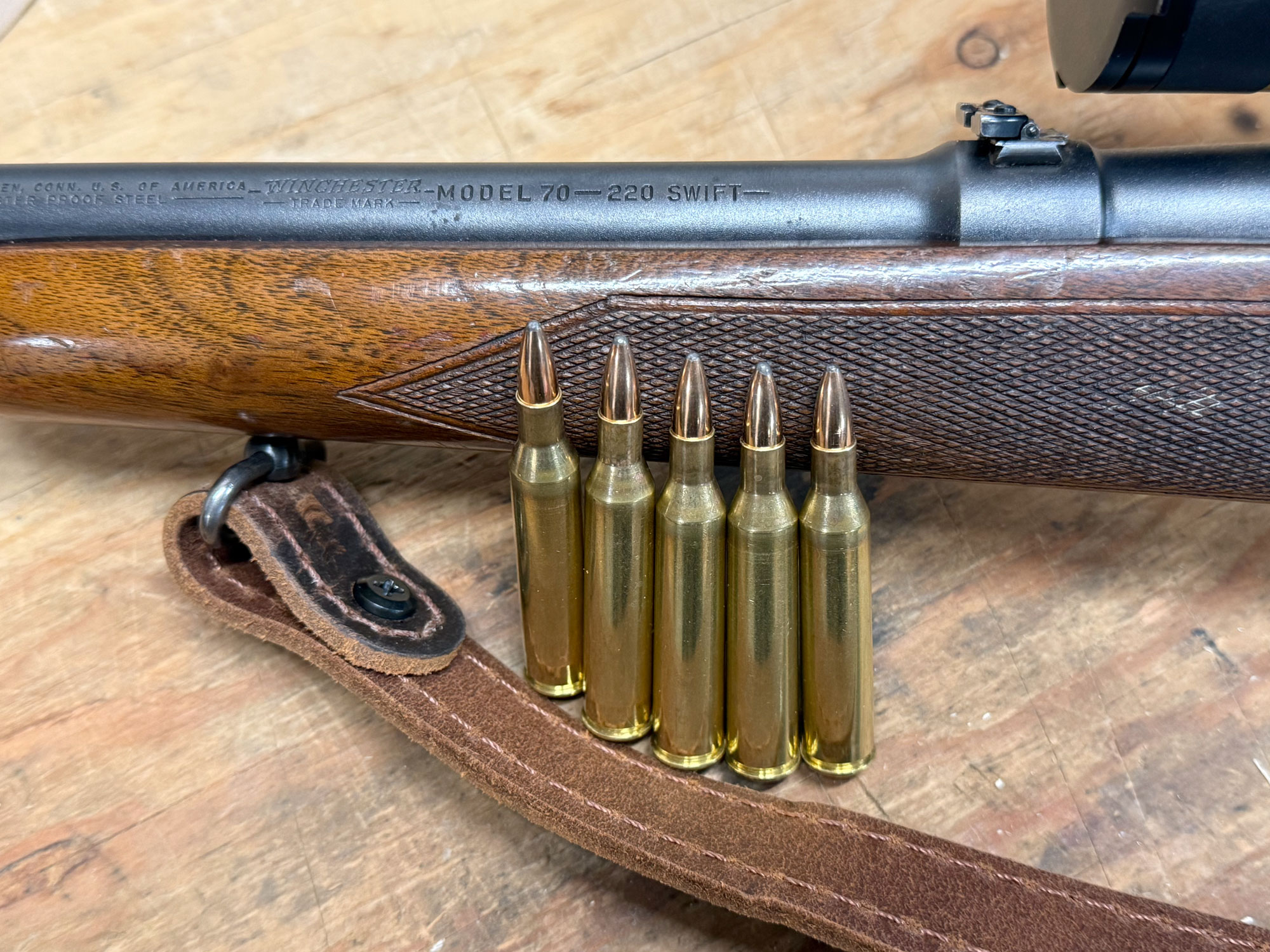
To compare the .220 Swift to the 22 Creedmoor, I purchased a 1954 Model 70 Winchester with a 26-inch barrel and 1:14 twist rate. During the Swift’s heyday, it was top dog. With the degree of uncertainty involving 70-year-old rifles, I wasn’t planning to place my bets on the gun’s accuracy. Rather, I wanted to see the real velocity potential of the cartridge in a period-correct rifle. I first tried the only factory load I could get my hands on — Hornady’s 55-grain V-Max — and discovered that the barrel did not stabilize that bullet well in cold temperatures. With handloaded bullets like the 40-grain V-Max, 44-grain Hammer Hunter, and 34-grain McGuire Copper rose, accuracy was quite good — and velocities were impressive.
Highest Average Velocities
Best Powder Results
As is often the case, my highest velocities did not correlate to my best accuracy results. I achieved best velocities with light bullets using CFE223, a high-energy, fast-burning powder. Accuracy was acceptable, but I noted that velocity was not very consistent in cold temperatures. I regularly saw velocities vary between 4380 fps and 4500 fps. I found StaBall Match and Varget work well with all these bullets, produce better consistency, and print a lot of sub-inch groups — at the cost of about 150 fps with the lighter 34- and 40-grain bullets.
22 Creedmoor
Like the .22/250, the 22 Creedmoor existed as a wildcat for many years before it was standardized in 2024. Similar to the Swift, the 22 Creedmoor was developed to increase the performance of the .224 bore, though with the tools and knowledge available to us now the definition of “better performance” has changed.
Related: 22 ARC vs. 22 Creedmoor Shootout: A 3,000-Round Range Test
Anyone with eyes can see that factory ammunition velocities of the 22 Creedmoor don’t match those of the .220 Swift. It’s not even close. So how could it rival the king of the .22s? The answer, or hope, was that leveraging heavy-for-caliber, efficient bullets provides better downrange dividends than spectacular muzzle velocity with lighter slugs.
22 Creedmoor Specs
- Parent Case: 6.5 Creedmoor
- Case Capacity: 52.6 Grains H2O
- Shoulder: 30 degrees
- Max COAL: 2.700 inches
- SAAMI Twist Rate: 1:8 inches
- Bullet Weight: 34 to 90 grains — depending on bullet construction
- Powders: Medium to slow — H4350 to H1000, Retumbo, and RL26 (with 69- to 90-grain bullets)
The 22 Creedmoor Thrives with Heavier Bullets
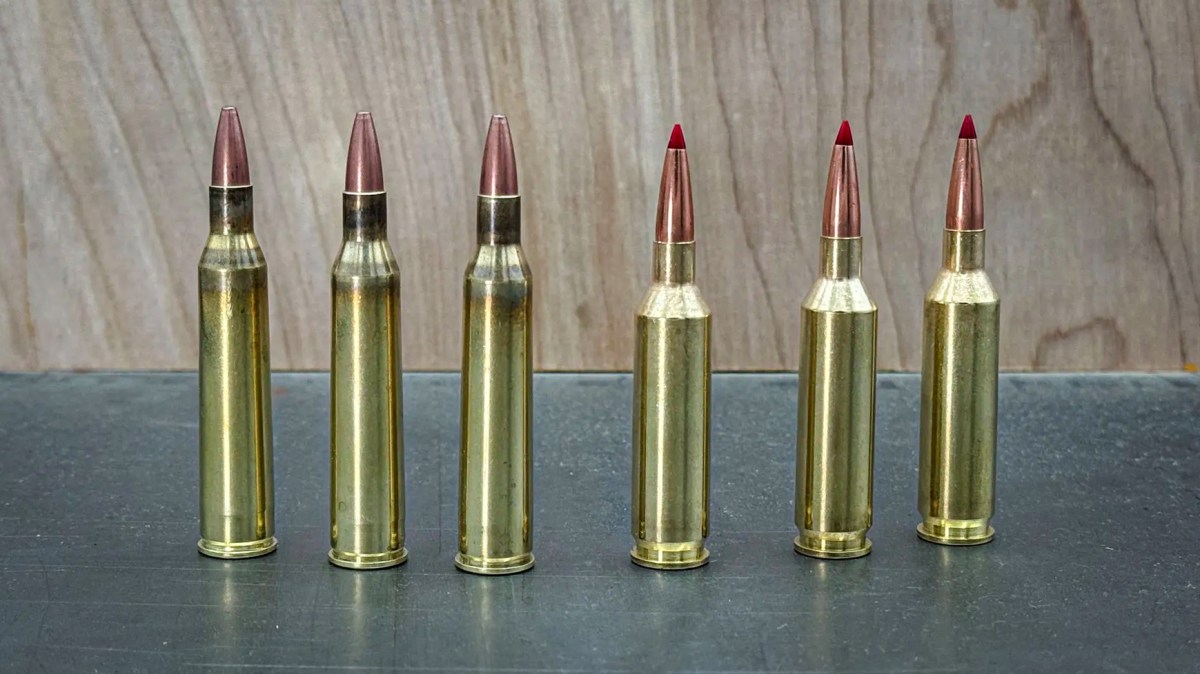
A result of modern cartridge design principles, the 22 Creedmoor falls in line with many other cartridges that offer a steep 30-degree shoulder, very little case taper, the head height to allow long bullets to be seated properly, and tight headspace and freebore specs. It’s designed to work with heavier .22-caliber bullets from 60 to 80 grains. On paper these more efficient bullets, which may start at lower muzzle velocities, quickly catch up to lighter bullets, which lose speed more quickly. Additionally, the heavier bullets resist wind drift at orders of magnitude better than the ultralight speed demons. The 22 Creedmoor can be loaded with lighter bullets, but that’s self defeating and offers no real advantage.
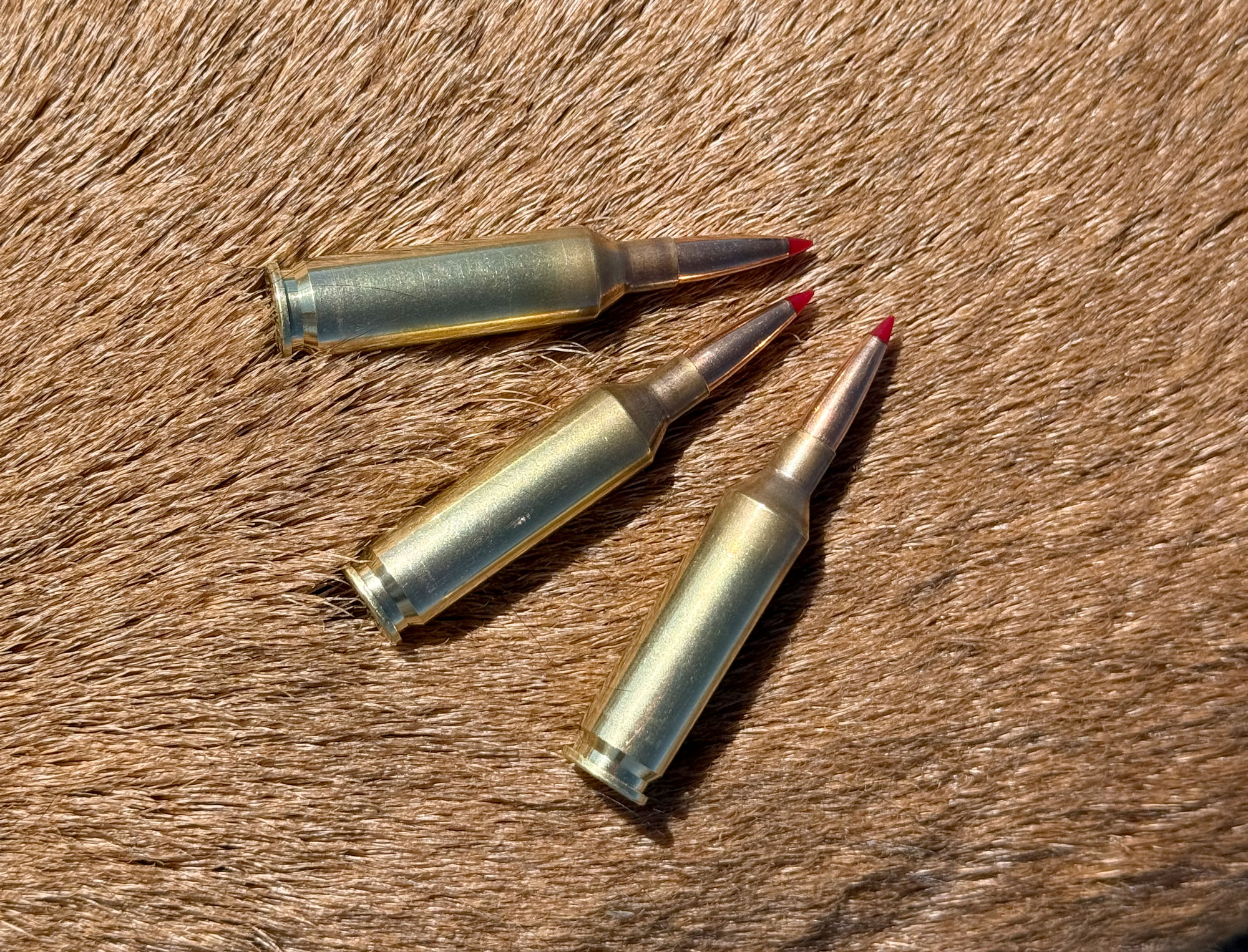
.220 Swift vs. 22 Creedmoor: How Do They Stack Up?
When considering whether the 22 Creedmoor is better than the .220 Swift, we need to examine two things. First, we must determine which actually has the maximum potential velocity with the same bullet. This will settle a lot of the what-ifs about fitting the old Swift with a tighter-twist barrel to match the Creedmoor’s heavier bullets. Second, we must look at downrange trajectory to see if the blistering muzzle velocity with lighter bullets really offers an advantage.
For these comparisons, I fitted a Stiller Wombat action with a 24-inch SAAMI standard 1:8-twist 22 Creedmoor barrel. This is two inches shorter than the barrel on my Swift and, all else equal, should result in a 60 to 100 fps handicap. If the Creedmoor can still match or best the velocity of the Swift, there’s not much to debate about its efficacy.
Warp Speed
The 22 Creedmoor has a slight advantage over the Swift in case capacity and, because capacities are similar, they use similar speed powders for the same bullets. To evaluate whether the Swift truly has a higher potential velocity, I tested both cartridges with lightweight monolithic bullets: a 34-grain McGuire Copper Rose and 44-grain Hammer Hunter. The best results in the Swift were using StaBall Match, and I simply did a cautious work-up with Varget in the 22 Creedmoor because little data exists with bullets in that weight class for the 22 CM.
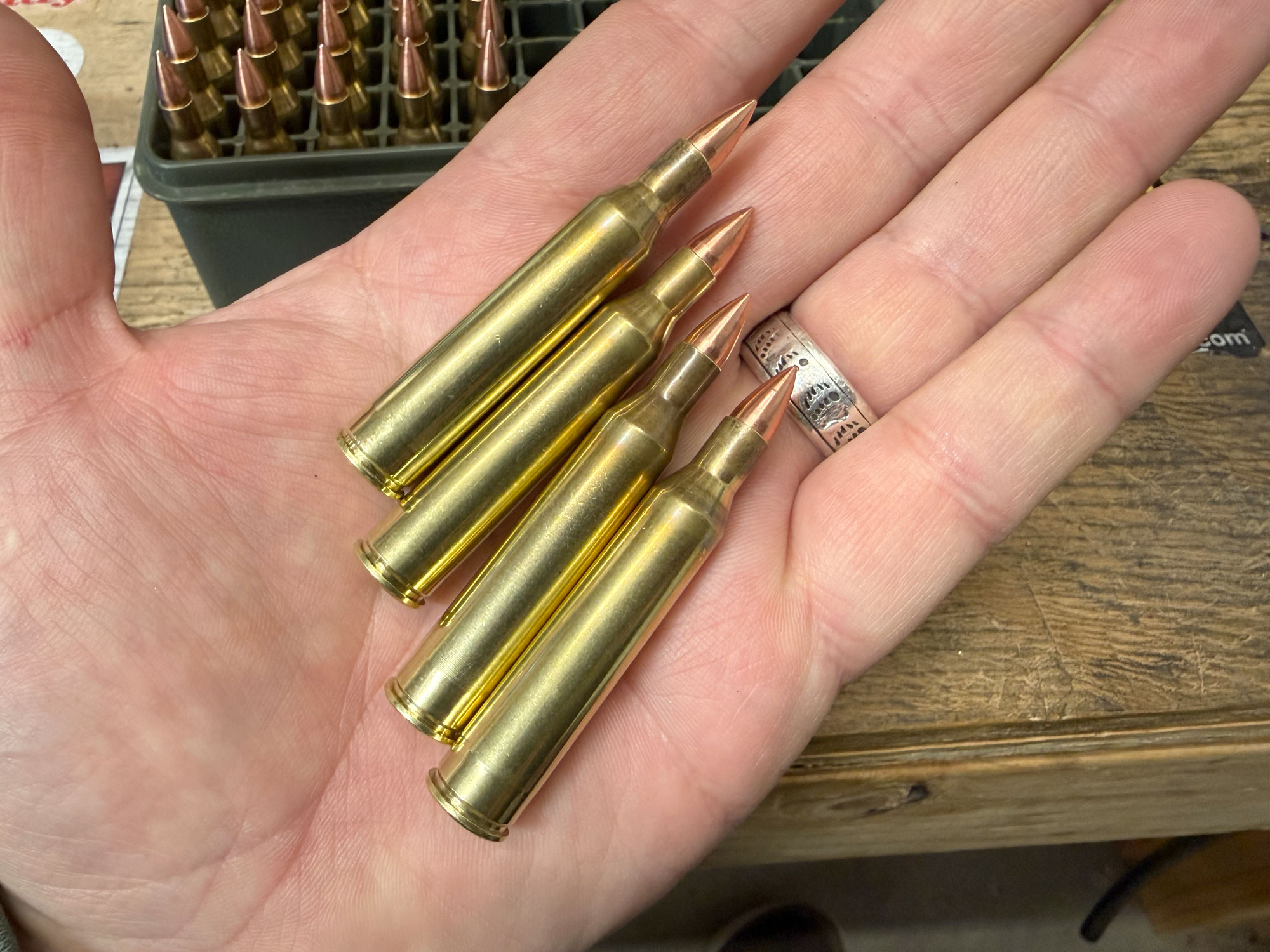
34-Grain McGuire Copper Rose
- .220 Swift (CFE223): 4,475 fps
- 22 Creedmoor (Varget): 4,483 fps
44-Grain Hammer Hunter
- .220 Swift (StaBall Match): 4,154 fps
- 22 CM (Varget): 4,313 fps
Even considering the two-inch shorter barrel on the 22 CM, it’s pretty easy to see that its predicted advantage is correct. It’s likely that CFE223 would produce better velocities with the 34-grain bullet in the Creedmoor, but even with Varget, it’s a winner.
Downrange Performance
It’s tempting, when seeing dramatically larger muzzle velocities, to assert that one cartridge has a distinct advantage over the other. Many people consider this better performance and ignore all else. The mistake is that, without considering other factors, this does not tell us which will have better performance downrange — whether it be velocity, trajectory, or maintained energy.
While hyper-fast velocities do provide a flat trajectory and they gave the long-distance hunter a cutting-edge advantage at the time, more efficient bullets rule the roost. Consider the trajectory and velocity figures below. A 69-grain ELD-VT leaving the muzzle 700 feet per second slower than a 40-grain V-Max is going the same speed at 200 yards, and has little more than an inch of trajectory difference to that point. Beyond that, it leaves the lighter bullet in the dust. Even the 80-grain ELD-X, leaving the muzzle 1000 fps slower than the 40-grain V-Max, has surpassed it at 300 yards.
Trajectory (inches)
| Cartridge / Bullet / Velocity | 100 yards | 150 yards | 200 yards | 250 yards | 300 yards | 350 yards | 400 yards | 450 yards | 500 yards | 550 yards | 600 yards |
| .220 Swift / 40-gr V-Max / 4207 fps | .65 in. | .72 in. | 0 in. | -1.64 in. | -4.38 in. | -8.4 in. | -13.96 in. | -21.36 in. | -30.98 in. | -43.32 in. | -58.97 in. |
| 22 CM / 69-gr ELD-VT/ 3547 fps | .91 in. | .89 in. | 0 in. | –1.82 in. | -4.64 in. | -8.56 in. | –13.65 in. | -20.02 in. | -27.77 in. | -37.03 in. | -47.93 in. |
| 22 CM / 80-gr ELD-X / 3210 fps | 1.23 in. | 1.13 in. | 0 in. | -2.23 in. | –5.65 in. | -10.33 in. | –16.38 in. | -23.89 in. | -32.98 in. | -43.76 in. | -56.37 in. |
Retained Velocity (fps)
| Cartridge / Bullet / Velocity | 100 yards | 150 yards | 200 yards | 250 yards | 300 yards | 350 yards | 400 yards | 450 yards | 500 yards | 550 yards | 600 yards |
| .220 Swift / 40-gr V-Max / 4207 fps | 3599 fps | 3325 fps | 3069 fps | 2826 fps | 2597 fps | 2380 fps | 2173 fps | 1977 fps | 1792 fps | 1620 fps | 1463 fps |
| 22 CM / 69-gr ELD-VT / 3547 fps | 3292 fps | 3170 fps | 3051 fps | 2935 fps | 2823 fps | 2713 fps | 2607 fps | 2503 fps | 2401 fps | 2302 fps | 2205 fps |
| 22 CM / 80-gr ELD-X / 3210 fps | 3002 fps | 2902 fps | 2805 fps | 2709 fps | 2616 fps | 2525 fps | 2435 fps | 2348 fps | 2262 fps | 2178 fps | 2095 fps |
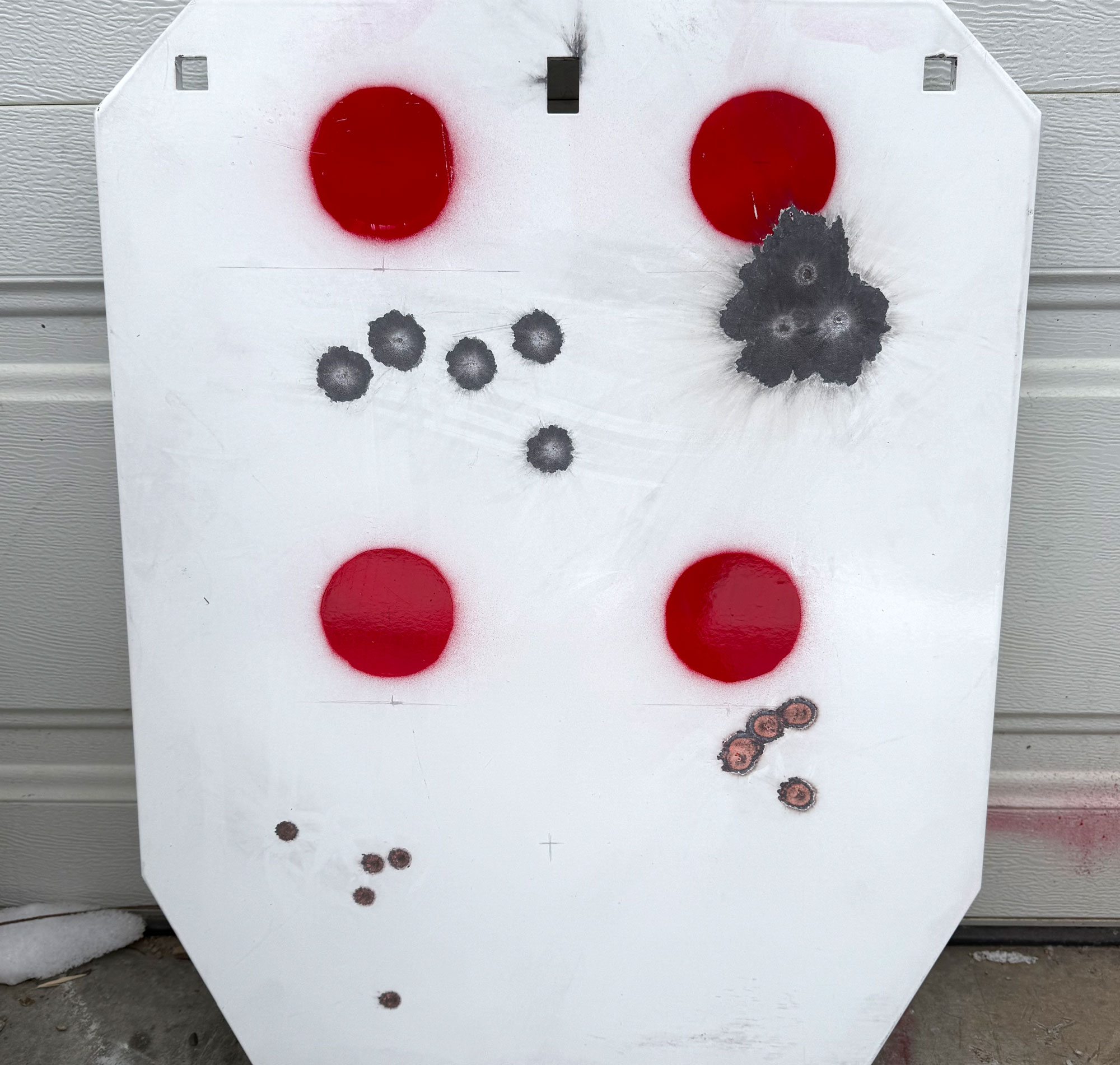
Ballistics tables are one thing, real life is another. To demonstrate this, in the video, I shot both the Swift and the Creedmoor side by side at about 350 yards with two loads each. In both cases, the more efficient bullets maintained a flatter trajectory than the lighter bullets at maximum velocity.
Final Thoughts
There are numerous levers we can pull to alter or improve a cartridge’s performance, but any way you cut it, the .220 Swift just cannot beat the 22 Creedmoor. But that doesn’t diminish how special the .220 Swift was, or the nostalgia we have for it. With modern bullets and powders, it’s even more effective than it was 90 years ago. The fact that it’s not the best performer any more shouldn’t discourage you from using it if you like it.
The Best Deer Hunting Rifles
Read the full article here

![University of Alabama Student Missing in Spain After Night Out at Barcelona Club [WATCH]](https://www.rvmnews.com/wp-content/uploads/2026/02/2026.02.02-04.34-rvmnews-6980d226081fa.jpg "University of Alabama Student Missing in Spain After Night Out at Barcelona Club [WATCH]")





![Eric Swalwell Drops Out of Governor Race Amid Growing Sexual Assault Scandal [WATCH]](https://www.lifezette.com/wp-content/uploads/2026/01/2026.01.18-06.53-lifezette-696d2c3be090e.jpg "Eric Swalwell Drops Out of Governor Race Amid Growing Sexual Assault Scandal [WATCH]")