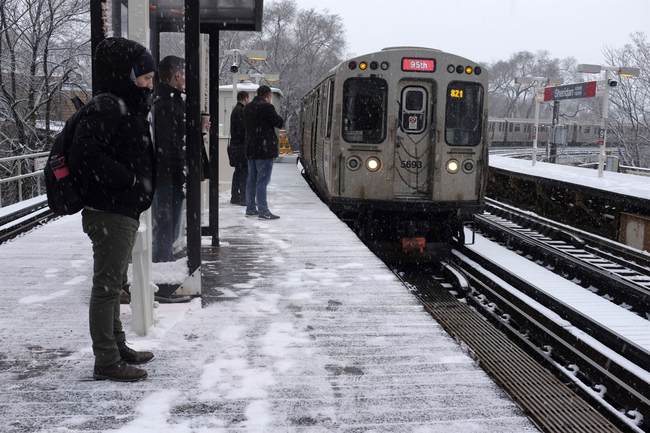

Riders on Chicago Transit Authority buses and trains might notice a few more police around on their morning commute today. The Chicago Police Department announced on Thursday that the city will be boosting security on public transit; a move that comes on the heels of the Supreme Court asking state and county officials to reply to the cert petition filed by plaintiffs in a case challenging the ban on lawful concealed carry on public transportation in the state of Illinois and the CTA specifically.
The increased officers also come as the city is implementing a new safety plan mandated by the feds, though it’s unclear whether the additional security on CTA property is an official part of that new strategy.
Earlier this week, Superintendent Larry Snelling sat down with the ABC7 I-Team to talk CTA safety.
“We need to find a way to keep people who are offending on the CTA, who are acting out violently against other people,” Snelling said. “We need to find a way to keep those people away from CTA.”
The city can’t pre-screen everyone who uses a train or bus in Chicago and deny passage to those with a propensity for violence. City officials could, however, allow people to lawfully carry a firearm on CTA property so that if they are attacked by one of these violent offenders they have the means to fight back. Instead, they’re engaging in a bit of public safety theater.
CTA and CPD leaders said the surge will increase the number of sworn officers assigned through the Voluntary Special Employment Program to an average of 120 per day, up from the typical daily staffing level of 77.
The program relies on CPD members who sign up to patrol CTA during their scheduled days off and serves as a supplement to the police department’s Public Transportation Section and district patrols. CTA has similar arrangements to draw officers from Forest Park, Oak Park, and Evanston.
Private security staffing will also see an increase, officials said. The number of canine security guards will rise from an average of 172 per day to 188, expanding one of the system’s most visible layers of security.
CTA Acting President Nora Leerhsen said the agency expects the expanded presence to bolster confidence among riders at a time when many have demanded safer platforms, trains, and buses.
“CPD officers are at the core of CTA’s multilayered security strategy and I value our partnership with [CPD] Superintendent Snelling and his staff as we continue our longstanding commitment to keep our riders safe,” Leerhsen said in a prepared statement.
Even with 300 extra security officials serving every day, riders may not notice an increase in staffing. The CTA rail system has 146 different stations, and there are more than 10,000 bus stops spread out over a six county area. The CTA is in service 24 hours a day, those 300 extra boots on the ground will be split up among different shifts, which will lessen their impact even more.
I hope that the surge will be beneficial to CTA riders and employees, but this strategy is no substitute for allowing people to exercise their right to self defense in a place where violence is commonplace. The website CWB Chicago had two different stories about violent assaults on CTA trains just yesterday, and reports of shootings, stabbings, and armed robberies aren’t difficult to find even if they’re rarely front-page news.
The immolation of a CTA rider, though, was not only big news in Chicago but across the country, and the public reaction to that horrific crime may be another factor in Chicago surging security to CTA property.
I don’t know if it will make riders feel safer, but I know that this surge does nothing to negate the arguments raised by the plaintiffs in Schoenthal v. Raoul. Cities and states can’t just slap a “gun-free zone” label on every crowded space open to the public where both “vulnerable populations” (i.e. children) and some level of law enforcement might be found, which was the primary argument raised by the Seventh Circuit Court of Appeals in upholding the carry ban on public transit.
The right to bear arms in self-defense on public transportation is critically important for a number of reasons, including the fact that riders can easily become victims of violent crimes on train cars and buses where no police are present. The ban also prevents concealed carry holders from carrying before or after they use public transportation, essentially depriving them of their ability to lawfully bear arms throughout the entirety of their day. Security surge or not, CTA riders deserve access to their Second Amendment rights, and the Supreme Court can ensure they have it if they grant cert in Schoenthal v. Raoul when they consider the case in conference early next year.
Read the full article here





![Rep Maxine Waters Tells ICE Protesters to Fight at LA ICE Protest as Riots Erupt, Federal Officers Targeted [WATCH]](https://www.rvmnews.com/wp-content/uploads/2025/01/2025.01.11-04.09-rvmnews-678297b7db6dc.jpg "Rep Maxine Waters Tells ICE Protesters to Fight at LA ICE Protest as Riots Erupt, Federal Officers Targeted [WATCH]")