
Fake constitutionalism is increasingly becoming a problem in America. There is a marked tendency among public officials, political commentators, and media figures to invoke bogus constitutional principles or bogus interpretations of genuine constitutional principles. They do this mainly to shift blame to their political opponents or to shield the otherwise unacceptable behavior of their political allies.
Fake constitutionalism undermines constitutional government by spreading misconceptions about what our Constitution means.
The First Amendment certainly protects a reporter’s right to publish information. But it does not protect unlawful activity in pursuit of information.
Regrettably the First Amendment has become one of the most fruitful areas in which fake constitutionalism thrives. It is now commonplace for Americans — even constitutional lawyers — to make inflated claims about the protections afforded by the First Amendment, extending its scope far beyond the safeguards America’s founders had in mind when they debated and wrote this essential provision of our Constitution.
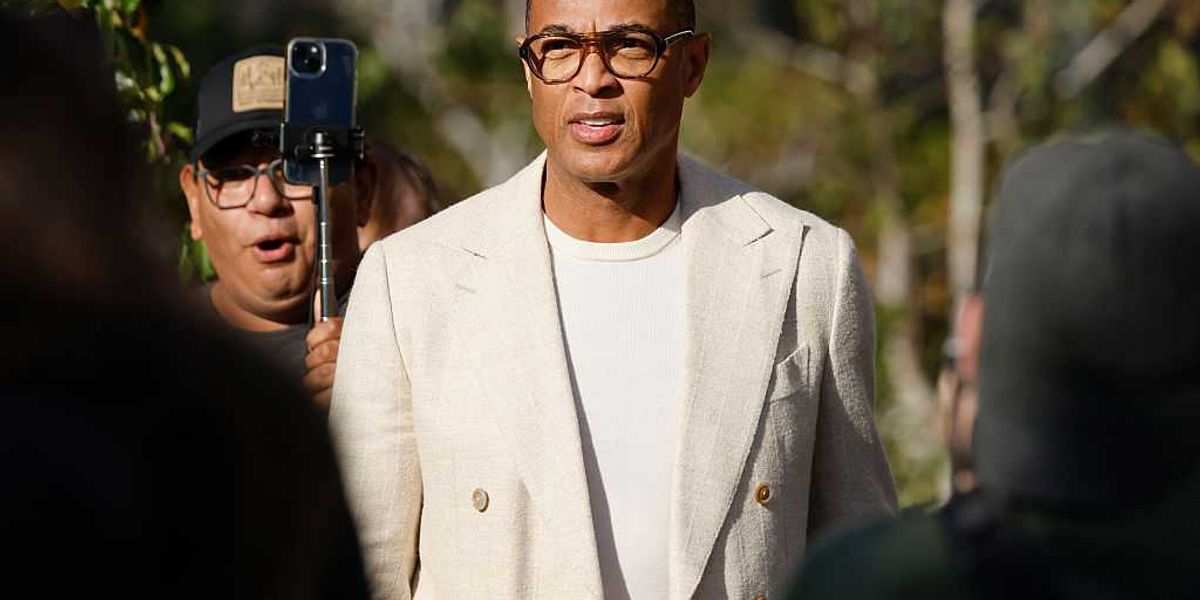
The most recent case in point is the misplaced outrage over the supposed violations of the First Amendment involved in the arrest of Don Lemon.
Lemon, formerly of CNN, was taken into custody on Jan. 30 for his part in disrupting a service at Cities Church in St. Paul, Minnesota. Lemon accompanied and filmed protesters who stormed the service to express their disapproval of Immigration and Customs Enforcement operations in Minneapolis. (An elder of the church is reportedly an ICE agent.) The Department of Justice has charged a number of the disruptors, including Lemon, with violating the FACE Act and conspiracy to deprive others of their civil rights — in this case, their right to gather and worship God in peace in their own church.
In his statement to the media, Lemon’s lawyer, Abbe Lowell, characterized his client’s arrest and the filing of federal charges against Lemon as an “unprecedented attack on the First Amendment.”
“Don has been a journalist for 30 years,” Lowell continued, “and his constitutionally protected work in Minneapolis was no different than what he has always done. The First Amendment exists to protect journalists whose role it is to shine light on the truth and hold those in power accountable.” Arguments to this effect have also been made by countless journalists and commentators incensed by the idea that a journalist might be held to account for his unlawful behavior.
Contrary to Lowell, the First Amendment does not afford any protection to journalism as an activity or to journalists as a class. Instead it protects certain more narrowly defined activities, namely speech and publication. This is evident from the language the framers of the amendment chose to express their meaning: “Congress shall make no law … abridging the freedom of speech, or of the press.”
RELATED: Unsealed indictment against Don Lemon cites his own comments on livestream from ‘takeover’ at church
Photo by Arturo Holmes/Getty Images
The scope of the First Amendment’s protection is also indicated by the early controversies over its meaning, most notably the debates over the Sedition Act of 1798. Celebrated American statesmen and jurists like Thomas Jefferson and James Madison condemned the act, while others of equal stature, such as Alexander Hamilton and Supreme Court Justice James Iredell, defended it.
The argument concerned the extent to which the government could punish certain kinds of publications. No one at the time, however, suggested that the First Amendment protected otherwise unlawful acts done in the pursuit of publishing information.
The narrow — and reasonable — original understanding of the First Amendment is also evident in the works of the great early American legal commentators such as Justice Joseph Story. In his celebrated “Commentaries on the Constitution of the United States,” Story wrote:
It is plain … that the language of [the First Amendment] imports no more, than that every man shall have a right to speak, write, and print his opinions upon any subject whatever, without any prior restraint, so always, that he does not injure any other person in his rights, person, or property, or reputation; and so always, that he does not thereby disturb the public peace.
As Story’s remarks make clear, even the right to speak and publish is limited by certain principles necessary to a just public order and the protection of other essential rights. Even more to the present purpose is Story’s argument that the First Amendment protects only the right to speak and publish — that is, rights that belong to every man, not just to journalists.
Rejecting this traditional understanding of the First Amendment and accepting the Abbe Lowell version would lead to ridiculous and unacceptable consequences. It would mean that professional journalists must be treated as a privileged class and must be allowed to break the law in the pursuit of a story.
But practically nobody thinks this should be the case, and it is certainly not how the law operates in its ordinary course.
If a reporter is speeding at 100 miles per hour through a town to get to the scene of an important story, he will be stopped by the police and charged with violating the speed limit and reckless driving. If this reporter were to cause an accident and kill someone, he would be charged with negligent homicide or manslaughter — and the fact that he committed the crime in connection with his desire to engage in activities that the First Amendment protects would be totally irrelevant to his defense.
The First Amendment certainly protects a reporter’s right to publish information. It does not, however, protect unlawful activity undertaken in pursuit of information, which is often protected by principles of privacy and ownership recognized in law.
Lemon and the protesters are guilty of the same misconduct, and the First Amendment is of no help to either.
It is undoubtedly a news event when a potential candidate for public office meets with advisers at his home to decide whether to launch a campaign. But this would not give someone like Don Lemon the right to barge into the home over the objections of those who live there and “cover” the event. He would be guilty of trespassing or home invasion and liable to legal punishment.
This example points to the inadequacy of the arguments made by those who have condemned the disruption of the church service but claimed that Lemon, as a journalist, should not be among those charged.
Such defenders seem to think that the other disruptors did something unlawful but that Lemon was merely there to report on the event. But his relevant actions were the same as those of the others involved. They came into the church uninvited during a service at which the worshipers had been peacefully conducting their own business — and in fact exercising a constitutional right clearly stated in the First Amendment. This disruption, of which Lemon was a part, prevented the congregants from carrying on the activities they had a right to pursue.
Charging the other protesters but not Lemon would treat him as a member of a privileged class that has a right to break the law.
This would introduce an unacceptable incoherence into our constitutional law. To the extent that the protesters wanted to make a political point, they also held views protected by the First Amendment. They erred, however, in choosing an unlawful method by which to make their complaints heard — just as Lemon erred in the method by which he tried to get his story.
Lemon and the protesters are guilty of the same misconduct, and the First Amendment is of no help to either.
Suppose a case in which the legal and constitutional issues are the same, but the actors’ political identities are different. Suppose, for example, a chapter of the Ku Klux Klan, outraged by federal civil rights enforcement, decides to disrupt the service at a predominantly African-American church, of which a federal civil rights lawyer is a member.
Suppose further that the Klan brings along a sympathetic reporter and storms the church, shouting insults, while the reporter films the whole shameful episode. Would any decent American think this action was a legitimate form of First Amendment-protected “protest”? Or that the reporter who tagged along should be immune to the charges that would properly be filed against the other participants?
Of course not.
RELATED: When worship is interrupted, neutrality is no longer an option
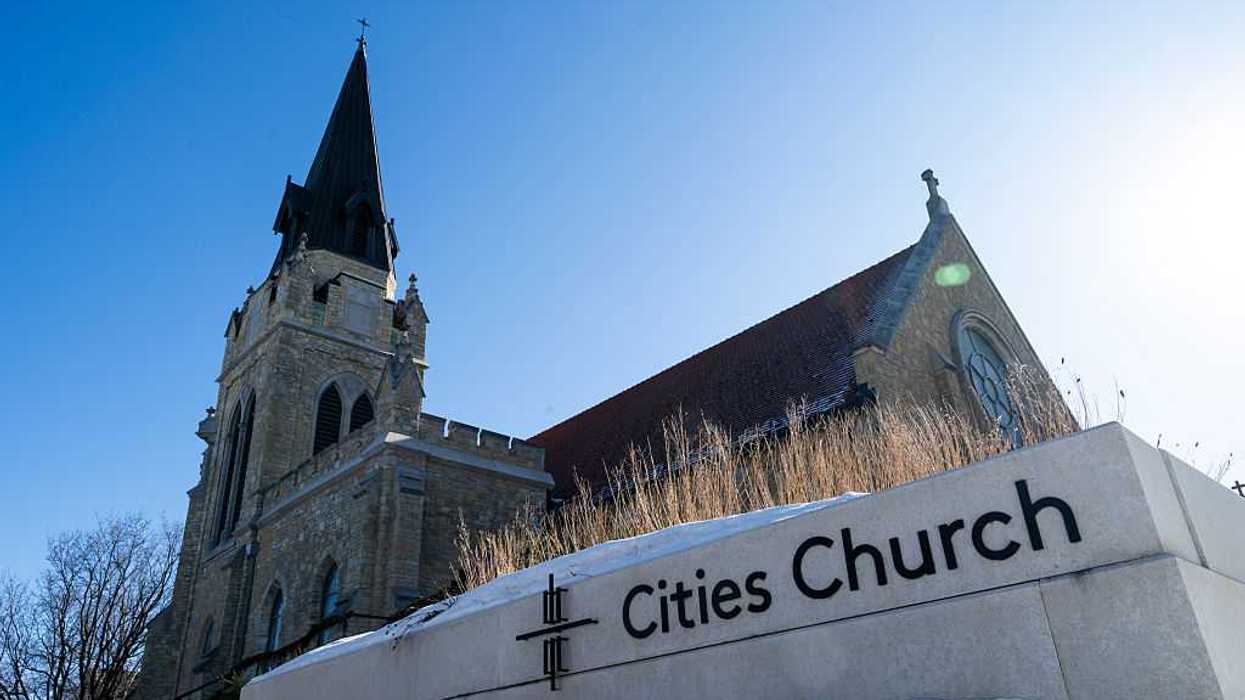 Photo by Stephen Maturen/Getty Images
Recall further Justice Story’s observation that the First Amendment’s protection of the right to speak and publish belongs to “every man.” This is a key principle affirmed by the Supreme Court in modern times. The great liberal Justice William Brennan, on more than one occasion, remarked that the First Amendment protects all Americans equally, not just the members of the professional, credentialed press. A blogger or a concerned citizen who circulates a newsletter has all the same First Amendment rights as someone who works for the New York Times or CNN.
This point is essential to further clarifying the unacceptable consequences that would result if we accepted the First Amendment defense of Don Lemon’s role in the Minnesota church disruption.
Because the amendment protects all Americans, and not only professional journalists, defending Lemon’s conduct as an activity protected by the First Amendment would mean that everybody could break the law and then claim to be engaged in “reporting.” Any concerned citizen with a recording device or a pad of paper could walk into a neighbor’s home, a local church, or, for that matter, the offices of CNN and then claim First Amendment immunity for disrupting the lives of other Americans pursuing legitimate activities.
No sensible person would embrace such a chaotic standard, which is certainly not required by the First Amendment.
Justice Story observed in his account of the First Amendment that “the exercise of a right is essentially different from an abuse of it. The one is no legitimate inference from the other.”
Story continued, “Common sense here promulgates the broad doctrine: so exercise your freedom, as not to infringe the rights of others, or the public peace and safety.” This is the way the founders thought about the rights they enshrined in the Constitution, and it is the only way to think about them that is consistent with a decent public order in which the rights of all are safe.
Editor’s note: A version of this article appeared originally at the American Mind.
Read the full article here




![Deep State Panic! Judicial Watch Drags 1.9 Million Hidden FBI Records Out of The Shadows [WATCH]](https://www.lifezette.com/wp-content/uploads/2025/05/2025.05.20-01.09-lifezette-682c7f16552e1.jpg "Deep State Panic! Judicial Watch Drags 1.9 Million Hidden FBI Records Out of The Shadows [WATCH]")