
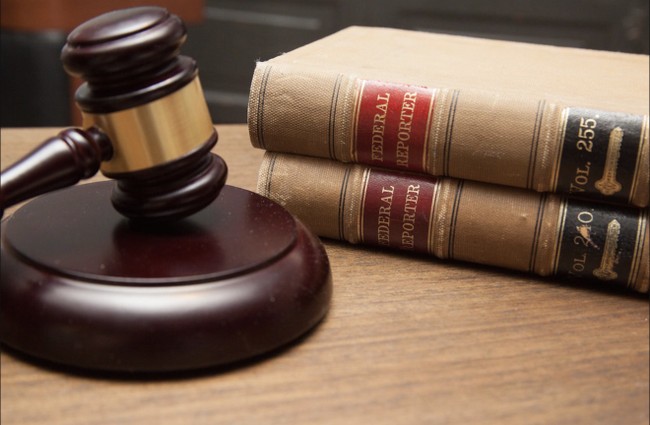

A Trump-appointed federal judge in Texas has upheld several of the Lone Star State’s “sensitive places” where lawful carry is prohibited, including racetracks, bars and restaurants that derive more than 51% of their profit from alcohol sales, and any place where high school, collegiate, or professional sporting events or interscholastic events are taking place.
The Firearms Policy Coalition has already announced its appeal of U.S. District Judge Mark Pittman’s decision, and there’s a good chance the Fifth Circuit will disagree with Pittman’s conclusions.
For one thing, Pittman heavily relied on the Ninth Circuit’s decision in Wolford v. Lopez, which is likely to be overturned, at least in part, by the Supreme Court later this year. In one instance, Pittman cited Wolford and several other lower court decisions that have held lawful carry can be banned almost anywhere children may be present to declare that the Texas prohibition on carry at interscholastic events is constitutionally permissible.
In order to come up with a historical analogue, Pittman looked back to Founding-era laws that did not actually forbid all adults from carrying in a school setting.
In and around the Founding era—as Plaintiffs note—there were “prominent” “restrictions” on “students’ possession and use of firearms” at “colleges and universities at the time of the Founding.” Those restrictions admittedly did not apply to non-students. But, the relevant point is that a majority of people in those settings were disarmed entirely. And the purpose—the “why”—of that regulation was to create a peaceful learning and social environment for the sake of the students.
Bans on college students possessing firearms on campus in 1791 is hardly akin to banning all adults from bearing arms at a track meet or municipal auditorium where a spelling bee is taking place. There simply is no Founding-era law that’s akin to the current statute in Texas, and without any evidence of a Founding-era tradition of banning all lawful carry in any kind of scholastic setting (even off-campus), the statute should be struck down.
The only other analogues Pittman could find were an 1870 Texas statute prohibiting firearms from “[a]ny church or religious assembly, any school room or other place where persons are assembled for educational, literary, or scientific purposes, or into a ball room, social party, or other social gathering . . . or any other public assembly”, an 1875 Missouri law, a 1903 Montana law, and a couple of short-lived territorial laws Pittman claimed were similar.
Even if we were to accept his Founding-era restrictions on college students carrying firearms as an appropriate analogue, a handful of ordinances from a handful of western states enacted over a period of more than 30 years is hardly evidence of a widespread and longlasting national tradition.
Pittman’s upholding of the Texas law prohibiting carry in bars and restaurants where more than 51% of revenue comes from alcohol sales was the result of similar overreach.
The American legal tradition includes two notable themes that predate and continue from the Founding through the nineteenth century. First, the Americans inherited and continued a legal tradition consisting of location-based prohibitions on carrying firearms in certain social settings. Second, the Founders also inherited and enforced a legal tradition that regulated the mix of firearms and alcohol. These legal traditions together provide precedent for the Texas statutes and are further confirmed by 19th century state laws prohibiting and restricting firearms in social settings centered around alcohol. While these may not perfectly resemble the Texas statutes, the Court need not identify a “historical twin.” Indeed, in Rahimi, there was no twin for the federal statute prohibiting those with a domestic violence restraining order from possessing a firearm. Yet, surety laws and going-armed laws led the Court to conclude that the ban on “the possession of firearms byt hose found by a court to present a threat to others fit[] neatly within that tradition.”
The reason why the Supreme Court said finding a “historical twin” was unnecessary in Rahimi is that there was no such thing as a domestic violence restraining order in 1791, so finding a twin would be an impossibility. There were, however, plenty of bars and restaurants serving alcohol and the time of the Founding, and while there were plenty of laws prohibiting the carriage of firearms while actively consuming alcohol, Pittman couldn’t cite any Founding-era laws that prevented carrying firearms in places where alcohol was served. Pittman tried to address this issue, but I don’t think he did a great job of rationalizing his view.
First, the fact that the Legislature could have made these laws applicable in a wider range of settings does not undermine the fundamental import of these laws. The lawmakers believed they had the authority to prevent firearms violence committed by intoxicated individuals by regulating or banning the use of firearms by such individuals or in such settings. There is no evidence that their lawfulness was ever in question. Second, these laws likely assumed that practically everyone was drinking in these settings, and the Virginia law specifically prohibits shooting by anyone at drinking events. So these laws likely disarmed most if not all persons at these events. Plus such laws need not be ubiquitous to form a tradition for purposes of Bruen. So they are relevantly similar for purposes of the Court’s analysis, even if they are not “twins,” and even if the contemporary law operates in a more prophylactic manner than previous laws.
The 19th century laws Pittman cites in support of the modern prohibition are just as problematic. With the exception of a handful of territorial statutes, the laws he mentions pertain to carrying firearms while intoxicated, not carrying in places where intoxicating beverages are served. But Pittman also bizarrely cited a law in Abilene, Kansas that “banned [firearms] within the city limits”; a measure that most definitely would be struck down under the Bruen decision.
In upholding the ban on carrying at stadiums and racetracks, Pittman didn’t even bother to cite any Founding-era sources. Instead, he just asserted that there were “long-maintained laws regulating Second Amendment liberties in crowded places of social amusement. And the historical evidence shows that social places of amusement were treated as sensitive places,” without ever detailing what that evidence is. Once again, he relies primarily on a handful of 19th century laws, including one that the Supreme Court itself described as an “outlier”.
You can read Pittman’s opinion here, but prepare to be as frustrated as FPC. In a brief statement after Pittman’s ruling was released, the group said:
Judge Pittman’s misguided opinion upholding Texas’s carry ban across wide swaths of public life-including at sporting events-isn’t even in the same ballpark as the Constitution. His decision is nothing but foul balls, so we’ve directed our attorneys to appeal this case to the Fifth Circuit without delay. We’re confident the law and the Supreme Court’s binding precedent will prevail-and this insane ruling will be reversed.
I’m glad to see FPC is already working on its appeal, and I’m looking forward to seeing their takedown of Pittman’s ruling when they file that appeal with the Fifth Circuit in the coming weeks.
Editor’s Note: Groups like Firearms Policy Coalition are hard at work across the country defending our Second Amendment rights through litigation and legislative action.
Help us continue to report on their efforts. Join Bearing Arms VIP and use promo code FIGHT to get 60% off your VIP membership.
Read the full article here