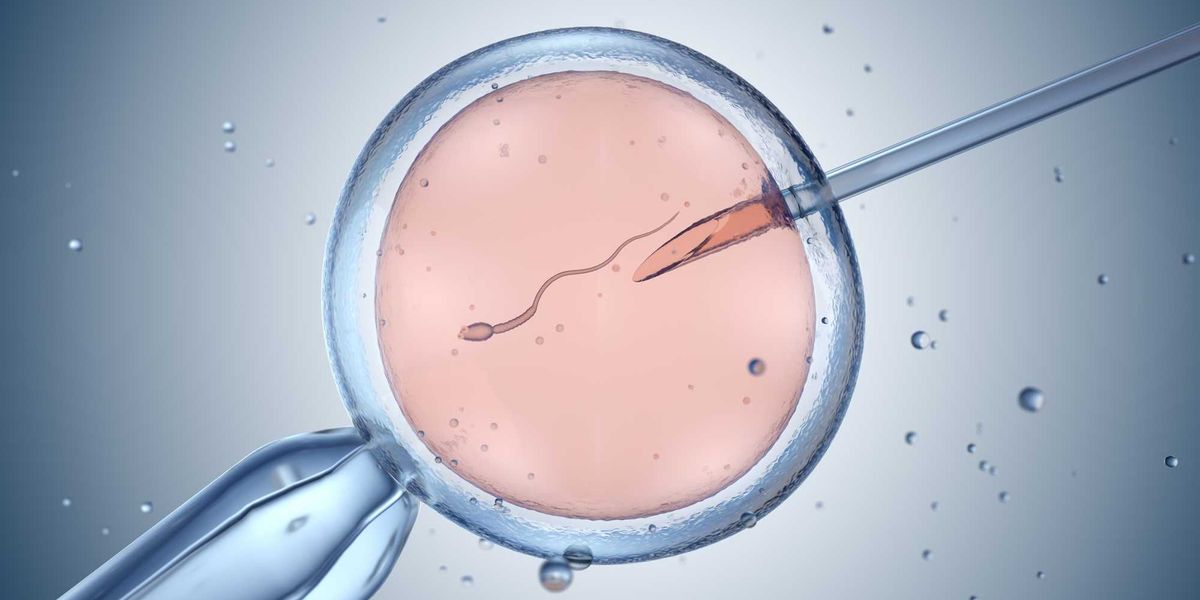

One year ago, President Trump signed an executive order directing his administration to develop policy recommendations to protect access to in-vitro fertilization, expand its availability, and lower its cost to patients.
In October, the administration announced additional measures to lower costs for IVF and common fertility drugs and explore pathways like expanded employer benefits or excepted benefit categories for assisted reproductive technologies. While this included joint efforts across federal agencies to make this costly intervention more affordable, the administration stopped short of imposing broad new federal mandates for insurance coverage or direct government funding of IVF.
The more than $20,000 invested in each IVF cycle, only to achieve a 25%-30% success rate, would be better spent on other economic incentives to encourage family formation.
The problem of below-replacement fertility rates in the United States — which poses serious demographic, social, and economic challenges — has gained some political attention since the last election.
As of 2024, the fertility rate in the U.S. stands at a record low of 1.6 births per woman of childbearing age, well below the replacement rate of 2.1. This drop continues a downward trend that began in the early 2000s and accelerated after the 2008 recession.
Trump frames his support for IVF as a way for the government to support couples who desire to start or grow families. While this administration has not yet enacted universal “free” IVF, the policies show clear support for making IVF accessible to more Americans.
Why IVF won’t fix the birth dearth
The notion that expanding access to IVF will measurably alleviate our fertility crisis is pure fantasy.
First, the goal of achieving a significant number of additional births using government-supported IVF will prove cost-prohibitive. The procedure typically runs $15,000 per cycle plus $5,000 for medications.
Second, the success rates tend to be low. A typical IVF cycle achieves pregnancy in about 20%-35% of cases for women under 35, and that number drops further with age.
IVF is usually employed for infertile women who have been unable to conceive naturally. But infertility, while far from a trivial issue, is not a significant driver of our low birth rates.
A 2013 Gallup poll found that, on average, American adults want to have between two and three children, a statistic that has remained unchanged since the 1970s. The 5% of adults who do not want to have children has not changed much since 1990.
RELATED: Who really controls behavioral health care — and why it matters now
Douglas Rissing/Getty Images
For the most part, medical problems do not explain why so many Americans are not realizing their desire for children. The main source of our birth dearth is not biological but economic. More than three-quarters of those who want more children but do not have them cite financial considerations as the main reason.
If that’s the problem, then the more than $20,000 invested in each IVF cycle, only to achieve a 25%-30% success rate, would be better spent on other economic incentives to encourage family formation for those who believe they cannot afford children.
We can and should argue over the details of specific proposals — whether child tax credits, support for stay-at-home moms, or other measures — but these approaches promise to deliver far more per dollar than IVF.
If you want more babies, simply creating them in a petri dish will not do. We need to make it more affordable for Americans to raise these children after they are born.
The ethical costs IVF can’t escape
Even when it helps couples to have a child, IVF comes with serious ethical costs.
Clinics compete in the market based on success rates. Because egg harvesting is an invasive and sometimes risky procedure, IVF cycles typically aim to create as many embryos as possible — usually more than the couple intends to bring to birth.
Unused embryos go into frozen storage but can later be thawed and implanted. In one 2022 experiment, run by its very nature without consent, twins were born after 30 years in cold storage. Their adoptive father was five years old when they were first conceived.
No one knows precisely how many embryos now sit in cryopreservation, because clinics are not required to report these numbers. Estimates range from 500,000 to millions.
Research supports the common-sense notion that, whenever possible, it would be preferable to make babies in the bedroom rather than the laboratory.
Many end up abandoned by parents who stop paying the $500-$1,000 yearly storage fees and fail to respond to repeated outreach from clinics. Most parents remain reluctant to allow clinics to destroy their spare embryos, suggesting at least moral ambivalence.
Other options exist, but they rarely satisfy. Parents can adopt out embryos to another infertile couple or donate them to embryo-destructive research. Parents rarely consent to either, likely out of similar moral reticence.
These parents know well what happens when those “clumps of cells” are placed in a mother’s womb.
Thus, parents who do not want to raise additional children are stuck in an insoluble ethical conundrum; their embryos are left in a cryogenic nursery limbo.
It’s hard to entirely blame IVF clients for this when all available choices seem morally problematic. Even when informed of these options before starting IVF, most couples admit they were singularly focused on achieving a pregnancy and rarely considered what would happen to excess embryos until later.
In creating countless human embryos that will never be placed in a uterus — the only conducive environment for embryonic life — we have created a problem for which there is no morally just solution. This should invite us to re-evaluate the practice that created this insoluble quandary in the first place.
RELATED: Women’s infertility is Big Pharma’s cash cow
 miodrag ignjatovic via iStock/Getty Images
Better answers for infertility
We need to acknowledge the anguish of infertility for couples trying unsuccessfully to conceive. There are better solutions than IVF to offer them, however.
The egg-harvesting phase of IVF introduces nontrivial medical risks. Although we need more longitudinal data, current evidence suggests significant risks also for the child conceived by this procedure.
Those risks include elevated risks for birth defects and chronic illness later in life, such as cardiovascular problems and metabolic dysregulation, cognitive impairment, and perhaps even cancer, possibly due to epigenetic changes introduced by the procedure.
This research supports the common-sense notion that, whenever possible, it would be preferable to make babies in the bedroom rather than the laboratory.
Nevertheless, the focus on IVF as the solution to infertility — and often the first solution offered to infertile couples — has dampened research and clinical efforts aimed at treating the underlying causes of infertility.
Instead of focusing on IVF, the Trump administration should support medical interventions that help previously infertile couples to conceive a child in the womb.
As in many other areas of contemporary medicine, we reach immediately for medically invasive, lab-based procedures. We offer couples a work-around, instead of assessing and attempting to correct the underlying cause.
Interventions under the umbrella of restorative reproductive medicine range from dietary changes or hormone balancing to, in some cases, medications or surgery.
This approach accords with the push to “Make America Healthy Again” by addressing root causes of our epidemic of chronic illness, rather than applying superficial, expensive, and suboptimal quick fixes.
RELATED: IVF CEO says conceiving naturally is for those with ‘genetic privilege’
 Rasi Bhadramani via iStock/Getty Images
What policy can do
Several challenges stand in the way of making these interventions available and accessible to more couples, which sensible policies can begin to address.
Research is inadequately funded. We also currently lack sufficient training for physicians in assessing and treating the root causes of infertility.
Among the most common causes of infertility is endometriosis — a condition that not only makes it difficult or impossible to maintain a pregnancy but also, if uncorrected, causes intense pain and other troublesome symptoms.
However, many physician specialists are not trained in the complex surgical approach required to adequately treat endometriosis to allow for pregnancy. Other such examples abound.
A better path forward
We should applaud the administration’s laudable goal of helping infertile couples to bear children. But IVF is not the right solution.
Instead of putting all our eggs in one basket, we need a capacious approach to supporting fertility that does more to address the root causes of infertility and, whenever possible, restores reproductive function the way nature intended.
This strategy respects human life at all stages and avoids insoluble ethical quandaries. It also offers a recipe for happier parents and healthier children.
Surely this is a proposal for addressing our fertility crisis that all Americans can endorse.
Editor’s note: A version of this article was published originally at the American Mind.
Read the full article here


![Fox Panel Rips AOC’s Embarrassing Taiwan Word Salad [WATCH]](https://www.rvmnews.com/wp-content/uploads/2025/09/2025.09.21-10.45-rvmnews-68cfd72db2999.jpg "Fox Panel Rips AOC’s Embarrassing Taiwan Word Salad [WATCH]")