

The phrase “politics makes strange bedfellows” is old. As in it was coined by William Shakespeare in The Tempest, from 1611. Like a lot of what The Bard wrote, it was insightful, simply because it’s true, even if no one put it in quite those words before.
But it’s true, and we’ve all seen examples over the years where two people who normally wouldn’t stand together suddenly do so because of a common cause. A prime example was Rep. Ron Paul and Sen. Bernie Sanders–the libertarian and the socialist–joining forces to try to audit the Fed.
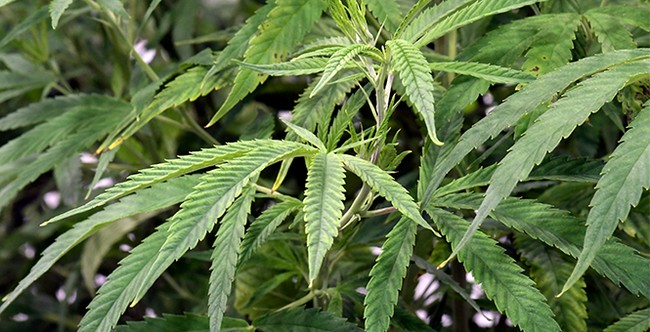
Now, we have another case, as the NRA and the pro-marijuana group NORML are among those filing amicus briefs challenging the federal prohibition on gun ownership for “unlawful” drug users, including those who use marijuana in accordance with state law.
Until a few years ago, the NRA was reluctant even to comment on the constitutionality of Section 922(g)(3) as applied to state-legal cannabis consumers. Now it is arguing that the statute is unconstitutional as applied to a cannabis consumer in Texas, where recreational use is still illegal. And although 18 states that have legalized recreational use are nevertheless urging the Supreme Court to allow that prosecution, the Drug Policy Alliance (DPA) and the National Organization for the Reform of Marijuana Laws (NORML) have joined the NRA in asking the justices to uphold the 5th Circuit’s decision.
As you would expect, the briefs generally agree with the 5th Circuit that a categorical ban on gun possession by drug users is inconsistent with the Second Amendment. But they also offer other arguments against Section 922(g)(3), saying it is unconstitutionally vague, violates the Eighth Amendment’s prohibition of status-based crimes, and exceeds the federal government’s enumerated powers.
And that is because it does.
But it’s interesting when you get two organizations that tend to be on opposite sides of the political spectrum, but will stand side-by-side when their purposes align.
In this case, NORML is about legalizing marijuana, and that includes addressing the prohibition against gun ownership for those who use it, either in accordance with state law or have used it in the past, yet are still prohibited because the law isn’t super clear as to how long ago is sufficiently long enough.
Plus, let’s be real, there really isn’t a historical analog.
‘No Historical Justification’
Under the Second Amendment test established by the Supreme Court’s 2022 ruling in New York State Rifle & Pistol Association v. Bruen, Section 922(g)(3) passes muster only if the government can show it is “consistent with this Nation’s historical tradition of firearm regulation.” To make that case, the Trump administration relies primarily on the historical treatment of “habitual drunkards,” who could be confined to workhouses as “vagrants” or civilly committed based on judicial determinations. As several of the briefs opposing the government’s position note, that analogy is problematic for several reasons.
Since vagrancy and civil commitment laws “were not even ‘firearm regulations’ or ‘gun laws,'” a brief from Gun Owners of America (GOA) argues, “they are irrelevant under this Court’s precedents.” And unlike Section 922(g)(3), those laws “demanded pre-deprivation procedural protections and individualized findings,” the NACDL notes. “Process preceded prohibition. Before any restriction could attach, an official had to determine that a particular person was a habitual drunkard requiring commitment.”
And there weren’t drug laws at the time, for better or worse. That means people could still drink and own guns. The issue was being a drunk and traipsing around with guns. Those laws being cited, as GOA notes, weren’t gun laws, though, only a signal that some people weren’t fit for being out in public due to their frequent and habitual intoxication.
It didn’t stop them from owning guns, necessarily, because while they couldn’t carry them while drunk, they should still own them.
Which is where the NRA, among many other gun rights groups, essentially teaming up with an organization like NORML gets entertaining for me.
Should people consume marijuana? In most cases, probably not. There are some medical uses for it, but there are medical downsides for it, too. It’s not the miracle drug some people try to make it.
However, our rights aren’t based on whether our actions are approved of by some third party. If the feds are going to turn a blind eye to marijuana consumption in numerous states, either medically or recreationally, then there’s no reason for them to enforce any prohibition on its use when exercising the right to keep and bear arms.
Editor’s Note: President Trump and Republicans across the country are doing everything they can to protect our Second Amendment rights and right to self-defense.
Help us continue to report on their efforts and legislative successes. Join Bearing Arms VIP and use promo code FIGHT to get 60% off your VIP membership.
Read the full article here


![Houston Family Zip-Tied While Criminal Illegal Aliens Hold Gun to a Child’s Head [WATCH]](https://www.lifezette.com/wp-content/uploads/2024/09/2024.09.02-08.34-lifezette-66d6216f5ae00.jpg "Houston Family Zip-Tied While Criminal Illegal Aliens Hold Gun to a Child’s Head [WATCH]")