
NEWYou can now listen to Fox News articles!
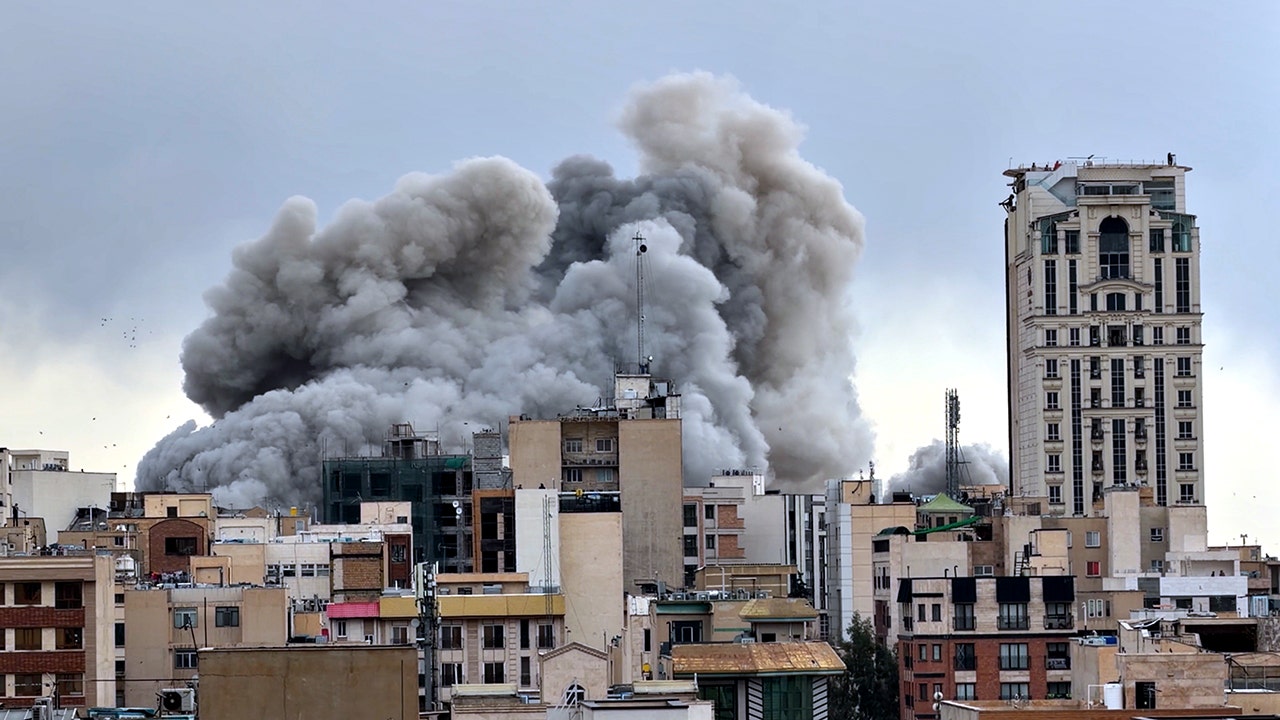
The death of Iran’s supreme leader, Ayatollah Ali Khamenei, following coordinated U.S.–Israeli strikes in late February 2026 marks one of the most consequential geopolitical moments of the decade. In the immediate aftermath, Iran launched retaliatory missile and drone attacks across Israel and against U.S. and Gulf-linked infrastructure, while internet disruptions spread domestically and internal unrest intensified. Analysts, journalists and policymakers quickly filled the information space with competing interpretations — some emphasizing escalation risks, others focusing on humanitarian fallout or regime durability.
Yet viewed through the lens increasingly guiding U.S. national security doctrine, the operation appears less as an isolated military escalation and more as part of a broader strategic transition already underway: the integration of economic security, technological dominance and supply-chain resilience into core American grand strategy.
Over the past five years, Washington’s strategic thinking has shifted decisively away from counterterrorism-era priorities toward competition defined by industrial capacity, infrastructure control and technological ecosystems. Energy routes, mineral supply chains, semiconductor inputs and data networks are no longer treated as commercial concerns alone; they are now regarded as national security assets. In that framework, instability surrounding Iran intersected directly with several emerging pillars of U.S. strategy.
Iran occupies a uniquely sensitive position in the global economic system. The Strait of Hormuz remains one of the world’s most critical maritime arteries, carrying roughly one-fifth of globally traded oil and a substantial share of liquefied natural gas exports. Persistent uncertainty around the waterway — whether through missile capabilities, naval harassment risks, or proxy-linked disruptions across adjacent shipping zones — has imposed structural costs on global trade. Energy volatility feeds directly into inflation, manufacturing competitiveness and industrial planning across allied economies.
At the same time, Iran’s resource base places it squarely within the emerging competition over critical minerals essential for advanced manufacturing, clean energy technologies and defense systems. Copper, zinc, lithium deposits and rare-earth complexes position the country as a potential long-term supplier within next-generation industrial supply chains. Much of this output has increasingly moved toward Asian markets, particularly China, often through sanction-evasion networks operating beyond formal financial oversight.
From Washington’s perspective, this convergence created a strategic contradiction: while the United States and its partners were attempting to build resilient industrial ecosystems independent of geopolitical rivals, a key regional actor sat astride both energy chokepoints and alternative resource flows benefiting competing economic blocs.
This tension became more pronounced as new connectivity initiatives accelerated. The India–Middle East–Europe Economic Corridor (IMEC), first introduced in 2023, aims to link South Asian manufacturing capacity with Gulf energy hubs and European markets through integrated rail, port and hydrogen infrastructure. The project represents more than logistics efficiency; it reflects an attempt to reshape Eurasian trade geography around aligned partners rather than contested transit routes.
GORDON SONDLAND: NO MORE ‘RESTRAINT’: EUROPE MUST STAND WITH AMERICA ON IRAN
Parallel efforts expanded through what policymakers and industry leaders increasingly describe as coordinated economic security frameworks. The expansion of mineral cooperation agreements under initiatives such as FORGE brought dozens of countries into shared financing, refining, and procurement arrangements designed to stabilize access to critical inputs. Simultaneously, private-sector coalitions — often grouped under the emerging concept of “Pax Silica” — have begun aligning advanced economies across semiconductors, artificial intelligence infrastructure, and materials processing.
Together, these initiatives signal a new organizing principle of U.S. grand strategy: secure the physical and digital foundations of economic power before systemic rivalry fully hardens.
The timing of the strikes becomes clearer within this context.
DOUG SCHOEN: AS A DEMOCRAT, I BACK TRUMP’S IRAN STRIKE — MY PARTY IS WRONG
By early 2026, multiple pressures had significantly weakened Iran’s strategic leverage. Years of sanctions targeting oil transport networks sharply constrained revenue flows. The Iranian rial experienced sustained depreciation amid high inflation, eroding purchasing power and amplifying domestic dissatisfaction. Informal trade mechanisms that once mitigated sanctions pressure faced increasing enforcement, narrowing fiscal space for the state.
Regionally, Iran’s network of partner militias faced mounting operational strain following sustained military campaigns across several theaters. Analysts observed reduced coordination effectiveness and growing logistical stress among groups previously central to Tehran’s deterrence posture. While still capable of retaliation, the broader network appeared less synchronized than in earlier phases of regional confrontation.
Internally, political authority increasingly consolidated among security-linked elites focused on regime preservation rather than strategic expansion. Reports circulating among diplomatic observers suggested limited room for negotiated compromise on core deterrence capabilities, even as economic pressures intensified.
HORMUZ ERUPTS: ATTACKS, GPS JAMMING, HOUTHI THREATS ROCK STRAIT AMID US-ISRAELI STRIKES
Taken together, these factors may have produced what strategists often describe as a narrowing operational window — a period in which adversary capabilities are constrained while competing infrastructure initiatives approach implementation milestones.
February 2026 represented precisely such a moment. Mineral partnerships expanded, Gulf–India economic negotiations advanced, and major subsea cable investments linking North America, South Asia, and Middle Eastern data hubs moved from planning into deployment. These networks are designed to underpin artificial intelligence development, cloud computing markets and next-generation digital trade across rapidly growing economies.
In modern strategic competition, vulnerability no longer resides solely in territory but in systems: shipping lanes, refining capacity, data transmission routes, and industrial inputs. Any actor capable of disrupting these systems acquires disproportionate leverage.
KEANE WARNS IRAN STRIKE BECOMING ‘REGIONAL WAR,’ SAYS THREE GULF STATES PREPARING FOR COMBAT
From this perspective, the strikes addressed not only immediate security concerns but the perceived long-term risk that continued instability surrounding Iran could undermine emerging economic architectures central to U.S. strategy.
The question of “why now” therefore extends beyond battlefield calculations. Acting earlier would have risked confrontation while Iran retained stronger regional coordination and financial flexibility. Acting later might have allowed entrenched disruptions to harden around critical trade and technology networks just as allied investment accelerated.
CLICK HERE FOR MORE FOX NEWS OPINION
Whether this assessment proves strategically sound remains uncertain. Iran retains significant retaliatory capacity and the trajectory of its internal political evolution is far from predetermined. Elite consolidation could stabilize the system, while fragmentation could introduce new forms of regional volatility affecting energy markets and transit corridors alike.
What is clear, however, is that global competition has entered a phase where military action, economic planning and technological infrastructure operate within a single strategic continuum. The United States increasingly frames national security not only in terms of territorial defense but in safeguarding the systems that sustain industrial production, digital connectivity and allied economic integration.
CLICK HERE TO DOWNLOAD THE FOX NEWS APP
The debate unfolding across social media often centers on immediate moral or political judgments. Yet the deeper transformation may lie in how power itself is being exercised. Security policy is becoming indistinguishable from economic architecture.
If so, the events in Iran may ultimately be understood less as an endpoint and more as a signal of a wider transition — one in which great-power competition is decided not only by armies or alliances, but by who secures the energy routes, mineral flows, and data networks that will define the global economy for decades to come.
CLICK HERE TO READ MORE FROM TANVI RATNA
Read the full article here

![Chinese‑Linked Billionaire Bankrolls Pro‑Iran Protests in NYC [WATCH]](https://www.lifezette.com/wp-content/uploads/2026/03/2026.03.02-10.01-lifezette-69a55fe4ea533.jpg "Chinese‑Linked Billionaire Bankrolls Pro‑Iran Protests in NYC [WATCH]")



![Deep State Panic! Judicial Watch Drags 1.9 Million Hidden FBI Records Out of The Shadows [WATCH]](https://www.lifezette.com/wp-content/uploads/2025/05/2025.05.20-01.09-lifezette-682c7f16552e1.jpg "Deep State Panic! Judicial Watch Drags 1.9 Million Hidden FBI Records Out of The Shadows [WATCH]")