
In an era where every grievance gets inflated into a moral crusade, the ideology people call “wokeness” stands out for one trait more than any other: ungratefulness.
Wokeness doesn’t simply point to injustice. It fixates on it. It treats progress as an illusion, opportunity as a trap, and gratitude as complicity. Everything becomes evidence of oppression. Nothing counts as improvement. To normal people, that posture feels like a bad odor in a room: It sours everything.
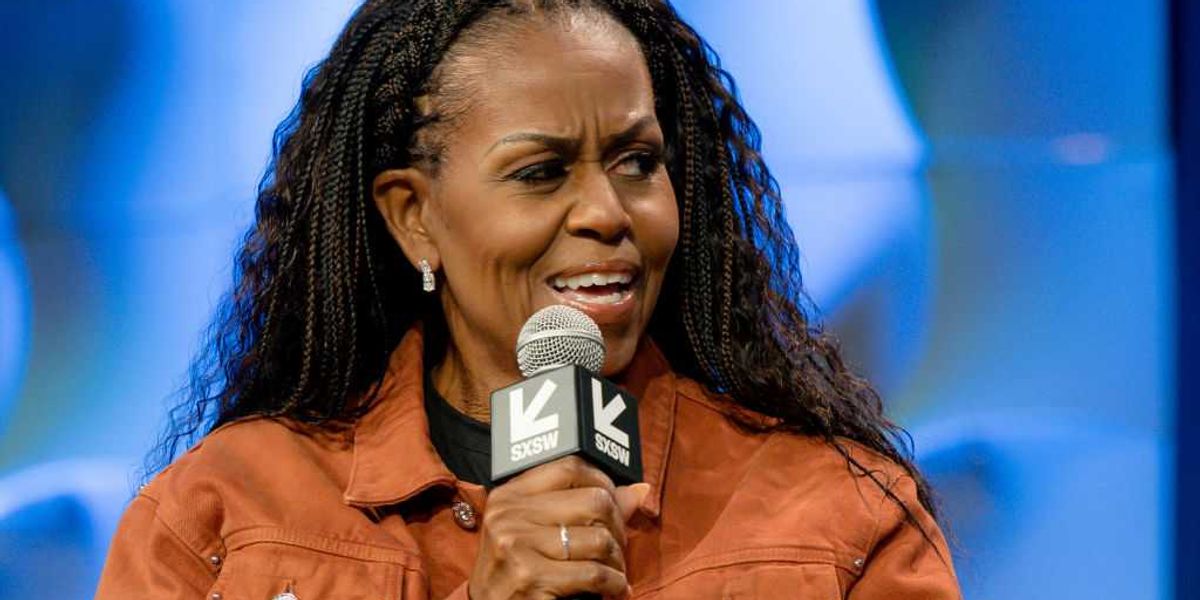
Michelle Obama’s story should read like an American testimonial. Yet she often talks about the country as if it injured her.
Everyone knows the type. The chronic complainer. A friend who rants about his job every time you see him. The boss is unfair. The pay is lousy. The co-workers are idiots.
At first, you listen. You sympathize. You offer advice. Then the excuses begin.
“I can’t quit because of the benefits.”
“The job market is terrible.”
“No one would hire me.”
Not with that attitude, pal!
Eventually you realize the problem isn’t his job. It’s him. He doesn’t want solutions. He wants a permanent grievance. After a while, you stop inviting him places. Or you nod and tune out.
Wokeness runs on the same fuel. It sells victimhood as identity and complaint as virtue. It refuses to admit how far the country has moved on race, sex, and equality because that would require humility — and would shrink the movement’s moral leverage.
The result is predictable: Sympathy dries up. People get exhausted. Potential allies become spectators.
You see this pattern in activist politics across the board. Some racial activists talk about systemic racism endlessly while refusing to deal honestly with internal problems that damage communities, like family breakdown and educational collapse. Some LGBTQ activists demand constant affirmation while downplaying enormous legal and cultural victories.
The message stays the same: You owe us more. It rarely becomes: Look how far we’ve come, or here’s what we can fix ourselves.
Michelle Obama embodies this attitude better than almost anyone.
Her story should read like an American testimonial. The country elected her husband president twice. The Obamas became global figures. They turned that platform into immense wealth and influence through books, speeches, and media deals. Few families have been lifted higher by modern America.
Yet Michelle Obama often talks about the country as if it injured her.
Start with her 2008 campaign remark: “For the first time in my adult lifetime, I’m really proud of my country.” Whatever she meant, it landed as contempt. She had lived an elite, upwardly mobile American life — Princeton, Harvard Law, a prestigious career — and still claimed pride only arrived when her husband’s political rise validated it.
Then came the line from her 2016 convention speech: “I wake up every morning in a house that was built by slaves.” She could have framed it as proof of moral progress: a black family in the White House, a nation that overcame its own sins. Instead, she chose the grievance frame, even in the middle of historic achievement.
More recently, Obama described her White House years as a kind of trauma: “What happened that eight years …? What did that do to me internally? … We made it through. We got out alive.” She doesn’t have to pretend the job was easy. But she keeps using the same vocabulary: burden, survival, damage — as if the privilege itself was the wound.
RELATED: Why Trump must block Netflix’s Warner Bros. takeover
Wokeness runs on ungratefulness — and normal people are done with it
In that same conversation, she complained about being labeled “bitter” and “angry” as a black woman. Yet she enjoyed years of glowing coverage from the same cultural institutions that demonize her critics: legacy media, Hollywood, corporate America, the prestige press. Whatever hostility Obama faced, she lived under the warmest spotlight in American public life.
That’s the dynamic people recognize instinctively. Wokeness demands that everyone feel guilty, even when the facts argue for gratitude. It can’t celebrate progress because celebration would admit the country improved. It can’t relax because the crusade requires permanent outrage. It can’t share credit because that would weaken the hierarchy of grievance.
Normal Americans don’t reject wokeness because they hate justice. They reject it because it never stops scolding, never seems satisfied, and never acknowledges anything good. It turns every achievement into an accusation and every success into a complaint.
Ungratefulness repels people. Always has. The movement that builds itself on resentment will keep shrinking — not because its enemies “silenced” it, but because everyday people walked away.
That’s the fate of every ideology that cannot say two simple words: Thank you.
Read the full article here


![He ‘Can’t Sleep on Women’ [WATCH]](https://www.boredtrashpanda.com/wp-content/uploads/2025/06/2025.06.27-02.16-boredtrashpanda-685ea7d366610.jpg "He ‘Can’t Sleep on Women’ [WATCH]")