![Artemis II Crew Proposes a Heartfelt Moon Crater Name During Record Mission [WATCH]](https://www.rvmnews.com/wp-content/uploads/2026/04/2026.04.09-11.47-rvmnews-69d791ca13b77.jpg "Artemis II Crew Proposes a Heartfelt Moon Crater Name During Record Mission [WATCH]")

Astronauts aboard NASA’s Artemis II mission are proposing to name a lunar crater “Carroll” in honor of the late wife of their commander, following a historic flight that pushed human exploration farther into space than ever before, as reported by NPR.
According to details provided, the four-person Artemis II crew broke the record Monday for the farthest distance from Earth ever traveled by humans.
The mission also marked the first time astronauts observed certain areas on the far side of the moon.
The Artemis II crew captured this image showing the rings of the Orientale basin during their lunar flyby on April 6.
At the 10 o’clock position of the Orientale basin, the two smaller craters – which the Artemis II crew has suggested be named Integrity & Carroll – are visible. pic.twitter.com/na5yOROl1z
— NASA Artemis (@NASAArtemis) April 7, 2026
During the mission, the crew, led by Commander Reid Wiseman, identified several unnamed craters on the lunar surface and began suggesting names for them.
Here’s What They’re Not Telling You About Your Retirement
Mission specialist Jeremy Hansen proposed that one crater be named after their spacecraft, “Integrity.”
He then suggested naming another crater “Carroll,” in recognition of Wiseman’s late wife, Carroll Wiseman.
“A number of years ago, we started this journey in our close-knit astronaut family, and we lost a loved one … her name was Carroll, the spouse of Reid, the mother of Katie and Ellie,” Hansen said during a communication with mission control.
Hansen described the crater as being located in a “really neat place on the moon” and noted it would be visible from Earth during specific lunar transits.
This Could Be the Most Important Video Gun Owners Watch All Year
“It’s a bright spot on the moon. And we would like to call it ‘Carroll,'” he added, becoming emotional as the crew gathered together in support.
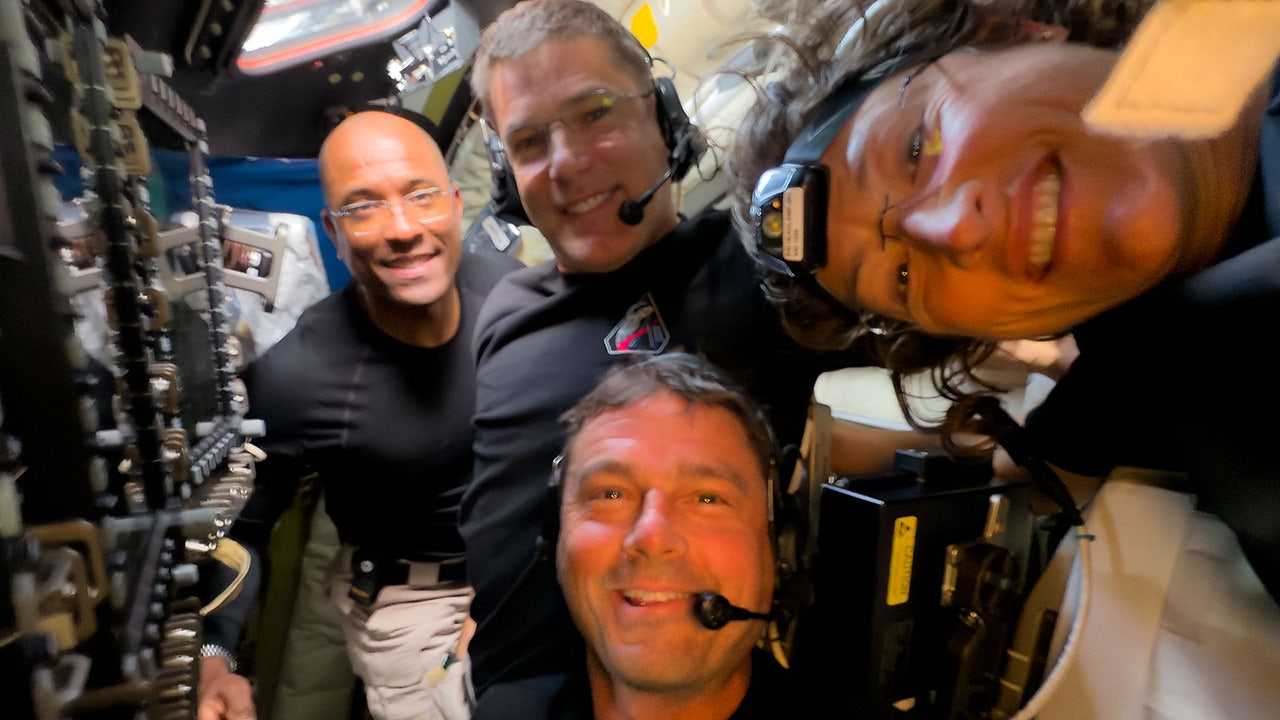
Video shared by NASA showed Wiseman placing an arm around Hansen, while astronaut Christina Koch wiped away tears as the group embraced.
Mission control later responded, “Integrity and Carroll crater, loud and clear. Thank you.”
The names remain unofficial. NASA stated that once the mission concludes, the proposals will be submitted to the International Astronomical Union, the organization responsible for naming celestial bodies and their surface features.
Carroll Wiseman worked as a registered nurse, first in a neonatal intensive care unit and later as a school nurse near Houston, Texas, where the family relocated for Wiseman’s career. She died of cancer in 2020 at age 46.
Wiseman has previously spoken about his wife’s support during her illness. “But she said, ‘No, this is where you work, and you love your job. And we should not give that up for this,'” he told Baltimore Magazine.
Selected in 2023 to lead Artemis II, Wiseman described the mission as continuing a path the couple had built together.
“It was like I was carrying a legacy of her along and … continuing to go down this path that we had forged for 17 years together,” he said in an earlier interview. “I honor her every single day, every single minute.”
Wiseman is a 27-year Navy veteran and pilot who joined NASA in 2009. He previously spent 165 days aboard the International Space Station in 2014, conducting more than 300 scientific experiments and completing two spacewalks.
NASA notes that despite his professional accomplishments, Wiseman has described raising his children as a single parent as his greatest challenge and most rewarding experience.
He has also spoken about his daughters’ initial concerns regarding his return to space.
“When I said, ‘This is something that I want to go do, it’s important to me, and I think I can do a good job at this,’ they were aligned very quickly,” he said. “I want my kids to know that you can still achieve and go on and pick yourself up.”
Wiseman shared another moment with his family during an appearance on NASA’s “Curious Universe” podcast, recalling how his older daughter responded after learning about his selection.
“And she was the one that was, I think, most against this for her life,” he said. “I thought that was amazing. Like here these two kids I thought were gonna pull me, but they were pushing me … I will never forget that, like that is exactly the way you want to feel as a parent.”
Ahead of launch, Wiseman posted a photo with his daughters in front of the rocket, writing, “I love these two ladies, and I’m boarding that rocket a very proud father.”
“Dad, we can’t leave the rocket without a .5 together!!” I love these two ladies, and I’m boarding that rocket a very proud father. pic.twitter.com/N6NKNaeUXF
— Reid Wiseman (@astro_reid) March 31, 2026
The naming of lunar features follows a formal process. Astronauts may suggest names, but final approval rests with the International Astronomical Union.
The organization maintains guidelines, including requirements that individuals honored must be deceased for at least three years, and that names avoid political, military, or religious significance.
Once approved, names become official and are added to global lunar maps and scientific records. The process typically takes about a month, though some approvals have taken significantly longer.
Warning: Account balances and purchasing power no longer tell the same story. Know in 2 minutes if your retirement is working for you.
The opinions expressed by contributors and/or content partners are their own and do not necessarily reflect the views of LifeZette. Contact us for guidelines on submitting your own commentary.
Read the full article here