
Nicholas Kristof has a column today about China’s desire to seize Taiwan and what it might actually do to make that happen. The column opens with a scenario in which China goes all in on a military invasion of the island, including some kind of attack on nearby US bases as a way to hinder our response. But Kristof and the people he’s spoken with (he’s in Taipei at the moment) don’t think that’s the most likely scenario.
The more likely scenario is going to be something like what China did with Hong Kong. Not an invasion, exactly, but a gradual takeover through gray zone tactics. In Hong Kong that meant pushing a new law through and then using it to round up protest leaders and clamp down on pro-democracy media outlets. Gradually, people who supported freedom had to flee or face prison.
So what would these gray zone tactics look like in the as of Taiwan? A lot of them are already happening.
China is already mounting cyberattacks, cutting internet cables and sending planes and ships toward Taiwan. It also holds live-fire military exercises, most recently a couple of weeks ago, to try to bully the island into accepting a future as some kind of autonomous zone under China’s oversight. One metric of the gray zone: In 2025, China undertook an average of 2.6 million cyberintrusions per day against Taiwan’s infrastructure, according to a new Taiwan government report.
If President Xi Jinping of China wanted to dial up the pressure and wear down Taiwan further without necessarily starting a war, he could impose a naval quarantine. For example, he might demand that ships stop at mainland ports like Xiamen or Shanghai for brief “customs checks” before going on to Taiwan; he might require “environmental inspections” of oil tankers bound for Taiwan. He could (disingenuously) tell countries: We agree that there is one China, so how can you object to the Chinese government conducting customs and safety inspections of cargoes bound for a part of China?
The next step up from a quarantine would be a blockade, particularly of oil and gas, and that would probably lead to all-out war. Taiwan’s economy depends on imported petroleum products, and it has only two or three weeks’ worth of natural gas on hand. Taiwan’s future might then depend on whether President Trump were willing to order the U.S. Navy to escort ships to Taiwan to break the blockade.
With the idea of a blockade in mind, check out this news report that appeared in the NY Times yesterday.
China quietly mobilized thousands of fishing boats twice in recent weeks to form massive floating barriers of at least 200 miles long, showing a new level of coordination that could give Beijing more ways to impose control in contested seas…
Last week, about 1,400 Chinese vessels abruptly dropped their usual fishing activities or sailed out of their home ports and congregated in the East China Sea. By Jan. 11, they had assembled into a rectangle stretching more than 200 miles. The formation was so dense that some approaching cargo ships appeared to skirt around them or had to zigzag through, ship-tracking data showed.
Maritime and military experts said the maneuvers suggested that China was strengthening its maritime militia, which is made up of civilian fishing boats trained to join in military operations. They said the maneuvers show that Beijing can rapidly muster large numbers of the boats in disputed seas.
In China, everyone is part of the military if the government demands it. These fishing boats have been used in the past as part of what observers call China’s cabbage strategy, wherein they used dozens of boats to surround contested islands. The boats aren’t military, per se, but they act to block other ships from approaching areas China intends to claim for itself. In other words, it’s a low-key blockade. What China has demonstrated last week is just a much bigger version of this tactic, a wall of ships that can be ordered in place at any moment. Here’s what that looked like in time-lapse:
🚨 Ship-tracking data shows China forming a 200-mile floating barrier near Taiwan using THOUSANDS of fishing boats.
The CCP is training civilian ships to gather en masse and clog sea lanes so it can seize Taiwan.
They are strengthening their maritime militia in plain sight. pic.twitter.com/BAhZqkuDWj
— POLARIS National Security (@PolarisNatSec) January 17, 2026
So it seems like China is practicing for something. It’s not a military blockade but a fake civilian one that would serve the same purpose.
And yet, Kristof says there’s a central puzzle when it comes to Taiwan. There are a surprising number of people who don’t seem to understand the danger they are in.
Some Taiwanese acknowledge the dangers but don’t see any point to even trying to resist China, seeing it as hopeless. When I asked an old Taiwanese friend, a journalist, what the island should do if attacked by China, she didn’t hesitate. “Surrender,” she answered.
Another old friend, a businessman, said he expected that in 10 years, Taiwan would be under China’s control, whether through war or by Taiwan reluctantly accepting a promise of autonomy under Chinese rule.
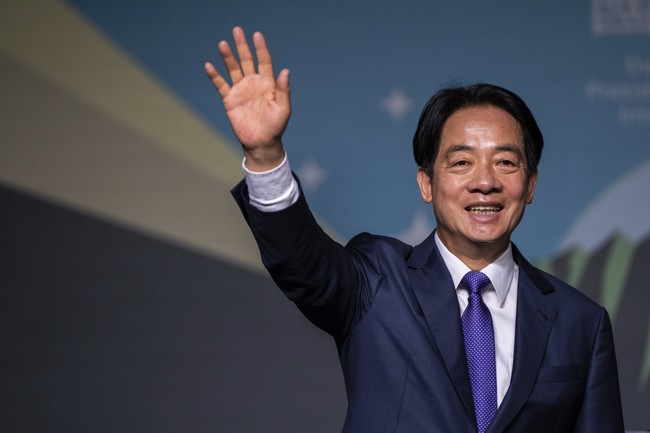
Not everyone in Taiwan is like that. The people did recently elect a new president, William Lai, who is outspokenly pro-democracy. China hates Lai and even campaigned against him. Lai has been increasing Taiwan’s military spending and plans to keep it going up for the next several years. So a majority of the Taiwanese people do care about their freedoms and their future, but they are just a majority. The country isn’t close to unified in opposing China. In fact, there are two pro-China political parties.
No one really knows when the attack will come or what form it will take, only that it will come. Xi Jinping is committed to seeing this happen in his lifetime. He has promised it publicly. The only thing holding him back right now is the possibility of conflict with the US which could mean failure and global humiliation for Xi. That might not be survivable, even for a communist dictator who plans to rule for life. So he’s biding his time, but clearly plans are still being made and new approaches to achieve his goal of “reunification” are being tested out.
Read the full article here

![Minneapolis Police Chief Admits Unlawful Behavior as Mayor Frey Squirms [WATCH]](https://www.lifezette.com/wp-content/uploads/2025/11/2025.11.23-11.50-lifezette-6922f4f537fb8.jpg "Minneapolis Police Chief Admits Unlawful Behavior as Mayor Frey Squirms [WATCH]")
![Armed Suspect Holds Toddler at Gunpoint, Vegas Cop Ends Him with a Headshot, Child Dies [WATCH]](https://www.rvmnews.com/wp-content/uploads/2026/02/2026.02.07-09.41-rvmnews-698708d5d2af2.jpg "Armed Suspect Holds Toddler at Gunpoint, Vegas Cop Ends Him with a Headshot, Child Dies [WATCH]")
![Kamala Harris’s Campaign Handle Got Dragged So Hard It Filed for Witness Protection [WATCH]](https://www.rvmnews.com/wp-content/uploads/2024/10/2024.10.17-07.44-rvmnews-671169283a17e.jpg "Kamala Harris’s Campaign Handle Got Dragged So Hard It Filed for Witness Protection [WATCH]")