

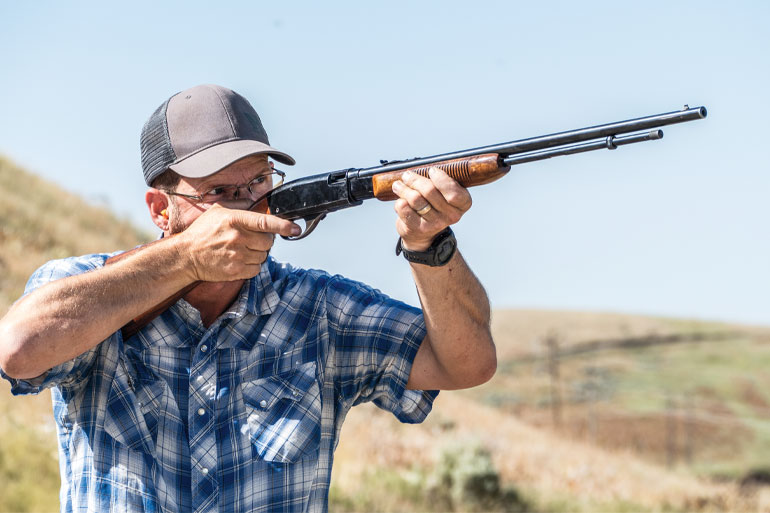
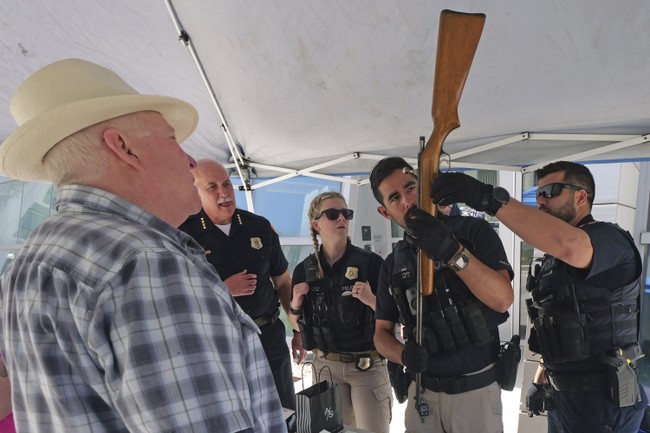

After the Bondi Beach terror attack last December, Australian Prime Minister Anthony Albanese was quick to announce plans for a national gun “buyback”, along with new restrictions on the types of arms that would be available for sale and prohibiting non-native Australians from owning firearms.
Rather than a federal compensated confiscation scheme, Albanese and the federal government wanted states to take the lead. The feds would provide half of the funds, but it would be up to state government and law enforcement to come up with the rest of the money, as well as actually conduct the “buyback.”
Albanese set a March 31st deadline for states to come up with the framework for their schemes, but now officials and media figures are calling the compensated confiscation program “extinct” and “in tatters” after most states have either declined to participate or are still deliberating whether to take part.
As a March deadline to agree to national gun reforms expires, only NSW and the Australian Capital Territory have agreed to join the scheme, while Western Australia has completed its own buyback and Tasmania has one under way.
Queensland and the Northern Territory have refused to join, Labor Premier Peter Malinauskas has said he does not intend to change South Australia’s gun laws and Victoria is noncommittal as it waits for the report of a review of its laws.
The national framework promised after the Bondi attack was “a bit all over the place” with states going their own way, said Troy Gray, the Electrical Trades Union’s Victorian secretary and a spokesman for an advocacy group that was influential in convincing Victorian Premier Jacinta Allan to ditch a proposed ban on duck-hunting in the state.
“We should adopt the commonsense approach of not penalising 1 million licensed firearms owners if we can avoid it and focus instead on keeping them [guns] out of the hands of criminals,” he said.
The government’s reaction to the terror attack at Bondi Beach was to largely blame lawful gun owners instead of the terrorists and their ideology. Banning duck hunting in response to terrorists shooting Jewish people celebrating Hanukkah? That would be like the United States banning paper airplanes after 9/11.
At least some states have firmly rejected taking part in these schemes, and there’s been widespread criticism of those politicians who’ve pointed the finger at Australian gun owners instead of talking about the threat of Islamic terrorism in the country.
Associate professor Andrew Hemming, a firearm regulation expert from the University of Southern Queensland, said that unlike the 1996 buyback after the Port Arthur massacre that was funded by the Commonwealth with a levy on Medicare, states had been asked to contribute 50:50 funding set to cost hundreds of millions each.
“In Queensland, Premier David Crisafulli has said the problem is about terrorism, it’s not about guns at all, suggesting the federal government has diverted the conversation from the real cause [of the Bondi attack],” he said.
“There’s a widespread view they’re deflecting blame from themselves, that they had to be seen to be doing something.
“The Albanese government was warned extensively about the dangers of not doing more on antisemitism, was flat-footed after the Bondi massacre, and felt the need to do something on gun laws,” he said.
Sadly, while some states have done the right thing and refused to get on board with Albanese’s gun ban plan, others have fallen in line. Financial Review reports that 80,000 firearms were handed over in Western Australia, which accounts for almost one quarter of all registered firearms in the state.
Gun control activists aren’t satisfied with those numbers. As one of them told ABC News Australia:
“The community, rightly, expects our gun laws to place tight restrictions on gun ownership and use — and for there to be fewer, not more, guns in our community.”
“Failure of any jurisdictions to participate in a coordinated national response would be deeply disappointing and a lost opportunity. All governments — state, territory and national — owe it to the Australian people to treat firearm ownership as a privilege and public safety as the paramount consideration.”
Their goal isn’t fewer firearms. It’s no firearms at all. And that goal is shared by the gun control lobby here at home, even if they’re several steps behind their anti-gun brethren Down Under.
I’m glad that the forces of gun control are seeing some pushback in Australia and I hope the opposition continues to grow. What’s happened to gun owners there over the past 30 years is a travesty, and continues to be a cautionary tale for U.S. gun owners intent on protecting our right to keep and bear arms for generations to come.
Editor’s Note: 2A groups across the country are doing everything they can to protect our Second Amendment rights and keep us from turning into Australia.
Help us continue to report on and support their efforts. Join Bearing Arms VIP and use promo code FIGHT to get 60% off your VIP membership.
Read the full article here






![Federal Judge Clears Path for Trump Administration to End Somali TPS [WATCH]](https://www.lifezette.com/wp-content/uploads/2026/07/2026.07.12-20.51-lifezette-6a53fe507fd56.jpg "Federal Judge Clears Path for Trump Administration to End Somali TPS [WATCH]")
![Delano Squires Nukes the War on Marriage [WATCH]](https://www.lifezette.com/wp-content/uploads/2025/12/2025.12.09-03.16-lifezette-69383d455c1a3.jpg "Delano Squires Nukes the War on Marriage [WATCH]")