

Wars take twists and turns, so any conclusion at this stage is premature.
But a war that looked like it was a grinding stalemate being fought to the last Russian or Ukrainian is looking increasingly like one that Ukraine is actually winning.
Ukraine’s tactical victories on the battlefield, as impressive as they are, won’t ensure victory. And as fascinating and gruesome as the videos of first-person drones on the battlefield are, those only explain why Ukraine is able to hold Russian advances back, and the modest gains on the battlefield Ukraine has made in retaking small bits of occupied territory.
Ukraine has mastered drone warfare on the battlefield, and even more importantly, has built an incredibly resilient and innovative system that adjusts hardware, software, and tactics at a blistering pace that Russia could not hope to achieve with its clunky and corrupt procurement and training systems. That explains Ukraine’s increasingly solid tactical position; unpredictably, Ukraine is now its own most important weapons supplier, and is now teaching the rest of the world how modern warfare is conducted on the ground.
But Russia can take a punch in the same way that Andre the Giant could. Ukraine needs strategic victories, and until, ironically, Trump weaned them off the teat of the West to the extent they were dependent completely on the West, all Ukraine could do was fight at the tactical level, guaranteeing a stalemate.
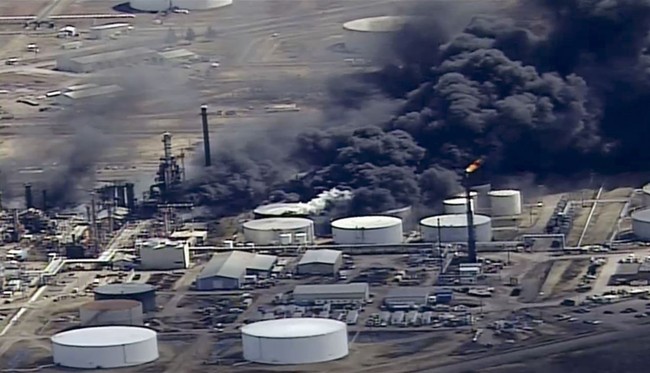
At the same time that Trump reduced American aid, he also allowed Ukraine to take the gloves off and to put Russian assets in Russia at risk, and the results are stunning. Not only have the tactical battle lines extended into Russia, making logistics infinitely harder, but Ukraine is now systematically dismantling key parts of Russia’s economic engine and weapons production facilities.
“Virtually all major oil refineries in central Russia have been forced to halt or scale back fuel output following Ukrainian drone attacks in recent days, according to official data and sources.
The combined capacity of refineries that have fully or partially halted operations… pic.twitter.com/6TNiHn79jh
— Rob Lee (@RALee85) May 21, 2026
“Virtually all major oil refineries in central Russia have been forced to halt or scale back fuel output following Ukrainian drone attacks in recent days, according to official data and sources.
The combined capacity of refineries that have fully or partially halted operations exceeds 83 million metric tons per year, or around 238,000 tons per day. That accounts for around one quarter of Russia’s total refining capacity, according to data and sources who spoke on condition of anonymity…
One of Russia’s largest refineries, Kirishi, with capacity of 20 million metric tons per year, has been fully shut since May 5, according to the sources.”
https://reuters.com/business/energy/oil-refining-standstill-central-russia-after-ukrainian-drone-strikes-sources-say-2026-05-20/
Russia has freely struck the heart of Ukraine since the beginning of the war, while its own key nodes of power and economic might have been immune to attack. Against a large, populous country, that’s no way to win a war.
Russia’s oil industry — which for years has fueled the Kremlin’s war machine — is burning.
Near Moscow, the SBU reportedly struck another Russian oil refinery, leaving the facility shut down for an indefinite period. According to reports, firefighters are still struggling to… pic.twitter.com/LYWKFNP3aL
— Mykhailo Rohoza (@MykhailoRohoza) May 21, 2026
Russia’s oil industry — which for years has fueled the Kremlin’s war machine — is burning.
Near Moscow, the SBU reportedly struck another Russian oil refinery, leaving the facility shut down for an indefinite period. According to reports, firefighters are still struggling to contain the blaze, and strong winds have caused the fire to spread into nearby forests. Emergency crews are reportedly being brought in from across the region as the scale of the fire continues to grow.
According to estimates cited by The Washington Post, Russia’s losses from Ukrainian strikes have already exceeded $7 billion, while oil production has reportedly dropped by around 400,000 barrels per day.
These are not just numbers. They represent burning fuel tanks, destroyed refineries, shattered storage facilities, and massive columns of black smoke rising over Russia’s rear infrastructure.
An economy heavily dependent on oil revenues has taken a serious hit.
Ukraine’s drones are no longer merely tactical weapons used on the battlefield, though. They reach the heart of imperial Russia in Moscow, driving Putin into hiding, and are dismantling Russia’s oil industry, robbing the country of the ability to export oil bit by bit. Despite high oil prices, Russia can’t take advantage of them.
Ironically, Russia is facing a problem not dissimilar to Iran’s with oil production, despite having different ways of extracting the oil. Shutting down oil wells doesn’t do quite the same damage to the oil underground, but the infrastructure above ground needs to be continually used or it can degrade and freeze, requiring that Russia rebuild the infrastructure.
On the night of May 20, Ukraine’s Defense Forces carried out a large-scale operation targeting Russia’s strategic rear infrastructure. The strikes focused on oil refineries, military-related chemical industry facilities, and infrastructure used for training Russian military… pic.twitter.com/s28El4nwYx
— Olena Rohoza (@OlenaRohoza) May 21, 2026
On the night of May 20, Ukraine’s Defense Forces carried out a large-scale operation targeting Russia’s strategic rear infrastructure. The strikes focused on oil refineries, military-related chemical industry facilities, and infrastructure used for training Russian military personnel.
Ukraine has effectively shifted to a strategy of systematic resource exhaustion: fuel processing plants, logistics hubs, and military infrastructure are now being targeted simultaneously. Russian air defenses and electronic warfare systems are increasingly struggling to stop waves of new Ukrainian drones.
One of the most significant strikes hit the Lukoil-Nizhegorodnefteorgsintez refinery in Kstovo, one of Russia’s largest oil refineries. After precise drone impacts, a massive fire broke out, damaging key technological units. Under sanctions, replacing and restoring such equipment could take many months.
At the same time, reports emerged about disruptions at the Ryazan and Moscow refineries. Earlier satellite images had already shown serious damage to facilities at the Ryazan plant, while the Moscow refinery reportedly suspended operations after drone attacks. Additional strikes targeted oil pumping and storage infrastructure, increasing pressure on fuel logistics around Moscow.
Another major strike targeted the Nevinnomyssk Azot chemical plant in Stavropol Krai — one of Russia’s largest producers of ammonium nitrate, a key component used in explosives production. Repeated attacks on such facilities directly affect Russia’s ability to manufacture artillery shells, bombs, and missile warheads.
A separate operation reportedly struck a Russian military training and coordination center in occupied Donetsk region. According to Ukrainian sources, multiple FPV drone strikes destroyed the facility and killed or wounded personnel linked to drone and artillery operations.
A key role in these operations is being played by new generations of low-cost Ukrainian drones with autonomous targeting systems. Ukraine continues scaling up mass drone production, creating constant pressure on Russian logistics and frontline supply routes.
The broader goal of these strikes is to weaken Russia’s military economy, disrupt fuel and ammunition supplies, and increase the cost of continuing the war. Russian advances on the battlefield have slowed significantly in recent weeks, while losses remain high.
The war is increasingly moving deeper into Russian territory, exposing vulnerabilities in infrastructure that Moscow once considered untouchable.
Russia has been banking on China as a strategic partner, but the fact is that China sees the relationship somewhat differently: they see Russian weakness as an opportunity to exploit the Russians, and while the recent summit between the two countries was presented as the two acting in concert to counterbalance the United States, China insists on Russia being the weaker partner.
2/ The Russian writer Maxim Kalashnikov comments:
“I’m not at all surprised that China didn’t bail us out with a massive war loan or the construction of the “Power of Siberia 2″ pipeline, buying gas at high prices.”
— ChrisO_wiki (@ChrisO_wiki) May 21, 2026
China buys Russian oil—but at a massive discount due to sanctions. The relationship is getting ever more asymmetrical.
Russia is becoming a supplicant as its strategic position weakens. Milbloggers in Russia have been openly criticizing the Kremlin, expressing disgust at the incompetence of the military leadership, and the oligarchs are looking at Putin as a weakening power.
Unmanned Systems Forces and Special Operations Forces struck the Syzran oil refinery
On the night of May 21, operators of the @1usc_army and the @Raid_413, in coordination with the @SOF_UKR, struck the Syzran oil refinery in the Samara region of russia.
The “Syzran Oil Refinery”… pic.twitter.com/h8jLr0eqtq— 🇺🇦 Unmanned Systems Forces (@usf_army) May 21, 2026
If Ukraine can continue to hit Russian oil infrastructure, as it is doing daily now, Russia’s economic power will continue to erode, and it will need China ever more.
Ukraine’s ability to unleash thousands of medium and long-range drones a day creates cumulative problems that allow it to harm Russia not just daily, but more and more each day as air defenses crumble. Each SAM system taken out makes the next wave even more deadly, and Ukraine can launch drones faster than Russia can replace their defenses.
Nothing can be taken for granted in war, of course. But unlike Ukraine, Russia can’t count on its allies to keep the supplies of key resources as their own capacity crumbles under fire.
The West’s earlier strategy of containing the battle for Ukraine to Ukrainian territory was a recipe for stalemate, and a war to the last Ukrainian. In this new environment, with a Ukraine unleashed and the development of a resilient and innovative defense industry in Ukraine, Russia is now on the ropes.
Will it last? It’s hard to know, but Russian society is not exactly resilient. In fact, while Putin’s control over his country is strong, it may also prove to be brittle like concrete, glass, or ceramics. Strike them in the right place and they shatter.
Editor’s Note: Every single day, here at HotAir, we will stand up and FIGHT, FIGHT, FIGHT against the radical Left and deliver the conservative reporting our readers deserve.
Help us continue to tell the truth about the Trump administration and its successes. Join HotAir VIP and use promo code FIGHT to receive 60% off your membership.
Read the full article here


![Chaos Erupts At Catholic Kindergarten Graduation As Parents Brawl Over Seats, One Hospitalized [WATCH]](https://www.lifezette.com/wp-content/uploads/2025/12/2025.12.05-09.29-lifezette-6932a5f3b5dc3.jpg "Chaos Erupts At Catholic Kindergarten Graduation As Parents Brawl Over Seats, One Hospitalized [WATCH]")
![Kamala Faces Backlash After Luxury Mansion Purchase in Predominantly White Neighborhood [WATCH]](https://www.rvmnews.com/wp-content/uploads/2026/07/2026.07.31-10.03-rvmnews-6a6c72e1c3006.jpg "Kamala Faces Backlash After Luxury Mansion Purchase in Predominantly White Neighborhood [WATCH]")
![Dem Darling Bails On Governor Race as Party Fears Damaging News [WATCH]](https://www.rvmnews.com/wp-content/uploads/2026/07/2026.07.31-10.00-rvmnews-6a6c7253d809a.jpg "Dem Darling Bails On Governor Race as Party Fears Damaging News [WATCH]")