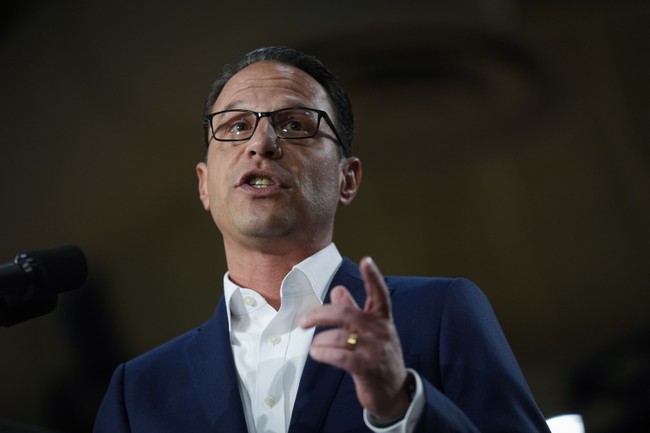
![U.N. Chief Demands 1.3 Trillion Dollars a Year for Costly ‘Climate Chaos’ Crusade [WATCH]](https://www.rvmnews.com/wp-content/uploads/2026/06/2026.06.24-16.32-rvmnews-6a3c068f39a5f.jpg "U.N. Chief Demands 1.3 Trillion Dollars a Year for Costly ‘Climate Chaos’ Crusade [WATCH]")

United Nations Secretary-General António Guterres used a speech at London Climate Action Week on Monday to call for a major expansion of global climate-related spending, urging governments, international lenders, and financial institutions to dramatically increase funding for climate initiatives over the next decade, as reported by Breitbart.
Speaking to attendees at the event in London, Guterres argued that nations must devote more resources to addressing the effects of climate change and supporting infrastructure projects designed to respond to environmental challenges.
“We must do far more to protect people and communities from the here-and-now effects of climate chaos,” Guterres said. “Because even at full speed, we cannot outrun climate change. Its impacts are already here, compounding and cascading.”
The U.N. leader focused part of his remarks on Africa, highlighting the continent’s energy resources while arguing that it receives only a small share of global clean-energy investment despite its potential.
Here’s What They’re Not Telling You About Your Retirement
“Africa is home to 60% of the world’s best solar resources, 30% of critical minerals, 1/5 of humanity,” Guterres continued. “Yet it receives just 2% of global clean energy investment. At the same time, more than 600 million Africans still lack access to electricity. This is unjust and a lost opportunity for Africa and the world.”
Guterres called on developed nations to fulfill existing climate-financing commitments and significantly increase support for developing countries. According to the secretary-general, current pledges are not sufficient to meet the scale of investment he believes is necessary.
“Developed countries must keep their promises, including support to the Fund for Responding to Loss and Damage and the Green Climate Fund. The $300 billion pledged to developing countries must be delivered with concrete steps to mobilize the $1.3 trillion a year by 2035,” Guterres said.
The proposal would represent a substantial increase in international climate-related financing. Guterres argued that additional funding should be directed toward long-term infrastructure projects, including power grids, mass transit systems, and water infrastructure.
This Could Be the Most Important Video Gun Owners Watch All Year
“In a world of shrinking aid, we must also unleash the catalytic role of multilateral development banks and the wider development finance system to help fund long-term infrastructure such as grids, mass transit, and water systems,” he said.
The secretary-general also called for a larger role for international financial institutions, including multilateral development banks, in funding climate and infrastructure projects around the globe.
According to Guterres, recent reforms have expanded the lending capacity of major international development banks by hundreds of billions of dollars, creating additional opportunities for financing large-scale projects.
“Recent reforms and policy decisions have increased the lending capacity of multilateral development banks by 600 to 800 billion U.S. dollars. They must use it aggressively to finance the infrastructure of the future and climate adaptation,” Guterres continued.
He also advocated for longer financing terms to support major projects that require decades of investment and development.
“They must also adapt their instruments to match the scale and time frame of the challenge, including 50-year finance where needed,” Guterres said.
U.N. Secretary-General António Guterres demands $1.3 trillion a YEAR “to protect people and communities from the here-and-now effects of climate chaos”
The doomers are not calling their shakedown “carbon credits” anymore. The new term is “climate adaptation.””Africa is home to… pic.twitter.com/xEU4rfZvmU— Breitbart News (@BreitbartNews) June 23, 2026
The remarks come as governments, international organizations, and financial institutions continue debating how to fund climate-related initiatives while balancing economic growth, energy needs, and development priorities.
Guterres’ proposal would require significant increases in public and private investment and would place renewed pressure on wealthier nations and global lending institutions to expand their financial commitments in the years leading up to 2035.
The Real MOU: What Trump’s Iran Agreement Actually Says – Truth Thursday | EP 677
The opinions expressed by contributors and/or content partners are their own and do not necessarily reflect the views of LifeZette. Contact us for guidelines on submitting your own commentary.
Read the full article here


![NATO Sec. General Praises Trump’s Pressure as Europe Quietly Rides Defense Gravy Train [WATCH]](https://www.rvmnews.com/wp-content/uploads/2026/06/2026.06.24-10.51-rvmnews-6a3bb6b457b81.jpg "NATO Sec. General Praises Trump’s Pressure as Europe Quietly Rides Defense Gravy Train [WATCH]")