Flock Safety spent years selling license plate cameras faster than local officials could ask questions. Now cities are shutting them off. On Wednesday, Tempe, Arizona, shut off all 33 of its Flock license plate readers and announced that it would end its contract. The city won’t hire another company to replace them.
That wasn’t always the plan. On March 26, the Tempe City Council approved a trial of Axon’s Outpost plate readers. The free, 60-day pilot included three fixed cameras and was described at the time as a test of an alternative to Flock. Wednesday’s announcement went further. Councilman Bobby Nichols said Tempe needed to “stop looking for other ALPR providers.”
‘These cameras need to be deactivated immediately.’
So Tempe isn’t merely changing the logo on the pole. At least for now, it’s walking away from fixed plate readers altogether.
Tempe Mayor Corey Woods (D) acknowledged that the cameras helped police but said the potential for abuse was too great. “For Tempe, that means taking these cameras down,” Woods said.
That same day, Sen. Josh Hawley (R-Mo.) launched a Senate investigation into Flock, demanding records from CEO Garrett Langley about data access, camera placement, retention, and sharing. Hawley gave the company until September 8 to respond.
“Americans do not surrender their privacy rights when they drive to work, drop their kids off at school, or go to church,” Hawley wrote.
Hawley wasn’t alone. Sen. Bernie Sanders (I-Vt.) said the same day that he would soon introduce legislation to “stop Flock and AI mass surveillance.” Sanders warned that the network was pushing the country toward a surveillance state run for the profit of “AI oligarchs.”
Flock sold local police departments roadside cameras and connected them to a nationwide system capable of reconstructing where ordinary Americans drive. Most of the people entered into that system aren’t suspects. They’re going to work, church, school, the gun store, the doctor, or wherever else free people go without asking the government for permission.
Knox County may be next
In Tennessee, the Knox County Sheriff’s Office has operated Flock cameras since 2020 and now has 143 of them, according to reporting by the Knoxville News Sentinel. The department planned to install another 270 with state grant money.
County officials then started asking basic questions. Is there a valid contract? Who approved it? Where are the cameras? Who can search the data?
Knox County Mayor Glenn Jacobs (R) says the original agreement expired in 2024 and that there’s no valid service contract governing the current cameras. Records reviewed by county officials also showed the sheriff’s office repeatedly purchasing Flock equipment in batches priced just below the threshold that would have triggered mayoral review.
RELATED: When did we agree to be watched?
Justin Sullivan/Getty Images
“These cameras need to be deactivated immediately,” Commissioner Kim Frazier said during an August 24 meeting. “You don’t have an active agreement.”
Jacobs has told Flock that the county will not renew the deal even if the company maintains that it is valid. Existing cameras remain active for now, but installation of new ones has stopped. The County Commission is scheduled to vote August 31 on an ordinance regulating the cameras. A proposed amendment would order Flock’s equipment removed within 30 days, though its sponsor says final passage would require a second reading in September.
Knox County hasn’t pulled the plug. Yet. But the county installed 143 cameras before commissioners could get straight answers about whether the contract was valid, where the cameras had been placed, or who inside the sheriff’s office controlled them. That should bother even people who like the cameras.
The cancellations are piling up
By mid-August, the Associated Press reported that more than 50 agencies or jurisdictions had canceled, suspended, rejected, or deactivated a Flock system since the beginning of the year, according to a tracker maintained by the anti-Flock group DeFlock.
The day before Tempe’s announcement, the Asheville City Council voted 5-2 to terminate its Flock contract, remove the hardware, and stop employees from accessing or sharing the data.
In Missouri, the St. Charles County Police Department discontinued Flock and began terminating its contract after an audit found that a civilian employee had searched the system for a personal, non-law-enforcement purpose. The employee resigned after receiving notice of termination.
Arizona has become a particularly bad market for the company:
The Josephine County Sheriff’s Office in Oregon canceled its contract and deactivated 10 cameras after residents objected on Fourth Amendment grounds. The sheriff’s office said the technology had helped solve crimes but conceded that much of the county was not willing to accept it.
In Massachusetts, Salem declined to renew its contract, citing insufficient protections for locally generated data. Salem plans to replace Flock with a system that keeps the data under local control, which is an improvement but hardly the end of automated plate tracking.
Stoughton, Wisconsin, shut the whole thing down. Its council unanimously terminated a two-year contract only months after the cameras were installed. The resolution called for shutting down and removing the cameras, deleting collected data, and barring the city from buying a replacement without a new public oversight process.
RELATED: Student accused of destroying Flock cameras — his community comes out to defend him
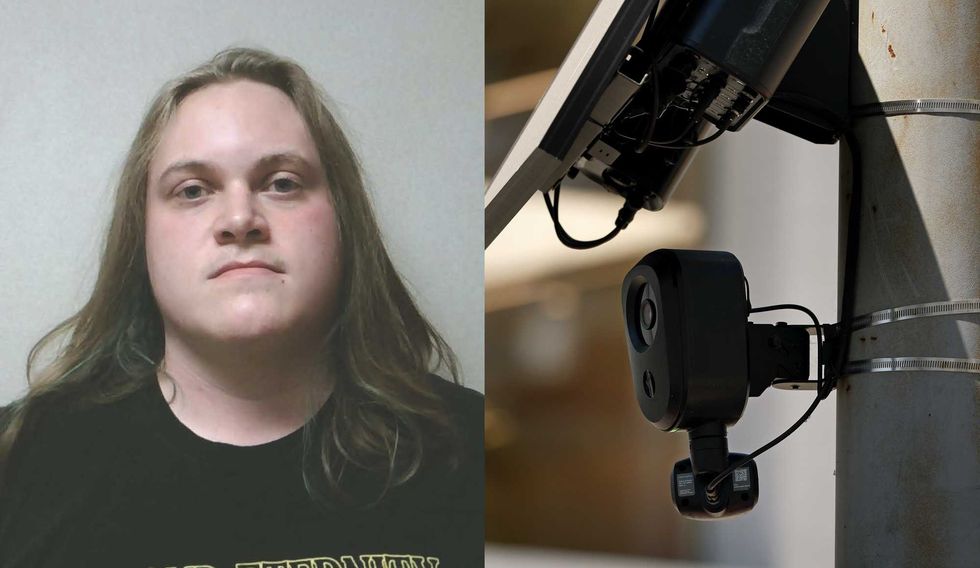 L-R: Monongalia County Sheriff’s Office press release; Justin Sullivan/Getty Images
Redmond, Washington, canceled its contract in a unanimous July vote and ended the city’s plate-reader program after deactivating the cameras months earlier. The LAPD stopped using Flock when its agreement expired, pending stronger terms for data ownership, privacy, security, and sharing. Officials left open the possibility of a new contract. Denver and Colorado’s Douglas County are replacing Flock with Axon.
Flock’s loss may be Axon’s gain
Axon has noticed the opportunity. CEO Rick Smith told investors that the company was seeing “a significant number of agencies” switch from other plate-reader systems to Axon. While Knox County is debating getting rid of its 143 Flock cameras, in January, the Knoxville City Council approved a $9.4 million expansion of the police department’s Axon contract. The package included plate readers along with additional body cameras, in-car cameras, and drones. The Knoxville Police Department now says it operates 19 fixed Axon plate readers and 30 mobile readers built into police dashcams. It keeps plate data for 30 days. Searches must be tied to an incident report number and are logged for auditing.
Those controls are better than a free-for-all. They don’t make the cameras stop recording innocent drivers.
Axon’s fixed Outpost cameras combine plate reading, vehicle identification, and live video. In July, the company also began rolling out cross-agency ALPR sharing. Axon’s version isn’t identical to Flock’s national network. Sharing is off by default, initiated by the agency that owns the data, and subject to offense categories and audit logs. But an agency can still let another department search its plate records.
Flock built the network first and the guardrails later
Flock now says it operates more than 120,000 cameras across roughly 6,000 communities. Together, they produce about 20 billion vehicle scans every month.
A Washington Post investigation found at least 50 officers who had been charged with or accused of misusing automated plate-reader systems, often to track current or former romantic partners.
One former Georgia police chief allegedly searched for his ex-girlfriend and her teenage daughter roughly 600 times. In Wisconsin, an officer allegedly searched plates connected to his ex-girlfriend and her partner 179 times, including checking whether she had visited an abortion clinic.
Flock’s CEO has said human misuse is inevitable and that the company’s job is to provide tools that catch it. In August, the company announced new safeguards that will make several previously optional controls mandatory by January 1. Law-enforcement customers will have to tie searches to case numbers, use software intended to flag abnormal search behavior, and review emergency overrides. Flock also shortened its standard retention period from 30 days to seven, though customers may configure it differently under their own laws and policies. The Associated Press has a useful summary of the changes.
Any check on abuse is better than none. But Flock added these rules only after its network was recording billions of vehicle movements every month. Local officials were sold a crime-fighting tool. What they got was access to a national location-search system. Its limits depended on company policy and department rules, plus the honesty of every employee handed a login.
There isn’t a clean partisan story here. Hawley and Sanders agree on very little, but both are now calling for federal action against Flock. Asheville, Tempe, and county sheriffs in Arizona and Oregon have reached similar conclusions for different reasons. A government camera network that records everyone by default and sorts out abuse afterward has the presumption backward.
Most of these towns never had a real debate until the cameras were already watching them. They should have.
Read the full article here



![Trump Secures ‘Biggest Oil Deal in World History,’ More Than Doubles American Oil Reserves [WATCH]](https://www.lifezette.com/wp-content/uploads/2026/01/2026.01.05-01.09-lifezette-695bb8143882a.jpg "Trump Secures ‘Biggest Oil Deal in World History,’ More Than Doubles American Oil Reserves [WATCH]")
![Don Lemon Bashes CNN, Invokes Inner Malcolm X, Attacks White Working Class Voters [WATCH]](https://www.lifezette.com/wp-content/uploads/2025/09/2025.09.23-09.05-lifezette-68d262ce55ce6.jpg "Don Lemon Bashes CNN, Invokes Inner Malcolm X, Attacks White Working Class Voters [WATCH]")