

I have no desire to run for public office. The last elected position I held was junior class vice president at St. Francis High School in La Cañada, California. That was in the late ’80s. My campaign for senior class president failed spectacularly and culminated with a lecture from a courageous Cuban refugee on democracy properly understood — a humbling story for another time.
Apart from that, I have no desire to spend weeks or months of a campaign defending every little thing I’ve said and written over the past 40 years, which, at this point, amounts easily to a couple million words.
Repentance requires confession. Rebranding only requires a delete button. Voters are entitled to know which one they’re looking at.
No, I’m not going to disavow the column I wrote for the UCSD Guardian in the early 1990s arguing, more or less, for the repeal of the 26th Amendment. Yes, I stand by the piece I wrote for the Sacramento Bee more than a decade ago declaring Millennials “the Idiot Generation.”
But that’s part of the deal. When you run for office, you’re running on your record.
Which makes the spectacle of Democratic candidates — democratic socialists especially — frantically scrubbing inconvenient old social-media posts so absurd. And so very delicious.
People are allowed to change their minds. Politicians too. Heaven knows I have.
But changing your mind is not the same thing as deleting evidence that you once held certain opinions.
Michigan Democratic Senate nominee Abdul El-Sayed is learning this lesson the hard way.
El-Sayed had already been taking flak over his relationship with left-wing streamer Hasan Piker, who notoriously said, “America deserved 9/11.” El-Sayed disavowed Piker’s comments in early August.
But now a deleted El-Sayed post from the 20th anniversary of 9/11 has resurfaced. He mourned the nearly 3,000 Americans murdered that day, then turned to the far larger number of people he said were killed in Afghanistan, Iraq, and Pakistan in the wars that followed.
I don’t particularly care whether El-Sayed’s argument offends anybody. Foreign policy is debatable. So are America’s wars. I care that he tried to make the argument disappear.
If he believes it, he should defend it. If he doesn’t, he should explain why not. But he shouldn’t get to hide.
RELATED: Hasan Piker is the anti-Charlie Kirk
Blaze Media Illustration
There is an amusing wrinkle. El-Sayed’s communications director, Roxie Richner, has a remarkable social-media record of her own. During the “Summer of Floyd” in 2020, the freckle-faced ginger girl declared that “all white women are policy failures,” lectured white people about “dismantling white supremacy,” and lashed out at people asking whether she was defending looting.
Richner was young. Very young. And demonstrably stupid. She had interned for El-Sayed’s 2018 gubernatorial campaign when she was just 16.
But she was hardly some random teenager sounding off online. By 2020, she was already working professionally in Democratic politics.
Should something an 18-year-old tweeted follow her forever? Probably not. But if those views no longer represent her, the obvious question is the same one her boss should answer: What changed?
Which brings me to Darializa Avila Chevalier, scourge of the American empire and Western civilization.
The New York democratic socialist congressional nominee deleted an old Twitter account from which the Internet Archive preserved more than 3,600 posts. Among them were praise for Marxism and communism, demands to abolish police, prisons, and borders, and some spicy rhetoric about seizing private property.
Chevalier wants voters to know she has “grown considerably.”
Growth is good! But forgive me if I have a few questions.
What precisely was the catalyst for that considerable growth? Did it occur before or after she decided to run for Congress? Which of those old positions — if any — does she now reject? Does she still favor abolishing “the very concept of policing”? What about prisons? Borders? All private property?
Which belief did she abandon first, and what convinced her it was mistaken? Apart from political viability, obviously.
Those are exactly the questions anyone claiming political maturation should be prepared — even eager — to answer.
Growth describes movement from one place to another. If a candidate wants credit for the distance traveled, voters have a right to know where she started, where she ended up, and what happened along the way.
Otherwise, “I’ve grown” isn’t so much an explanation as it is a cheap evasion.
RELATED: Woke 2.0 is coming … and it will be worse
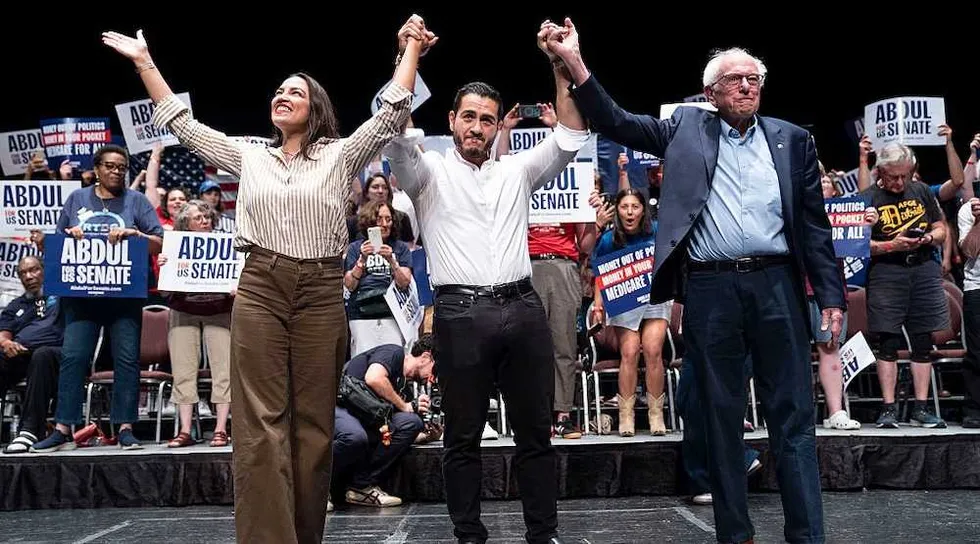 Photo by Sarah Rice/Getty Images
Wisconsin’s Francesca Hong offered another funny variation this summer. In 2020, the failed democratic socialist gubernatorial candidate posted “Cancel Thanksgiving,” calling the holiday a celebration of colonialism. The post disappeared. This summer, Hong announced that Thanksgiving was actually her “favorite holiday.”
I guess the turkey won her over. Unfortunately for Hong, it didn’t win over the voters.
Scrubbing inconvenient positions from the public record is not exclusively a Democratic vice. Republicans do it too. Trump-backed Maryland gubernatorial nominee Dan Cox scrubbed portions of his website after winning his 2022 primary. This year, Republican congressional candidates Eric Flores and Ralph Alvarado quietly de-emphasized their support for the president on their websites after securing their nominations.
The rule applies to everybody.
It’s not like we’re talking about stray remarks uttered after a few drinks at somebody’s wedding. These were political statements (“arguments” might be too generous a term), made publicly and often repeatedly, because the people making them wanted other people to like and share them.
Then some of them decided to run for higher office and discovered that an electorate is considerably larger and less zealous than activists at a DSA meeting.
The Wayback Machine is not an opposition-research dirty trick. It is your record.
But I’m happy to offer an honorable way out. Fess up. Own it.
“Yes, I said it. I believed it. I was wrong.” Then explain why.
Or: “Yes, I said it. I still believe it. Elect me or don’t.”
I would respect either answer.
Some things I’ve said and written over four decades have aged well. Some haven’t. Some undoubtedly look pretty dumb today — I assume. They’re still mine.
Repentance requires confession. Rebranding requires a delete button.
Voters are entitled to know which one they’re looking at.
Read the full article here