
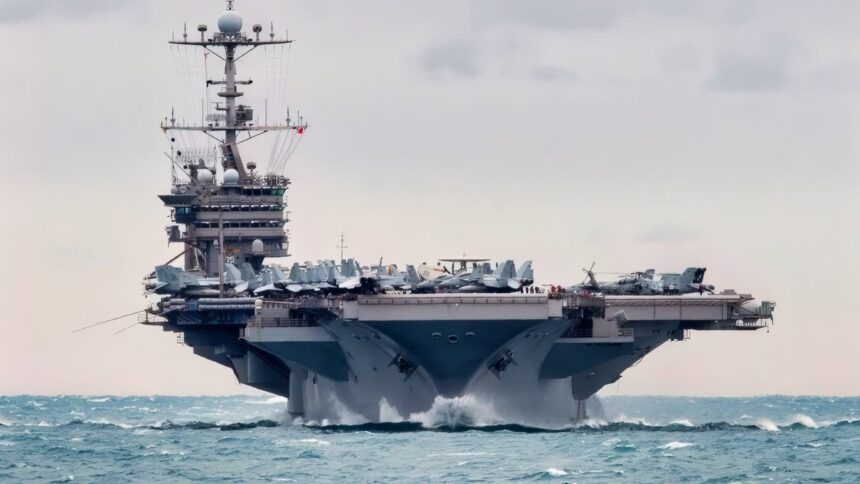

Every Nimitz-class nuclear aircraft carrier is designed to serve for approximately 50 years. But to reach the 50-year mark, each carrier must undergo one enormous maintenance event around the 25-year mark: the Refueling and Complex Overhaul, or RCOH.
This is far different from pulling a conventional ship into dry dock for an engine overhaul; the RCOH requires opening the carrier up, refueling its nuclear reactors, rebuilding major portions of the ship, and removing and replacing decades of accumulated technological obsolescence at once.
ATLANTIC OCEAN (Aug. 30, 2018) An MH-60S Sea Hawk helicopter assigned to Carrier Air Wing (CVW) 7 flies by the Nimitz-class aircraft carrier USS Abraham Lincoln (CVN 72) during dual-carrier sustainment operations with the Nimitz-class aircraft carrier USS Harry S. Truman (CVN 75). In addition to demonstrating the Navy’s inherent flexibility and scalability, this evolution provides the opportunity to conduct complex, multi-unit training to enhance maritime interoperability and combat readiness; prepare the Navy to protect our homeland; and preserve and promote peace anywhere around the world. (U.S. Navy photo by Mass Communication Specialist 3rd Class Juan Sotolongo/Released)
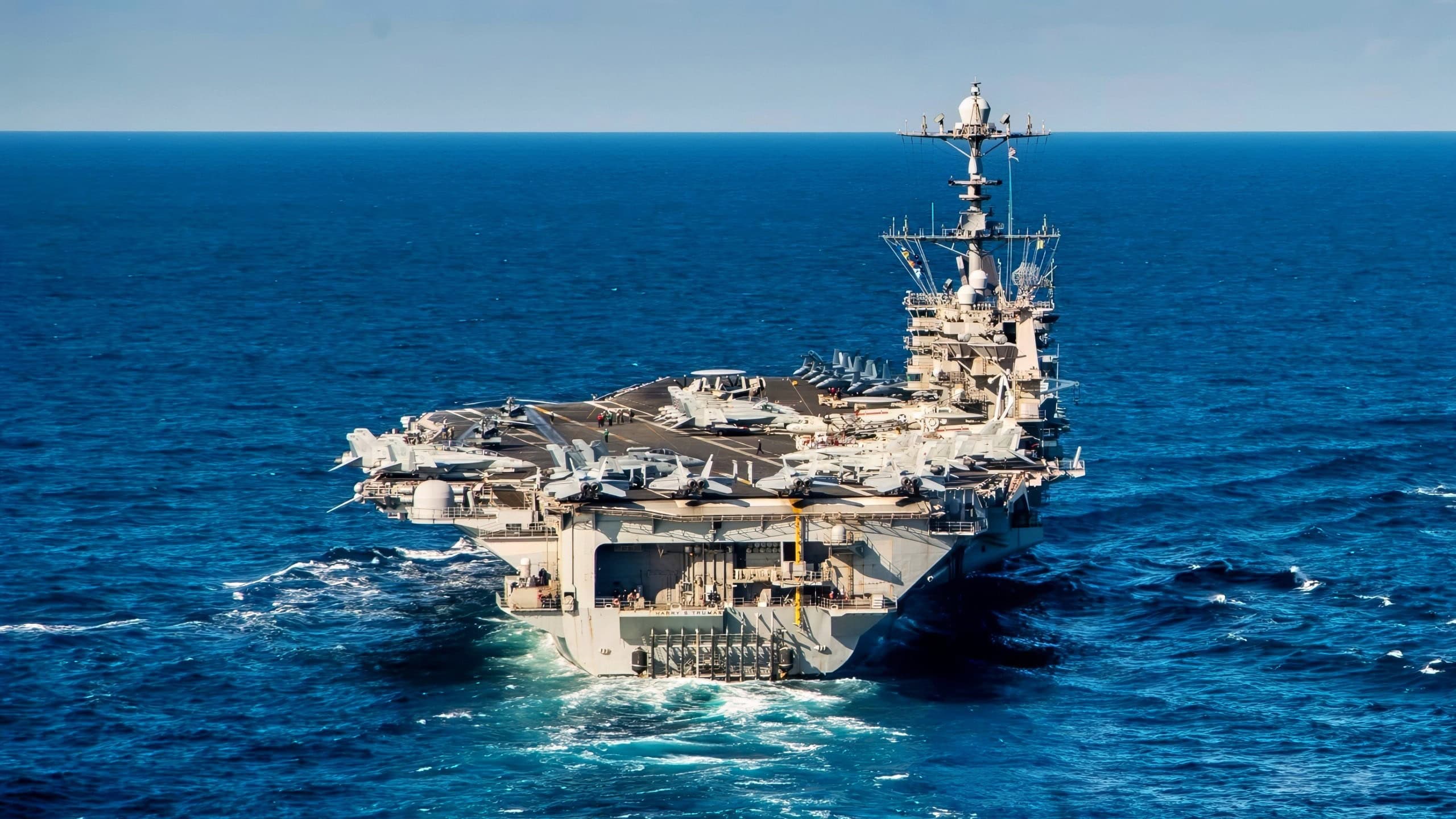
MEDITERRANEAN SEA (Jan. 22, 2021 The Arleigh Burke-class guided-missile destroyer USS Gravely (DDG 107) breaks away from the Nimitz-class aircraft carrier USS Harry S. Truman (CVN 75) following a replenishment-at-sea exercise, Jan. 22, 2022. The Harry S. Truman Carrier Strike Group is on a scheduled deployment in the U.S. Sixth Fleet area of operations in support of naval operations to maintain maritime stability and security, and defend U.S., allied and partner interests in Europe and Africa. (U.S. Navy photo by Mass Communication Specialist 3rd Class Bela Chambers)
The process is extensive, taking upwards of four years and costing billions of dollars. The work is performed at Newport News Shipbuilding in Virginia.
And while the work is underway, something strange happens: the US spends billions and billions to maintain a ship that, for years, has offered no operational presence whatsoever.
So why does the US accept such a tradeoff? Because the payoff for the RCOH investment is another quarter-century of ultra-endurance service from one of the most capable warships ever built.
The Refueling
Obviously, a nuclear carrier doesn’t feature a big tank of nuclear fuel. Rather, it has reactors that contain uranium-bearing fuel elements, whose fission generates heat.
The heat converts water into steam, and that steam drives turbines that propel the ship and generate electricity. It’s an ingenious system that can propel a one-thousand-foot warship and support the enormous electrical loads required to operate such a vessel, indefinitely.
A Nimitz-class ship has two Westinghouse A4W pressurized-water reactors, which were designed with the understanding that a refueling cycle would be necessary around the midlife mark.
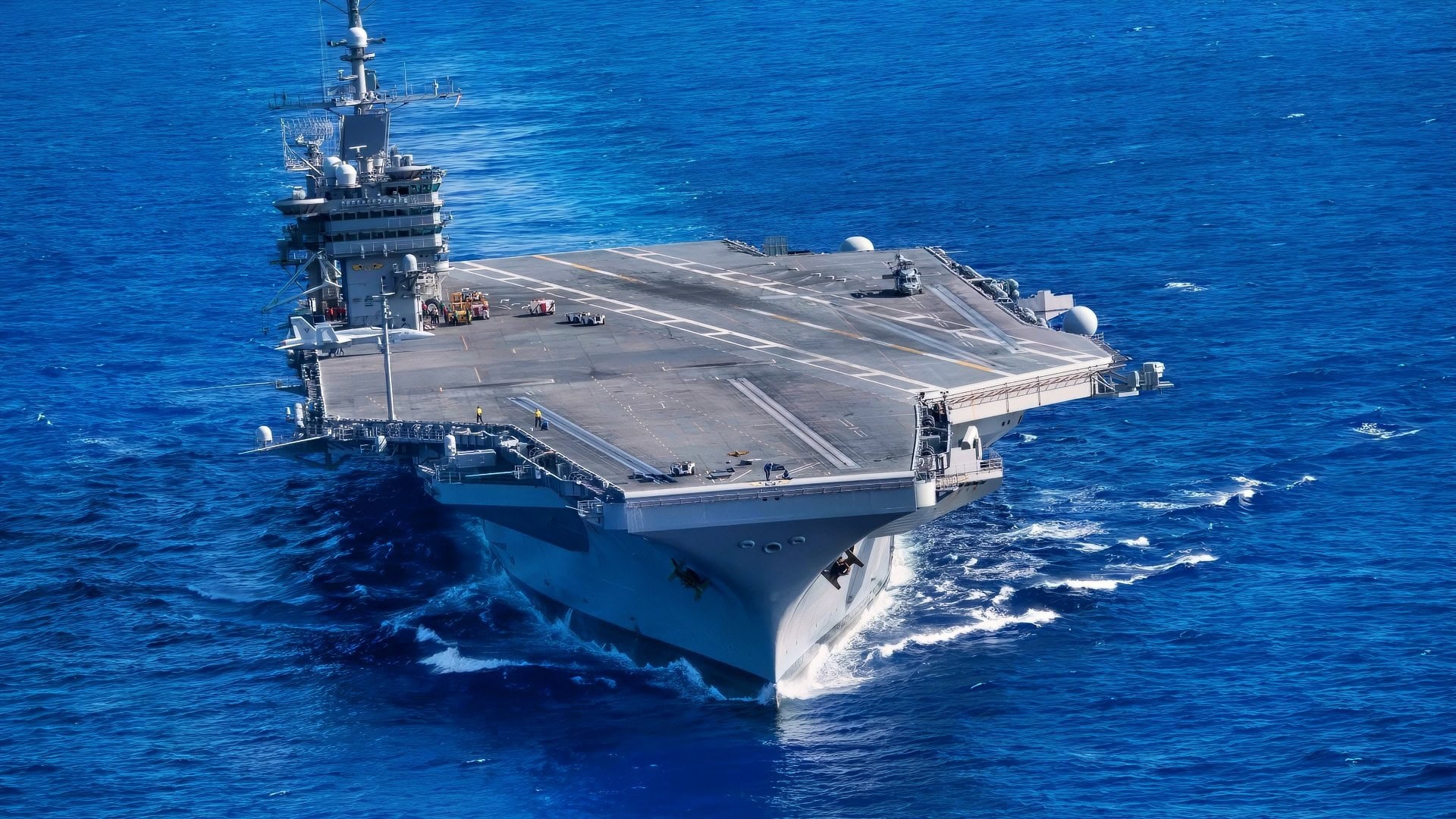
The aircraft carrier USS John C. Stennis (CVN 74) steams through the Atlantic Ocean, Sept. 6, 2019. The John C. Stennis is underway as part of a Commander, U.S. 2nd Fleet ordered sortie ahead of Hurricane Dorian, which is forecasted to bring high winds and heavy rain to the East Coast. Ships are being directed to areas in the Atlantic Ocean where they are best postured for storm avoidance. (U.S. Navy photo by Mass Communication Specialist 3rd Class Grant G. Grady)
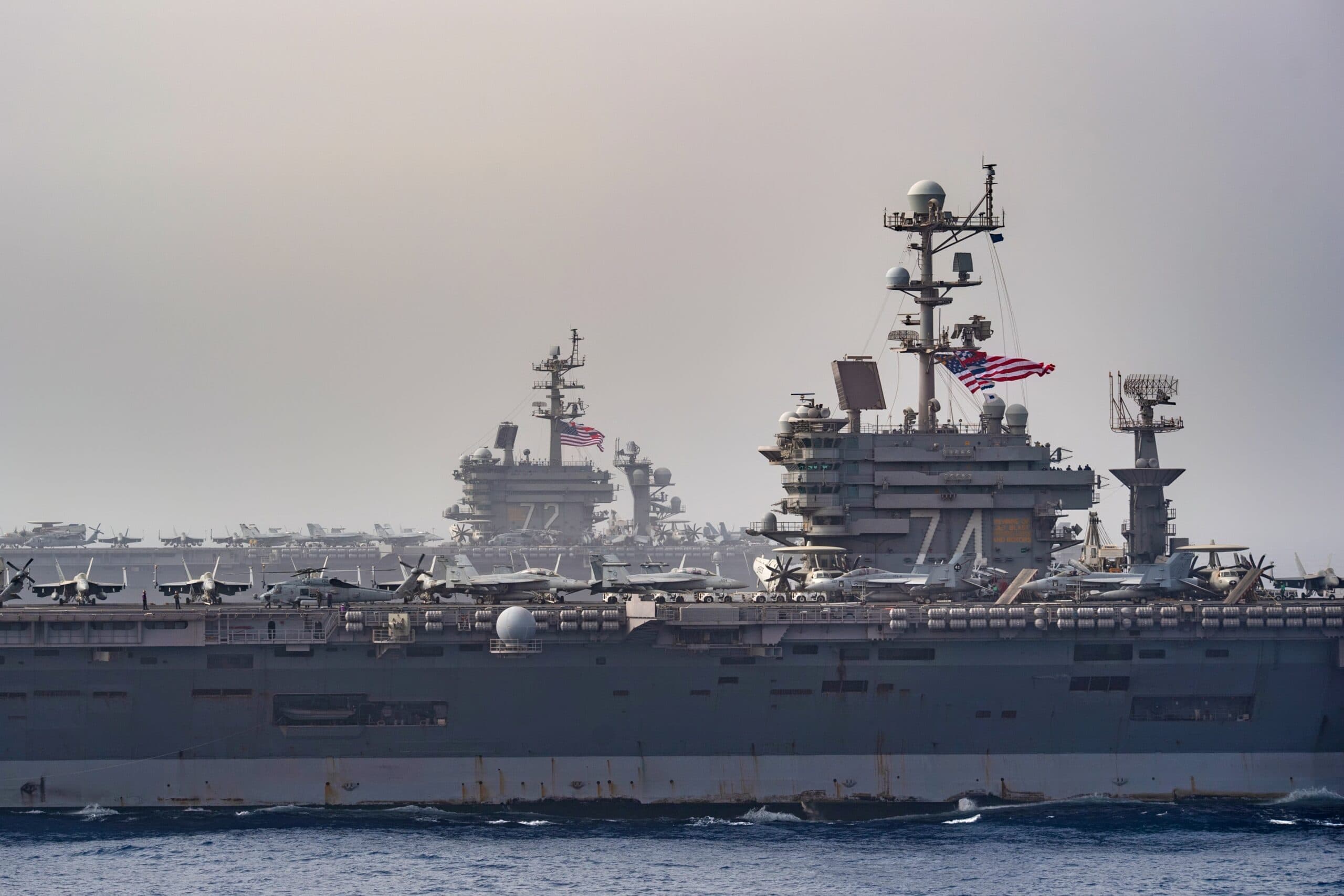
The aircraft carrier USS John C. Stennis (CVN 74) steams alongside the aircraft carrier USS Abraham Lincoln (CVN 72), background, in the Mediterranean Sea, April 24, 2019. The John C. Stennis Carrier Strike Group (CSG) 3 and Abraham Lincoln Carrier Strike Group (CSG) 12 are conducting dual carrier operations, providing opportunity for two strike groups to work together alongside key allies and partners in the U.S. 6th Fleet area of operations. John C. Stennis is underway in the Mediterranean Sea as part of the John C. Stennis Carrier Strike Group (JCSCSG) deployment in support of maritime security cooperation efforts in the U.S. 6th Fleet area of responsibility. (U.S. Navy photo by Mass Communication Specialist 3rd Class Grant G. Grady)
After 20–25 years, the reactors consume enough fissile material that their core characteristics change, requiring the ship to be refueled to maintain its planned 50-year service life.
The requirement here is substantially more involved than just refueling a gas-turbine ship; the Nimitz’s reactor is buried inside the 100,000-ton warship and demands extensive work.
Indeed, the reactor is deliberately buried inside the carrier—behind structural compartments, shielding, machinery, and armored spaces.
This arrangement works for combat but is unpleasant for maintenance.
Workers must create carefully controlled access routes through the ship, removing components before reaching reactor spaces.
And of course, the work is nuclear in nature, demanding exacting cautions like radiation monitoring, contamination controls, specialized nuclear-certified workers, perfect documentation, and the handling and disposition of spent nuclear fuel.
And that’s just the refueling portion—the “R” in the “RCOH.”
The COH
While the Nimitz is being gutted to allow nuclear work, the Navy takes advantage of the downtime and unique access to perform a massive midlife modernization.
The hull is inspected and repaired to compensate for decades of exposure to saltwater and flight operations. The propulsion equipment is refurbished.
The electrical distribution systems are overhauled.
The catapults and arresting gear are serviced. Everything receives work—the aviation fuel infrastructure, elevators and aircraft-support systems, combat systems, radar, communications, and electronic warfare systems. Everything. Even the crew spaces.
Basically, the Nimitz is taken apart and rebuilt to modern standards.
Does This Make the Case for Conventional Carriers?
There is a case for conventional carriers, sure. Conventional propulsion avoids nuclear reactors, nuclear-trained crew requirements, reactor refueling, and nuclear-certified shipyard infrastructure. Conventional carriers would save billions over the course of the ship’s lifecycle.
If, for some reason, the US doctrine was more regionally focused and less concerned with global affairs, then yes, conventional carriers might make more sense.
But nuclear power gives the ship extraordinary endurance and sustained power.
A nuclear carrier can reposition immediately without taking on additional fuel.
That becomes vital when carriers are asked to move across far-flung regions such as the Western Pacific, the Indian Ocean, the Persian Gulf, the Atlantic, and the Mediterranean.
Nuclear propulsion lets the US move with the operational flexibility its doctrine demands.
Still, the downsides of nuclear propulsion are real, with the RCOH serving as a primary example. But these are the downsides of the US doctrine—the cost of enacting a global vision in multiple theaters simultaneously.
The US pays a steep price to enact its doctrine. Nuclear carriers and their myriad costs and requirements are just the mechanized manifestations of the price the US pays for imposing its doctrine.
About the Author: Harrison Kass
Harrison Kass is a writer and attorney focused on national security, technology, and political culture. His work has appeared in Tablet, City Journal, The Hill, The Spectator, and The Cipher Brief. He holds a JD from the University of Oregon and a master’s in Global & Joint Program Studies from NYU. More at harrisonkass.com.