


Summary and Key Points: Lockheed, which had just built the F-117, refused to bid on the A-12 Avenger II. Northrop, which had built the B-2 and was teamed with Grumman, refused too — and told the Navy its cost estimate was at least $2,000,000,000 short and that the required technologies did not yet exist. The Navy signed anyway, with the one team willing to accept the terms: a fixed-price contract with a target of $4,380,000,000 and a ceiling of $4,840,000,000, covering 8 aircraft and 4 test articles, for an airplane that depended on stealth coatings, large composite structures and a radar nobody had yet built. Not one A-12 ever flew. Dick Cheney terminated the program in January 1991, and the lawsuit over who owed whom ran for 23 years.
The Sad Story of the A-12 Avenger II Stealth Bomber
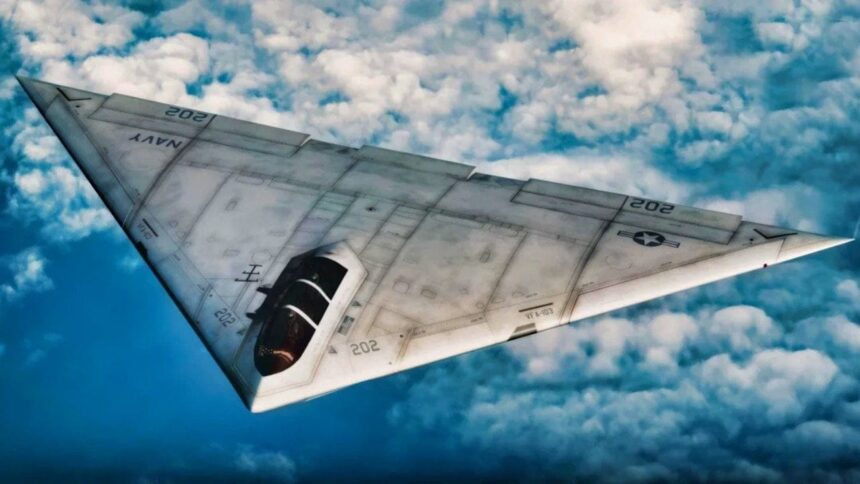
The A-12 Avenger II is remembered as a $5 billion stealth jet that never flew, a failure of overweight design and runaway cost.
But the deeper cause of the disaster was not the airplane. It was the contract: a fixed price set in stone for technology that had not yet been invented, a structure so dangerous that the most experienced teams in the competition refused to touch it. That trap helped bring down a legendary planemaker, and thirty-five years later, Boeing is bleeding billions of dollars on exactly the same kind of deal. The A-12’s most important legacy is a lesson Washington keeps paying to relearn.
Most accounts of the A-12 Avenger II, the Navy’s canceled “Flying Dorito,” treat it as a story about an aircraft.
The tailless stealth attack jet grew roughly 30 percent overweight, its radar proved fiendishly complex, and in January 1991, Defense Secretary Dick Cheney terminated it because no one could tell him what it would finally cost.
All true, for sure.
But focusing on the airplane misses the more important and transferable lesson: the A-12 was doomed less by its engineering than by the way the Navy chose to buy it. It signed a fixed-price contract for something no one yet knew how to build, and that single decision is what turned an ambitious program into the largest contract termination in Pentagon history at the time.
The Contract That Fixed a Price on the Impossible
In January 1988, the Navy awarded the A-12 development contract to a team of McDonnell Douglas and General Dynamics. Crucially, it was a fixed-price incentive contract, with a target price of $4.38 billion and a ceiling of $4.84 billion, covering the development and delivery of eight aircraft and four test articles. On paper, that looked like a way to protect taxpayers by capping the government’s exposure.
In practice, it was a category error.
A firm-fixed-price development contract makes sense under one set of conditions: the requirements are stable, the technology is mature, and the contractor can reasonably estimate and absorb the costs.
The A-12 met none of those conditions. It depended on immature stealth coatings, large composite structures that the American industry was still learning to manufacture, and an advanced radar that did not yet exist in workable form.
As the Defense Acquisition University’s own case study notes, senior Navy leaders suffered a fundamental misunderstanding of the contract they had written, at times behaving as if they had awarded a flexible cost-reimbursement deal when they had, in fact, locked the contractors into a fixed price.
You cannot fix a firm price on something you have not yet figured out how to invent. The A-12 tried to, and the gap between the promised price and the true cost of solving those unsolved problems is where the program died.
The Experienced Bidders Saw the Trap and Ran
The most damning evidence that the contract, not the airplane, was the fatal flaw is what the competition’s most qualified players did when they saw the terms. They walked away.
B-2 Spirit Stealth Bomber. 19FortyFive.com Photo from National Museum of the U.S. Air Force Visit in 2025.
Lockheed, which had built the F-117 stealth fighter, refused to compete at all, rejecting both the fixed-price structure and the Navy’s performance demands as technologically infeasible. The rival Northrop team, which combined the stealth experience behind the B-2, deep composite expertise, and Grumman’s unmatched record building carrier aircraft, also refused to bid on a fixed-price basis.
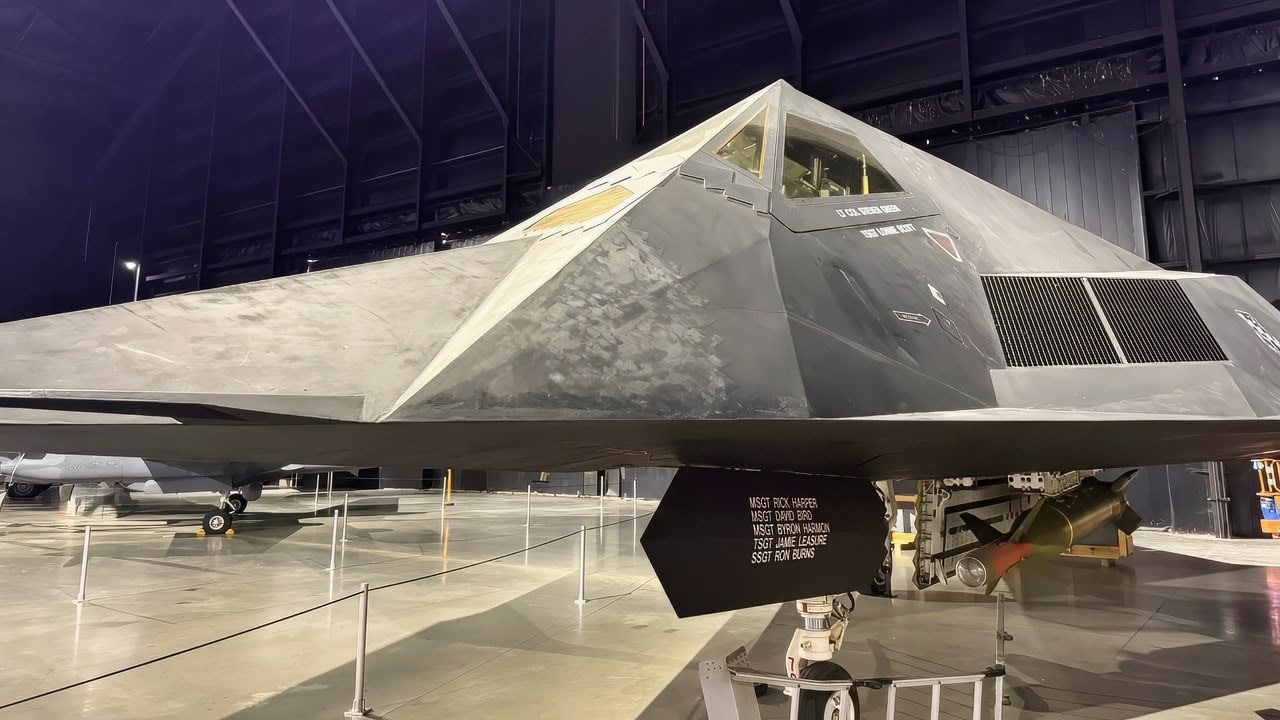
F-117A Nighthawk at USAF Museum. Image taken by 19FortyFive Owner, Harry J. Kazianis.
More than that, it told the Navy its cost estimates were at least $2 billion short and warned that the required technologies were not yet available, something the litigation record later showed the Navy already knew. Grumman, in particular, remembered being burned by a fixed-price development deal on the F-14 years earlier and would not repeat it.
That left the field to the McDonnell Douglas and General Dynamics team, a pairing with comparatively little experience in stealth or large composite structures, willing to accept terms the veterans had judged impossible. The Navy got the bid it wanted. It did not get an airplane.
When the Bill Came Due for the A-12 Avenger II
Because the contract was fixed-price, the consequences of that impossible bargain landed almost entirely on the contractors, which is exactly how fixed-price contracts are designed to work.
As the technical problems mounted, the weight climbed, the radar faltered, and the schedule slipped, there was no mechanism to spread the pain back to the government. By the time Cheney terminated the program for default in early 1991, just under $3 billion had been spent, most of it on a full-scale development effort that had produced no flyable aircraft. The government then demanded the contractors repay most of what they had received.
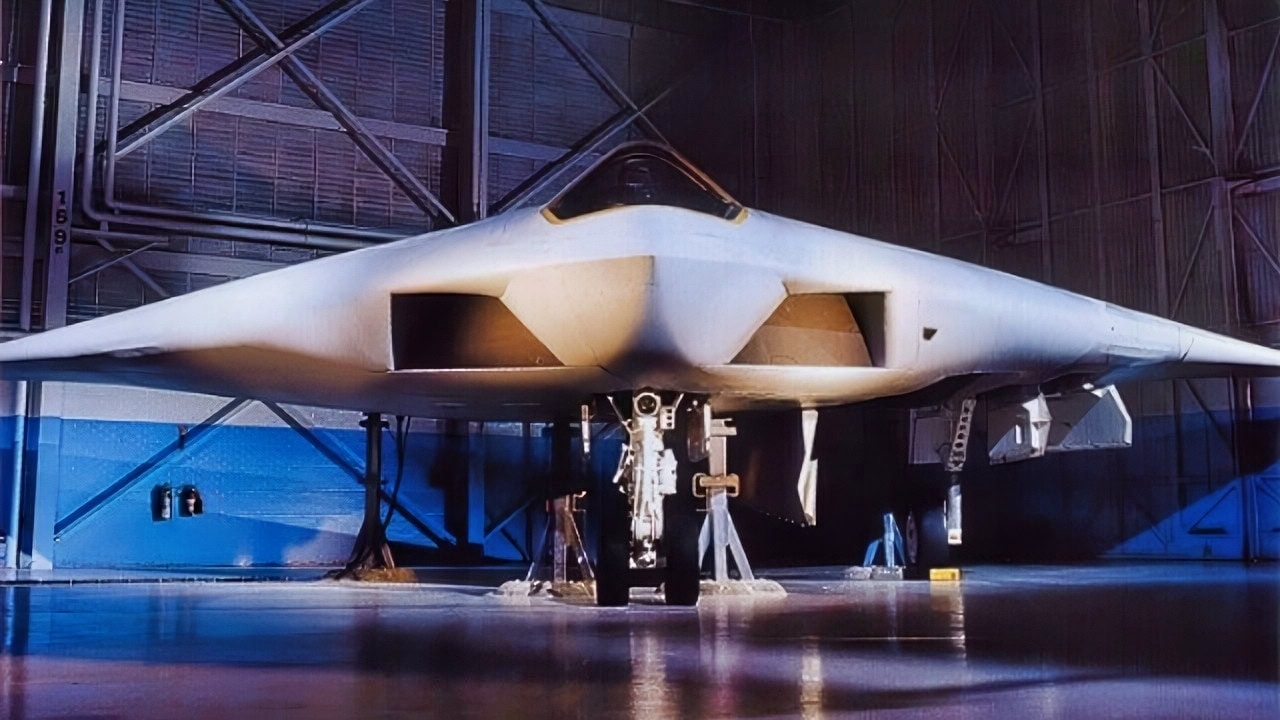
A-12 Avenger II Photo Media Handout
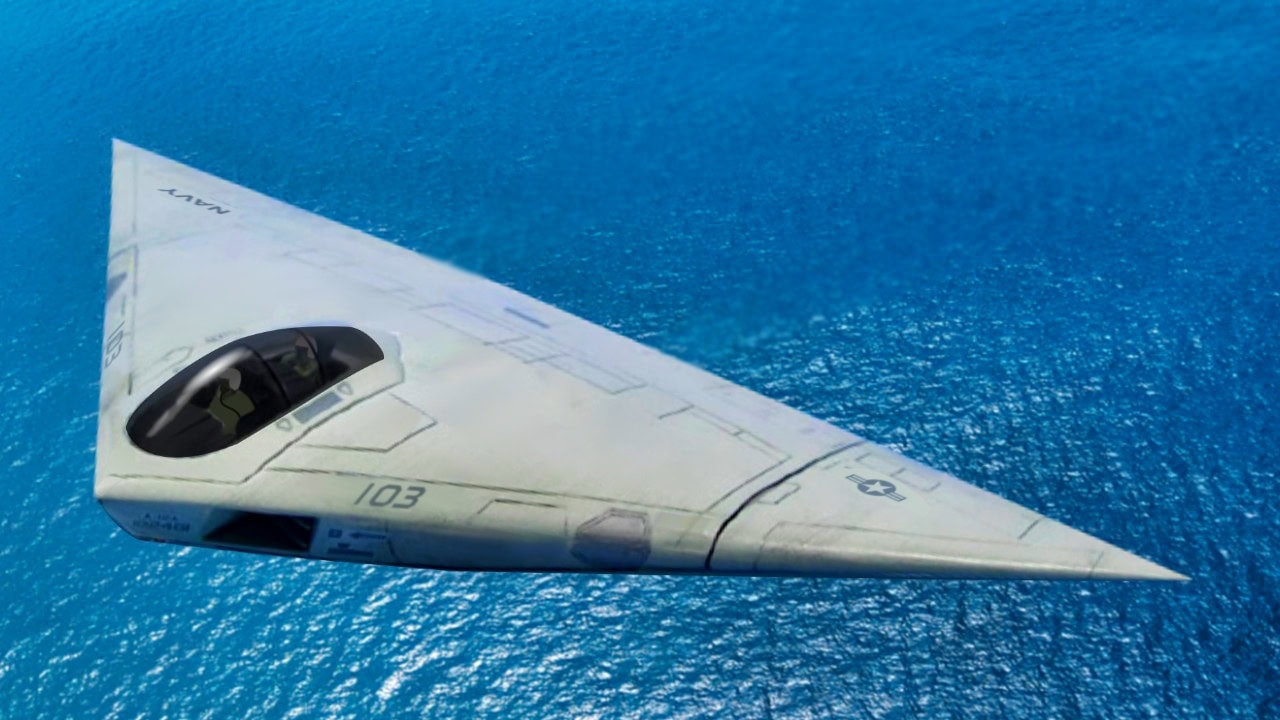
A-12 Avenger II. Image Credit: Creative Commons.
The historian James Stevenson spent years and millions of pages of declassified documents on the affair, and he began his book, tellingly titled The $5 Billion Misunderstanding, suspecting the contractors had tried to cheat the Navy.
He came away convinced of nearly the opposite, that they were victims of a naval establishment eager to shift blame for its own failures onto the private sector, and he was sharply critical of Cheney’s team for failing to control the Navy. The lawsuit over who owed whom ran for an astonishing 23 years before settling in 2014. The aircraft never flew, but the fight over the contract outlasted the Cold War.
The Blow That Helped End McDonnell Douglas
The damage did not stop at the courtroom. The A-12 cancellation is widely regarded as one of the heavy blows that weakened McDonnell Douglas through the 1990s, a company that had been one of America’s premier military aircraft builders.
It was not the sole cause of the firm’s decline; other lost competitions and a shrinking post-Cold War market mattered too, but it was a significant one, and by 1997, a diminished McDonnell Douglas was absorbed into Boeing.
A contract structure meant to protect the public had helped hollow out one of the two companies capable of building the Navy’s carrier aircraft, leaving the country with one fewer competitor for every subsequent program. The taxpayer protection came at the cost of industrial capacity, which is its own kind of expense.
Fixed-Price Isn’t the Villain. Misapplying It Is.
None of this means fixed-price contracts are bad, and it would be wrong to draw that lesson. They exist for good reasons. When the government knows exactly what it wants and the technology is proven, a fixed price is the taxpayer’s best friend, forcing the contractor to bear the risk of inefficiency rather than billing the public for every overrun.
That is precisely why the Air Force has increasingly pushed fixed-price terms onto contractors, and why, when Boeing’s KC-46 tanker ran more than $7 billion over its ceiling, the government’s financial exposure stayed capped while Boeing ate the loss.
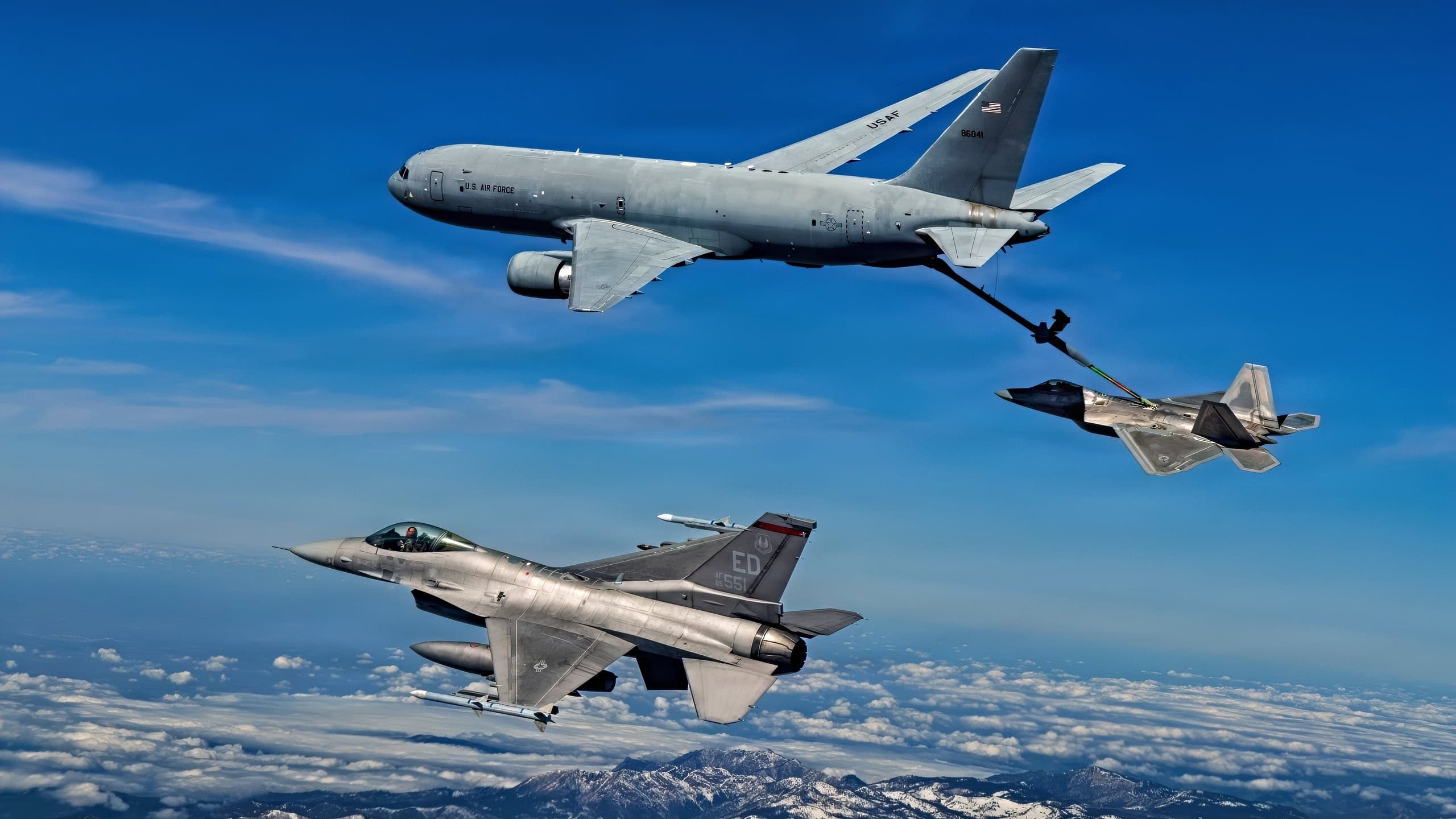
A KC-46 Pegasus assigned to the 418th Flight Test Squadron, Global Reach Combined Test Force, refuels an F-22 Raptor assigned to the 411th Flight Test Squadron, Air Dominance Combined Test Force while an F-16 assigned to the 416th Flight Test Squadron, Airpower Foundations Combined Test Force, awaits a turn over the Mojave Desert on March 3, 2026. Partnerships between the Combined Test Forces at Edwards helps expedite critical capability for the warfighter by leveraging multiple program portfolios in tandem. In this scenario, the F-16 aircraft was operating as a target for key F-22 Raptor test points while the KC-46 was able to collect additional data for aerial refueling efforts. (Courtesy photo)
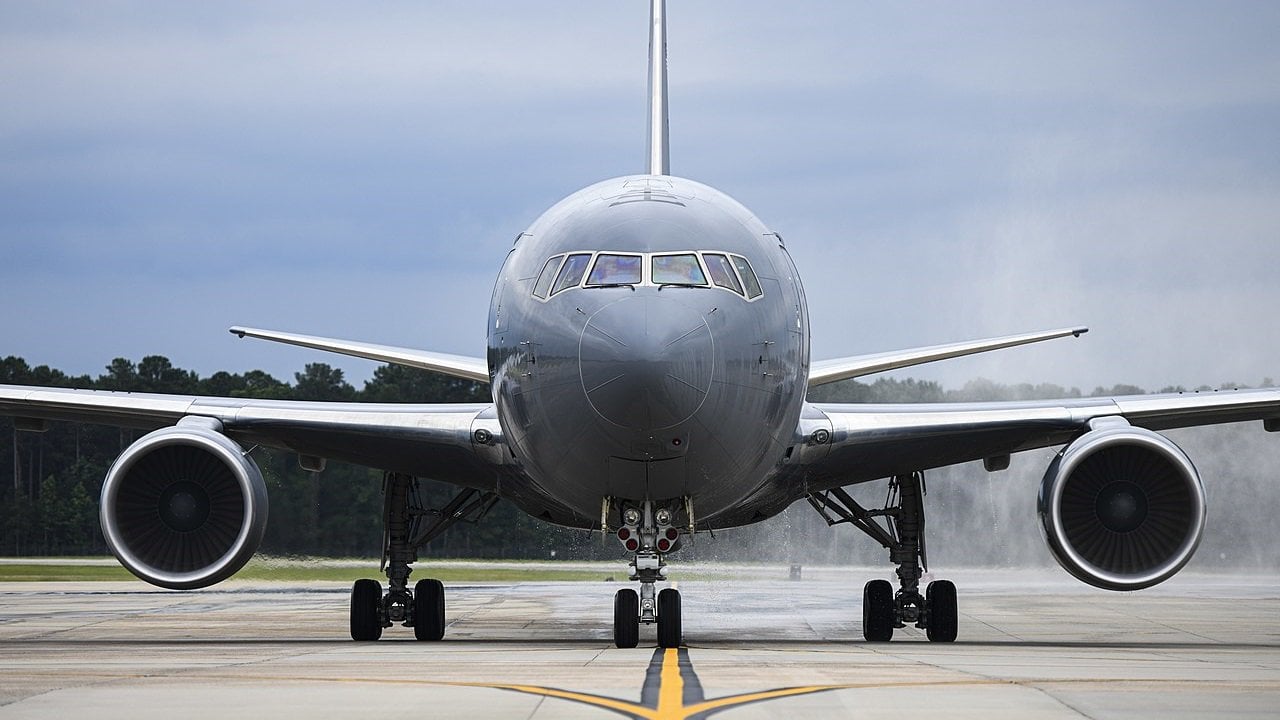
The first KC-46A Pegasus lands at Seymour Johnson Air Force Base, North Carolina, June 12, 2020. The KC-46A Pegasus is a widebody, multirole tanker that can refuel all U.S., allied and coalition military aircraft compatible with international aerial refueling procedures. (U.S. Air Force photo by Senior Airman Jacob B. Derry)
The problem is not the tool but where it is aimed. Fixing a price works for building a known thing; it fails for inventing an unknown one. The moment a program depends on technology that has not yet been developed, the fixed price becomes a fiction, because neither side can honestly estimate the cost of solving problems no one has solved. The Air Force itself has acknowledged the deeper hazard: companies desperate to win will underbid the true price of high-risk development just to secure the contract, all but guaranteeing a painful reckoning later. That is the A-12 in miniature, and it is a trap the Pentagon built again.
The Lesson Washington Keeps Forgetting
In the aftermath of the A-12 and the broader fixed-price development fad of the 1980s, Congress moved to restrict such contracts for costly programs. Then, over time, the restriction was loosened, notably in the 2007 Defense Authorization Act, and the institutional memory faded.
The result has been a slow-motion rerun. Boeing, in a burst of aggressive bidding around 2018, took on a cluster of fixed-price development programs, the KC-46 tanker, the T-7 trainer, the MQ-25 carrier drone, and the VC-25B replacement for Air Force One, and has been paying for it ever since.
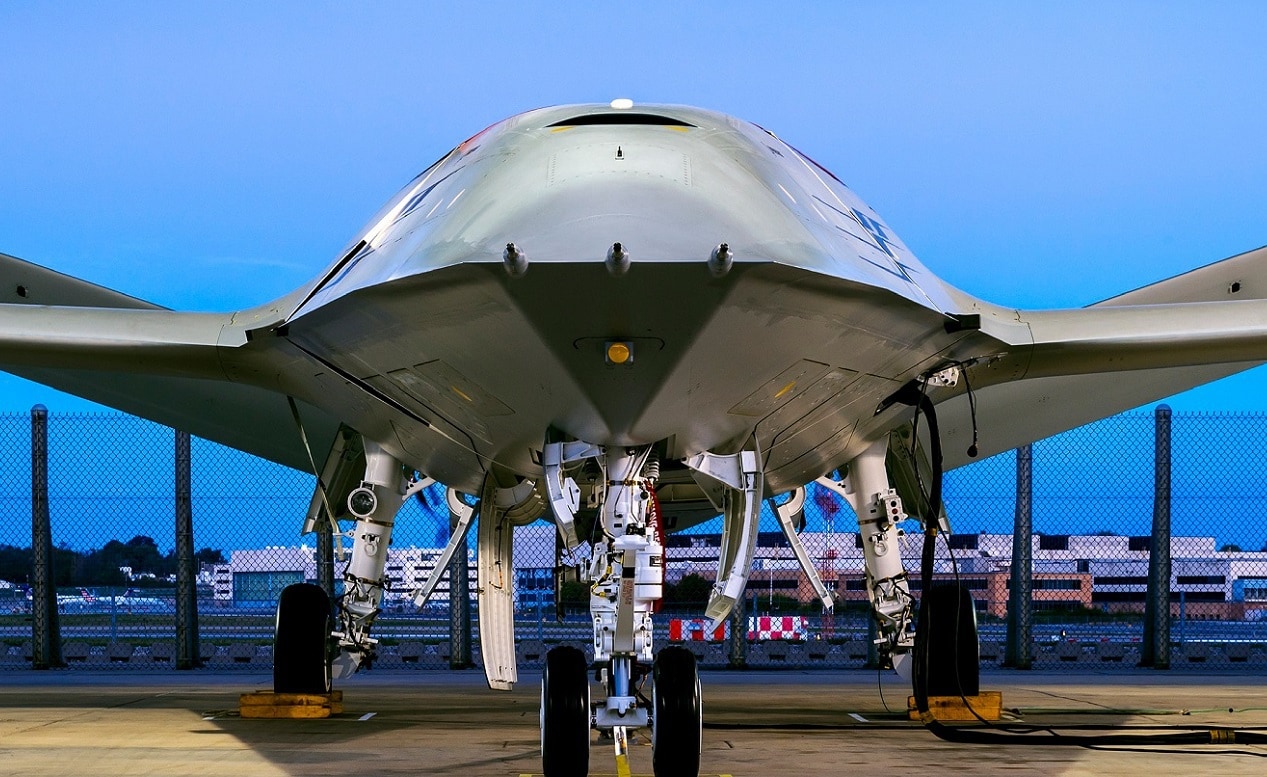
MQ-25. Image Credit – Creative Commons.
Its defense unit lost close to $4.9 billion in 2024 alone, its largest annual defense loss on record, on top of billions more in prior years, driven overwhelmingly by those fixed-price bets. Analysts now describe the KC-46 as a cautionary tale about the risks of fixing a price on immature technology, the exact phrase that could have been written about the A-12 three decades earlier.
Boeing appears to have learned what the Northrop team knew in 1988. Its chief financial officer has said the company has stopped signing fixed-price development contracts and does not intend to, and Boeing walked away from the competition to build the “doomsday plane” rather than accept fixed-price terms, precisely the move Lockheed and Northrop made a generation ago.
The Pentagon, for its part, structured its newest and most ambitious aircraft program, the F-47 next-generation fighter, as a cost-plus contract, a quiet admission that you cannot fix a price on an airplane you have not yet designed.
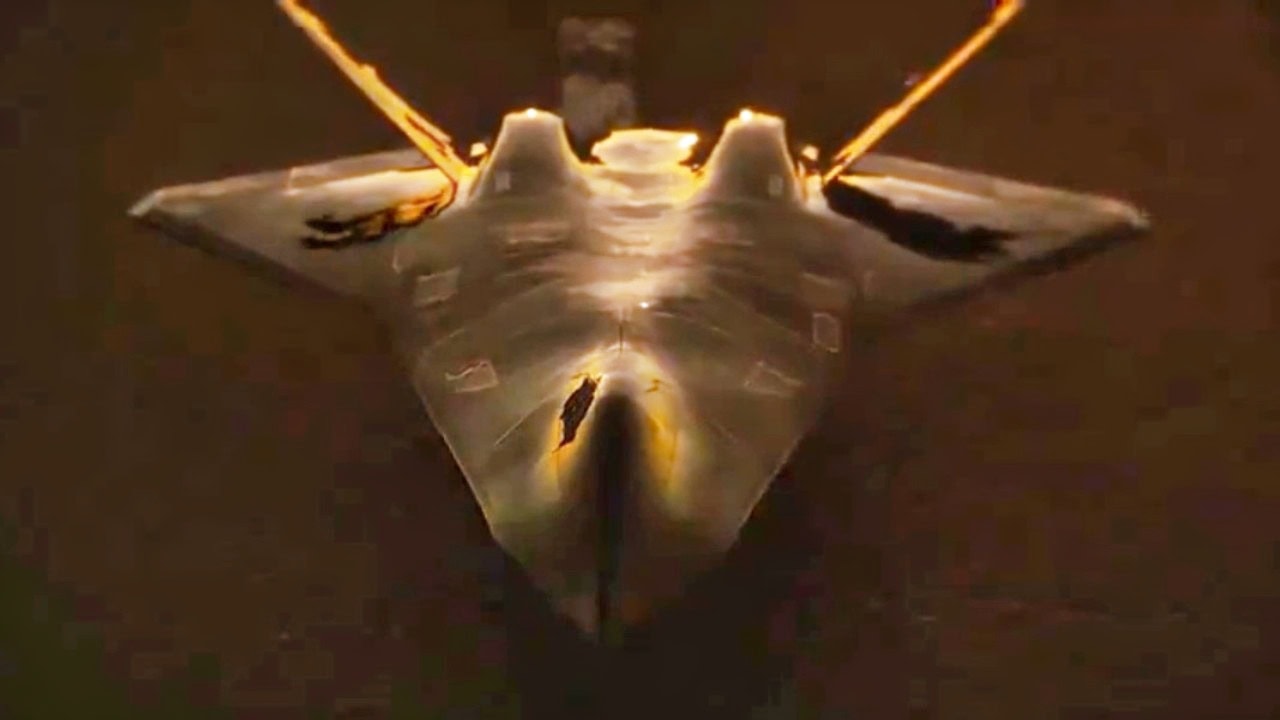
F-47 Fighter from Boeing. Image Credit: U.S. Air Force Screenshot.
The A-12 Avenger II never dropped a bomb, never landed on a carrier, and exists today only as a black triangular mockup in a Texas museum. But its real legacy is not the aircraft.
It is a lesson about how the United States buys its weapons, one written in $5 billion of wasted money and the wreckage of a great company, and then set aside until the next generation is paid to learn it all over again.
On current evidence, it will not be the last time.
About the Author: Harry J. Kazianis
Harry J. Kazianis (@Grecianformula) was the former Senior Director of National Security Affairs at the Center for the National Interest (CFTNI), a foreign policy think tank founded by Richard Nixon based in Washington, DC. Harry has over a decade of experience in think tanks and national security publishing. His ideas have been published in the NY Times, The Washington Post, The Wall Street Journal, CNN, and many other outlets worldwide. He has held positions at CSIS, the Heritage Foundation, the University of Nottingham, and several other institutions related to national security research and studies. He is the former Executive Editor of the National Interest and the Diplomat. He holds a Master’s degree focusing on international affairs from Harvard University.

![“I Thought We Were All Friends” [WATCH]](https://www.rvmnews.com/wp-content/uploads/2026/09/2026.09.09-15.32-rvmnews-6aa17c2457d5d-e1788971215760.jpg "“I Thought We Were All Friends” [WATCH]")

![Wild California Beach Brawl Erupts as Martial Artist Says Man Picked the Wrong Target [WATCH]](https://www.rvmnews.com/wp-content/uploads/2026/09/2026.09.09-15.36-rvmnews-6aa17cef219bd-e1788971792365.jpg "Wild California Beach Brawl Erupts as Martial Artist Says Man Picked the Wrong Target [WATCH]")
![Jaclyn Smith Details Drug Fueled ‘Charlie’s Angels’ Set, Reveals Which Co-Star Had a Bad Temper [WATCH]](https://www.boredtrashpanda.com/wp-content/uploads/2026/09/2026.09.09-14.56-boredtrashpanda-6aa17384b5b17.jpg "Jaclyn Smith Details Drug Fueled ‘Charlie’s Angels’ Set, Reveals Which Co-Star Had a Bad Temper [WATCH]")