
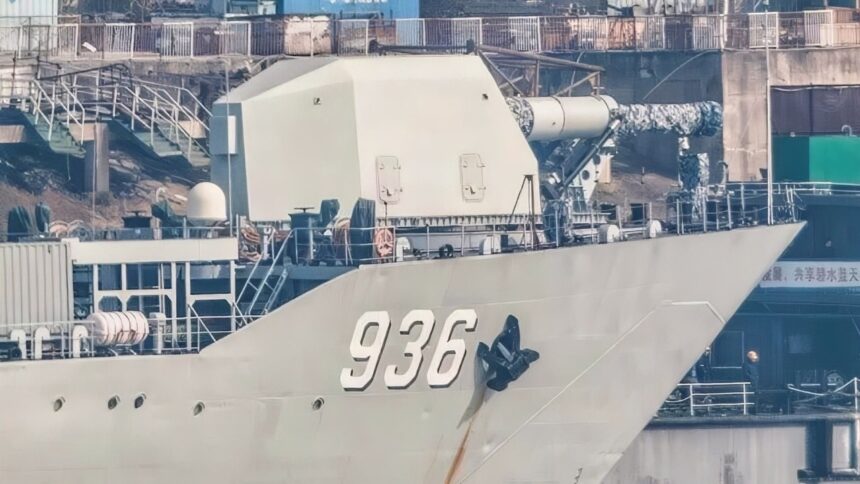

Summary and Key Points: In the winter of 2018, a photograph spread across the Chinese internet showing a People’s Liberation Army Navy landing ship with something impossible bolted to its bow — an enormous boxy turret wrapping a barrel far too fat for any conventional naval gun. The ship was the Haiyangshan, a modified Type 072III tank landing vessel, pennant number 936. The barrel was an electromagnetic railgun, a weapon that fires a metal slug not with gunpowder but with a pulse of electricity powerful enough to propel it faster than any chemical propellant can.
China Put a Railgun to Sea and Kept It There. America Spent $500 Million and Gave Up
In the winter of 2018, a photograph spread across the Chinese internet showing a People’s Liberation Army Navy landing ship with something impossible bolted to its bow: an enormous boxy turret wrapping a barrel far too fat for any conventional naval gun.
The ship was the Haiyangshan, a modified Type 072III tank landing vessel, pennant number 936, and the barrel was an electromagnetic railgun, a weapon that fires a metal slug not with gunpowder but with a pulse of electricity powerful enough to fling it at velocities no chemical propellant can reach.
No other navy on Earth had ever put a railgun to sea.
The United States, which had spent fifteen years and half a billion dollars chasing the same weapon, would formally abandon its own program three years later, defeated by the physics.
China kept going.
From Laboratory Curiosity to a Gun on a Ship
The railgun is not a new idea, and that is precisely what makes China’s progress remarkable.
Militaries have pursued electromagnetic launch for the better part of a century, only to be defeated by the same wall: the weapon works in a laboratory and destroys itself in practice.
DAHLGREN, Va. (Dec. 10, 2010) High-speed camera image of the Office of Naval Research Electromagnetic Railgun located at the Naval Surface Warfare Center Dahlgren Division, firing a world-record setting 33 mega-joule shot, breaking the previous record established Jan. 31, 2008. The railgun is a long-range, high-energy gun launch system that uses electricity rather than gunpowder or rocket motors to launch projectiles capable of striking a target at a range of more than 200 nautical miles with Mach 7 velocity. A future tactical railgun will hit targets at ranges almost 20 times farther than conventional surface ship combat systems. (U.S. Navy photo/Released)
China’s path to the water ran through one institution and, to a striking degree, one man.
American intelligence, according to a detailed 2018 CNBC account, traced the program’s beginnings to a weapon first observed in 2011 and tested in 2014; between 2015 and 2017 it was calibrated to strike at longer ranges, and by December 2017 it had been mounted on the Haiyangshan and had begun at-sea testing, a milestone the same reporting stressed no other nation had reached.
The public acknowledgment came from Rear Admiral Ma Weiming of the PLA Naval University of Engineering in Wuhan, the electrical engineer behind China’s electromagnetic aircraft catapults, who confirmed in October 2017 that a development and testing program existed and announced an unspecified major breakthrough.
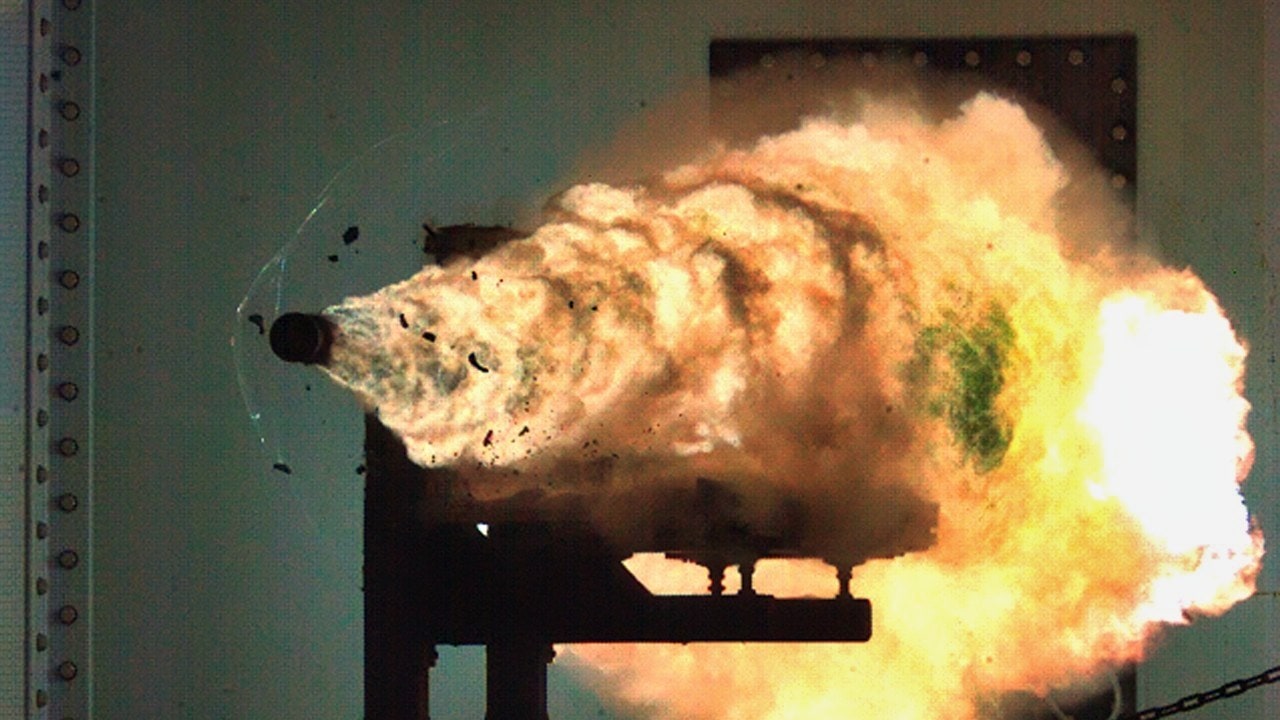
(Jan. 31, 2008) Photograph taken from a high-speed video camera during a record-setting firing of an electromagnetic railgun (EMRG) at Naval Surface Warfare Center, Dahlgren, Va., on January 31, 2008, firing at 10.64MJ (megajoules) with a muzzle velocity of 2520 meters per second. The Office of Naval Research’s EMRG program is part of the Department of the Navy’s Science and Technology investments, focused on developing new technologies to support Navy and Marine Corps war fighting needs. This photograph is a frame taken from a high-speed video camera. U.S. Navy Photograph (Released)
In August 2023, Ma and his team published a paper in a Chinese engineering journal titled, in translation, “Current Status and Challenges in Electromagnetic Launch Technology,” stating that the university had overcome core obstacles, including high-magnetic-density coil design and compact pulsed-power supply technology. What separates this from the American story is the trajectory.
The United States moved from land testing to the sea, then retreated to shore before quitting; China moved from the laboratory onto a warship and stayed there, iterating in the open salt air of a working test vessel for years.
How a Railgun Actually Works
A railgun consists of two parallel conductive rails connected to an enormous power source, with a sliding conductive armature bridging them behind the projectile.
When the current fires, it runs up one rail, across the armature, and back down the other, and the interaction between that current and the magnetic field it generates produces the Lorentz force, a push directed along the rails that accelerates the armature and the projectile ahead of it to extraordinary speed. There is no explosive, no propellant, no combustion.
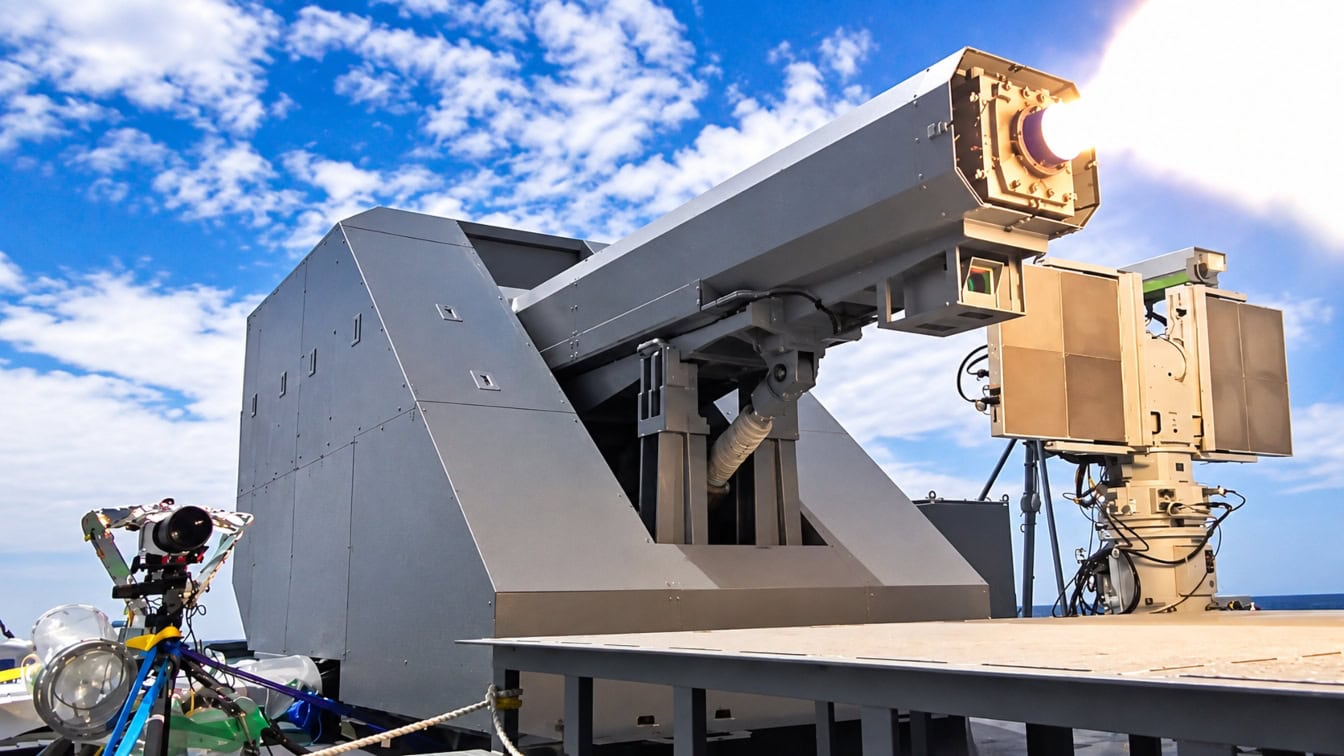
Japan Railgun Test Creative Commons Image
The projectile is a dense metal dart, and it does its damage through kinetic energy alone, arriving so fast that the impact itself releases energy comparable to a shell full of explosives.
The appeal is obvious once the mechanism is clear. A railgun round carries nothing that can detonate on the ship that fires it, so the magazine is far safer; the projectiles are small and cheap compared to missiles, so a warship can carry hundreds; and the muzzle velocities, potentially above Mach 6, deliver both long range and almost no warning to the target.
The difficulty is equally inherent in the same physics. Pushing millions of amperes through a pair of rails to launch a slug at hypersonic speed generates colossal heat and electromagnetic stress, and the rails erode with every shot, so barrels wear out fast.
The launch environment, the searing plasma, the tens of thousands of gravities of acceleration, the immense magnetic pulse, is savage on any guidance electronics packed into the projectile.
And the whole apparatus demands a violent burst of electrical power that few warships can supply.
What China Says It Has Solved
The most important Chinese claims are about durability and intelligence built into the weapon, and if true, they address the exact failures that killed the American gun.
Researchers at the Naval Engineering University, as reported by the South China Morning Post and summarized in a March 2024 Defense One analysis, claimed a railgun able to fire a projectile 100 to 200 kilometers at around Mach 6, and made two assertions that matter more than the range.
The first is that the system embeds up to 100,000 AI-enabled sensors throughout the weapon to detect incipient faults before catastrophic failure and refine performance over time.
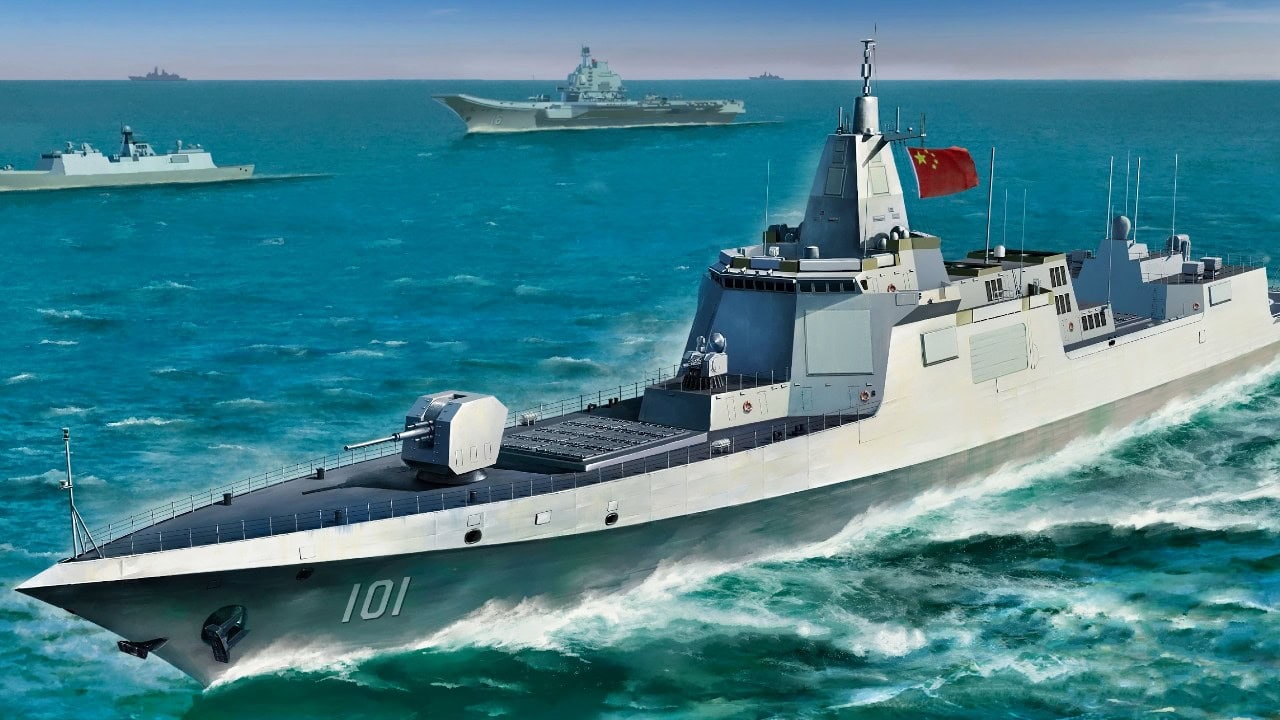
Chinese Navy Warship Created by Artist. Image Credit: Creative Commons.
The second, which follows from the first, is that this monitoring allowed them to test-fire 120 rounds in succession without a failure.
Barrel life was the specific problem that defeated the United States, whose prototype needed a new barrel after roughly a dozen or two dozen shots, so a verified claim of 120 consecutive rounds would represent a genuine leap.
Reports from early 2025 added a further wrinkle: an experimental X-shaped design from the same university, sometimes called the X-rail gun, that crosses two railguns at right angles into a single tube in an attempt to manage the self-destructive heat and power overload of the conventional layout, though no operational testing of that concept has been confirmed and analysts note real doubts about electromagnetic interference between the crossed rails.
Every one of these figures comes from Chinese state media or Chinese researchers; none has been independently verified, and honest analysis has to hold them at arm’s length while acknowledging that the pattern — years of sustained testing on an actual ship — is harder to fake than any single number.
Why Railguns Are So Desirable
The case for the weapon rests on the price of its ammunition against the price of missiles.
American and allied cost estimates, drawn from a 2022 Congressional Research Service report and related analysis, put a hypervelocity projectile in the range of 25,000 to 85,000 dollars per round, against 1.4 million dollars for a single Harpoon anti-ship missile and roughly the same or more for a Tomahawk.
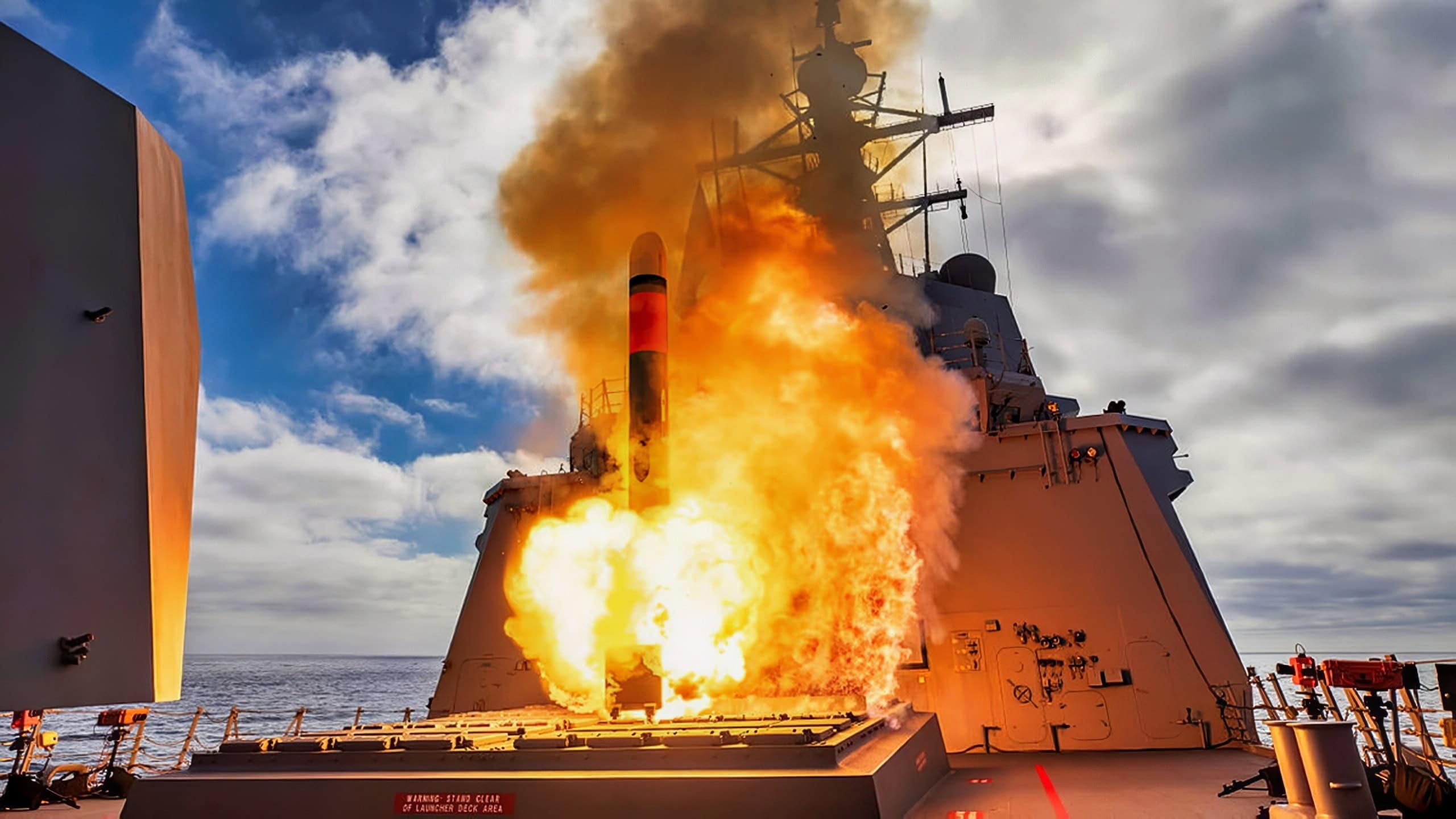
Tomahawk Missile Firing. Image Credit: Government of Australia.
Earlier US intelligence assessments cited by CNBC estimated each Chinese railgun round at between $ 25,000 and $ 50,000, squarely in the same range.
The strategic implication is dramatic in an age of missile saturation and interceptor shortages: if a warship can knock down an incoming missile or strike a target 150 kilometers away with a 40,000-dollar slug instead of a multimillion-dollar interceptor, the cost curve of naval combat inverts in favor of the defender, and a ship’s magazine effectively becomes bottomless.
What no open source reliably provides is the other half of the ledger, the cost of the gun, its power plant, and its integration into a warship, because China publishes nothing on program cost and every figure in circulation is inference.
The honest statement is the comparative one the evidence supports: the round is cheap, potentially transformatively so, and the platform is expensive in ways nobody outside the program can price, which is exactly the balance that makes the weapon attractive if the engineering can be made to work at all.
The Weapon It Could Become
A working naval railgun would not be one weapon but three, which is what makes the prospect so consequential for the United States and its allies. As a strike weapon, it could hit ships or land targets more than 100 kilometers away with a hypersonic kinetic round that is nearly impossible to intercept and gives almost no warning.
As a defensive weapon, it could engage incoming aircraft, cruise missiles, and even ballistic missiles at a fraction of the cost of the interceptor missiles that navies currently expend, addressing the single most expensive problem in modern air defense.
And as a magazine, it changes the arithmetic of endurance, since a ship carrying hundreds of cheap slugs can keep fighting long after a missile-armed vessel has emptied its vertical launch cells.
Ma Weiming has sketched an even more ambitious destination. In a 2023 paper, he described a nuclear-powered supership integrating railguns, coilguns, and laser weapons on a single unified electrical grid, a vessel he wrote would completely overturn the naval fleet formations of the past century by merging propulsion and weapons into one power system.
That vision points to the real reason China may succeed where America stalled: the railgun is less a gun than an electrical problem, and China has spent two decades and enormous resources becoming the world leader in shipboard electrical power and electromagnetic launch, the same expertise that produced its aircraft-carrier catapults. It should be said plainly that not every claim in this space is credible.
Viral videos purporting to show a Chinese Mach 7 plasma cannon have circulated widely and have been met with heavy skepticism by independent fact-checkers, who note that plasma-armature railgun research is real, but the specific sensational claims attached to these clips are unverified and likely overstated.
The genuine program is impressive enough without the embellishments.
The American Failure It Is Measured Against
China’s persistence looks most striking against the wreck of the United States Navy’s own railgun program, which promised exactly the same revolution but could not deliver it.
The Electromagnetic Railgun program, launched in 2005 and run through the Office of Naval Research with BAE Systems and General Atomics as the competing contractors, aimed at a weapon firing projectiles at Mach 7 to ranges around 100 nautical miles, and it produced genuinely impressive test results on land, firing its first shots by 2010 with a plan to put the gun to sea by 2016.
It never happened. In July 2021, the Navy confirmed it had ended railgun research at the close of that year, citing, in its own words, fiscal constraints, combat-system integration challenges, and the maturation of other weapon concepts, after spending about $ 500 million over 15 years without ever fielding the weapon. The technical post-mortem is unambiguous about why.
The barrel eroded so fast that the prototype needed replacement after only two dozen shots, a problem that resisted every material-science fix the program tried, from exotic alloys to ceramic liners to segmented rails.
The rate of fire stayed too low. The guidance electronics could not reliably be made to survive the launch. And the power demand was so extreme that essentially no ship in the fleet could meet it, with only the three Zumwalt-class destroyers and the Ford-class carriers built with the necessary electrical margin.
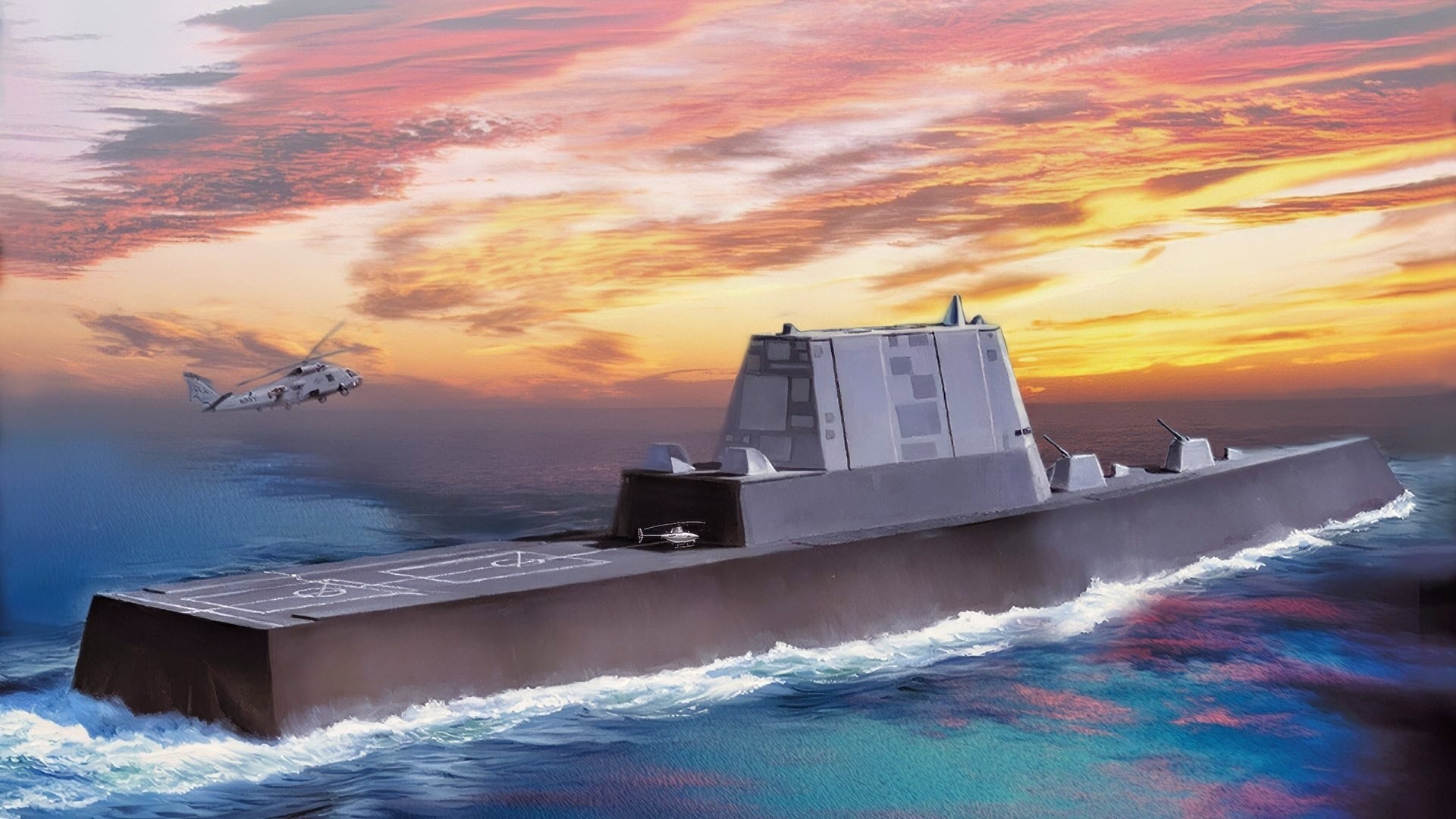
Zumwalt-Class Artist Rendering. Image Credit: Creative Commons.
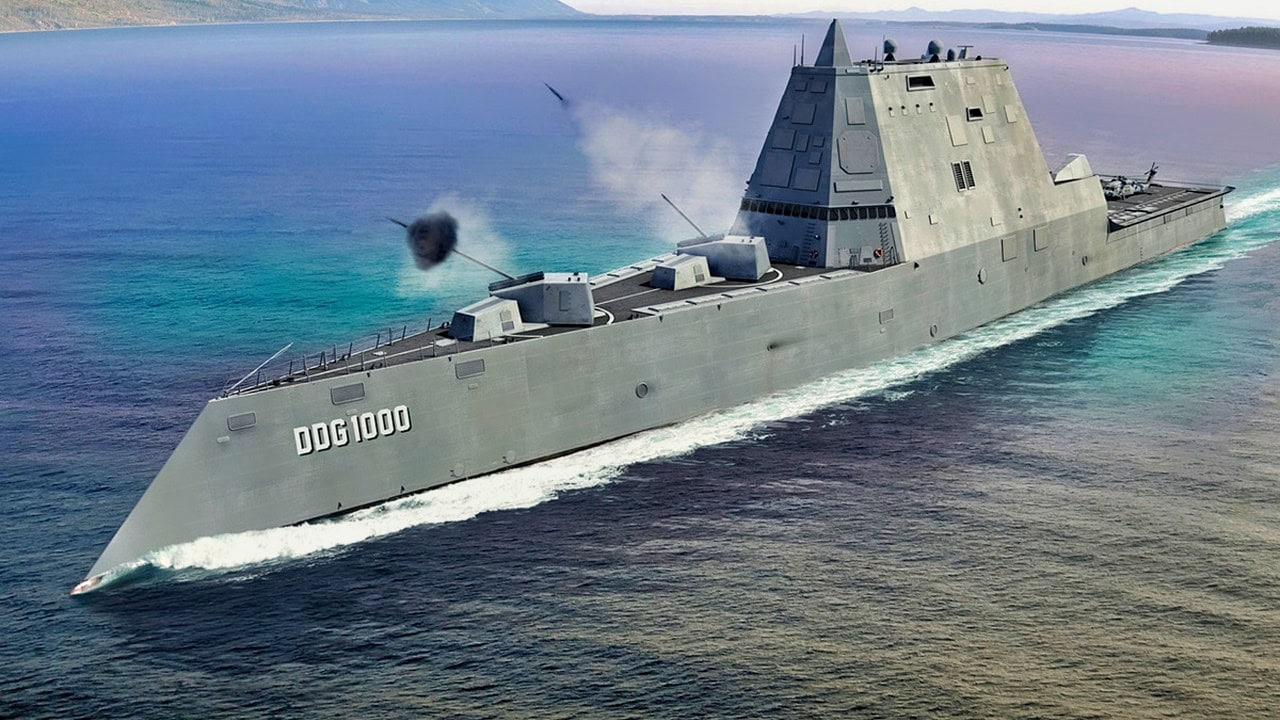
Zumwalt-Class U.S. Navy Destroyer. Image Credit: Creative Commons.
The railgun joined a long list of expensive, technically brilliant American programs, alongside the Zumwalt’s own canceled Advanced Gun System and the Army’s Future Combat Systems, that worked in the laboratory and failed in the fleet.
The one lasting product was a consolation prize, the Hypervelocity Projectile, the guided dart designed as the railgun’s ammunition, which turned out to be fireable from the conventional five-inch guns already on every American destroyer, and which survived the parent program’s death because it needed no exotic launcher at all.
What Happens Next
The story did not end with the American cancellation, which is why the state of play in 2026 is more contested than it looked five years ago.
The same forces that killed the US railgun are now pulling it back toward relevance.
Japan has moved to the front of the Western effort, conducting at-sea firing tests of a prototype railgun from a support ship in 2025, releasing photographs of confirmed hits on a towed target, and demonstrating projectile velocities around 2,300 meters per second and barrel life beyond 200 rounds, all aimed explicitly at countering the hypersonic missiles China and others are fielding.
In the United States, the interceptor shortages exposed by the intense missile combat of the 2026 Iran war, Japan’s visible progress, and proposals for large new surface combatants, the Trump-class battleships, with abundant electrical power have combined to revive American interest in the weapon the Navy shelved, with General Atomics confirming in January 2026 that it was in discussions with the Navy about the role of railguns on future ships.
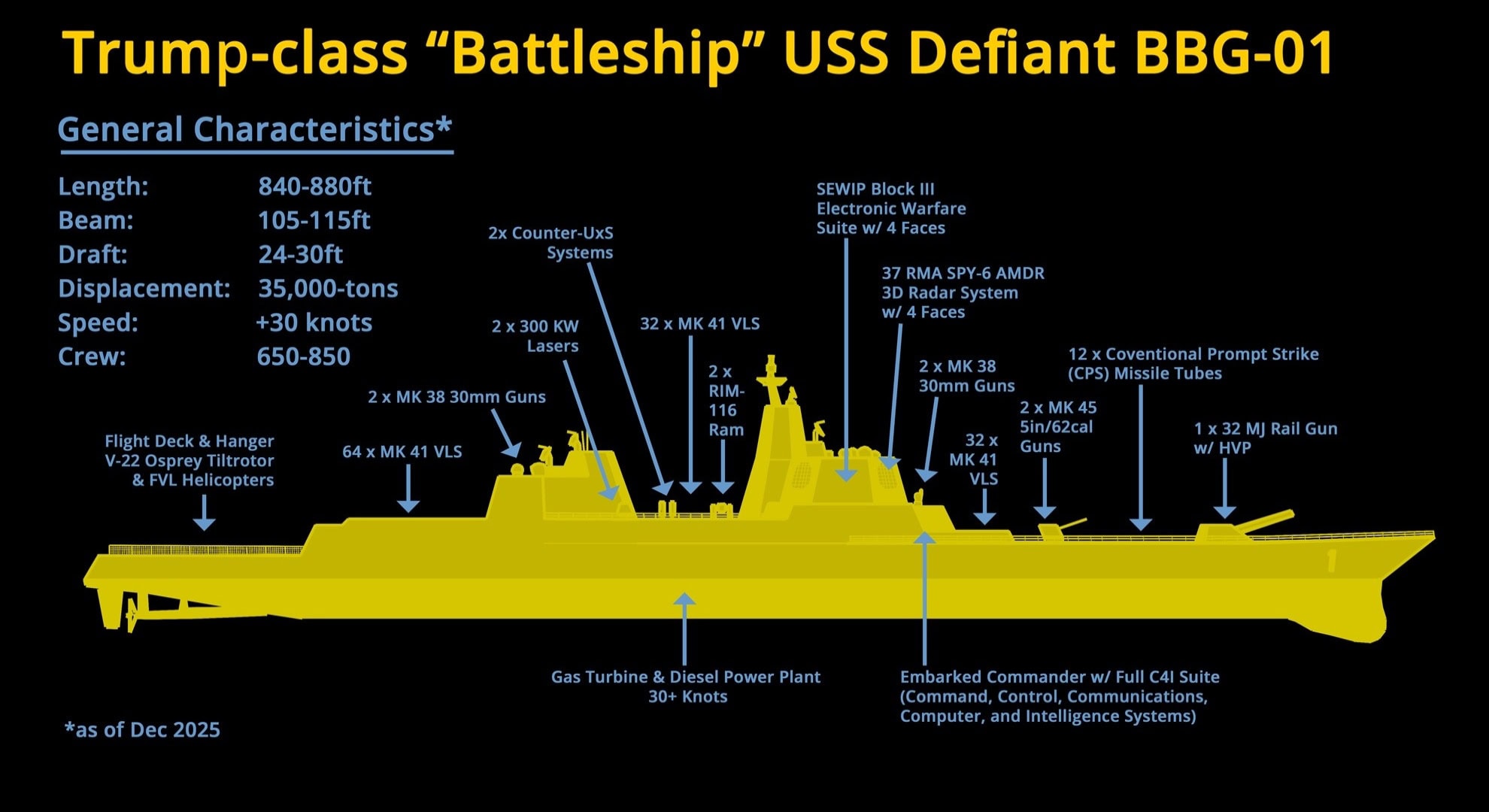
Trump-Class Battleship Creative Commons Photo
The case for skepticism remains strong on the physics, because the fundamental problems of barrel wear, thermal management, and sustained rate of fire under real conditions have not been shown to be solved by anyone, including China.
What is clear is that the strategic asymmetry will be resolved in the next few years. China has a railgun that has spent years at sea and a national industrial commitment to the shipboard electrical power that the weapon requires; the United States has world-class engineering, a graveyard of canceled programs, and a renewed reason to try again.
Whether China’s 120-round claims and hypersonic ranges withstand independent scrutiny remains unknown and may stay that way until the weapon either appears on a front-line warship or quietly disappears from one.
About the Author: Harry J. Kazianis
Harry J. Kazianis (@Grecianformula) was the former Senior Director of National Security Affairs at the Center for the National Interest (CFTNI), a foreign policy think tank founded by Richard Nixon based in Washington, DC. Harry has over a decade of experience in think tanks and national security publishing. His ideas have been published in the NY Times, The Washington Post, The Wall Street Journal, CNN, and many other outlets. He has held positions at CSIS, the Heritage Foundation, the University of Nottingham, and several other institutions related to national security research and studies. He is the former Executive Editor of the National Interest and the Diplomat. He holds a Master’s degree focusing on international affairs from Harvard University.




![Liberal Plant Attempts to Attack Ramaswamy’s Success, Vivek Claps Back [WATCH]](https://www.lifezette.com/wp-content/uploads/2024/09/2024.09.26-02.16-lifezette-66f56cd7cb522.jpg "Liberal Plant Attempts to Attack Ramaswamy’s Success, Vivek Claps Back [WATCH]")
![Dolly Parton Airport? Nashville Board Clears 1st Hurdle with Unanimous Rule Change Vote [WATCH]](https://www.boredtrashpanda.com/wp-content/uploads/2026/07/2026.07.08-17.27-boredtrashpanda-6a4e8891f0bdc.jpg "Dolly Parton Airport? Nashville Board Clears 1st Hurdle with Unanimous Rule Change Vote [WATCH]")