

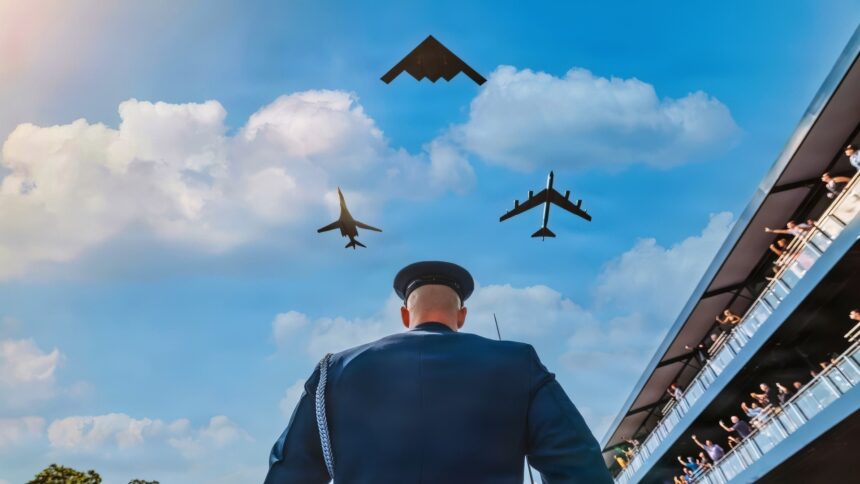

The US Air Force (USAF) had been planning to retire its B-1 and B-2 Stealth bombers in the early 2030s-time frame. Their retirement was expected because the B-21 was scheduled to enter service the next year. This next-generation stealth bomber, known as the “Raider”, is expected to be in service in large numbers by the end of the decade or into the 2030s at the latest. This originally would have left a gap of sorts in long-range strategic bomber capacity.
This level of drawdown in the bomber force is now being viewed as unwise because of the recent hostilities in Iran and the potential problems that could emerge in the Asia-Pacific theatre.
The Great US Air Force Bomber Upgrade
The USAF had planned to invest nearly $1.7 billion in continuing to modernize the B-1B Lancer and B-2 Spirit bombers over the next five years.
This itself was already a revision to earlier-stated plans to retire these bombers before the B-21 Raider is deployed with FOC across the service.
The funds that will now be expended to keep these older aircraft in service are being justified on the grounds that there will always be a need for assets available to conduct missions at long ranges and – in the case of the B-2 – into denied areas where stealth is a necessary aspect in order to maintain acceptable levels of survivability.
The USAF will need this fleet of at-the-ready long-range platforms while the “teething pains” of bringing the B-21 online restrict the availability of that type.
The other major strategic asset of the force, the B-52, will also experience availability issues while it undergoes one of the most ambitious modernization and overhaul upgrades in its history.
The improvements will include a new digital “J”-series configuration and an all-glass cockpit.
US Air Force Plans for B-1B Lancer and B-2 Spirit
Initial plans to mothball the B-1 and B-2s were shelved after both demonstrated their ability to contribute to major combat operations involving multiple platform types.
(July 29, 2025) The Ticonderoga-class guided-missile cruiser USS Princeton (CG 59) fires its forward Mark 45 5-inch gun during a weapons maintenance shoot, July 29, 2025. The Carl Vinson Carrier Strike Group is underway conducting routine operations in the U.S. 3rd Fleet area of operations. (U.S. Navy photo by Mass Communication Specialist 1st Class Jacob I. Allison)
Additional funding secured by the Trump Administration for the defense budget then allowed the USAF to move forward with plans to upgrade both types.
The latest documentation on the USAF budget shows plans to spend $342 million on B-1 modernization from 2027 to 2031. “This request provides the necessary funding to modernize the platform, ensuring its lethality and relevance through 2037,” the budget document reads.
The B-2 is the even bigger winner in this process.
The 19-aircraft fleet will receive $1.35 billion in upgrades, installed in parallel with the B-1 modernization during this five-year “re-building” window.
Moreover, the budget documents show no scheduled retirement date for the B-2. Informed speculation is that the aircraft could still be flying into the 2050s.
Sensible Re-Investment
Retired Col. Mark Gunzinger, a former deputy undersecretary of defense and bomber expert who flew B-52s during his flying career, has been quoted as saying the B-2 is likely to remain in service longer and will still be flying as the B-1s are retired.
He is currently the director of future concepts and capability assessments for the Air and Space Forces Association’s (AFA) Mitchell Institute for Aerospace Studies
“Given the skyrocketing demand [for bomber capacity], it makes perfect sense to buy back the B-1 and B-2,” he said to the AFA’s Air & Space Forces Magazine.
“The B-2 is the only fully operational stealth bomber that we have, and frankly, long-range penetrating strike capability is one of the most significant shortfalls in our military. So why divest the B-2 early? It was completely budget-driven and resource-driven,” he continued.

A B-21 Raider is unveiled at Northrop Grumman’s manufacturing facility on Air Force Plant 42 in Palmdale, California, Dec. 2, 2022. The B-21 will be a long-range, highly survivable, penetrating strike stealth bomber capable of delivering both conventional and nuclear munitions. (U.S. Air Force photo by Airman 1st Class Joshua M. Carroll)
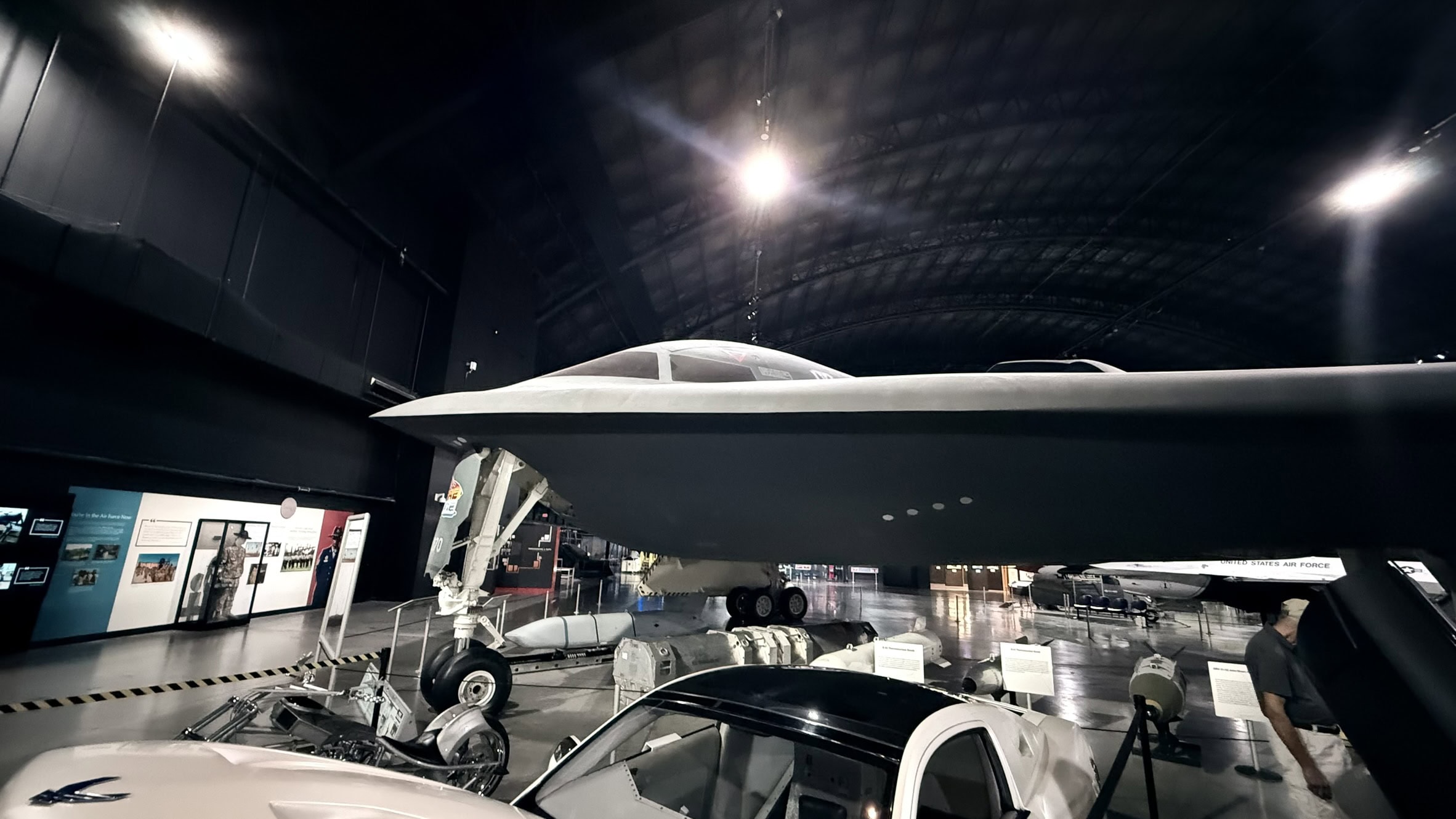
B-2 Spirit Stealth Bomber. 19FortyFive.com Photo from National Museum of the U.S. Air Force Visit in 2025.
In a separate statement, the USAF Global Strike Command said the B-2s will continue to operate from Whiteman Air Force Base, Missouri, as long as they are needed, including after the B-21s are in operational service.
The first operational B-21s will be fielded at Ellsworth Air Force Base, South Dakota, in 2027, with Whiteman later becoming the second base to host them.
“As we field the B-21, the requirement exists to simultaneously train and perform operational missions,” a Global Strike spokesperson said. “The B-2 will remain a critical long-range strike option for the President and will be maintained as a viable capability for as long as it is needed for national security.”
About the Author: Reuben F. Johnson
Reuben F. Johnson has thirty-six years of experience analyzing and reporting on foreign weapons systems, defense technologies, and international arms export policy. Johnson is the Korea Fellow at the Casimir Pulaski Foundation. He is also a survivor of the Russian invasion of Ukraine in February 2022. He worked for years in the American defense industry as a foreign technology analyst and later as a consultant for the U.S. Department of Defense, the Departments of the Navy and Air Force, and the governments of the United Kingdom and Australia. In 2022-2023, he won two awards in a row for his defense reporting. He holds a bachelor’s degree from DePauw University and a master’s degree from Miami University in Ohio, with a specialization in Soviet and Russian studies. He lives in Warsaw.


![Sophie Cunningham Exposes the Absurd Fury Over Sydney Sweeney’s Viral New Ad [WATCH]](https://www.boredtrashpanda.com/wp-content/uploads/2026/09/2026.09.18-13.22-boredtrashpanda-6aad3afea90cd.jpg "Sophie Cunningham Exposes the Absurd Fury Over Sydney Sweeney’s Viral New Ad [WATCH]")