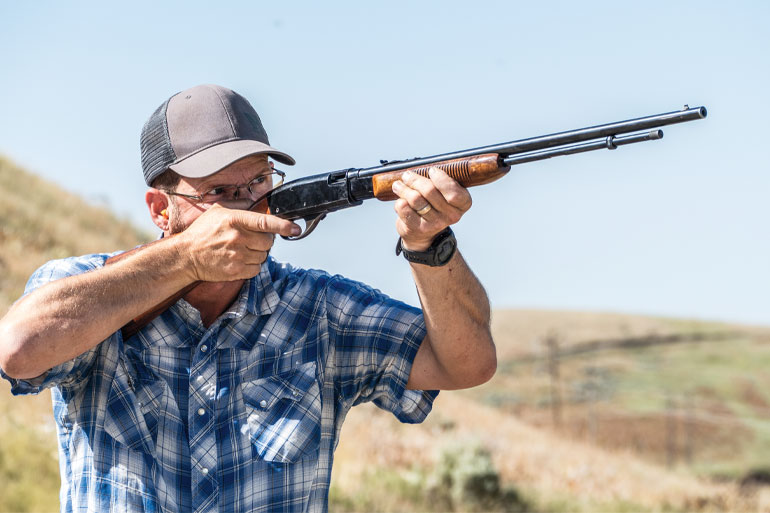
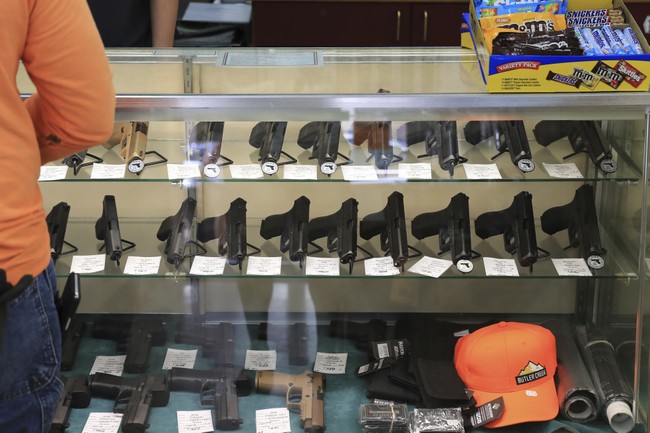

Over the past few years federal courts have struggled and split over the question of whether adults younger than 21 are fully vested with their right to keep and bear arms. Some courts have argued that laws limiting the retail purchase of handguns or carrying a concealed firearm are fine, since in 1791 those under the age of 21 were considered minors. Others have pointed out that today the age of majority is clearly 18, and that means adults younger than 21 should be able to keep and bear arms just like adults 21 and older.
The Supreme Court has, somewhat surprisingly, kept these circuit splits intact by declining to take up any lawsuit dealing with the issue. Now the Department of Justice has released an opinion from the Office of Legal Counsel that might persuade SCOTUS to weigh in. According to the OLC, adults under the age of 21 do have the right to purchase handguns, even though federal law prohibits them from buying one in a commercial sale.
The OLC opinion was apparently requested by Attorney General Todd Blanche, perhaps in response to a Fifth Circuit decision in FPC v. ATF earlier this year that also concluded 18-to-20-year-olds have the right to acquire handguns in a commercial sale. The DOJ announced that it would appeal the decision back in March, but last month asked the Fifth Circuit for and received an extension in filing its first brief allowing the government to submit it to the court on September 21.
Now that the Office of Legal Counsel has essentially concluded that the Fifth Circuit got it right, will that have any impact on the government’s brief that’s due next Monday? I’d certainly think so. I don’t know the DOJ can be expected to defend a statute that its own counsel says is unconstitutional.
As the OLC brief argues, under-21s are a part of the political community today, which means they’re part of “the people” who have a right to keep and bear arms. And though violent crime committed by youth and young adults wasn’t unknown or unheard of at the time of the Founding, there were virtually no “express prohibitions on the purchase of firearms” by under-21s.
Indeed, far from banning youths from owning firearms, thevFounding generation did the opposite: The Militia Act required males eighteen and older to enroll and to furnish their own weapons, and nearly every state’s militia law did the same. Punishing violent crime remained primarily in the hands of the states, which—unlike Congress—possess a police power. And the states responded to violent crime, when they responded at all, through the ordinary instruments of their power: prosecutions for assault and homicide, and sureties of the peace for those who threatened violence. It was not until the mid-nineteenth century that the first firearm specific sales restrictions were entertained, and even those were, by and large, framed with respect to “minors” rather than to any specific ages.
The OLC opinion rejects the argument that the “infancy doctrine” that prevented those under the age of 21 from entering into contracts at the Founding has any relevance to forbidding a 20-year-old from purchasing a handgun at Bass Pro today. It points out that 44 states and the District of Columbia explicitly set the age of majority at 18, and even those outliers recognize the right of 18-year-olds to enter into contracts today.
The opinion also acknowledges that 18-year-olds are treated as adults in the eyes of the criminal justice system, which I think is another compelling point in favor of establishing their right to keep and bear arms. A 19-year-old charged with carrying a gun without a license isn’t going to be adjudicated in juvenile court, even if the laws of the state don’t allow him to obtain a concealed carry license. If someone’s going to be treated as an adult when they break the law with a firearm, it seems to me that they must be treated as an adult when they want to engage in lawful activity with a gun too.
If you’re a history buff, you’ll want to do a deep dive into the OLC opinion. If not, the opinion’s bottom line will probably suffice. Either way, keep your eyes open for the DOJ’s brief in FPC v. ATF next week, because it’s going to be really interesting to see how the DOJ’s intent to appeal is impacted by today’s opinion.
Editor’s Note: President Trump and Republicans across the country are doing everything they can to protect our Second Amendment rights and right to self-defense.
Help us continue to report on their efforts and legislative successes. Join Bearing Arms VIP and use promo code FIGHT to receive 60% off your membership.
Read the full article here


![Sophie Cunningham Exposes the Absurd Fury Over Sydney Sweeney’s Viral New Ad [WATCH]](https://www.boredtrashpanda.com/wp-content/uploads/2026/09/2026.09.18-13.22-boredtrashpanda-6aad3afea90cd.jpg "Sophie Cunningham Exposes the Absurd Fury Over Sydney Sweeney’s Viral New Ad [WATCH]")