
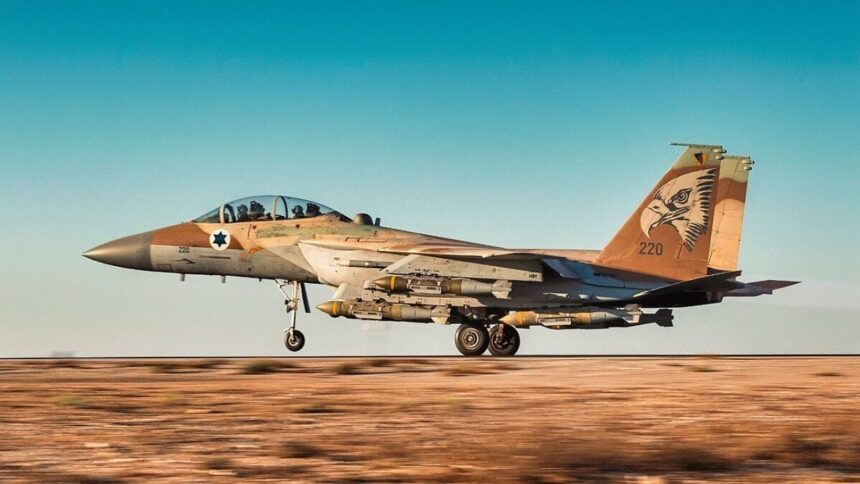

Summary and Key Points: Zivi Nedivi has said that if he had known his right wing was gone, he would have ejected. That is the whole reason he is alive. On May 1, 1983, during dissimilar air combat training over the Negev Desert, his two-seat F-15D collided with an A-4 Skyhawk. The Skyhawk came apart, and its pilot got out. The Eagle pitched hard down and began to roll.
Israel’s F-15 Fighters Look Almost Unbreakable
Israel is moving to purchase more F-15s, with its defense ministry announcing in May this year that it approved a second squadron of the new F-15IA.
The decision means the Israeli Air Force will continue investing in a fighter jet first flown more than half a century ago.
F-15I Ra’am. Image Credit: IDF.
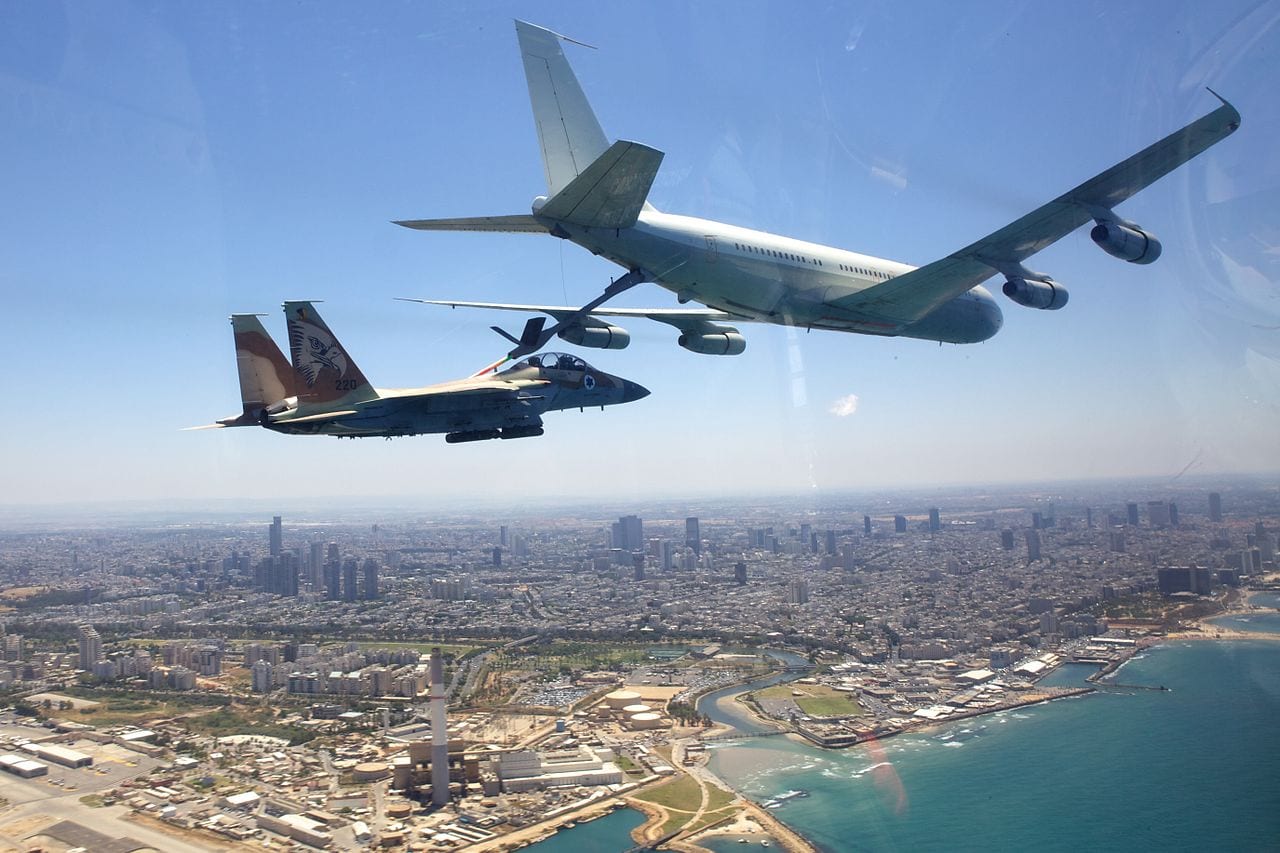
F-15I. Image Credit: Creative Commons.
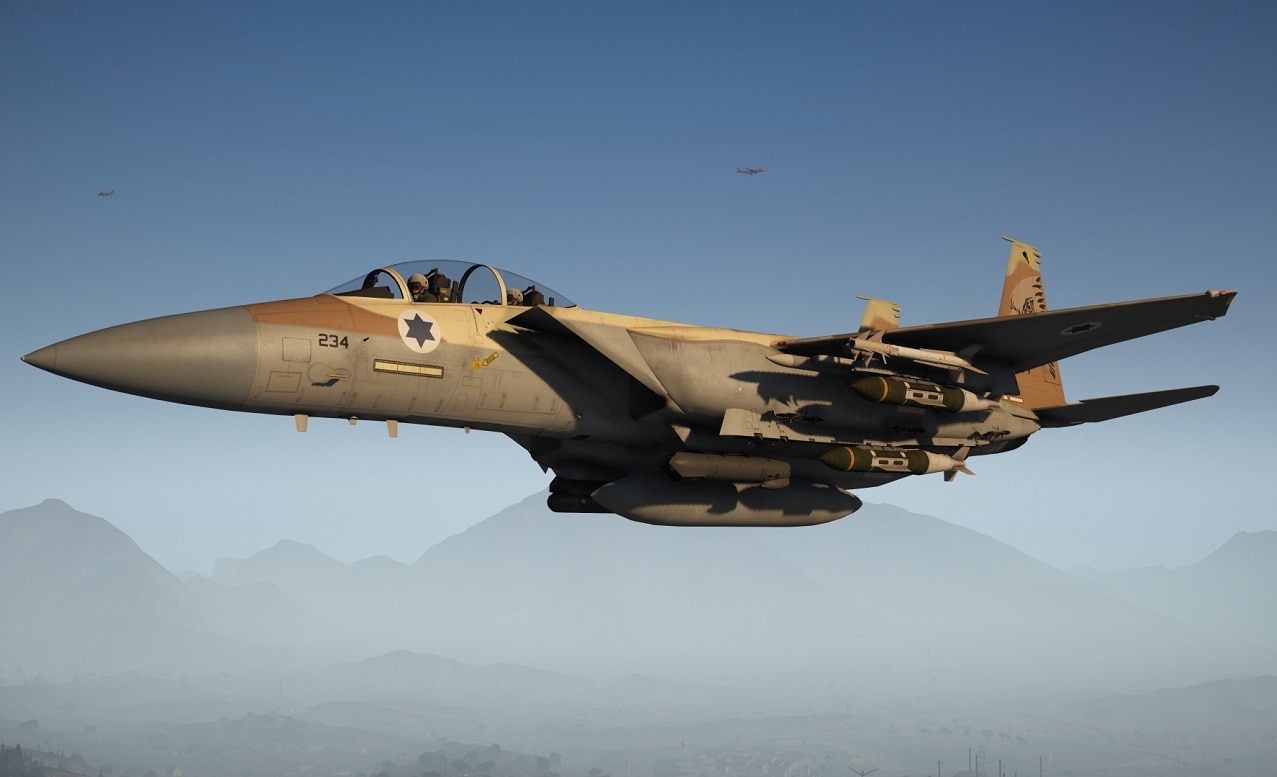
F-15I Ra’am. Image Credit: Creative Commons.
It’s an aircraft with a long history, and several remarkable incidents have occurred during its service in Israel.
During a training exercise in 1983, for example, an Israeli F-15D collided with another fighter and lost almost all of its right wing.
Incredibly, the pilot regained control, flew the aircraft to an airbase, and landed successfully.
But until he landed, the pilot had no idea how much of the aircraft was missing.
Why Israel Still Flies the F-15
The United States developed the F-15 Eagle, a twin-engine fighter aircraft, during the Cold War — so why does Israel still use it?
The fighter jet combines powerful engines and a radar capable of finding distant aircraft with the maneuverability required for close combat.
The first F-15A flew in 1972, and it officially entered U.S. Air Force service, joining combat squadrons, in 1976. Israel was one of the first foreign operators of the aircraft.
The first version of the Eagle, adapted and upgraded over the last several decades, was primarily built as an air-to-air fighter.
The later versions, however, were designed for strike missions. The design remains in production today, but in a highly updated form.
The planned F-15IA aircraft on their way to Israel will be capable of carrying modern systems and are adapted especially for Israeli equipment. The first delivery is expected to arrive in 2031.
The aircraft involved in the famed 1983 accident was one of the earlier, two-seat versions known as the F-15D, or the “Baz” to Israeli pilots.
The Historic Collision
Israeli crews, while conducting simulated air combat scenarios over the Negev Desert on May 1, 1983, saw an F-15D collide with an A-4 Skyhawk taking part in the exercise.
Zivi Nedivi piloted the F-15D. Yehoar Gal, the rear-seat crew member, was also on board.
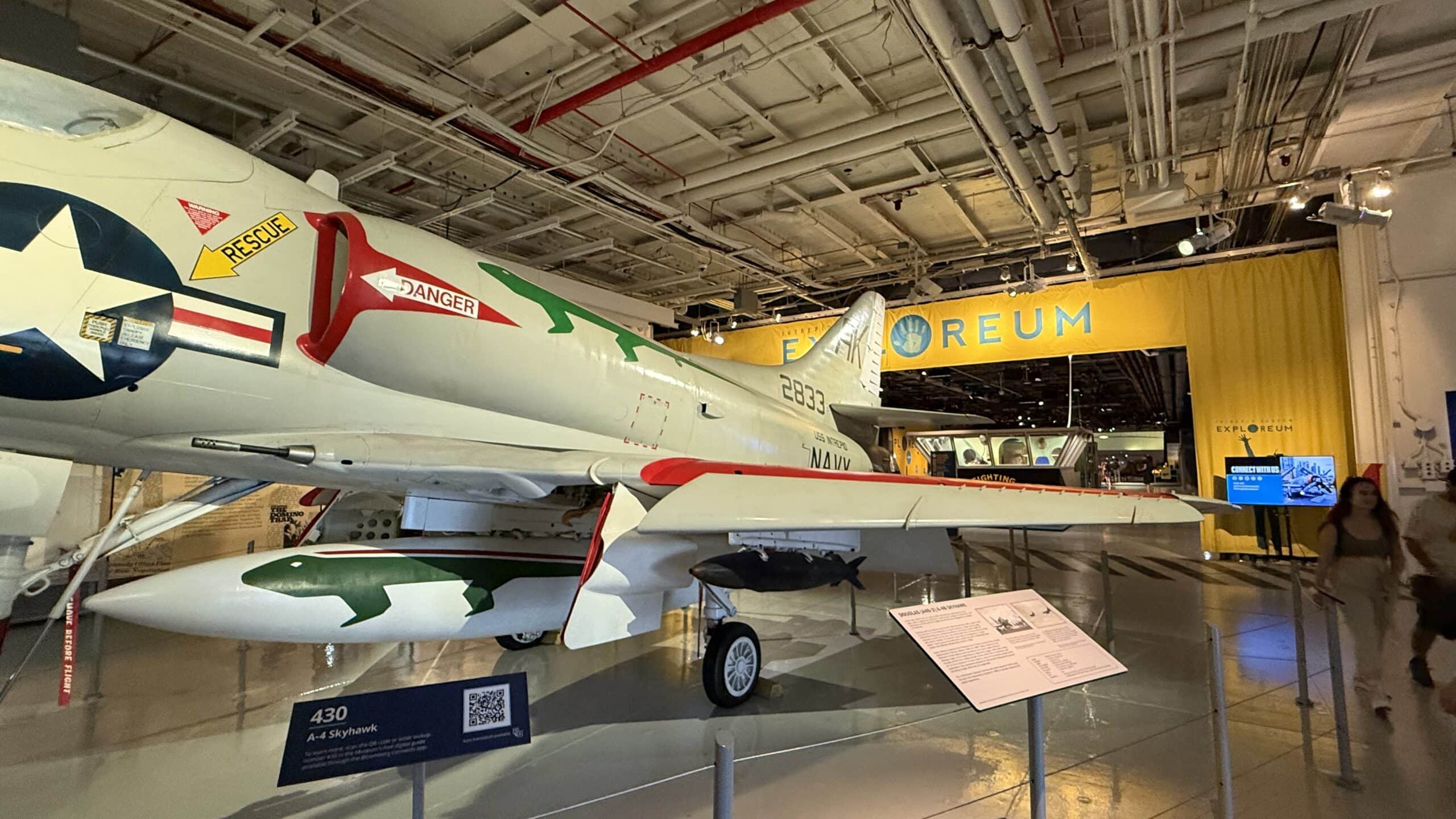
A-4 Skyhawk 19FortyFive Photo from USS Intrepid.
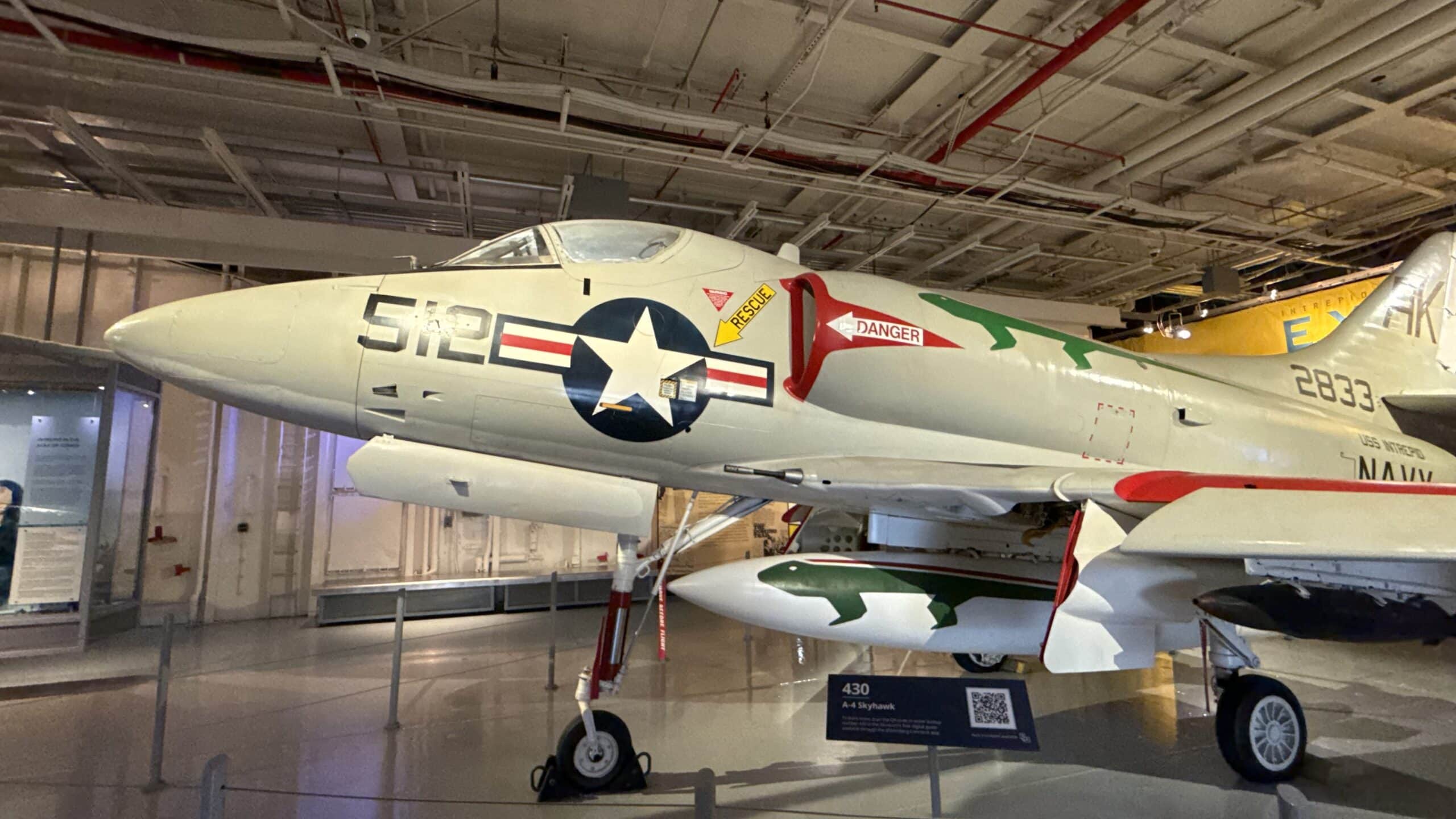
A-4 Skyhawk 19FortyFive Photo from USS Intrepid.
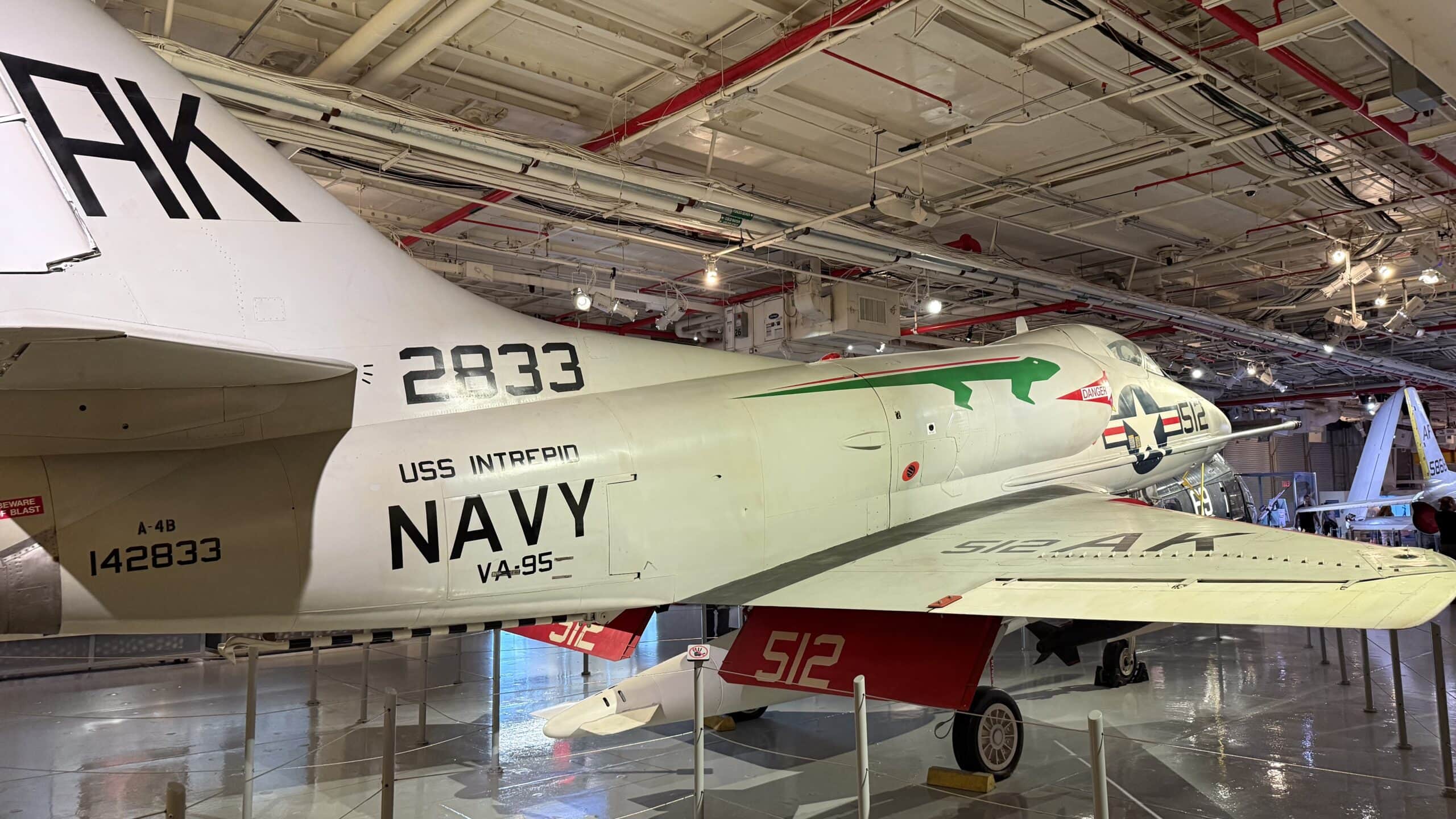
A-4 Skyhawk 19FortyFive Photo from USS Intrepid.
The Skyhawk broke apart, but the pilot ejected and survived, with the impact tearing away virtually all of the Eagle’s right wing.
In an interview aired on the History Channel, Nedivi described the moment: he heard a loud impact noise, followed by the F-15 rapidly pitching downward and spinning.
At first, he prepared to eject himself but instead applied the afterburner, and the aircraft gradually stopped rolling.
He then raised the plane’s nose and kept it in the air.
Photographs of the aircraft after the landing were also taken and have since been published, showing visible evidence of the damage it took.
The Damage They Couldn’t See
When the incident occurred, the crew knew the F-15 had been badly hit, but they didn’t know just how badly. In fact, nobody expected its wing to have been torn off, because the fuel streaming from the damaged right side obscured their view.
Nedivi asked another pilot to inspect the aircraft, but the spray still made it difficult to see exactly what was left.
And with the jet still responding to his controls, he decided to continue flying to the nearby Ramon Airbase.
Had the crew noticed the missing wing, he may not have made that decision — but they didn’t, and he did.
Nedivi later said that he probably would have ejected if he had understood the full extent of the damage, because an aircraft with one wing largely destroyed cannot be expected to fly safely, particularly as it slows down for landing.
So, whatever control Nedivi had regained while traveling at high speed could easily have disappeared as he approached landing.
Landing At High Speed
Nedivi kept the fighter moving fast to maintain his momentum, and by his account, he crossed the runway threshold at around 250 knots — compared to about 130 knots for a normal F-15 approach.
That extra speed was necessary to keep the jet under control, but it made it more challenging to stop before the runway ended.
So, he lowered the F-15’s arresting hook that catches a cable on the runway.
The hook successfully engaged, but the force of the rapid landing tore it from the aircraft completely – meaning he couldn’t count on it to control his speed.
Nedivi continued to brake and eventually brought the jet to a full stop, only just before the barrier at the far end of the runway.
Only after the plane landed and the pilot opened the canopy did he look across and see that the right wing was missing.
How It Stayed In the Air
The F-15 stayed in the air because just enough of the wing remained intact — specifically, the part that attaches to the fuselage.
The plane’s broad body and other surviving surfaces generated sufficient lift that, at continued high speeds, it could stay in the air.
Had it been another aircraft, or had more of the wing been lost, the story may have ended differently.
About the Author: Jack Buckby
Jack Buckby is a British researcher and analyst specializing in defense and national security, based in New York. His work focuses on military capability, procurement, and strategic competition, and he produces and edits analysis for policy and defense audiences. He brings extensive editorial experience, with a career output spanning over 1,000 articles at 19FortyFive, and has previously authored books and papers on extremism and deradicalization.

![VP Vance Led Fraud Purge Axes 760,000 Bogus Obamacare Enrollments, Saves Taxpayers $2.2 Billion [WATCH]](https://www.lifezette.com/wp-content/uploads/2025/09/2025.09.25-05.52-lifezette-68d58152c8aef.jpg "VP Vance Led Fraud Purge Axes 760,000 Bogus Obamacare Enrollments, Saves Taxpayers $2.2 Billion [WATCH]")