
Summary and Key Points: The Royal Navy’s Queen Elizabeth-class aircraft carriers, HMS Queen Elizabeth and HMS Prince of Wales, displace 65,000 tonnes, carry 921 crew, and launch F-35B STOVL fighters from a ski jump, with no catapults or arresting gear. Each costs £6.2 billion and £96 million a year to maintain, defended by three Phalanx 20mm CIWS mounts and no missiles. Military Watch Magazine says drone and ballistic missile swarms overwhelm them without Type 45 destroyers’ Sea Viper cover.
The Queen Elizabeth-Class Aircraft Carrier Dilemma
The British Royal Navy badly wanted to restore its aircraft carrier capability after years without them.
At one time, the British Royal Navy was the dominant global navy.
Royal Navy Aircraft Carrier. Image Credit: Creative Commons.
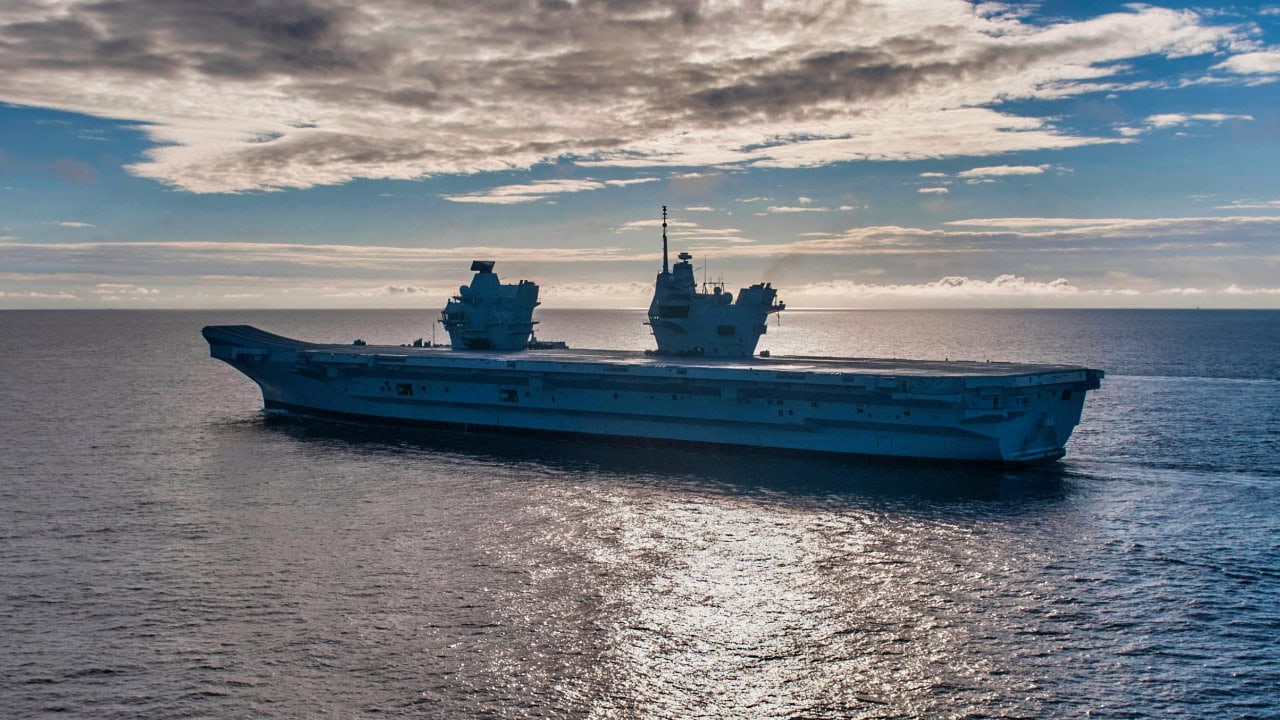
(Aug. 8, 2017) The Royal Navy aircraft carrier HMS Queen Elizabeth II sails in formation alongside the Nimitz-class aircraft carrier USS George H.W. Bush (CVN 77) during exercise Saxon Warrior 2017, Aug. 8. Saxon Warrior is a United States and United Kingdom co-hosted carrier strike group exercise that demonstrates interoperability and capability to respond to crises and deter potential threats. (U.S. Navy photo by Mass Communication Specialist 3rd Class Tristan B. Lotz/Released)
They had plenty of carriers. But after the British Empire collapsed following the Second World War, and with the end of the Cold War, the Royal Navy’s budgets and capabilities tightened.
Should Britain Have Invested In The Queen Elizabeth-Class Carriers?
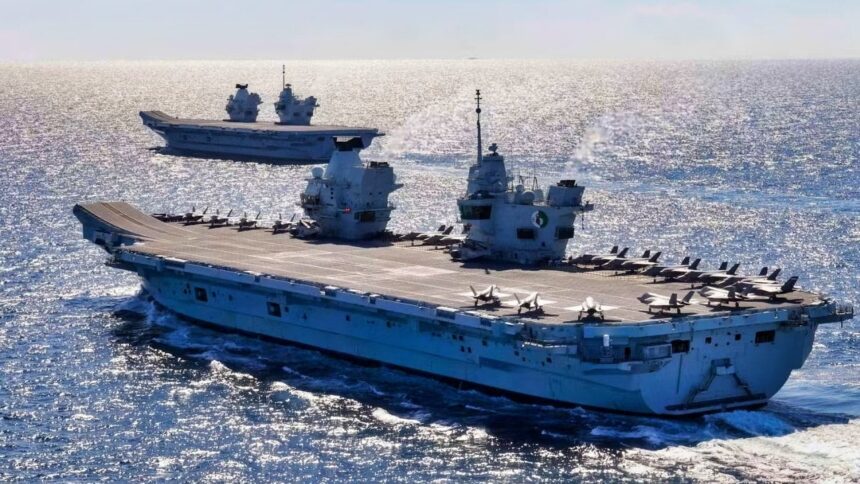
Today, Britain has two conventionally powered aircraft carriers: HMS Queen Elizabeth and HMS Prince of Wales. Each vessel displaces around 65,000 metric tonnes and measures 280 meters long.
While the British carriers are non-nuclear, maintaining two non-nuclear aircraft carriers displacing 65,000 metric tonnes is expensive for a country with a smaller navy.
There have already been calls to reduce the Royal Navy’s commitment to these monstrosities. The carriers have had multiple maintenance issues.
The Royal Navy is struggling to keep the ships fully staffed.
The air wing has also had issues.
And the cost burdens the cash-strapped British taxpayer.
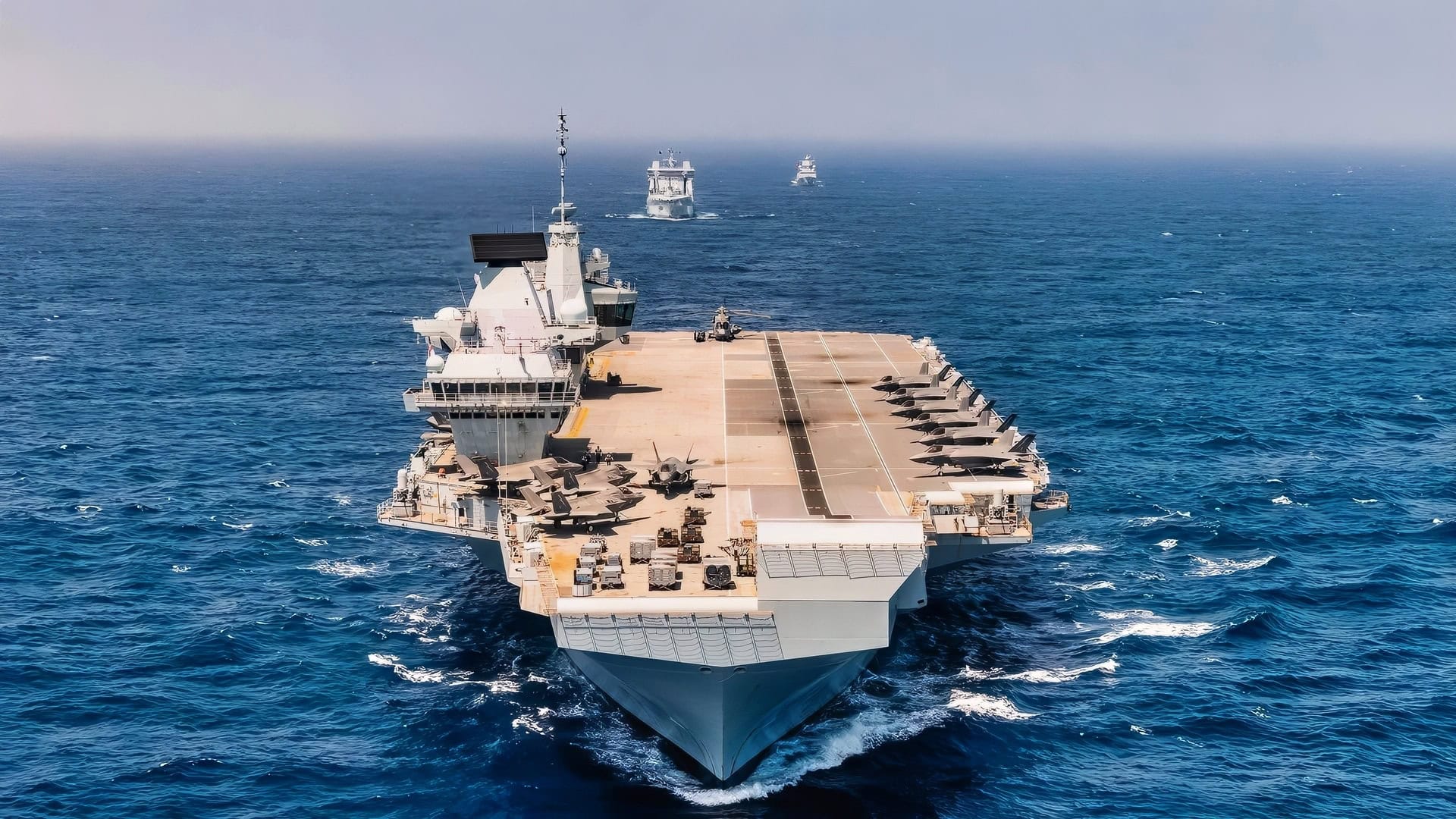
Queen Elizabeth-Class Aircraft Carrier Royal Navy. Creative Commons Photo.
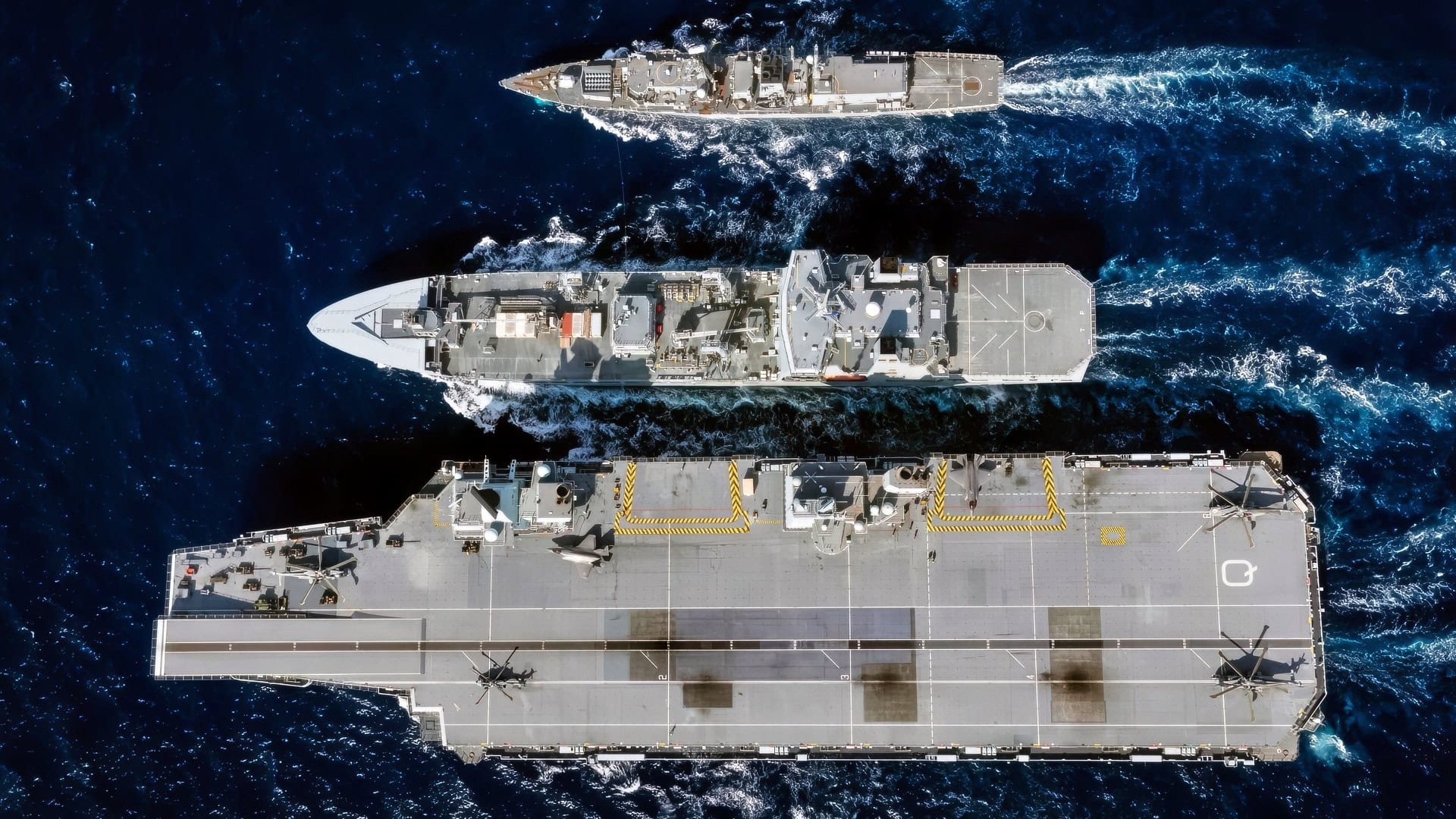
Royal Navy Queen Elizabeth Aircraft Carrier Creative Commons Image
The Queen Elizabeth-class aircraft carrier uses an integrated electric propulsion system that combines gas turbines and diesel generators.
These ships carry a crew of up to 921.
The air wing is supposed to comprise Lockheed F-35B Lightning II fifth-generation warplanes.
The “B” variant is the same one that the United States Marine Corps uses, meaning it has a short takeoff and vertical landing (STOVL) capability.
Rather than the advanced catapult system used by American (and Chinese) aircraft carriers, the Queen Elizabeth-class has a rudimentary ski-jump/short takeoff system.
The ships also lack an advanced arresting gear (AAG) recovery system, meaning the air wing must have planes that can land without cables.
Hence, the need for F-35Bs and their STOVL capability.
In defense, the Queen Elizabeth-class has three Phalanx 20mm Close-In Weapons System (CIWS) mounts, along with smaller-caliber weapons. Each ship cost the British taxpayer around 6.2 billion pounds to build.
Maintaining one of these ships costs an average of 96 million pounds per year.
If there are bigger maintenance issues, such as the kind that have afflicted these ships since they were first deployed, the cost balloons–and the time it takes to repair and maintain them increases (creating strategic shortfalls).
Now for the real problem.
Complicating Factors
After all the costs involved with building and maintaining these ships, these two carriers keep getting sunk in a variety of exercises.
Military Watch Magazine, an online trade publication, assessed that swarming tactics like those rivals routinely employ with drones and anti-ship ballistic missiles (ASBMs) can overwhelm the carriers.
Critics of the carriers in the British government have used the findings of these exercises to argue that the British Royal Navy cannot afford them.
While each carrier employs a Phalanx CIWS for defense, it is insufficient against swarms of drones or ASBMs.
The Phalanx employs a radar-directed, six-barrel, 20 mm Gatling gun to engage incoming threats at short range. Its effective engagement envelope is up to two kilometers (depending on the target and circumstances).
Both carriers lack the medium- or long-range surface-to-air missiles (SAMs) found aboard Britain’s Type 45 destroyers.
So the carriers require accompanying ships, airborne fighters acting as interceptors, electronic warfare (EW), and early-warning capabilities to detect threats before they get within range of the Phalanx CIWS.
The British Type 45 has a decent defensive capability.
It’s called Sea Viper, which uses Aster missiles to intercept enemy aircraft, drones, and missiles from long range.
However, the Royal Navy’s surface fleet is relatively small and already strained.
These destroyers are not always available in the numbers or in the way the carriers require.
That means that unless Britain keeps its carriers in reserve most of the time until the destroyers are ready, those two carriers are highly vulnerable to attack if deployed without a proper screen.
If swarms of missiles and/or drones attacked the carriers, their survival would depend on the availability and deployment rate of the Type 45 destroyers. Otherwise, those carriers are getting clipped.
Strategic Implications
In response to some of these reports, the Ministry of Defense is setting aside £ 240 million to develop drones for a future hybrid carrier air wing, to be deployed alongside those F-35Bs.
Until those capabilities are honed, however, the carriers are completely dependent on a finite amount of protection from the Royal Navy’s Type 45 defenses and any defenses the carrier’s air wing can provide.
And even that is not a totally reliable defense.
The problem isn’t so much the carriers themselves (although they are expensive and difficult to maintain). The issue is the carriers’ survivability.
Both the War in Ukraine and even the Iran War have demonstrated how vulnerable to ASBM and/or drone swarms aircraft carriers are.
And this is only getting worse.
The US Navy and Russian Navy in their respective wars have already struggled under the threat of these kinds of attacks on their naval assets.
Yet, the British Royal Navy is not large enough or capable enough to fully defend major surface ships, like these carriers, from similar swarming attacks.
In other words, the two British carriers are sitting ducks in this age of modern drone and ASBM swarm warfare.
About the Author: Brandon J. Weichert
Brandon J. Weichert is the Senior National Security Editor at 19FortyFive.com. He also manages The Weichert Brief on Substack. Weichert also hosts “National Security Talk” on Rumble. He is the author of four bestselling national security books, most recently A Disaster of Our Own Making: How the West Lost Ukraine (Encounter Books). Follow him via Twitter/X @WeTheBrandon.

![Ken Paxton’s Estranged Ex-Wife Weighs in on Senate Race with James Talarico [WATCH]](https://www.lifezette.com/wp-content/uploads/2026/10/2026.10.04-10.06-lifezette-6ac2250e62c8f.jpg "Ken Paxton’s Estranged Ex-Wife Weighs in on Senate Race with James Talarico [WATCH]")