
Summary and Key Points: A 1981 war game became a 1982 fight over the future of the aircraft carrier. The Navy cited Ocean Venture ’81 as proof that USS Dwight D. Eisenhower and USS Forrestal could survive a war at sea, just as Congress was weighing whether to buy two more nuclear carriers. The exercise’s chief analyst, Lt. Cmdr. Dean Knuth, told The Washington Post that opposing submarines had gotten through, and by published accounts one was a Canadian Oberon that an umpire ruled had sunk Eisenhower. Sen. Gary Hart pushed to hold up the new carriers, and Congress eventually decided it had not been misled. Which submarine did it has never been made public.
The US Navy’s Aircraft Carriers Can Be Beaten
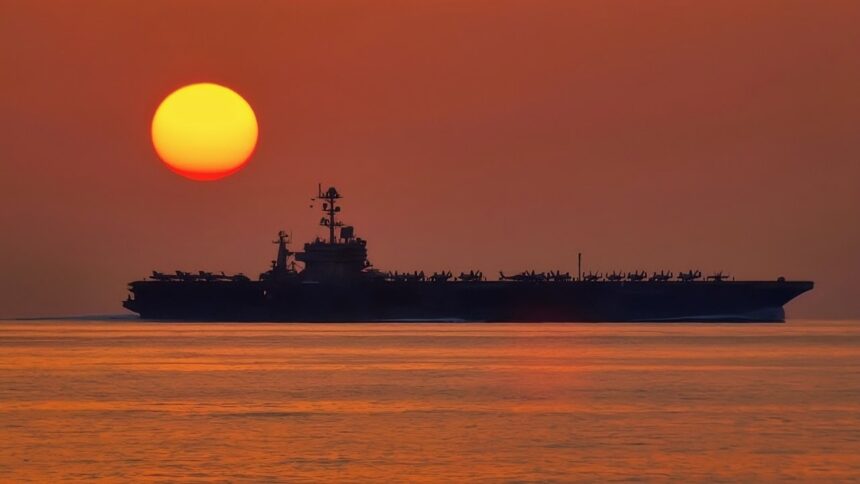
During a 1981 naval exercise, a Canadian diesel-electric submarine reportedly got close enough to USS Dwight D. Eisenhower to carry out a simulated torpedo attack. The story is intriguing because it suggests that a small, relatively inexpensive submarine could, in theory, have defeated one of the U.S. Navy’s most powerful aircraft carriers of the time. It wasn’t just a straight victory, though.
Published accounts of what happened don’t actually identify which Canadian submarine made the attack.
What we do know, though, is that the carrier took part in Ocean Venture ‘81 and that a U.S. Navy analyst later challenged the Navy’s account of just how well its carriers had survived attacks during that exercise.
Here’s what we know about that story.
The Exercise
Ocean Venture ‘81 began on August 1 and ran through October, with ships and aircraft from 14 countries participating in operations across the Atlantic and other waters.
ATLANTIC OCEAN (Oct. 4, 2015) – An F-35C Lightning II carrier variant joint strike fighter assigned to the Salty Dogs of Air Test and Evaluation Squadron (VX) 23 prepares to take off from the flight deck of the aircraft carrier USS Dwight D. Eisenhower (CVN 69). The F-35C Lightning II Pax River Integrated Test Force is currently conducting follow-on sea trials aboard the Eisenhower. (U.S. Navy photo by Mass Communication Specialist 3rd Class Jameson E. Lynch/Released)
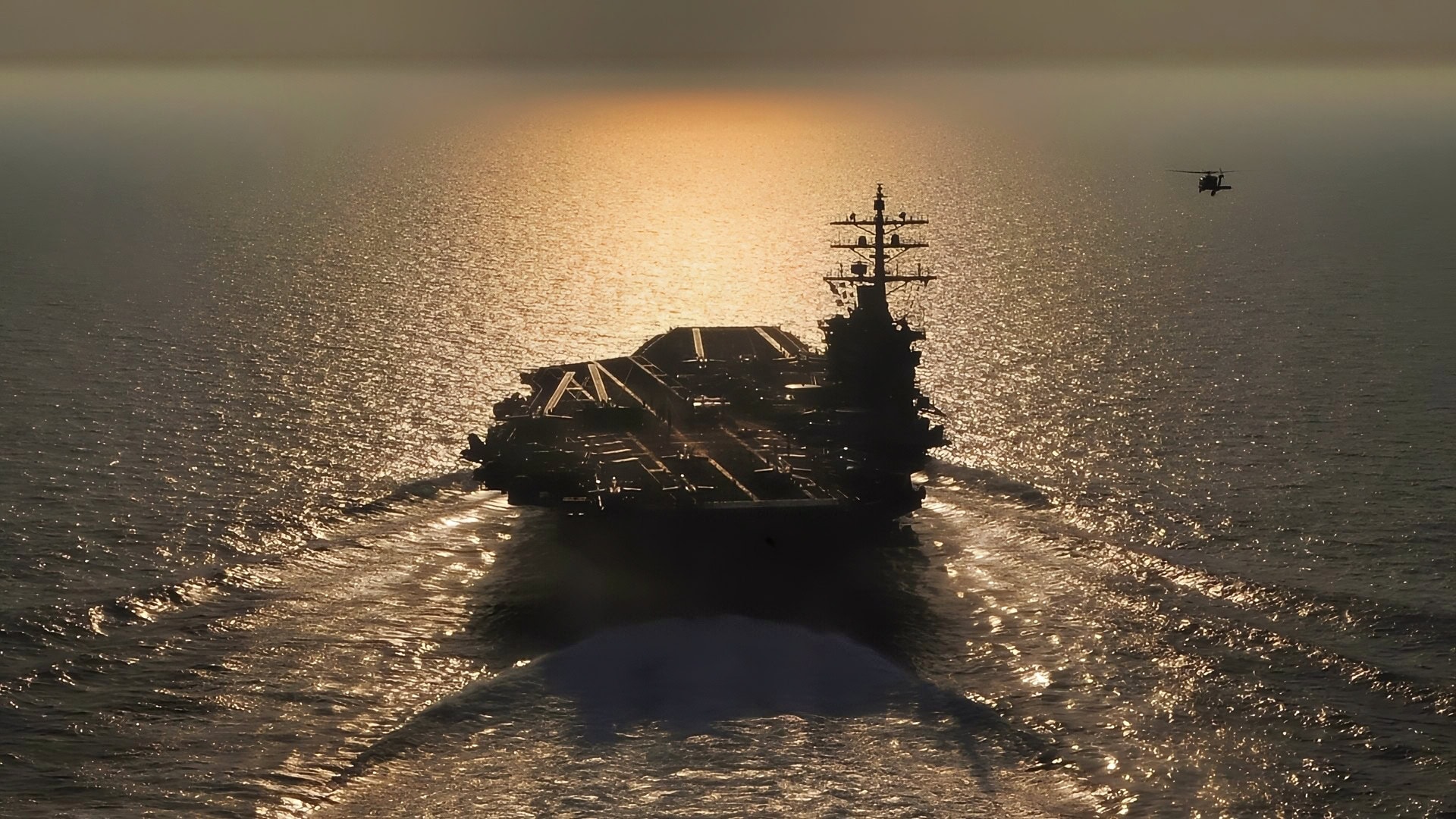
MEDITERRANEAN SEA (July 10, 2012) – An SH-60F Seahawk from the Nightdippers of Helicopter Anti-Submarine Squadron (HS) 5 flies alongside Nimitz-class aircraft carrier USS Dwight D. Eisenhower (CVN 69), July 10. Dwight D. Eisenhower is on a regularly scheduled deployment in support of Maritime Security Operations (MSO) and Theater Security Cooperation (TSC) efforts in the U.S. 5th and 6th Fleet areas of responsibility. IKE deployed as part of Eisenhower Carrier Strike Group (CSG), which includes CSG 8, IKE, guided-missile cruiser USS Hue City (CG 66), guided-missile destroyer USS Farragut (DDG 99), guided-missile destroyer USS Winston S. Churchill (DDG 81), USS Jason Dunham (DDG 109), the seven squadrons of Carrier Air Wing (CVW) 7, and Destroyer Squadron 28. (U.S. Navy photo by Mass Communication Specialist 2nd Class Julia A. Casper/Released)
During one phase of the simulated conflict, a force built up around Eisenhower and USS Forrestal attempted to reach the Norwegian Sea while opposing forces tried to attack it.
The scenario was intended to test whether American carriers could make the journey and still launch aircraft during a real war.
For context: carriers travel with escorts in part to protect them from submarines.
The ships and their aircraft search the water ahead of them and around the formation for potential threats.
For the attacking submarine, the task was to avoid being found long enough to reach a firing position — and that’s what the Canadian boat is said to have done.
Which Canadian Submarine Was It?
Here’s where it gets confusing. Canada had three Oberon-class submarines in service: HMCS Ojibwa, Onondaga, and Okanagan.
The ships entered service in 1965, 1967, and 1968, respectively. According to published accounts of the Eisenhower encounter, the class was Oberon, but the particular boat and its crew were not noted.
Those three Oberon boats, however, were all diesel-electric submarines.
When submerged, they could shut down their engines and run entirely on batteries, reducing the noise enemy ships could detect.
The boats cannot do that indefinitely, of course, because the batteries eventually needed to be recharged.
For an attack during an exercise, though, a period of quiet movement could be just enough to get the job done.
The Canadian crews also had experience using the boats in this way.
For years, their submarines had served as enemy targets while allied ships and aircraft practiced finding them in other exercises — and that work had given the crews regular opportunities to operate against the same kinds of defenses that protect a carrier group over and over again.
So it wasn’t just a matter of the boats being capable, but the crews being talented and experienced.
The Reported Torpedo Attack
According to various online accounts, a Canadian Oberon slipped through the defensive screen around Eisenhower and simulated launching a torpedo at the carrier.
No torpedo hit the carrier, of course; in an exercise like this, success is determined by whether a submarine reached a position from which its weapon could have been fired effectively against a ship under the rules of the scenario.
According to the accounts, a U.S. Navy umpire ruled that the carrier was sunk — but the ruling did not identify the submarine or specify when exactly the attack took place.
It also doesn’t say which escort ships searched for the boat.
The Resulting Argument
Submarine attacks during Ocean Venture became contentious. In May 1982, The Washington Post interviewed Lt. Commander Dean Knuth, the chief analyst of the exercise.
Knuth disputed any claim that Eisenhower or Forrestal had made it from the North Atlantic to the Norwegian Sea without being successfully attacked.
Knuth argued that opposing submarines had been able to make simulated attacks on the carriers during the exercise, but the Navy drew a different conclusion from the results.
Instead, the U.S. Navy maintained that its carriers had performed well.
That exercise mattered, though. At the time, Congress was considering whether to fund two more nuclear-powered aircraft carriers, and the Navy cited Ocean Venture as evidence that they were survivable and worthwhile investments.
The Disagreement Reached Congress
Senator Gary Hart eventually called for an investigation and sought authorization to withhold the new carriers until their exact fate in that exercise was officially established.
Senator William Cohen, chair of the Senate subcommittee overseeing the matter, also reviewed the case and said lawmakers ultimately had not been misled.
To this day, nobody knows what Canadian submarine ever really “sank” Eisenhower.
MORE – Iran Used Mines to Attack the US Navy
MORE – The M250 – A Green Beret Gives Us His Take
About the Author: Jack Buckby
Jack Buckby is a British researcher and analyst specializing in defense and national security, based in New York. His work focuses on military capability, procurement, and strategic competition, and he produces and edits analysis for policy and defense audiences. He brings extensive editorial experience, with a career output spanning over 1,000 articles at 19FortyFive and National Security Journal, and has previously authored books and papers on extremism and deradicalization.