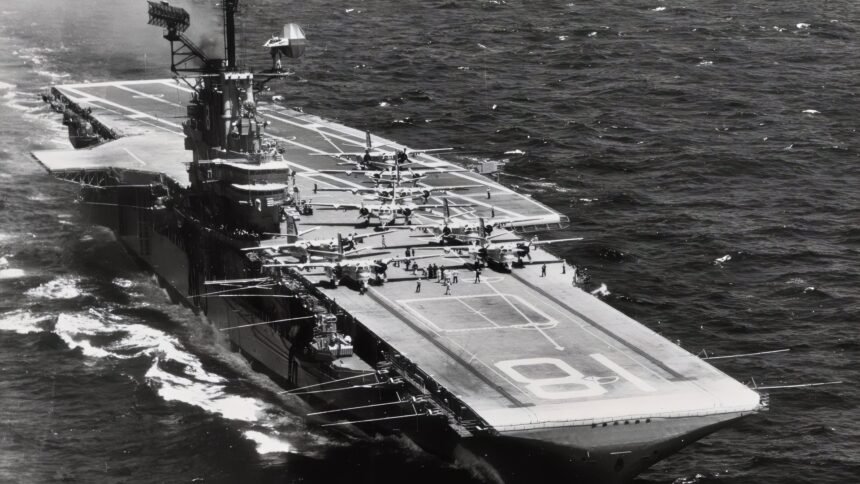

On the night of April 26, 1952, the USS Hobson (DMS-26), a Gleaves-class destroyer, collided with the Essex-class aircraft carrier, the USS Wasp (CV-18).
The two ships were participating in amphibious exercises in the Atlantic to practice night operations when Hobson attempted to turn in front of Wasp and collided with the carrier.
The incident ripped the destroyer in half, killing 176 crewmen, including her commanding officer.
The collision resulted in the greatest loss of life for the U.S. Navy since WWII and was one of the greatest peacetime disasters that the service suffered in its history.
Hobson Before the Collision
Before the incident, Hobson had an eventful World War II career.
She was commissioned in 1942, right after the U.S. had entered the war, and served in both the Pacific and Atlantic theaters.
She took part in Operation Torch, which saw the Allied landing in North Africa and the beginning of the American African campaign.
She later participated in Operation Overlord, where she bombarded shore targets at Utah Beach using her 127mm naval guns.
Afterward, she was sent to the Pacific theater, where she participated in the Okinawa campaign. During the fighting, she was struck by a bomb from a kamikaze attack.
Essex-Class Aircraft Carrier USS Intrepid Tour from 2025. 19FortyFive Original Image.
The bomb struck her deck, right above her engine room.
The ship survived, but she spent the rest of the war undergoing repairs at the Norfolk Naval Shipyard.
When the War ended, Hobson was finishing her repairs. She returned to active duty in 1946 and spent the next several years conducting minesweeping operations in the Atlantic.
However, with the outbreak of the Korean War, the U.S. Navy intensified training operations.
From 1950 onward, Hobson participated in amphibious and carrier operations, serving as a screening ship and fleet air-defense ship.
In 1952, she joined carrier operations with the USS Wasp, along with the destroyers USS Rodman (DD-456) and USS Ross (DD-563).
The group operated about 490 nautical miles off the coast of Newfoundland, Canada, and was en route to Gibraltar.
En Route to Disaster
During the night of April 26th, the four ships sailed in formation, with Hobson steaming at roughly 24 knots, following Wasp 3,000 yards off her starboard quarter.
Hobson’s commanding officer, Lt. Cmdr. William J. Tierney, had commanded the destroyer for only five weeks.
Before his current assignment, Tierney had spent six months commanding a high-speed transport.
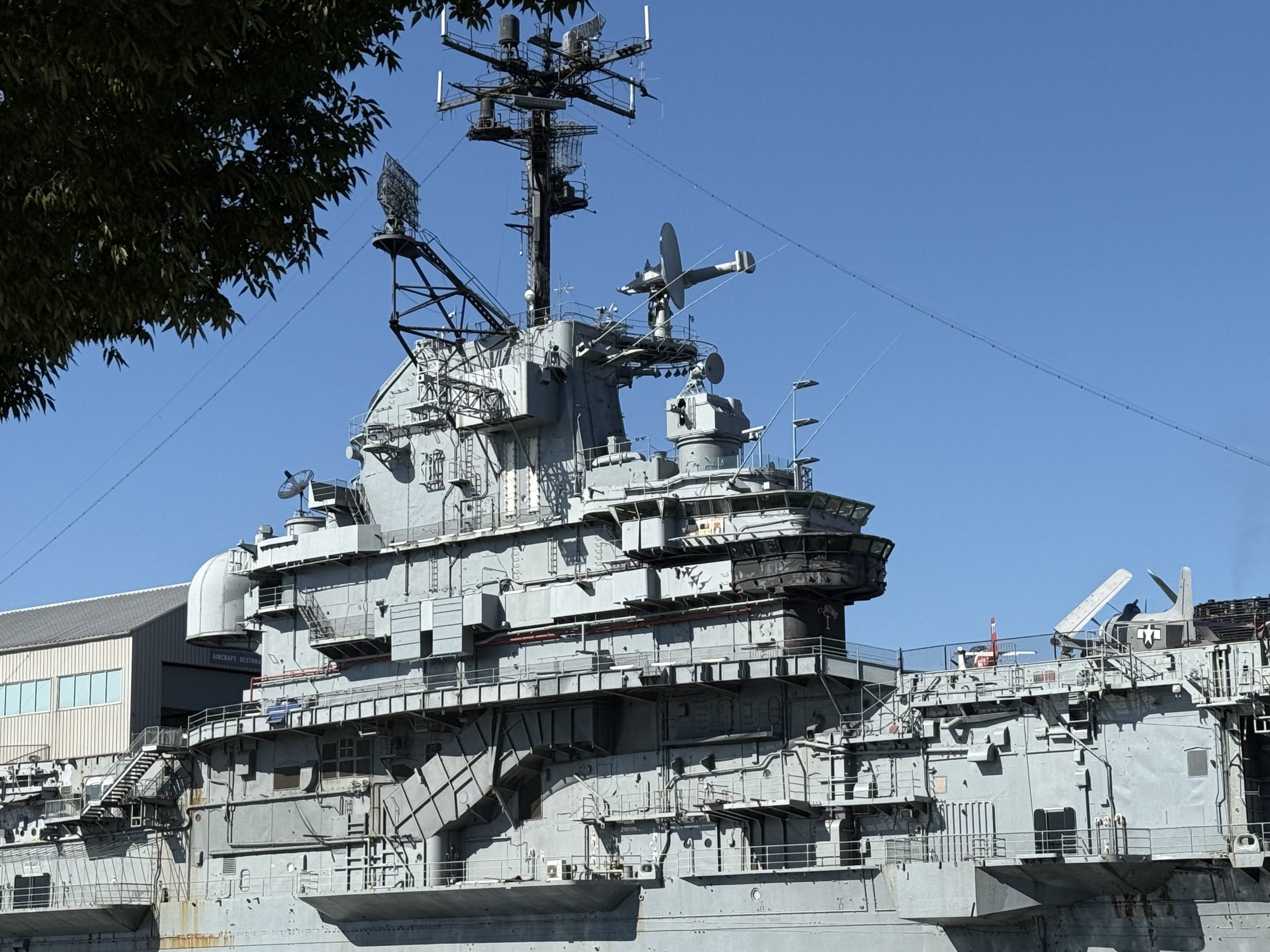
Essex-Class Aircraft Carrier USS Intrepid Tour from 2025. 19FortyFive Original Image.
During his short tour with Wasp, he had spent only seven days underway, and even fewer with the carrier task group.
In other words, Hobson’s commander was inexperienced and likely unprepared for the perils and risks of carrier group operations.
Tierney suspected that Wasp was preparing for aircraft recovery operations and would change her course to 250-260 degrees.
He outlined a course to maneuver the ship ahead of Wasp and then come up on the carrier’s port quarter.
At the time, Hobson’s executive officer, Lt. William A. Hoefer, was on the bridge, in control of the ship.
When he saw Tierney’s suggested course, he immediately objected, saying the plan would put the ship on a collision course with Wasp.
He suggested the conventional method: slow down and let the carrier cross in front of them.
By all accounts, a heated discussion broke out on Hobson’s Bridge between Hoefer, Tierney, and Lt. Donald Cummings.
Hoefer unfortunately lost the argument and stormed out to the outside wing to calm his temper.
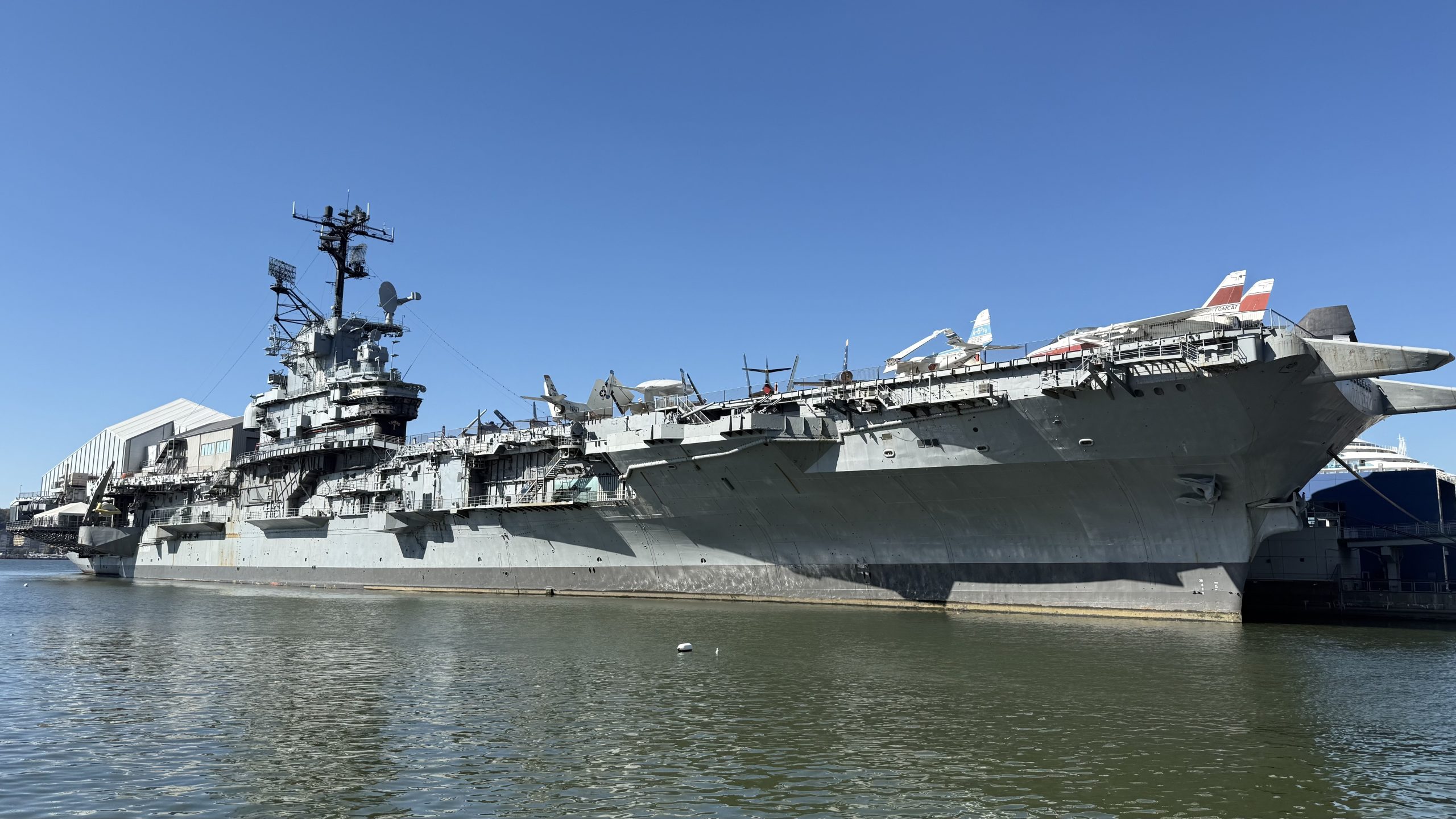
Essex-Class Aircraft Carrier USS Intrepid Tour from 2025. 19FortyFive Original Image.
Aboard Wasp, the carrier’s commanding officer, Capt. Burnham C. McCaffree, and Lt. Robert Herbst were on the bridge and ordered the ship to maneuver into the wind for recovery operations.
McCaffree observed his tailing destroyers and assumed they would take appropriate measures to follow.
However, the wind shifted slightly, and the carrier slightly altered its course from 260 to 250 degrees.
Disaster Strikes
Back on Hobson, Tierney ordered the destroyer on a course of 130 degrees.
Fogged port pelorus prevented Hobson from getting an accurate bearing on Wasp.
Likewise, Wasp’s surface radar was out of action, preventing the carrier from “seeing” Hobson.
For some reason, Tierney ordered the ship into a sharp, quick turn, followed by full left rudder.
Hoefer, realizing what was about to happen, rushed back to the bridge and yelled for everyone to brace for impact.
Meanwhile, by the time Wasp realized what was happening, it was too late for either ship to do anything to avert the coming storm.
Despite Hobson’s last-minute efforts to avoid Wasp, the massive carrier struck the destroyer amidships. The impact rolled the destroyer onto her side and broke her in two.
Wasp, Ross, and Rodman immediately sprang into action to rescue survivors.
Around 61 survivors were recovered, but Hobson Tierney and 175 other crewmen were lost at sea.
Immediately after the incident, the U.S. launched an investigation to determine where the fault lay.
Investigators determined that Hobson, in particular, and Tierney were at fault for turning directly in front of the carrier.
Wasp sustained considerable damage in the collision and spent only ten days undergoing repairs before she was back at sea.
However, the repairs cost the Navy about $1 million (around $12 million today).
Overall, the incident was an incredibly tragic but ultimately avoidable disaster that needlessly cost the lives of more than 100 sailors and officers.
About the Author: Isaac Seitz
Isaac Seitz, a Defense Columnist, graduated from Patrick Henry College’s Strategic Intelligence and National Security program. He has also studied Russian at Middlebury Language Schools and has worked as an Intelligence Analyst in the private sector.