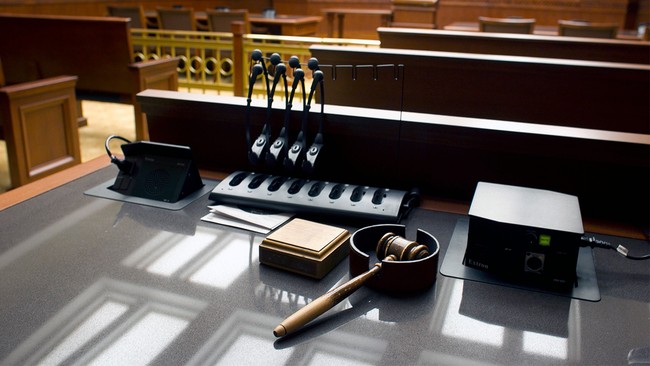

In less than a month, the Supreme Judicial Court in Massachusetts will hear oral arguments in a case that could determine whether local licensing officials can continue to use (and abuse) their own discretion in deciding who is “suitable” to exercise their Second Amendment rights.
The case involves a man named Randy Westbrook, who applied for and was denied a License to Carry by Holyoke Police Chief David Pratt, who deemed Westbrook “unsuitable.” Westbrook has no felony convictions or other prohibitions that would preclude him from purchasing and possessing a firearm under federal law, but Pratt based his denial on an alleged domestic violence incident more than a decade ago.
Westbrook was convicted of, nor pled guilty to that crime, though he admitted that there were sufficient facts for a finding of guilty. In return, he received a continuance without a finding on the aggravated assault and battery charge. Essentially, the charges were dismissed.
Still, as Westbrook’s attorney William S. Smith notes, Pratt concluded that Westbrook shouldn’t receive a license to carry (which is also necessary to possess a handgun in the home) based on his “31 years of police experience.”
That testimony illustrates precisely why this case matters so much. Constitutional rights cannot vary according to the experience, philosophy, instincts or risk tolerance of whichever government official happens to decide the application.
That’s called subjectivity, and SCOTUS has already said that’s a no-no when it comes to issuing carry licenses.
Second Amendment Foundation, California Rifle & Pistol Association, Second Amendment Law Center, Minnesota Gun Owners Caucus, and Citizens Committee for the Right to Keep and Bear Arms (where I serve as a volunteer, unpaid board member) have now filed an amicus brief with the SJC arguing that G.L. c. 140, §131(d), which is the law in question, does not comport with the right to keep and bear arms.
While Second Amendment jurisprudence is still developing, the Supreme Court has twice now confirmed that dangerous people can be disarmed. As the Commonwealth notes, “[t]he Rahimi Court explained that colonial ‘going-armed’ laws demonstrate a general historical tradition of preventing people from misusing firearms.” But that power is limited because “affording the government that kind of ‘broad power to designate any group as dangerous and thereby disqualify its members from having a gun’ would risk allowing it to ‘quickly swallow’ the Second Amendment.”
Here, the primary problem for the Commonwealth, historically speaking, is temporal. If it were the year 2011, and Mr. Westbrook had just recently admitted to sufficient facts for a finding of guilty as to alleged domestic violence, or received a continuance without a finding, then perhaps he could fall into Rahimi’s confirmation that “[w]hen an individual poses a clear threat of physical violence to another, the threatening individual may be disarmed.”
But it is not 2011, it is 2026. Mr. Westbrook’s last alleged violent crime was over 16 years ago, and the last crime of any kind in the record dates back 12 years. The Supreme Court emphasized that one of the reasons Zackey Rahimi could be disarmed was because “like surety bonds of limited duration, Section 922(g)(8)’s restriction was temporary as applied to Rahimi. Section 922(g)(8) only prohibits firearm possession so long as the defendant ‘is’ subject to a restraining order. In Rahimi’s case that is one to two years after his release from prison….” “One or two years” is far short of the much longer span of time at issue here.
Westbrook’s attorney agrees. Writing at his MA Gun Lawyer blog, Smith argues that a mere prediction that somebody “may” create a risk is not necessarily a finding of present dangerousness.
Nor does the existence of allegations from many years ago establish that a person presently poses a danger.
This distinction has become even more important following the Supreme Court’s modern Second Amendment cases. The government cannot simply invoke the words “public safety” and thereby escape Bruen’s constitutional analysis.
If that were enough, Bruen would mean very little.
Virtually every gun-control law ever enacted can be defended rhetorically in the name of public safety. But Bruen rejected the idea that courts may simply balance the government’s asserted public-safety interests against the constitutional right.
The question instead is whether the restriction is consistent with the Nation’s historical tradition of firearm regulation.
That is the constitutional test Massachusetts must satisfy.
And it’s a test that Massachusetts is bound to fail, unless the SJC puts its collective thumb on the scales of justice.
Mr. Westbrook can pass a NICS check. If he lived in one of 29 other states, he could lawfully carry without even needing a government permit because he can lawfully possess a firearm. The only thing standing in the way of Westbrook exercising his right to carry is the subjective opinion of his local police chief.
This is not what a “shall issue” licensing scheme looks like. This is precisely the kind of “may issue” regime that the Supreme Court ruled unconstitutional in Bruen four years ago, and now it’s time for the Supreme Judicial Court in Massachusetts to do the same with the state law Westbrook is challenging.
Read the full article here