


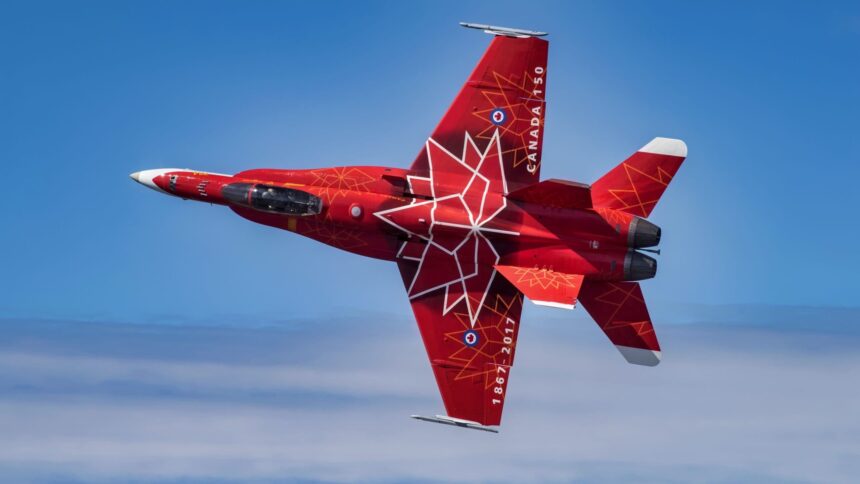

Exercise Amalgam Dart ran from August 24 to September 1, wrapping up two days ago.
For more than a week, Royal Canadian Air Force CF-18s and U.S. Air Force F-16s flew integrated intercept scenarios out of Bagotville, working the same command-and-control network, chasing the same simulated cruise missiles, doing exactly what North American Aerospace Defense Command was built to do.
CF-18 Canada. Image Credit: Creative Commons.
Almost nobody noticed.
Everyone was talking about submarines instead.
On Monday, Treasury Secretary Scott Bessent needled Canada over its retaliatory tariffs, joking about the country’s tiny submarine fleet in a way that landed about as well north of the border as you’d expect.
A few days before that, the Secretary of War mocked a Canadian cadet in uniform online, drawing condemnation from Defence Minister David McGuinty, who called it beneath the dignity of the office.
Layer on an escalating tariff fight and a bilateral defense board that Washington quietly shelved back in May, and you get this week’s dominant read on Ottawa: Canada is heading for the exits.
It isn’t.
What Canada is actually doing is more interesting than a divorce, and considerably more useful for Washington to understand than another grievance to file away.
Ottawa is cutting its dependence on American defense manufacturers while preserving, and in places deepening, its dependence on the very architecture that defends this continent.
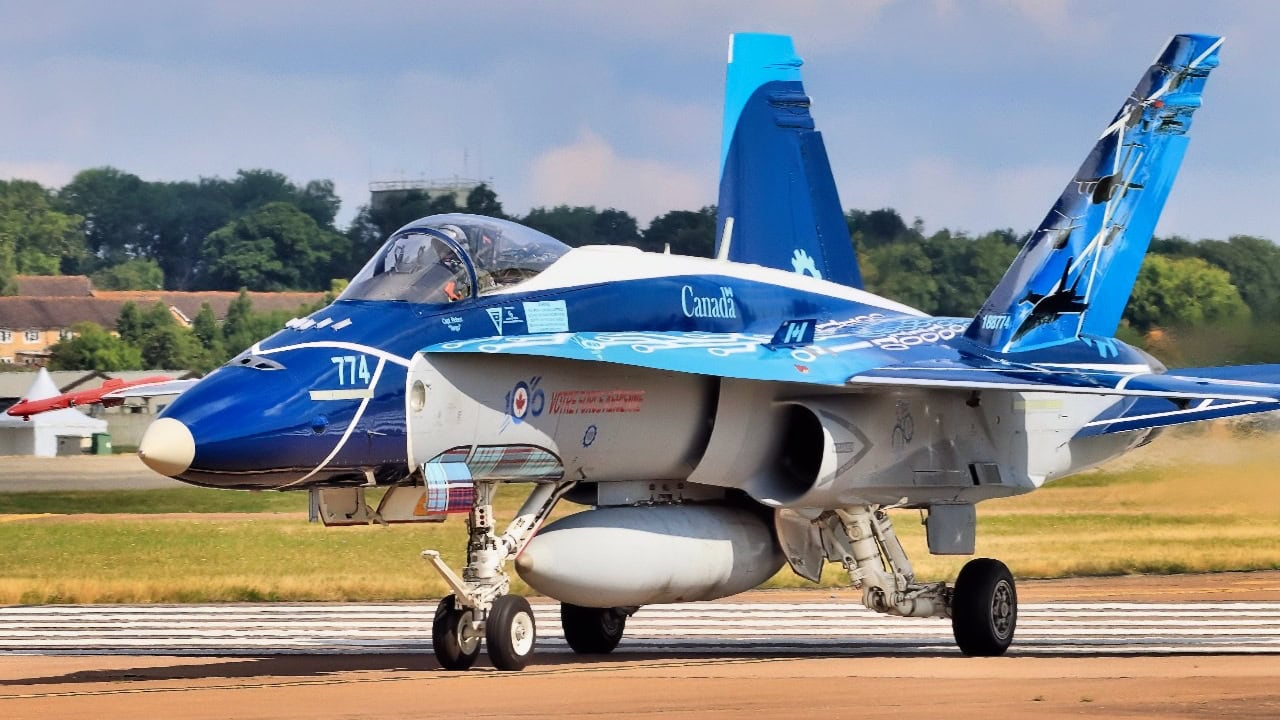
CF-18 Canada Air Force.
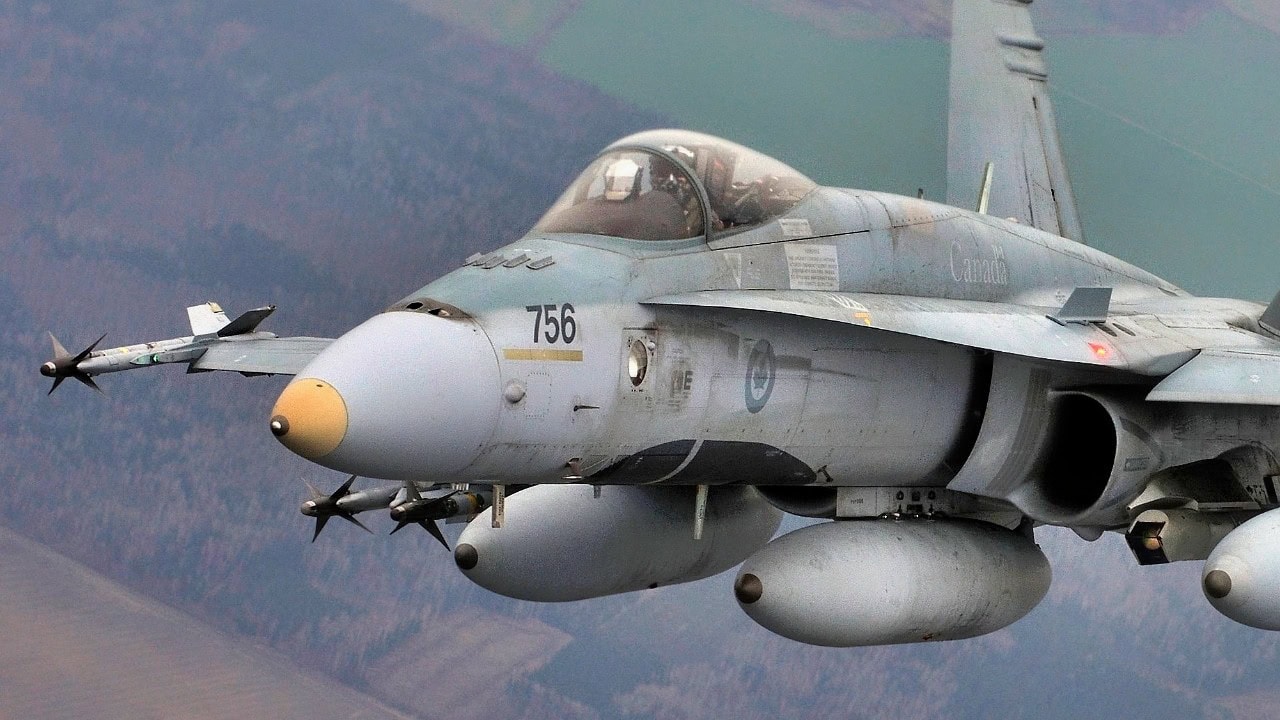
A CF-188 Hornet from the Canadian Air Task Force Lithuania flies over Lithuania on November 20, 2014 for the NATO Baltic Air Policing Block 36 during Operation REASSURANCE.
Photo: Air Task Force — OP Reassurance, DND
Treat those two facts as contradictory, and you will misread almost everything that follows.
The Room Fuhr Is Reading
Start with the man running Canadian defense procurement, because he said the quiet part out loud this week.
Stephen Fuhr, the secretary of state responsible for buying Canada’s next generation of military hardware, told reporters that handing a major contract to an American firm through a sole-source deal right now would be politically untenable. “That’s just me reading the room,” he said, adding that a government moving ahead with such an award would find little public patience for it right now.
Fuhr isn’t announcing a strategy shift. He’s describing a political constraint, and American officials have spent the summer tightening that constraint without seeming to notice or care.
Then there’s the Permanent Joint Board on Defense, which has coordinated bilateral defense planning since Franklin Roosevelt and Mackenzie King created it in 1940.
Some coverage treated its May suspension as Washington torching an eighty-six-year-old institution.
The duller, truer version: the board hadn’t met since November 2024, before this administration’s Canada file took its current shape, and Under Secretary of War Elbridge Colby formally paused U.S. participation, citing Canada’s failure to meet its own spending commitments.
He didn’t rupture a functioning channel. He turned an already-dormant one into an explicit political signal.
None of this means Washington invented Canadian diversification. Ottawa wanted it before the current tensions began; Carney has pushed to end the era when, as he put it, seventy cents of every defense dollar went south.
American rhetoric has removed whatever remained of the domestic cost of following through.
The Purchase That Argues the Other Way
Here’s where the “Canada is leaving” story runs into trouble. The marquee example of Canadian defense diversification, an Arctic radar system Ottawa bought from Australia rather than an American contractor, is, by Ottawa’s own description, a NORAD program.
In June, Canada committed $2.5 billion to an over-the-horizon radar built on Australian technology, part of a broader Arctic surveillance package worth more than $6 billion.
Raytheon had spent years developing Canadian over-the-horizon radar technology under a government-funded research program. Ottawa ultimately chose the Australian technological pathway instead.
But the Department of National Defence’s own language calls the radar “a key component of Canada’s NORAD modernization plan,” and that isn’t spin for domestic consumption.
It sits inside the $38.6 billion, twenty-year NORAD modernization program Ottawa announced in 2022, meant to replace and supplement Cold War-era warning infrastructure both countries still depend on.
None of this is new.
The Distant Early Warning Line went up in the 1950s for the same reason A-OTHR is going up now: whoever controls the northern approaches decides how much warning either country gets, and neither Ottawa nor Washington has ever solved that problem alone.
Choosing Australian technology didn’t move Canada an inch further from NORAD. It fed the same mission, on the same continent, under the same binational command that has run it since 1958.
The airborne piece is a shade different, and worth being precise about.
Canada is negotiating, no contract signed yet, to buy Saab’s GlobalEye surveillance aircraft over an American Boeing offering, with roughly a third of the eventual global fleet, some forty aircraft counting export orders, to be built in Canada.
Carney announced it in May with language built for a domestic audience: the deal “builds Canadian strategic autonomy, creates Canadian jobs.”
Two Truths, One Procurement Wave
None of this is Ottawa running a con. Carney’s autonomy framing and the Defence Department’s NORAD framing sit on the same government websites, available to anyone who reads past the press release.
They’re two honest descriptions of the same purchases, aimed at audiences that care about different things, and Ottawa has no incentive to reconcile them for outside observers.
Looking independent costs Carney nothing at home.
Staying plugged into North American air defense costs him nothing either, because geography leaves him no real alternative.
That’s the piece Washington keeps missing when it reads every non-American contract as evidence of drift. Canada can change who builds its radar.
It cannot change the fact that Arctic airspace only makes sense as a shared surveillance problem.
The distinction that matters isn’t between an ally and a defector.
It’s between industrial autonomy, which Canada is genuinely pursuing, and strategic separation, which it isn’t and structurally can’t afford. Confuse the two, and you’ll keep misreading Ottawa’s next contract.
What Comes After the Insults Wear Off
The mistake is treating each new non-American contract as a data point on a trend line running toward the exit. It’s a hedge, and hedges are built to coexist with the arrangement they’re hedging against, not replace it.
This gets tested not in a press release about Swedish radar planes.
It’s in Canada’s still-open decision on whether to join Golden Dome, the missile shield Washington is building with or without it.
That’s the file where “diversified but integrated” stops being a comfortable answer, and Ottawa has to say plainly whether it wants a seat at the table for decisions that could affect Canadian soil, or whether it’s content to stay formally excluded from an architecture that could shape continental and Canadian security either way.
Everything short of that question, Canada can keep answering both ways at once.
Washington can tolerate a Canada that buys its hardware elsewhere and still shows up for continental defense.
What it can’t afford is turning that hedge into an actual exit.
About the Author: Dr. Andrew Latham
Andrew Latham is a professor of international relations and political theory at Macalester College in Saint Paul, MN. You can follow him on X: @aalatham.

![Trump Torches Barack Obama and Climate Alarmism as a ‘Big Hoax’ [WATCH]](https://www.lifezette.com/wp-content/uploads/2025/08/2025.08.15-08.27-lifezette-689eef8dbe1b6.jpg "Trump Torches Barack Obama and Climate Alarmism as a ‘Big Hoax’ [WATCH]")