

Todd Achilles believes the Democratic and Republican parties are too big, too powerful, and have too much control over legislative processes at the detriment of the American people.
That is why Achilles is running as an independent U.S. Senate candidate from Idaho, possessing the best chance according to polls to knock off three-term incumbent Sen. Jim Risch, a Republican. It presents a golden opportunity for the independent candidate, as Democratic nominee David Roth ended his campaign in late July though he never endorsed Achilles.
Roth’s exit has opened a lane for Achilles roughly 60 days out from the pivotal November midterms that could reshape Washington and House and Senate chambers controlled by a GOP majority. Parties in power typically bear the brunt of voters’ woes in off-presidential election years.
Republicans currently control the Senate by a 53-47 margin. Victories by just one of a handful of military veterans running as independent candidates across the nation, like Achilles, would theoretically force more compromise and debate about major issues in what has become an extremely polarized Congress.
Achilles spoke with Military.com about how his service and short tenure in the Idaho Legislature have guided his principles and the policies he’s put forward as a major political nominee in 2026.
Congress Needs to ‘Get Back on Track’
Achilles previously served as a member for the 16B district of the Idaho House of Representatives from 2024 to July 2025, resigning to embark on his current campaign. He’s been a member of both main political parties.
But they’re broke, he said, which is why he became an independent or unaffiliated candidate. He told Military.com that whatever party’s in control doesn’t provide the checks and balances required to run a federal government, which “goes counter to the very foundations of the American system of government.”
“We just can’t exist that way,” he said. “And that’s only going to undermine everything that America stands for. So, the way we get this back on track is with independents reestablishing Congress as an independent branch of government.”
He described independents’ presence in Washington as providing a “fulcrum” in the Senate. Besides him, independent military veterans running for U.S. Senate include Ty Pinkins in Mississippi; Dan Osborn in Nebraska; Seth Bodnar in Montana; Brian Bengs in South Dakota; and Robert Chew in Colorado.
“Really, [if] just two out of the six of us win, we can deny a majority to either party,” Achilles said. “And when that happens…both parties have to negotiate with the independents to get anything done, and that’s how we break the grip of the two-party system. We start to reform and renew and rejuvenate Congress in a way that every American wants to see.”
What a New Agenda Looks Like
In order to be that “middle” he describes, Achilles must first win. His campaign message is to address a number of policies that he believes have failed under the Washington duopoly.
“It’s time for term limits and age limits,” he said. “It’s time to overturn Citizens United and shut down these dark money groups that are just dumping insane amounts of money into our elections. This gerrymandering that’s been going on has just been abused by both parties. We need to replace it once and for all with proportional representation.”
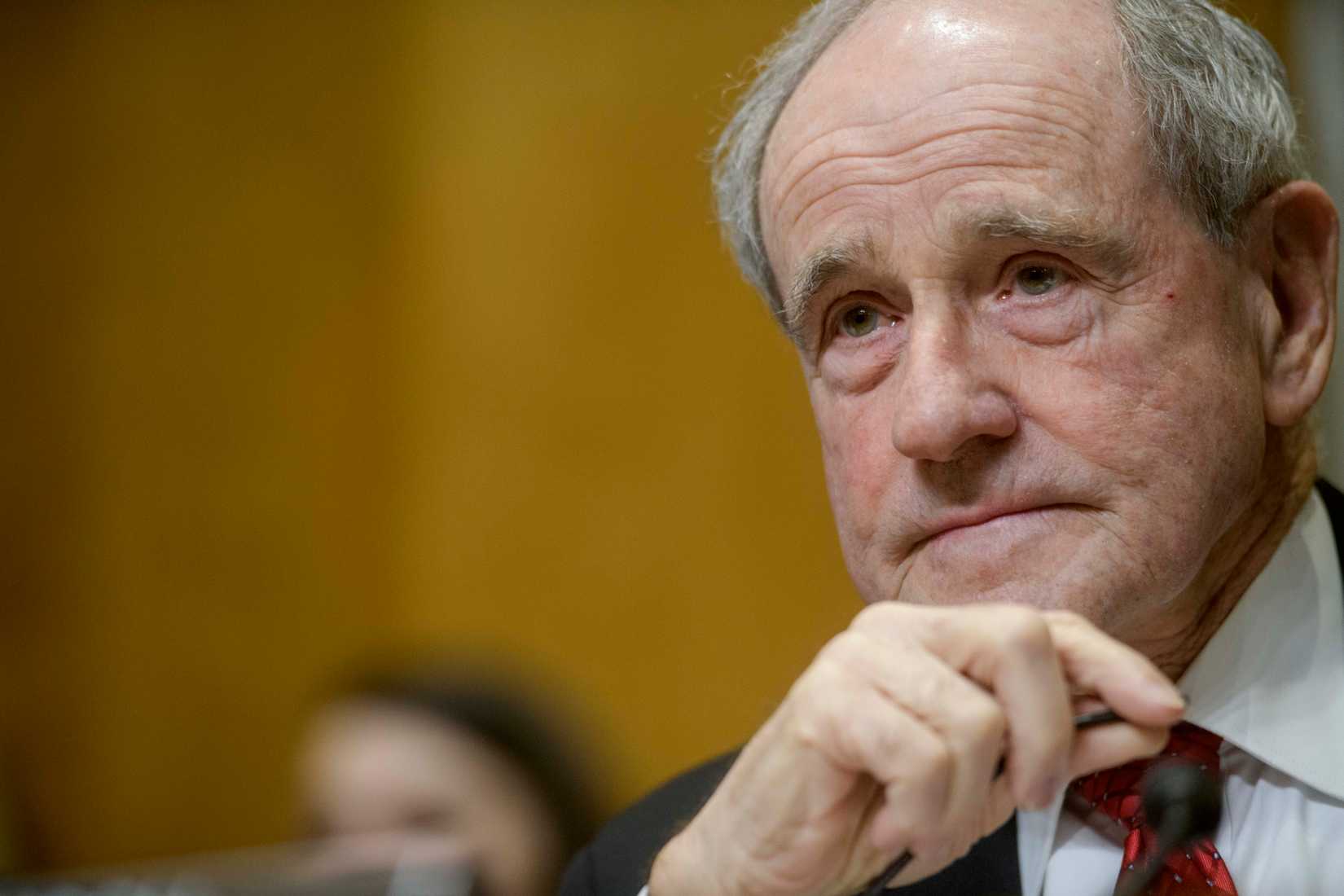
Mentioning term and age limits, Achilles was asked about his opponent, Risch. The 83-year-old, endorsed by President Donald Trump, has served Idaho in the Senate since 2009. If victorious, he would complete his next term at age 89.
“Idahoans do not want to send an 83-year-old back to represent them because he’s the oldest, wealthiest senator in Idaho history,” Achilles said. “He has absolutely no idea the challenges that are going on, particularly with young folks trying to live in the state of Idaho right now—where 60% of Idahoans don’t earn a livable wage, and we have one of the least affordable housing markets in the country. Folks are ready for change.”
He said that when he knocks on doors, Idahoans bring up Risch’s age as a concern before asking Achilles whether he’s a Republican or Democrat. When Achilles tells them he’s neither, he said people are more often than not receptive.
“People are ready for it,” he said. “They’re ready to be done with the politics, and they’re done sending these geriatric senators back who just look at the Senate as a retirement gig rather than doing the hard work that you need to do to represent the state.”
Other points of emphasis include discarding gigantic omnibus bills that “the lobbyists love” due to tax loopholes and carve-outs. Congressional day trading, as he described, should also go out the window as he said it undermines trust and is “just a complete abuse of power.”
Being a Former Tank Commander
Achilles’ current stances can be traced back to his time in service, saying that when he served next to fellow soldiers, he didn’t know what political proclivities they possessed and nobody cared. It was about protecting one another, and the country.
He didn’t enlist; rather, he went through ROTC and was commissioned as a second lieutenant. He served as a tank commander and a platoon leader in the 3rd Battalion (originally part of the 24th), 69th Armor Regiment (3-69 Armor) at Fort Stewart, Ga.
“You learned so many lessons when you were in the military,” he said. “As a junior officer, [you are] learning how to lead troops, learning the importance of always putting your troops first and always looking out for them, and accomplishing the mission through a unit that’s trained and ready and tactically and technically proficient.”
As a tank commander, he was one of four guys. His loader was from Baltimore, his driver was from South Carolina, and his gunner was from Louisiana.
“I had absolutely no idea what their political leanings were, none whatsoever, right?” he said. “Because it didn’t matter if we couldn’t get together, if we couldn’t work together, we’re dead.”
Other Post-Service Experience
After exiting the Army, Achilles spent about 25 years in the private sector, including in the tech industry at companies including Hewlett-Packard and T-Mobile.
He then felt it time to return to public service, so he began teaching public policy—which he’d done for a decade at Boise State University. He “raised his hand” to be appointed by a Republican governor into a Democratic seat in the Idaho Legislature.
“It was one of the most impactful jobs I’ve ever had, and one of the toughest jobs I’ve ever had,” he said. “But I think there’s an interesting thing here when it comes to veterans and public service. There was a handful of us that were vets on the Democratic side and a handful of vets on the Republican side, and the veterans could always have a conversation across the aisle.
“We could always have that respectful, thoughtful conversation, even if we had divergent views on policy. I think it just comes from that tradition in the military of working with whoever you got to get the mission done.”
In a state like Idaho, which Achilles said is beloved for its public lands and appreciation for the public education system, he views himself as an alternative for those disaffected Trump voters who talk to Achilles on the campaign trail about affordability and foreign policy.
Being an independent has given prospective constituents an ear to express themselves, likely more so than if Achilles was a Democrat.
“We’ve got probably 100,000 Idahoans that are losing their health care in 2026, and probably another 100,000, 125,000 young couples that can’t afford to have a family,” he said. “That’s just flat out wrong. Those are not values that have built this country over the last two centuries, and we’ve got to fix it.
“It’s this crony capitalism, this corporate socialism, and this corrupt politics from career politicians like Jim Risch that has undermined the American dream and made life so hard in Idaho—and everybody sees this. It doesn’t matter where you are on the political spectrum, everybody sees it. Everybody wants it cleaned up.”


![Trump Heads to UN as Global Elites Panic Over Iran, China, Ukraine, Gaza and More [WATCH]](https://www.lifezette.com/wp-content/uploads/2026/09/2026.09.22-12.18-lifezette-6ab2721209c0e.png "Trump Heads to UN as Global Elites Panic Over Iran, China, Ukraine, Gaza and More [WATCH]")
![A Brutal Rundown of CNN and MSNBC’s Biggest Hoaxes Delivered by Carl Higbie [WATCH]](https://www.rvmnews.com/wp-content/uploads/2026/09/2026.09.22-13.29-rvmnews-6ab282d2abc22.jpg "A Brutal Rundown of CNN and MSNBC’s Biggest Hoaxes Delivered by Carl Higbie [WATCH]")