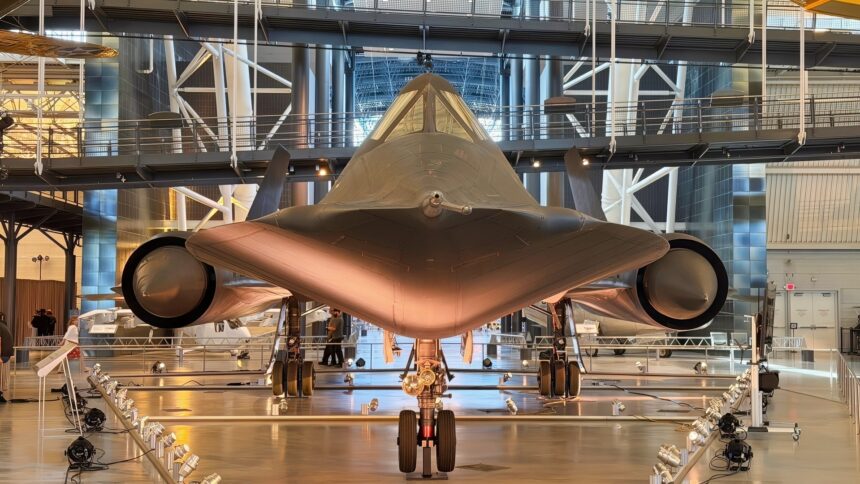

The SR-71 Blackbird is the fastest aircraft ever flown, with two immensely powerful jet engines running on fuel specially formulated not to burn.
Taken together, these two things seem self-contradictory: jet engines running on fuel designed not to burn.
SR-71 Blackbird Sideview. Smithsonian Display Photo Taken by 19FortyFive on 9/30/2026.
That fuel was called JP-7, specially formulated for the pair of Pratt & Whitney J-58 single-spool turbojets, with a unique modification that bled compressor air into the afterburner, increasing thrust at high speeds.
It’s Not The Speed That Kills You. It’s The Heat.
It is easy to look at the sleek, black shape of the SR-71 and miss the biggest challenge Lockheed engineers at the super-secret “Skunkworks” had to overcome to reach Mach 3.2.
That challenge was dealing with the tremendous heat generated at high speeds.
Air friction above Mach 1 increases exponentially at Mach 3 and tries to melt the airplane.
This is why the Blackbird is made of a special Titanium alloy that resists softening or melting at high temperatures.
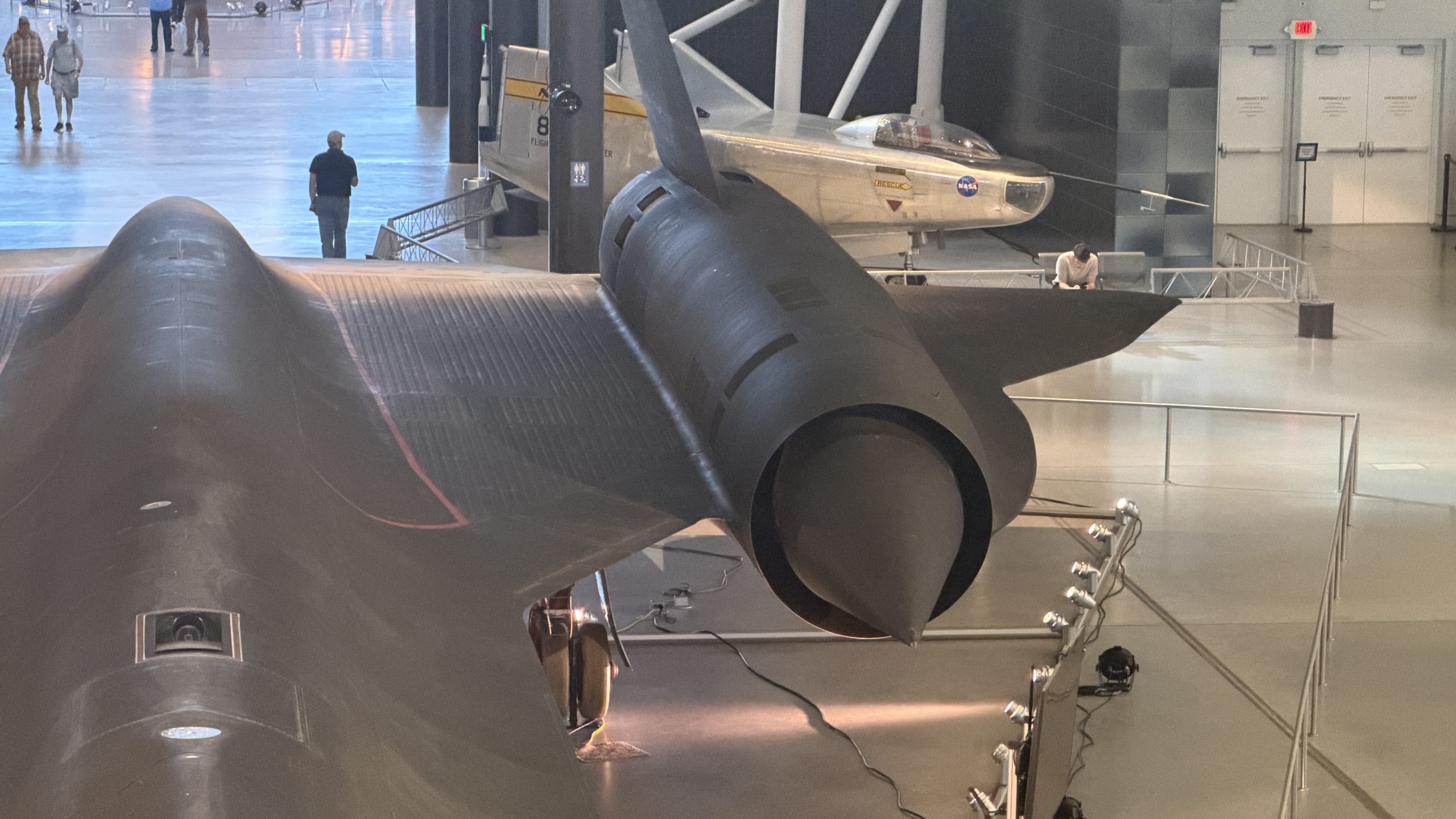
SR-71 Blackbird Sideview. Smithsonian Display Photo Taken by 19FortyFive on 9/30/2026.
While the airframe could resist adiabatic heating on the SR-71’s skin, the superheated air still raised the temperature of components inside the skin to hundreds of degrees.
Temperatures could boil hydraulic fluid, melt electrical connections and equipment, and kill the crew.
The true limits of the SR-71’s speed were not its shape or the thrust of its powerful engines, but how to handle the intense heat from compressing air at high speeds.
At these temperatures, the standard military aviation fuel of the time, JP-4, would ignite spontaneously inside the Blackbirds’ fuel tanks and explode.
The CIA Told Shell Oil, ‘Give Us A Jet Fuel That Won’t Burn’
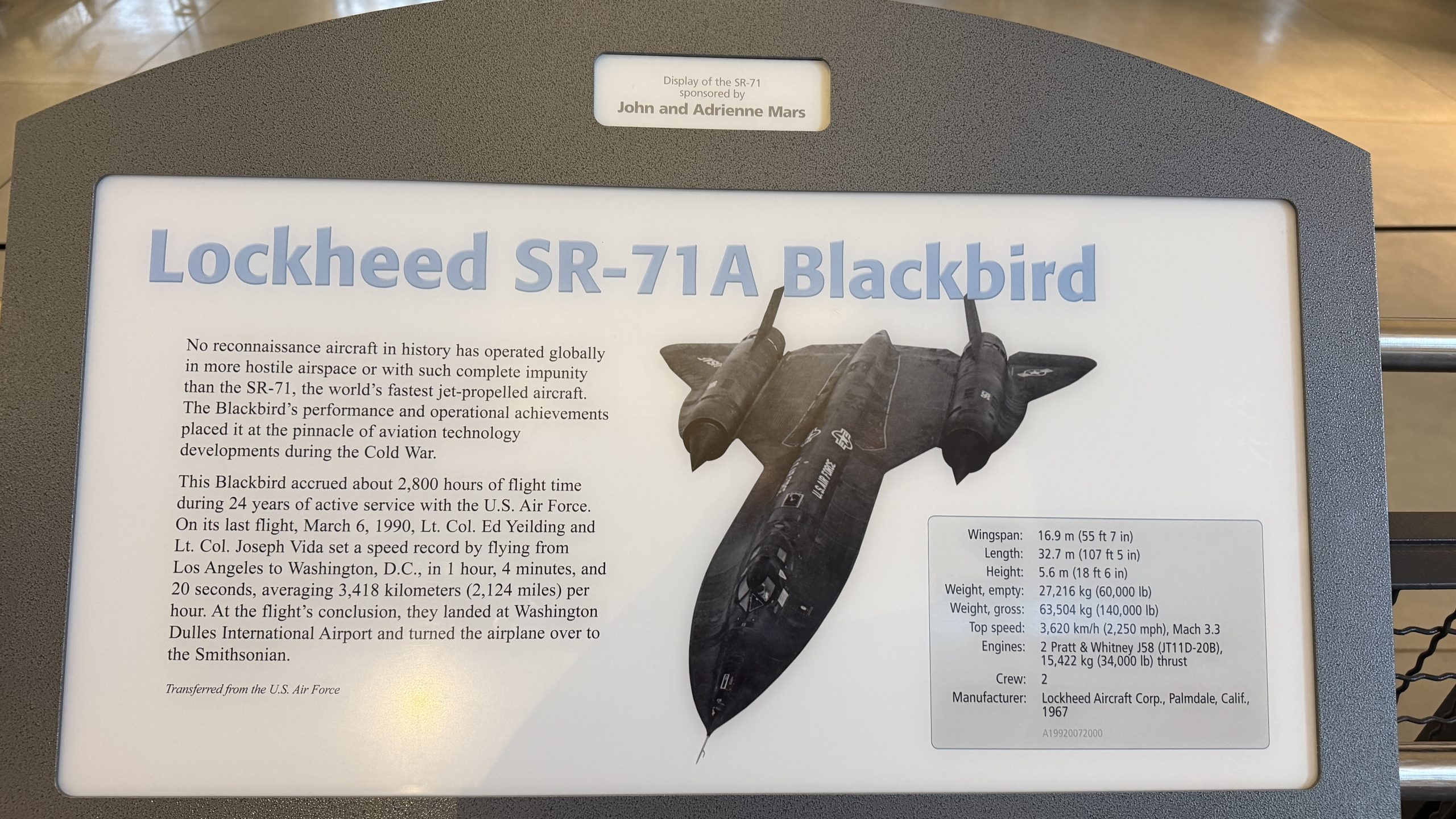
SR-71 Blackbird Sideview. Smithsonian Display Photo Taken by 19FortyFive on 9/30/2026.
In 1955, the CIA (via the military, of course) issued a very unusual (and Top Secret) request to Shell Oil engineers for a new fuel formulation.
The requirements seemed ordinary at first: it shouldn’t cause nausea for ground crews or pilots in the cockpit if it leaked.
It had to be clear and bright as water at room temperature so contaminants would be easier to detect.
It must have a high flash point and high thermal stability.
Then additional requirements went beyond the normal aviation-fuel script.
The fuel would also serve as hydraulic fluid and a heat sink to cool various internal components in the aircraft.
Lockheed Engineers Used JP-7 As Hydraulic Fluid and Coolant In The SR-71
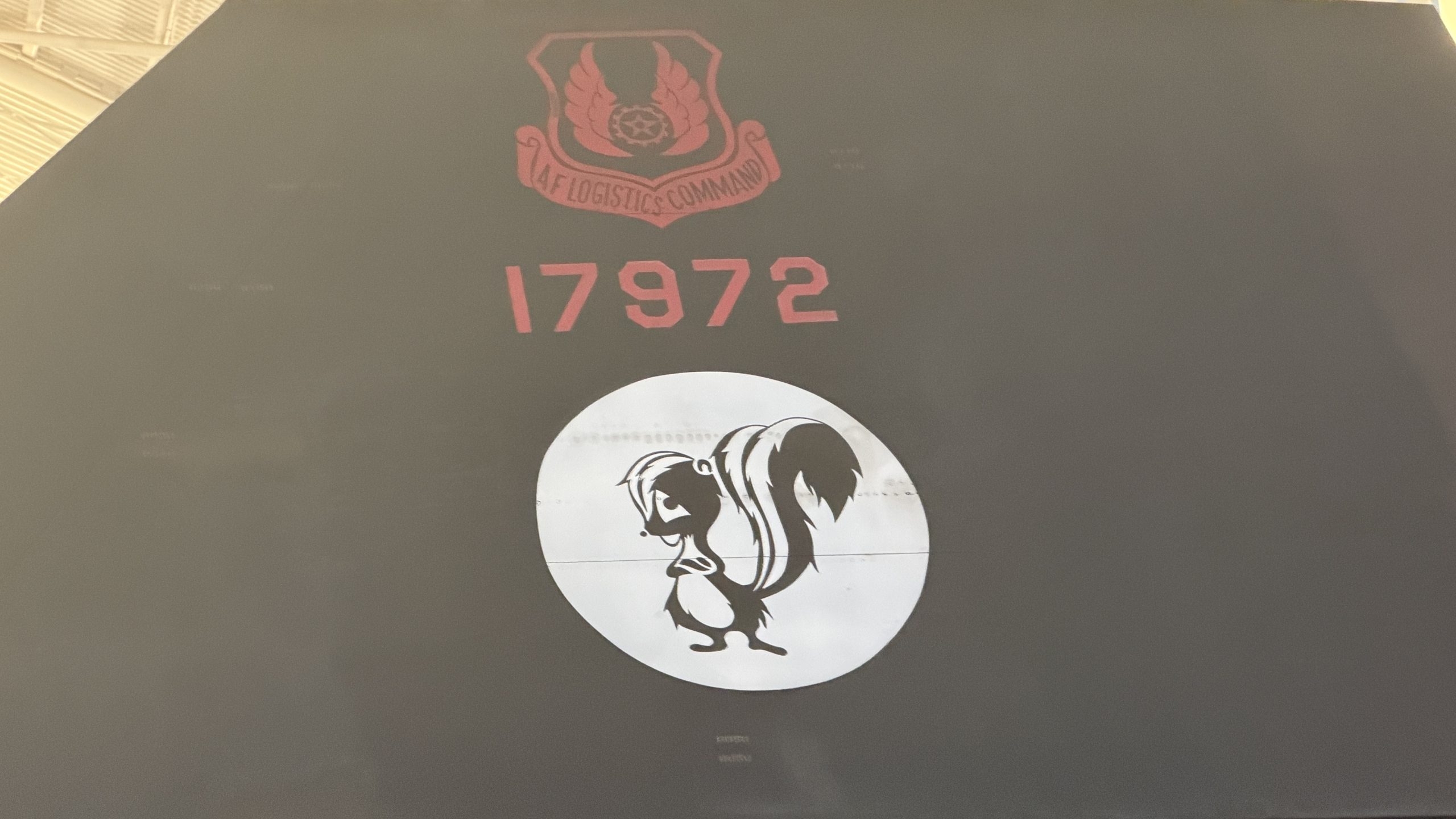
SR-71 Blackbird Sideview. Smithsonian Display Photo Taken by 19FortyFive on 9/30/2026.
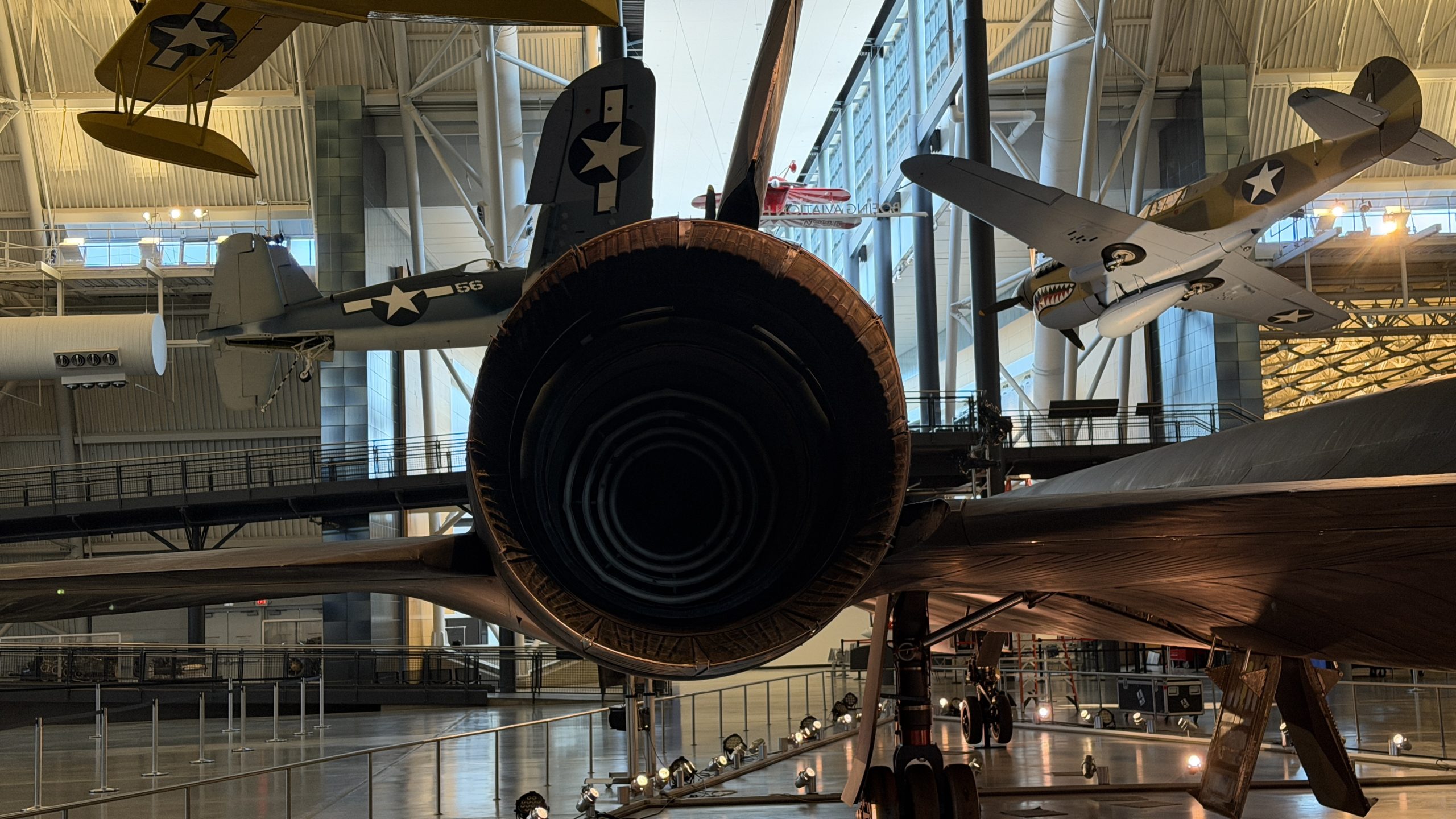
SR-71 Blackbird Sideview. Smithsonian Display Photo Taken by 19FortyFive on 9/30/2026.
Lockheed engineers devised an ingenious solution to prevent heat generated at high speeds from igniting the Blackbird’s fuel.
They developed a fuel with a very high flash point that could double as hydraulic fluid to operate the control systems and landing gear, while piping it around the aircraft as coolant to remove heat from the electrical systems and cockpit.
The heated fuel would then return to the fuel tanks, where it could be cooled and recirculated.
As the tanks emptied, nitrogen would be pumped in to maintain 1.5 atmospheres of positive pressure, preventing the fuel from expanding with heat and the tanks from collapsing at the low pressures of high altitudes.
To make matters worse, the fuel must not break down and leave deposits in the fuel system that could cause in-flight failures, and it must have a high brightness-of-flame index to reduce the heat that would melt the burner parts at the rear of the engine.
In other words, a fuel that has to be very hot to ignite but remain cool enough not to melt the engine when it does.
In JP-7, Shell Made A Fuel That A Lit Match Wouldn’t Light.
Without putting you to sleep with the chemistry, Shell pulled a rabbit out of a hat.
Their JP-7 fuel formulation used a blend of highly volatile components at very low concentrations, with very low levels of impurities like nitrogen, oxygen, and sulfur.
JP-7 was so low in volatility that it wouldn’t burn.
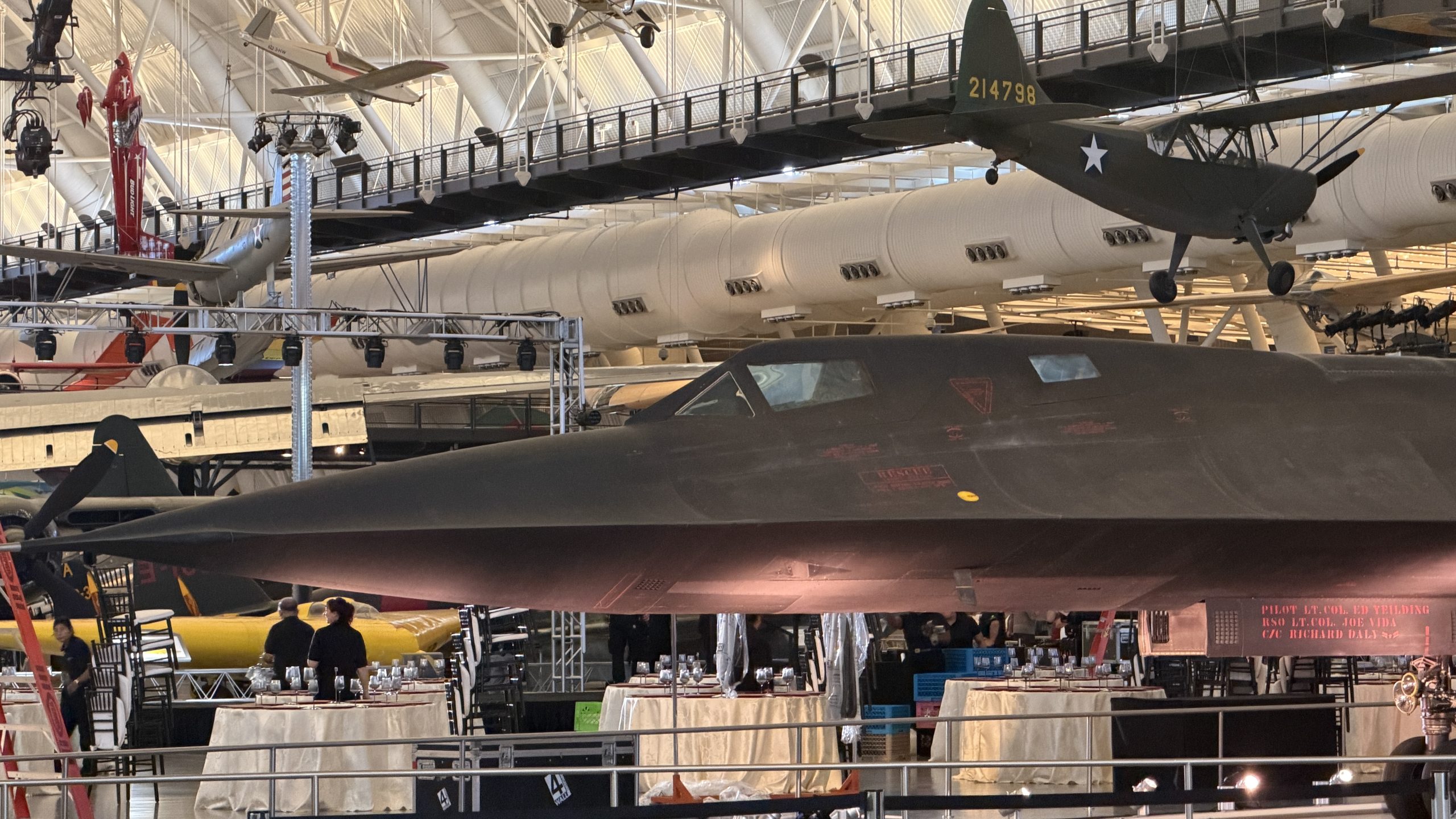
SR-71 Blackbird Sideview. Smithsonian Display Photo Taken by 19FortyFive on 9/30/2026.
You could drop a match into a bucket of the stuff, and it would extinguish without igniting the fuel. JP-7’s flash point was 140 degrees Fahrenheit, and it took 550 degrees Fahrenheit to boil it.
It Took A Chemical Called TEB to Ignite JP-7
To light off the Blackbird’s engines, JP-7 needed a special injected chemical. Something so volatile it would ignite spontaneously on contact with outside air: Triethylborane (TEB).
Mounted above the J-58 engines in small cylinders, the pilots injected shots of TEB into the JP-7 stream in the compressors, igniting the fuel at startup.
The result was a long stream of flaming, superheated exhaust from the afterburners that was radar-detectable, so they added a compound called A-50 to the fuel to minimize this effect.
JP-7 Dissolved The Linings In Fuel Hoses and Tanker Trucks
JP-7 was not without its complications in fueling the SR-71.
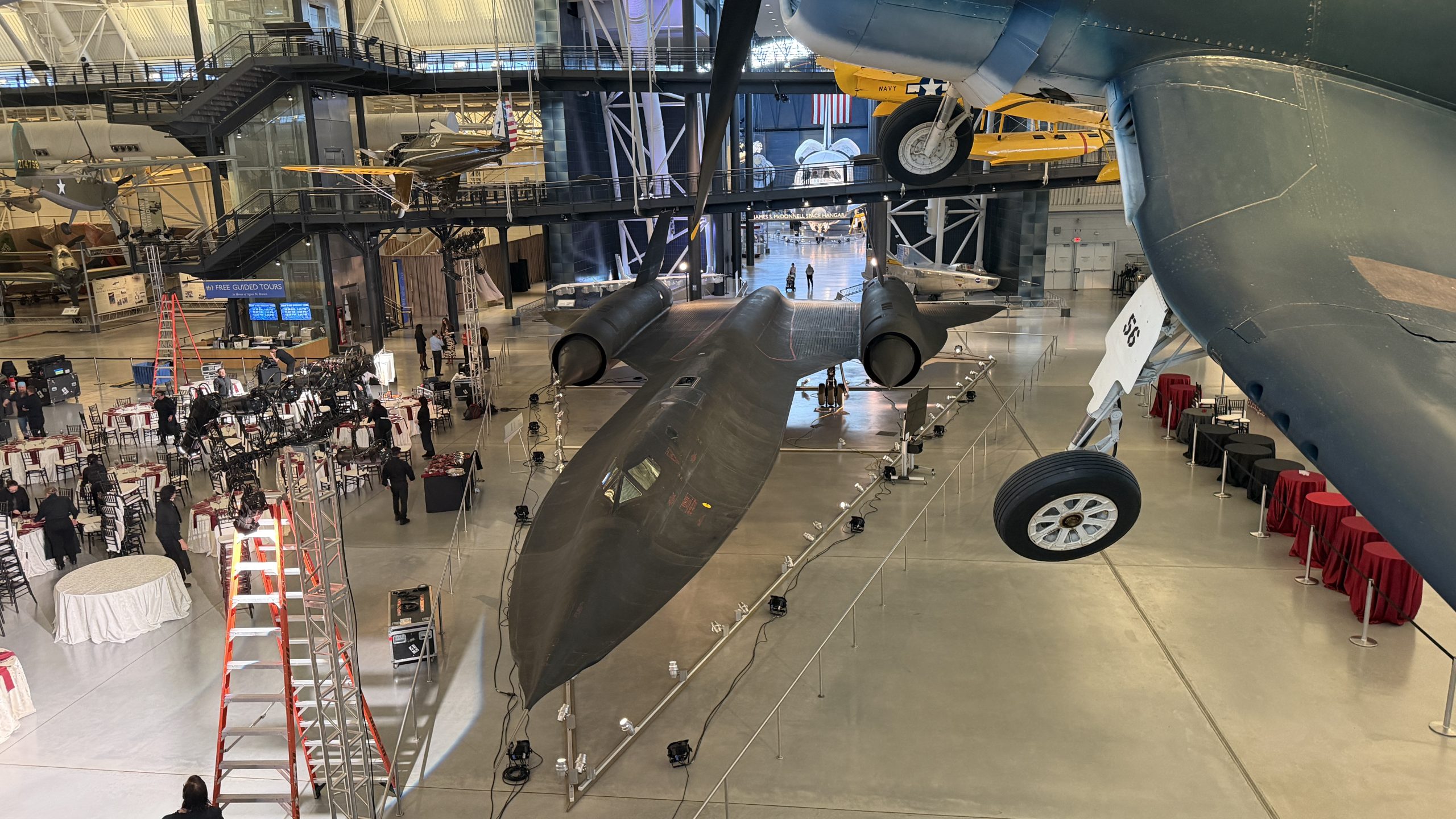
SR-71 Blackbird Sideview. Smithsonian Display Photo Taken by 19FortyFive on 9/30/2026.
It tended to dissolve the linings in fuel hoses and tanker truck tanks.
Special flushing procedures were developed to prevent contamination of the 80,000 pounds of fuel a Blackbird tank could hold.
The Air Force Had To Modify 56 Stratotankers To Carry JP-7
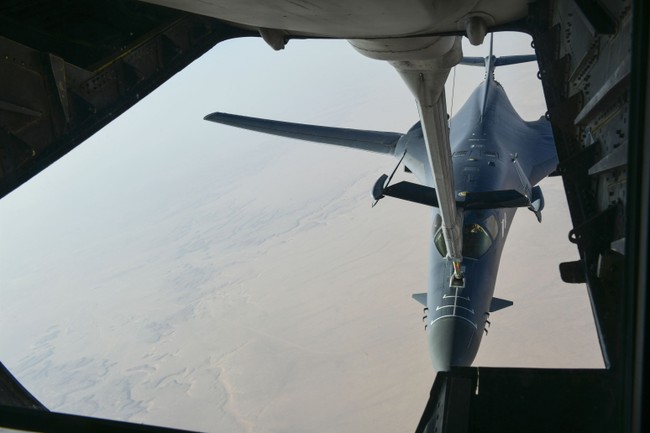
Because JP-7 was a unique mixture made for one specific aircraft, in-flight refueling became complicated.
The Air Force’s tanker fleet was putting JP-4 in the tanks of every airborne customer that tucked in behind its fueling booms.
The numerous fuel tanks on the Boeing KC-135 Stratotanker could move JP-4 around internally to maintain proper trim characteristics in flight.
Because of JP-7’s purity requirements, they couldn’t risk JP-4 in these tanks or fuel pumps contaminating the JP-7.
The Air Force solved this problem by modifying some 56 Stratotankers into the KC-135Q variant used only for the Blackbird.
You get some sense of how much fuel the SR-71 consumed when it required 56 aerial refueling aircraft to fuel the 6-10 Blackbirds in service at any given time.
About the Author: Sean Spoonts
Sean Spoonts is the former Editor-In-Chief of SOFREP.com. He is a military analyst, writer, and commentator whose work has appeared in Newsweek, CNS News, Ukrinform, and various military/veteran media networks and professional publications, including the Military Intelligence Professional Bulletin. He is a U.S. Navy veteran, having served as an Aviation Anti-Submarine Warfare Operator and Search and Rescue Helicopter Aircrewman