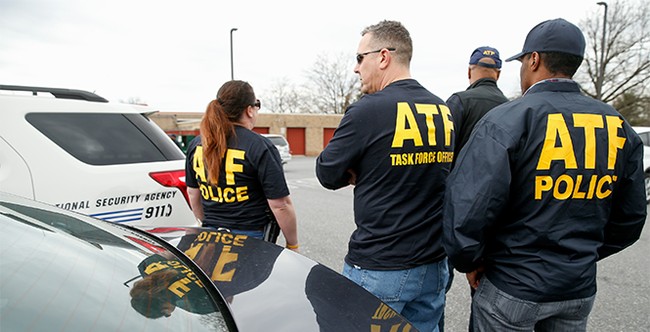

The first tranche of the 34 proposed rules announced by the DOJ and ATF last week are now available for download at the Federal Register’s website, with the official publication and the start of the public comment period scheduled for Wednesday, May 6.
The nearly two dozen proposals released today include the repeal of the Biden-era “engaged in the business” rule that treats almost every private seller of firearms as an “unlicensed dealer” who must conduct background checks on every sale, as well as repeal of Biden’s rule targeting pistol braces by defining most brace-equipped pistols as short-barreled rifles.
Once the rules are officially published, the public will have 90 days to weigh in with their comments. The ATF then has the opportunity to revise the proposals after reading and evaluating every comment submitted before issuing its final rule.
Even rules that seem simple enough in theory can run for dozens of pages, so it will take some time to evaluate each of the proposals offered by the ATF. I did take a quick scan of the proposed rule dealing with “Clarifying Interstate Transportation of Firearms under the Gun Control Act”, which addresses Section 926A of the GCA, and it looks pretty good to me.
The current interpretation of the statute doesn’t allow for any real break in travel, whether it’s to take a restroom break, grab something to eat, or stop overnight at a motel or hotel to rest. As the agency notes in its proposal:
Courts attempting to determine the scope of section 926A have excessively narrowed its application. In Revell v. Port Authority of New York and New Jersey, the plaintiff, a Utah resident flying through New Jersey to Pennsylvania in 2005, missed his connecting flight and was forced to collect his baggage and spend the night in a hotel. The following morning, after declaring the unloaded firearm, he was arrested for illegal possession of a handgun and ammunition under New Jersey law.
Revell sued the arresting agency, Port Authority of New York and New Jersey, and the arresting officer under 42 U.S.C. 1983 alleging violations of his Fourth and Fourteenth Amendment rights and appealed the subsequent district court’s decisions against him. Although the court recognized that Revell had been placed in “a difficult predicament through no fault of his own” and had notified the airline about the firearm, the court found Revell’s actions were beyond the scope of section 926A because “the gun and ammunition were readily accessible to Revell during his stay in New Jersey.” The court further suggested that “[s]tranded” gun owners like Revell also had the option to go to airport law enforcement or airport personnel before retrieving their luggage to request that they hold their firearms overnight. Such options, however, are not ordinarily available. Airlines generally refuse to accept baggage more than a few hours before a flight, and airport law enforcement does not customarily hold firearms, even for delayed passengers. In fact, the court in Revell recognizes that the idea to go to airport law enforcement was merely a “suggestion” and “this suggestion leaves unanswered the question of what the gun owner should do if the law enforcement officers decline to assist him.”
Under the ATF’s proposal, Mr. Revell and others in similar predicaments would no longer have to fear getting arrested for circumstances beyond their control.
Accordingly, the proposed rule amends 27 CFR 478.38 to clarify that incidental activities that are reasonably necessary to a person’s interstate transportation are considered “transport” and thus within the scope of activities protected by 18 U.S.C. 926A and 27 CFR 478.38. This would include, but not be limited to, staying in temporary lodging overnight, stopping for food, fuel, vehicle maintenance, an emergency, medical treatment, transiting between modes of transportation, or moving a firearm at the beginning of a journey from a fixed address to a vehicle for transportation or at the end of a journey from a vehicle to a fixed address. Because section926A provides a “safe harbor” for travelers and “[a]ny regulatory preemption of State law shall be restricted to the minimum level necessary to achieve the objectives of the statute pursuant to which the regulations are promulgated,” see E.O. 13132(4)(c), the proposed rule only protects reasonably necessary incidents of travel, such as stopping for fuel or temporary rest. The rule does not authorize, however, someone to have an extended break in transportation, for reasons unrelated to travel, in a jurisdiction where possession of the firearm or ammunition would be prohibited.
In other words, if I’m driving from Virginia to New Hampshire with my handgun locked up and inaccessible in the rear of my SUV and my “check engine” light comes on while I’m in Maryland, I’m not in danger of getting arrested if I exit the interstate and find a local repair shop that can diagnosis the problem. It sounds like I can even grab a bite to eat at Chap’s Pit Beef or Jimmy’s Famous Seafood in Baltimore if I want, but I can’t stop to take in an Orioles game.
According to the ATF, the proposed rule would make clear that the right to transport firearms also includes the concomitant incidental right to transport accessories and attachments of such firearms, such as ammunition, sights, and magazines. That is hugely important, because it means that if you’re traveling to a place like New Hampshire, where there are no laws restricting the possession of “large capacity” magazines, you can’t get arrested for possession of a 20-round magazine if you’re pulled over in Massachusetts; again, so long as the magazine is stored in accordance with federal statute. So long as you can legally possess that magazine in your home state and in the state you’re traveling to, you can’t be punished or prosecuted for having that magazine while traveling through a state where its possession is prohibited.
This proposed rule would be a major improvement over the current interpretation of Section 926A, so I’m sure the gun control lobby will have plenty of complaints about it when they submit their public comments. We’ll be taking a closer look at more of the proposed rules in the days ahead, but I’m encouraged by what I’ve seen so far.
Editor’s Note: President Trump and Republicans across the country are doing everything they can to protect our Second Amendment rights and right to self-defense.
Help us continue to report on their efforts and legislative successes. Join Bearing Arms VIP and use promo code FIGHT to receive 60% off your membership.
Read the full article here


![Shark Cruises Flooded New Jersey Streets as Violent Nor’easter Hammers Coast [WATCH]](https://www.lifezette.com/wp-content/uploads/2026/09/2026.09.28-12.59-lifezette-6aba64c3802c9.jpg "Shark Cruises Flooded New Jersey Streets as Violent Nor’easter Hammers Coast [WATCH]")