
The last two times Britain test-launched its submarine-based nuclear missile system, it failed. An unarmed Trident missile fired from HMS Vengeance in 2016 technically launched, but veered off course. Then, in January 2024, another was launched from HMS Vanguard, but it fell into the Atlantic shortly after it left the submarine. The incidents differed, and the failures may have stemmed from different causes. Together, they mean the British Royal Navy has not had a successful test launch since before 2016.
The Vanguard-Class
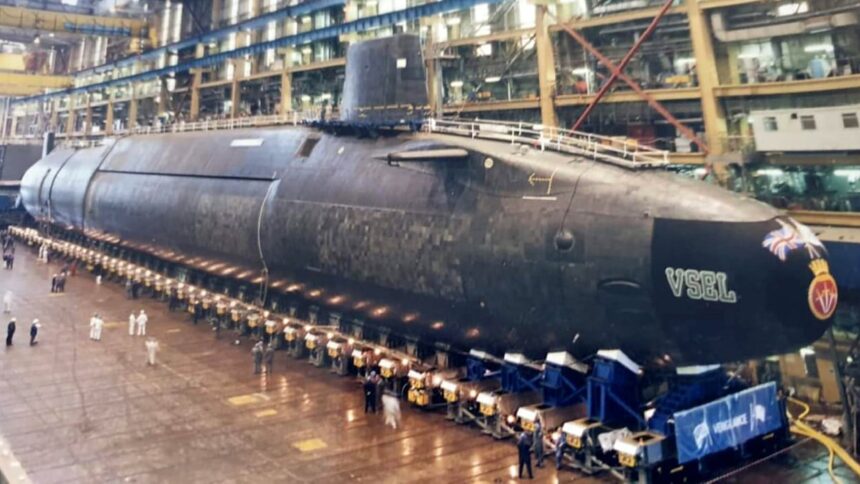
Vanguard-Class Submarine of Royal Navy. Image: Creative Commons.
The Vanguard class is a family of four nuclear-powered ballistic missile submarines – HMS Vanguard, Vengeance, Victorious, and Vigilant. Each submarine carries Trident II D5 missiles fitted with British nuclear warheads.
Because they are nuclear-powered, the submarines can travel for extremely long periods without regular refueling stops.
They can also remain submerged for extended periods — and that’s exactly their job, too.
The submarines remain hidden, preserving Britain’s ability to respond to a nuclear attack.
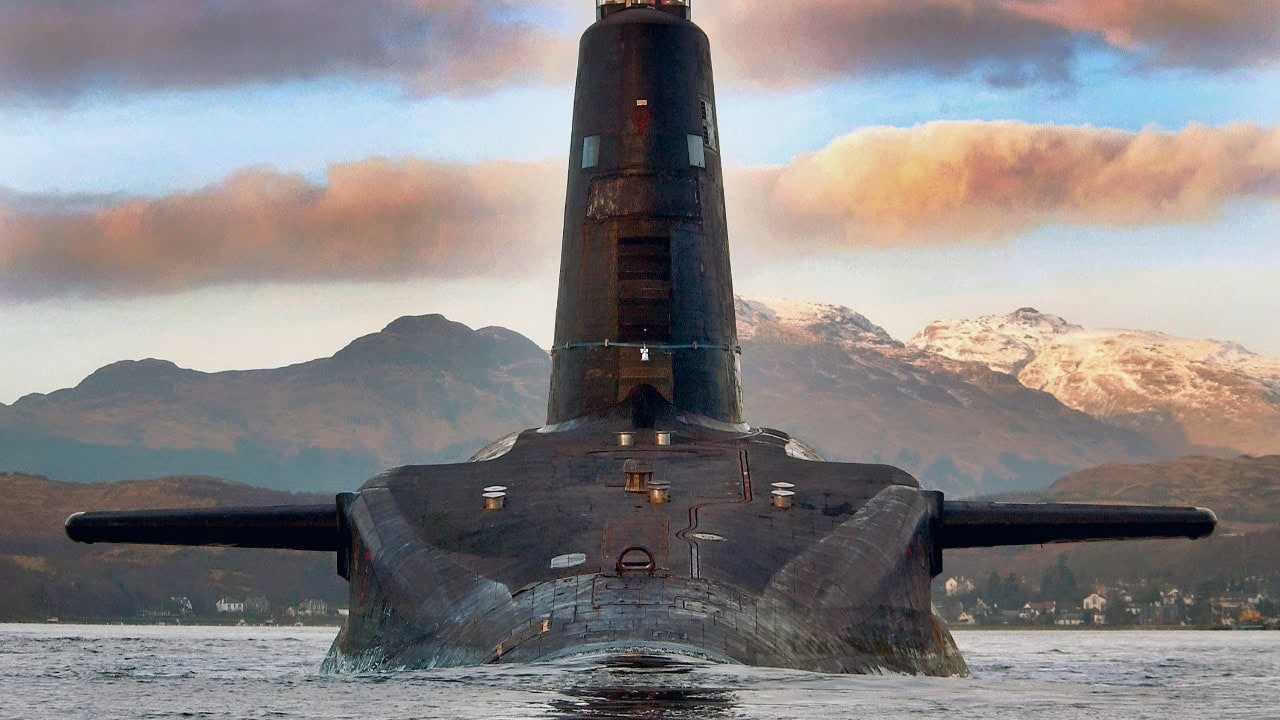
Vanguard-Class Submarine Royal Navy
Vanguard is the class of vessel that carries and launches the weapons, while Trident is the missile system it carries.
The failures relate to the missile system, and not the British submarines.
Britain and Trident
When Prime Minister Margaret Thatcher’s government decided to replace its aging Polaris submarines, it knew it needed a new missile system. On July 15, 1980, Defense Secretary Francis Pym told Parliament that ministers had chosen the U.S.-developed Trident missile system to be fitted onboard the new subs.
Britain would build the submarines and the nuclear warheads itself, and then buy the missiles from the United States.
Pym said the government had considered a continuing nuclear deterrent a necessity for British security and for maintaining NATO’s defense at a time when the Soviet Union was expanding its military.
But the exact missile that was chosen came a couple of years later.
Defense Secretary John Nott announced in 1982 that four planned submarines would carry the newer Trident II D5 rather than the Trident I C4, arguing that using the system the U.S. was in the process of adopting would make it easier and less costly to support over the fleet’s lifetime.
The first Vanguard-class submarine finally entered service in December 1994.
In 1998, Britain became more dependent on the fleet when it withdrew the WE177 bomb — its last air-launched nuclear weapon.
And since then, Trident has been Britain’s only sovereign nuclear delivery system.
The Royal Navy keeps at least one Vanguard ballistic missile submarine on patrol at all times.
The 2016 Test
In June 2016, HMS Vengeance fired an unarmed Trident missile off the coast of Florida after it underwent maintenance.
The missile did leave the submarine, but it veered off course and was destroyed. The British government never publicly revealed the precise cause of the misfire.
The test took place before a July 2016 vote in parliament to renew the submarine fleet, but the failure was not made public until January the next year.
Michael Fallon, the then- Secretary of State for Defence, confirmed that there had been an anomaly.
Despite the missile’s failure, Fallon said that the test had successfully assessed the submarine and crew, and declined to discuss what went wrong with the missile itself, citing security matters.
The 2024 Test
On January 30, 2024, HMS Vanguard attempted another unarmed launch during testing after an extended seven-year maintenance period.
During the test, the missile launched from the submarine but fell into nearby Atlantic waters, with reports suggesting its first-stage motors failed to ignite.
The British Ministry of Defence did acknowledge the missile launch failure, but again said that it was specific to the test.
Then-Secretary of State for Defence Grant Shapps was on board the Royal Navy nuclear submarine with other top officials when the test-firing occurred and failed, with the incident again being described as an “anomaly”.
The failure was confirmed in a February 21 statement to Parliament following reports in the country’s newspapers about the failed launch.
Appearing before the Defence Committee on February 21, Britain’s Defence Procurement Minister James Cartlidge refused to comment on a question about the failure, and whether the failure was related to the missile itself, but did confirm that he was on board when it occurred and that unnamed U.S. officials were present.
Media reports suggested that while the missile cleared the submarine, its first-stage rocket motors failed to ignite.
The Challenge Ahead
The four Vanguard submarines must now continue Britain’s at-sea patrols until the 2030s, when the Dreadnought-class replacements are expected to enter service.
The new boats will, however, also carry Trident II D5 missiles.
Four Dreadnought-class submarines are currently under construction at Barrow-in-Furness, with the first expected to enter service in the early 2030s.
About the Author: Jack Buckby
Jack Buckby is a British researcher and analyst specializing in defense and national security, based in New York. His work focuses on military capability, procurement, and strategic competition, producing and editing analysis for policy and defense audiences. He brings extensive editorial experience, with a career output spanning over 1,000 articles at 19FortyFive, and has previously authored books and papers on extremism and deradicalization.

![Judge Judy Goes Off On the People Who Come to America and Complain About It [WATCH]](https://www.boredtrashpanda.com/wp-content/uploads/2026/09/2026.09.24-17.56-boredtrashpanda-6ab56437d6cf2.jpg "Judge Judy Goes Off On the People Who Come to America and Complain About It [WATCH]")