
It’s been roughly five decades since the term “post-traumatic stress disorder” emerged and gained traction, driven largely by the experiences of Vietnam War veterans. Forty-six years have passed since it became an official psychiatric diagnosis.
In that span of time, PTSD research has substantially advanced our understanding of its underlying neurobiology, led to the development of a wide range of evidence-based treatments, and significantly improved access to specialized care for traumatized individuals.
‘I want to show the VA that spends $571 million a year on suicide prevention that what we’re doing here at Camp Hope actually works.’
In other words, American vets today have access to more knowledge and resources than ever before.
And yet, some would argue that mainstream PTSD care is not treating the full person.
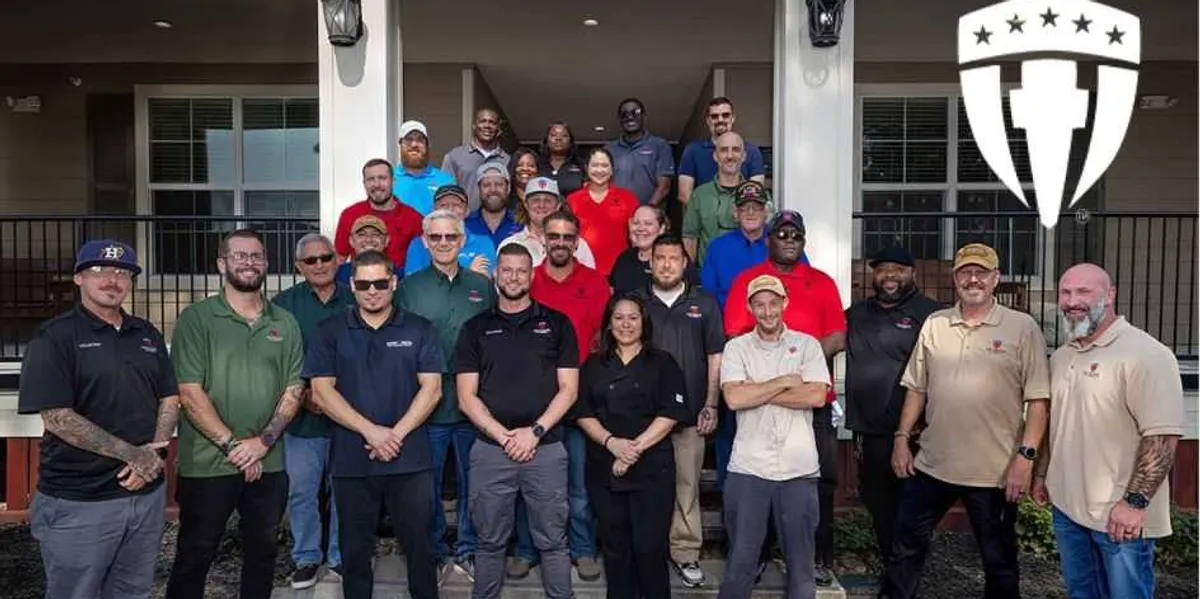
Chris Knight is the president of the PTSD Foundation of America — a nonprofit that takes a Christ-centered approach to helping veterans heal from combat-related trauma.
Rather than relying solely on mainstream treatments, the organization integrates professional counseling and therapy with intensive peer mentorship and a Christ-centered approach that places Jesus at the heart of the healing journey.
In a conversation that was as enlightening as it was encouraging, Chris gave me the ins and outs of the organization and shared testimonies of veterans who entered the program broken, addicted, and haunted by the horrors of their past and emerged healed, confident, and rooted in God’s grace.
A different path to healing
While the foundation provides a broad range of services — including outreach, peer support groups, advocacy, a 24/7 combat trauma helpline, and resources for veterans and families nationwide — its flagship program, Camp Hope, is where the deep transformation happens.
Camp Hope is a six-to-nine-month interim transitional housing and intensive peer-mentoring program located on a 5-acre campus in Houston, Texas. Its mission is simple but profound: Save lives by saving souls.
The program includes four progressive phases: The black phase (the first 30 days, more or less) is a strict “blackout” period with no electronics, outside distractions, or family visits, allowing veterans to focus on stabilization and daily routines. The red phase (minimum three months) emphasizes breaking old habits, emotional regulation, and trauma work. The yellow phase focuses on practical reintegration skills — vocational training, job readiness, financial literacy, and family relationships — while the optional green phase offers a supported transition back into civilian life.
The deepest reality
In these six to nine months, veterans receive the kind of comprehensive care for body, mind, and spirit that typical VA and secular PTSD programs simply can’t offer, according to Chris, because they miss the deepest reality: Only an identity rooted in Christ can truly sustain a person.
As a combat veteran with over 20 years of service, Chris intimately understands the painful challenge of shifting an identity once defined by the military to one centered on Jesus.
“The military is our life. It’s our culture. It’s ultimately our identity, and when we get out, we don’t know how to function. That’s why our identity must be placed in Christ,” he said.
This reorientation of selfhood is crucial in the healing process. While Camp Hope includes on-site psychotherapy provided by licensed mental health clinicians who specialize in trauma and addiction, these traditional counseling tools play a supporting role to the program’s core: intensive peer-to-peer mentoring.
It’s in these intimate relationships that veterans are able to fully overcome something Chris calls “moral injury” — the layered trauma that results from actions (or inaction) that violate one’s own deeply held moral beliefs and values.
He gave the following heartbreaking example:
During the Iraq War, insurgents employed a tactic where they would push women and children in front of American convoys to stop or slow the advancement, allowing for an ambush. Many American troops died because of this, so eventually a gut-wrenching decision was made: Keep driving no matter what. This put the soldiers in the driver’s seat in a moral dilemma where all paths led to violating their deepest held beliefs.
Chris explained that professional therapy and counseling are effective at addressing the psychological aspect of a moral injury, such as the one mentioned above, but to overcome the spiritual wounds, it takes the power of Christ and a healed brother who can both empathize with the pain and attest to the healing available.
“We walk them through where God was when their trauma occurred, why God allows horrible things to happen, and then through forgiveness, grace, and mercy,” Chris said. “In order for them to forgive themselves, we have to point them back to the highest power that died for us and forgives us of our darkest sins.”
Medication, counseling, and therapy only go so far, he told me, because “they don’t address the heart, which is why PTSD Foundation of America and Camp Hope are Christ-based.”
The results speak for themselves. Hundreds of combat veterans have completed the program, many of whom return to be staff members.
Here are some of their stories.
Alex Yutzey
Immediately following high school graduation, Alex joined the military, where for the next six years he served as an airborne infantryman. In that span of time, he would deploy to both Iraq and Afghanistan.
In these combat zones, Alex watched many of his brothers die. But to fulfill his sworn duties, he did what all military personnel are forced to do amid tragedy: Shove the pain down and keep moving forward.
While repression kept him alive in war, the same tactic deeply failed him in the real world. When Alex returned home, death came with him. In the years following his homecoming, he watched many more brothers die from suicide.
Emotional suppression continued to be Alex’s sole coping mechanism until one final death broke him: his grandmother’s.
Finally, the pain Alex had bottled up for years demanded to be felt, but he didn’t know how to confront such overwhelming heartache. PTSD and drug addiction defined the next several years of his life.
But Alex’s story was far from over. His wife found out about Camp Hope and relocated their family to Houston to create space for Alex to enroll in the program.
The treatment, mentorship, and hope he found completely transformed his entire life. His marriage, his future, and ultimately his life were saved.
After graduating the program, Alex stayed on at Camp Hope to be a driver. Over the next several years, he worked his way up and today serves as the director of the program, where he continues to live out his life’s mission to end veteran suicide, confront suffering in the veteran community, and guide his brothers and sisters toward healing, recovery, and a better way of life.
Nicholas Eckley
Nicholas entered the military already carrying emotional baggage from his difficult home life. For years, he walked a wayward path fueled by anger. After several bad decisions, he decided to make a drastic change and enroll himself in the United States Marine Corps.
The structure, identity, and brotherhood proved immediately beneficial. Nicholas grew from a broken young man into a courageous leader who eventually became a platoon sergeant. He led a team of men who would do anything for each other, and these bonds were life-giving.
But his deployment to Afghanistan changed things. Combat was brutal and tragic, but the worst part was that Nicholas couldn’t escape it when he came home. The memories permeated every area of his life — from his thoughts and reactions to his quality of sleep and relationships with others.
But these invisible wounds were only half of Nicholas’ suffering. He also returned from war with a physical injury from an IED blast. Like many wounded veterans, he was prescribed opioids, which led to a crippling addiction. It wasn’t long before the discipline and strength he had developed in the military gave way to isolation, frustration, and hopelessness.
His wife and children were the people who suffered the most from this change. Nicholas, unable to cope with the fact that he was hurting the people he loved most, attempted to take his own life.
This dark night of the soul, however, ultimately became the catalyst for change. He found his way to Camp Hope, bonded with other veterans who had walked similar paths, and reconnected with his faith in God.
In his testimony, Nicholas wrote, “Rebuilding my relationship with God wasn’t a single moment, it was a process. A daily decision. A willingness to surrender control and trust in something greater than myself. Through that process, I began to find peace where there had once been chaos, pain, and anger.”
Over time, Nicholas rebuilt his relationships with his wife and kids. Today, he is a proud husband, father, teacher, and coach who works with troubled students who need support, guidance, and someone who believes in them.
His testimony culminates in this powerful declaration: “I didn’t just survive what I went through. I was rebuilt because of it.”
Sam Kauahquo
Sam was 18 years old when he became a United States Marine. His two deployments to Iraq were a testament to his skill and courage. In just three years, he was awarded the Combat Action Ribbon, a Purple Heart, and received a combat meritorious mast.
He returned home proud of his accomplishments but deeply traumatized by the combat he’d experienced. His PTSD was so severe, it wrecked his life and his will to live.
He wrote, “I lost nearly everything and found myself battling suicidal thoughts that led to three attempts on my life, each one resulting in hospitalization. My darkest moment came during my final attempt, when I tried to end my life through self-asphyxiation.”
After this final suicide attempt, a fellow marine he had served with reached out and told him about Camp Hope.
Out of options, Sam enrolled in the program. Over the next several months, he found healing, purpose, and a renewed sense of direction.
By graduation, he was so radically changed that he decided to work for the PTSD Foundation of America for the next four years, helping fellow wounded veterans find the path to recovery.
Today, Sam is a husband, a father, and a college graduate who is currently building a nonprofit that integrates the game of golf with life lessons, faith, and structure to help people struggling with mental health issues.
“Camp Hope didn’t just save my life; it gave me a future. And today, I live that future with purpose, gratitude, and a commitment to helping others find their way out of the darkness with life lessons, God, and purpose,” he wrote.
A vision for the future
In our conversation, Chris painted a vivid picture of his dreams for Camp Hope. As successful as the program is, it has several limitations that he is eager to resolve.
“Camp Hope has been so successful that we’ve had to be very careful about spreading too much awareness because we only have so many spots. Our most immediate need is funding for expansion. When we have to turn a vet away, it’s just heartbreaking,” he told me.
His other vision for the future involves building transitional housing that would serve as an in-between place for veterans who have graduated the program but still need more time to transition back into everyday life.
Lastly, Chris dreams of opening Camp Hope to women. Currently, the program only serves men, but Chris is keenly aware of female combat veterans’ need for support and care.
Opening the program to women is a challenge, he admitted, because women have unique physical and psychological needs.
“Women come with children,” he said, “and because it’s difficult to find a place that accommodates children, female combat veterans will often neglect to get the care they need. Our goal is to build a facility that meets the needs of these women and their children.”
This project, he explained, will involve tailoring counseling and therapies specifically to women and their children, implementing an education system, providing child care, and building living facilities.
But Chris’ boldest vision expands far beyond the 5-acre boundaries of Camp Hope.
“Ultimately, I want to change how the nation treats trauma,” he said, “and that begins with something we call a COIN operation in the military. It means winning the hearts and minds of those we serve. I want to show the VA that spends $571 million a year on suicide prevention that what we’re doing here at Camp Hope actually works.”
In a system that continues to lose veterans every day despite allocating hundreds of millions each year, Camp Hope stands as living proof that real, lasting healing is possible when the heart is addressed along with the mind through the transforming power of Christ.
Read the full article here


![Suspect in DC Attack Donated to Kamala, Once Honored as Teacher of the Month [WATCH]](https://www.lifezette.com/wp-content/uploads/2026/04/2026.04.26-07.53-lifezette-69edc47a7d90a.jpg "Suspect in DC Attack Donated to Kamala, Once Honored as Teacher of the Month [WATCH]")

![VP Vance Led Fraud Purge Axes 760,000 Bogus Obamacare Enrollments, Saves Taxpayers $2.2 Billion [WATCH]](https://www.lifezette.com/wp-content/uploads/2025/09/2025.09.25-05.52-lifezette-68d58152c8aef.jpg "VP Vance Led Fraud Purge Axes 760,000 Bogus Obamacare Enrollments, Saves Taxpayers $2.2 Billion [WATCH]")