
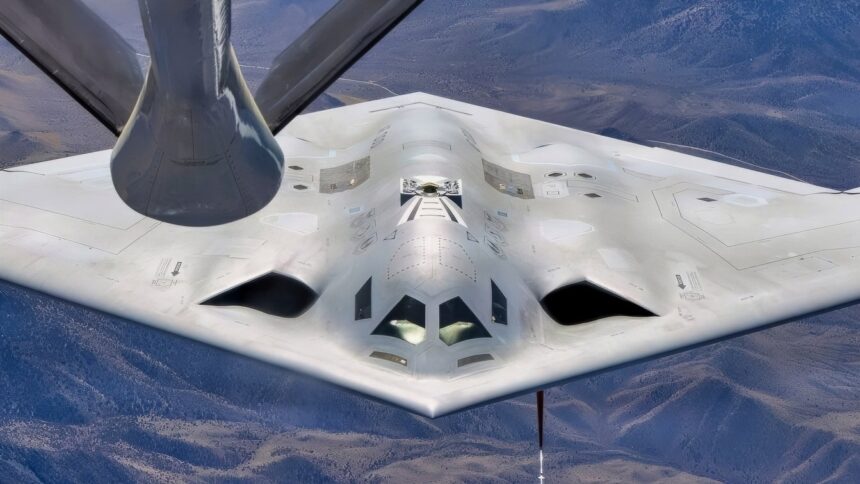

Chinese researchers claim they discovered vulnerabilities in America’s newest stealth bomber without obtaining any classified documents or even getting close to the aircraft. Researchers from the China Aerodynamics Research and Development Center claimed to have used an advanced computer modeling platform known as PADJ-X to virtually reconstruct and analyze the likely aerodynamic characteristics of the upcoming B-21 Raider — the U.S. Air Force’s next-generation stealth bomber.
The researchers claim that, in their simulations, they identified several areas where the flying-wing bomber’s aerodynamic efficiency and stability might be compromised—and areas where it could be improved.
The claims are shocking because they show how far technology has come, how much AI tools can help foreign adversaries understand complex and classified technology, and how even secretive programs can be quickly reconstructed virtually by researchers.
But they come with an important caveat: there is still no practical access to the B-21, and the project’s classified engineering data remains out of reach.
The conclusions, then, could be flawed.
The story, however, showed how sophisticated computer modeling has become, and how adversaries can learn about advanced American technologies before they even see the light of day.
How China Built a Virtual B-21
The tool behind the news is PADJ-X, a multidisciplinary aircraft design system that uses a method known as “adjoint optimization.” In simple terms, the technology lets engineers change many variables in a virtual aircraft at once and then calculate how those changes affect the aircraft’s performance.
This means engineers can determine the optimal shape and design of a vehicle without first building and testing it. It could be viewed as a sort of virtual reality testing machine.
The technology was publicly revealed in late 2025 by a team led by Huang Jiangtao at the China Aerodynamics Research and Development Center – one of the biggest military aerodynamics research organizations in China.
Artist rendering of a B-21 Raider in a hangar at Ellsworth Air Force Base, South Dakota, one of the future bases to host the new airframe. AFCEC is leading a $1 billion construction effort at Ellsworth to deliver sustainable infrastructure to meet warfighter demands for bomber airpower. (U.S. Air Force graphic)
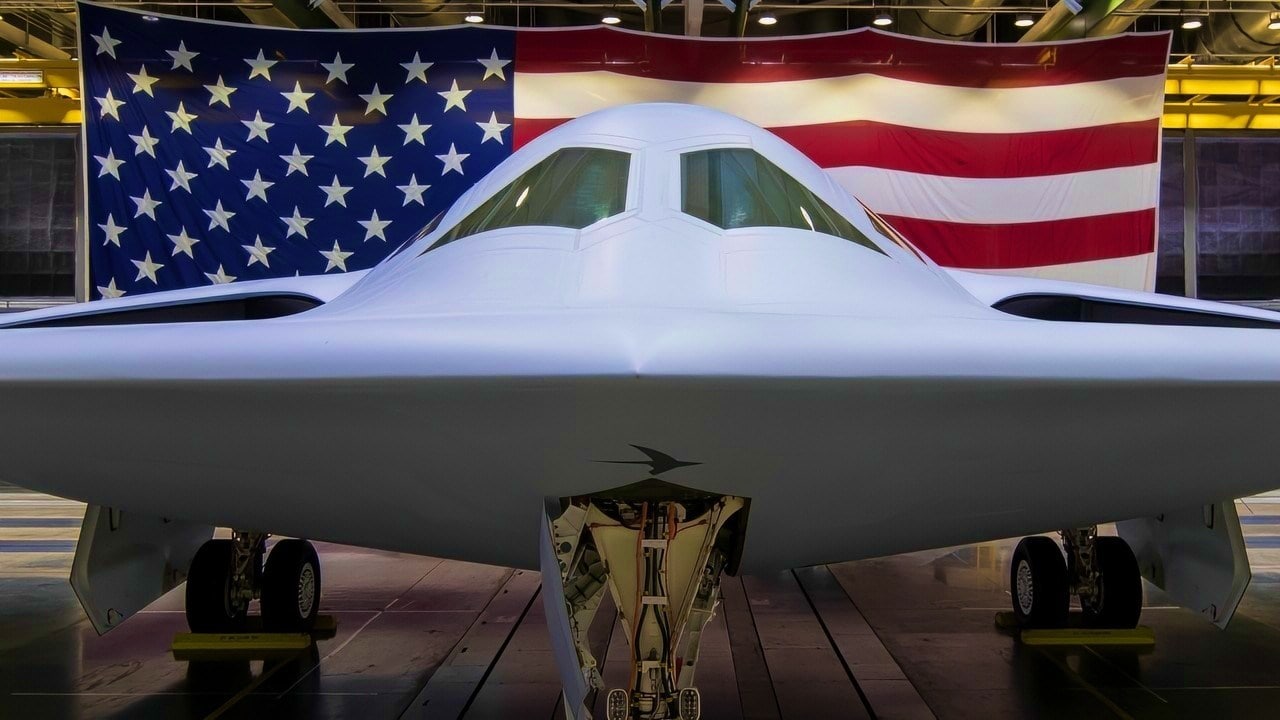
The B-21 Raider was unveiled to the public at a ceremony on December 2, 2022, in Palmdale, Calif. Designed to operate in tomorrow’s high-end threat environment, the B-21 will play a critical role in ensuring America’s enduring airpower capability. (U.S. Air Force photo)
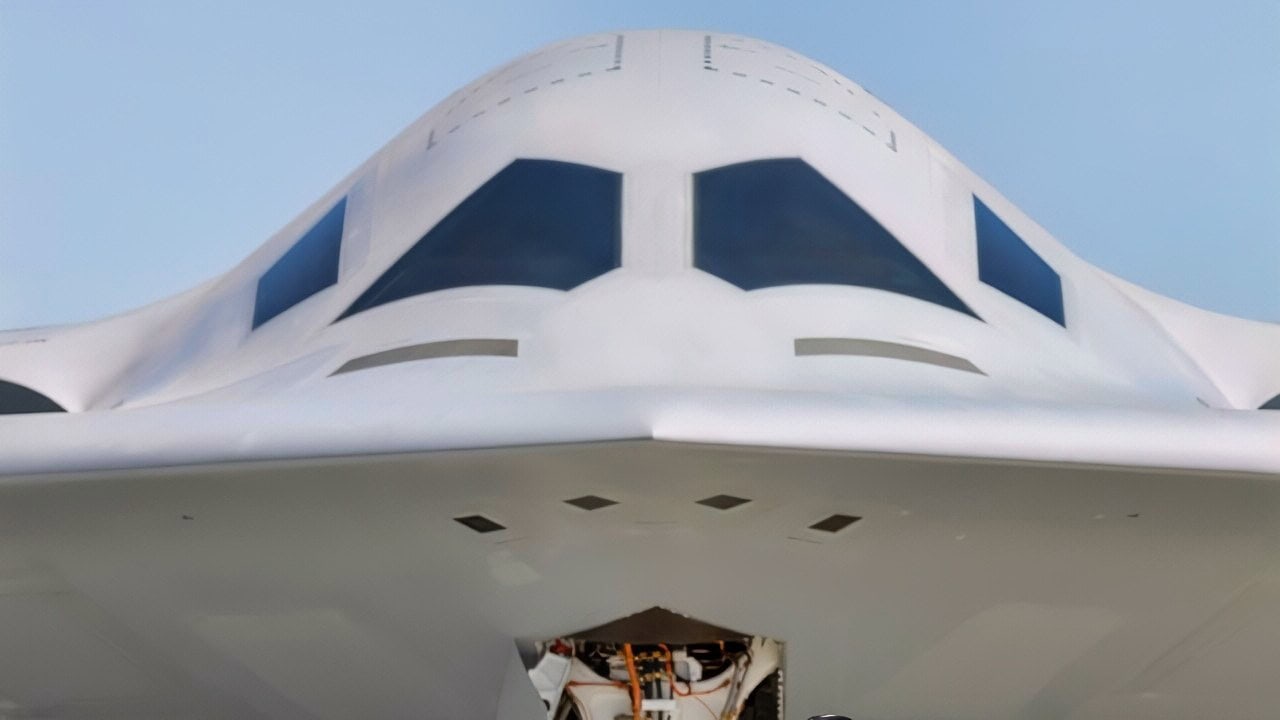
U.S. Air Force Airmen with the 912th Aircraft Maintenance Squadron prepare to recover the second B-21 Raider to arrive for test and evaluation at Edwards AFB, Calif., Sept. 11, 2025. The arrival of a second test aircraft provides maintainers valuable hands-on experience with tools, data and processes that will support future operational squadrons. (U.S Air Force photo by Kyle Brasier)
The researchers described PADJ-X in a peer-reviewed paper published in the Chinese journal Acta Aeronautica et Astronautica Sinica, and the South China Morning Post later reported the work in January this year.
It generated significant media attention.
According to the researchers, PADJ-X was designed to bring multiple stages of the aircraft development process into one digital environment – including aerodynamics, propulsion, electromagnetic characteristics, and sonic boom effects.
Normally, engineers would need different software and separate calculations to examine how different elements of an aircraft’s design interact.
PADJ-X was made to calculate how changes in one area affect others.
The B-21, while still in development, was one of the aircraft configurations Chinese researchers used to show what the software could achieve.
How It Worked – and Why It’s Flawed
Without access to the B-21, the researchers created a computer model based on what they knew and had seen of the flying-wing aircraft.
They applied 288 design parameters, then let PADJ-X modify the virtual aircraft and assess whether other configurations could perform better.
According to the research paper, the software produced a better-optimized design that would provide a roughly 15 percent improvement in lift-to-drag ratio.
The researchers also claim to have identified potential stability issues in the configuration.
But here’s the problem: the researchers described how the software identified potential improvements, but those improvements aren’t necessarily accurate and lack context.
For example, the software based its calculations on Chinese researchers’ best estimates of the B-21’s size, shape, weight, and dimensions.
A small error in any measurement the system receives will result in inaccurate output.
Additionally, those improvements are offered without context, meaning a perceived weakness may be a deliberate part of the aircraft’s design and a decision made to accommodate another design feature.
The Real B-21 Is Getting Closer
China may think it has a good idea of what’s coming, but only the Pentagon really knows.
The Air Force is preparing to move the B-21 out of testing and into service. On September 9, the Air Force activated a new B-21 Integration Detachment at Ellsworth Air Force Base in South Dakota.
The news means that a newly dedicated unit responsible for preparing the base for the arrival of the aircraft is now operational, and Ellsworth is preparing to become the Raider’s first main operating base.
And the preparations involved are substantial.
The Air Force recently completed a new $161 million facility at Ellsworth that’s specifically designed to maintain the B-21’s low-observable coating.
The Air Force also built an $81 million maintenance and wash facility, and dozens of other construction projects are underway in preparation for the arrival of America’s next-generation stealth bomber.
Northrop Grumman is building the B-21 as a long-range strategic bomber that will replace the B-2 and B-1B fleet and give the U.S. the long-range reach it needs in today’s geopolitical environment.
About the Author: Jack Buckby
Jack Buckby is a British researcher and analyst specializing in defense and national security, based in New York. His work focuses on military capability, procurement, and strategic competition, producing and editing analysis for policy and defense audiences. He brings extensive editorial experience, with a career output spanning over 1,000 articles at 19FortyFive and National Security Journal, and has previously authored books and papers on extremism and deradicalization.



![Coast Guard Saves 15-Year-Old Stranded for Three Days Aboard Capsized Boat in Frigid Alaska Waters [WATCH]](https://www.rvmnews.com/wp-content/uploads/2026/09/2026.09.16-17.01-rvmnews-6aaacb7ce1059.jpg "Coast Guard Saves 15-Year-Old Stranded for Three Days Aboard Capsized Boat in Frigid Alaska Waters [WATCH]")