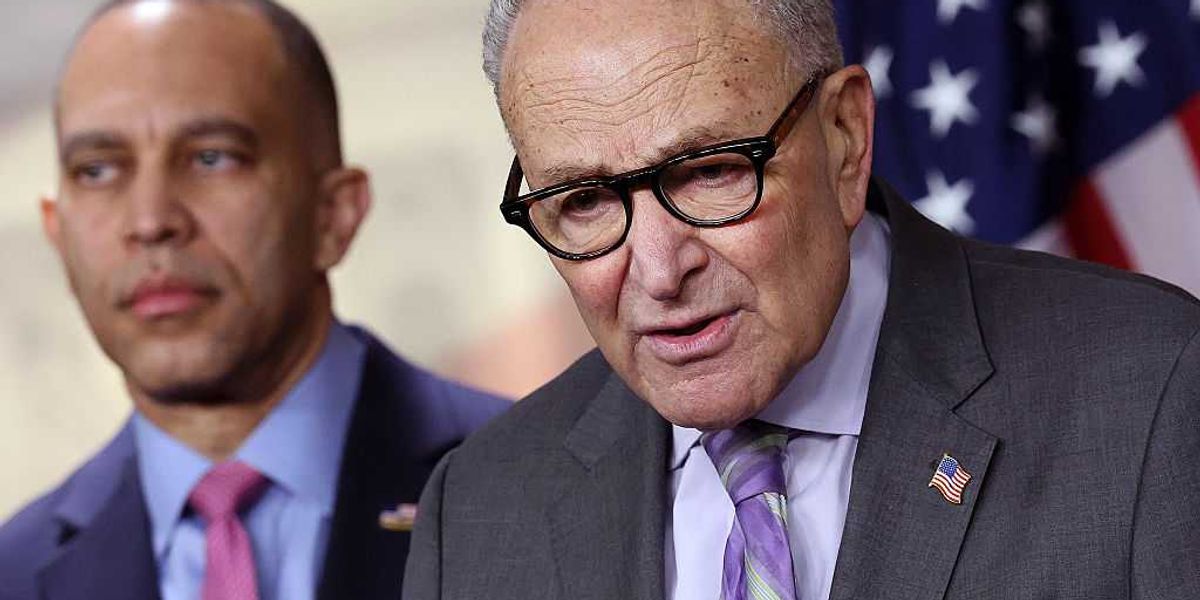

Pollsters and prediction markets are prophesying overwhelming Democratic success in the midterm election, which is now seven weeks away. CNN admitted in a recent analysis, however, that those hoping for a blue tidal wave might be left greatly disappointed in November.
Doom and gloom for the GOP
Polymarket presently suggests that Democrats have a 62% chance of taking the U.S. Senate and a 92% chance of taking the House. Kalshi similarly forecasts Democrats taking over the House and Senate.
‘It’s going to be close.’
According to the Economist’s latest midterm forecast, Democrats have a 93% chance of flipping the House and securing a 238-197 majority, and a 59% chance of taking the Senate.
The latest New York Times/Siena poll shows Democrats enjoying an eight-point edge on the generic ballot.
A recent NBC News poll found that while the Democratic Party is viewed more negatively than both President Donald Trump and the Republican Party, 50% of respondents favored Democratic control of Congress.
RELATED: The cost of living is coming for Congress
The Kansas City Star/Tribune News Service/Getty Images
Pollster Nate Silver argued on Sunday that the idea of the Senate as a “toss-up” is “misaligned with the long history of strong opposition performance in midterm elections, especially when the incumbent president is as unpopular as Trump.”
Blue disappointment?
In light of recent polling, the average price of gasoline sitting at an estimated $4.44 per gallon, and the sense that the midterm vote serves as a referendum on Trump’s policies, hope is mounting on the left that a blue wave will wash away the Republican trifecta in Washington.
That hope may, however, be unfounded.
CNN political analyst Ronald Brownstein suggested just over a week ago that Democrats might not be in a position to exploit the president’s waning public approval, Americans’ economic woes, and growing political discontent.
In addition to noting that many Democratic candidates are not attracting the numbers of voters who disapproved of Trump in 2018 and 2020, Brownstein wrote that despite disenchantment among some voters on the right, few appear willing to turn coat.
“The share of non-MAGA Republicans who say they are still voting for Republicans this fall is about 20 points higher than the portion who approve of Trump’s performance,” Brownstein wrote, citing GOP pollster Micah Roberts’ analysis of CNBC survey data.
“There are a lot of people who may think, ‘I don’t like Trump but … I don’t agree with the policies of the other party and where they would take us,'” said Roberts.
While Republican voters might not cast votes for Democratic candidates, Brownstein noted that the GOP still faces the possibility that disenchanted Republican voters might decide not to vote at all — a big problem given the enthusiasm among likely Democratic voters.
Voter enthusiasm might threaten Republicans’ hold on power; however, the GOP’s redistricting efforts have placed breakers before any blue wave.
After all, far fewer House seats are competitive now than were in 2018, and 13 House Democrats must now defend districts where Trump netted at least five points more than his share of the national vote, said Brownstein.
The CNN analyst cast greater doubt on Democrats’ senatorial ambitions, noting that “of the Republican-held seats Democrats are most seriously contesting, Maine is the only one in a state that supported Harris; North Carolina is the sole other state on the Senate map where Harris even came close. Trump prevailed by double digits in every other state whose Senate seat Democrats are targeting.”
Thanks to the U.S. Supreme Court’s June ruling in National Republican Senatorial Committee v. Federal Election Commission, the GOP — not similarly hard up for cash like the Democrats — also enjoys a financial advantage Brownstein reckons could be wielded to limit Democratic gains.
National Republican Congressional Committee Chairman Richard Hudson told the New York Post earlier this month that instead of a blue or red wave this November, there will be “30 knife fights in 30 dark alleys.”
“It’s just a handful of races, but every one of them will be decided by a few thousand votes. It’s going to be close,” added Hudson.
The Cook Political Report projects that the GOP and the Democratic Party are set to win 208 and 205 House seats, respectively, and marked 21 seats as toss-ups.
Like Blaze News? Bypass the censors, sign up for our newsletters, and get stories like this direct to your inbox. Sign up here!
Read the full article here



![The Three Greatest Scandals of the 21st Century [WATCH]](https://www.rvmnews.com/wp-content/uploads/2026/09/2026.09.21-15.15-rvmnews-6ab14a14594b1.jpg "The Three Greatest Scandals of the 21st Century [WATCH]")
![The Socialists Just Borrowed the CCP’s Playbook for America [WATCH]](https://www.rvmnews.com/wp-content/uploads/2026/09/2026.09.21-15.06-rvmnews-6ab147efd2f12.jpg "The Socialists Just Borrowed the CCP’s Playbook for America [WATCH]")