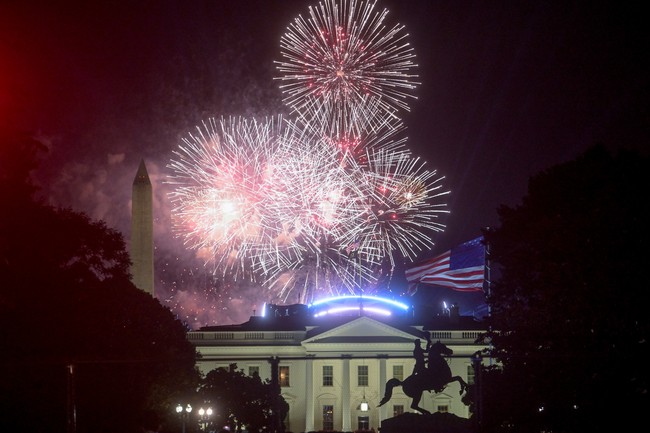

Tonight, like many Americans, I’ll be taking in a fireworks display as I celebrate our country’s 250th birthday. This morning, though, I started my celebration with a 250-round salute to those who created this free and independent nation through both pen and powder.
The words of the Declaration of Independence are timeless and elegant, but they would have been forgotten by future generations if the Continental Congress were the only men willing to put their lives on the line for freedom. Were it not for the tens of thousands of citizens who fought the British army, both as members of an organized militia and in the Continental Army, July 4 would be just another day for you and me.
The musket, along with the Pennsylvania and Kentucky long rifles, were the guns that won us our freedom. As American Rifleman executive editor Even Brune recently wrote in a must-read piece on the guns of the American Revolution:
Often imbued with downright mythological capabilities, the vaunted American longrifle had several notable features born of the needs of settlers and frontiersmen who lived and worked for long periods away from any supply source. Its distinctive long barrel served two purposes: It provided enough room to maximize the slow burn of black powder, allowing riflemen to make the most of a meager charge of what was likely lower-quality powder, and it offered a lengthened sight radius for longer, more precise shots. Instead of the .60- to .70-caliber bore sizes often seen on the German Jägers that inspired their creation, American rifles generally had bores of .50 caliber or smaller. This allowed riflemen to carry more ammunition for the same given weight. A smaller projectile also required less powder, further maximizing their powder supply.
Despite these advantages, longrifles had one significant drawback compared to smoothbore guns of the era: reloading time. To ensure an accurate, precise shot, longrifles had to be slowly and methodically loaded with a tightly patched ball that would be pressed into the rifling as it traveled down the bore. Consequently, rates of fire for longrifles averaged about one shot per minute, compared with the three shots a minute for a contemporary military musket loaded with paper cartridges. For a frontiersman taking a solitary shot on game, reloading time was not a significant consideration. On the 18th-century battlefield, this drawback would have serious ramifications.
Brune contends that “the outcome of the American Revolution was governed more by politics than it was by American feats of arms,” which I disagree with. The politician and the citizen-soldier were equally instrumental in declaring independence and securing the blessings of liberty for generations to come.
The Founding Generation knew the inherent importance of an armed populace. James Madison wrote in Federalist 46 that the citizens of the United States have the “advantage of being armed, which the Americans possess over the people of almost every other nation.” Those armed citizens, combined with the existence of subordinate governments, form “a barrier against the enterprises of ambition, more insurmountable than any which a simple government of any form can admit of.”
Notwithstanding the military establishments in the several kingdoms of Europe, which are carried as far as the public resources will bear, the governments are afraid to trust the people with arms. And it is not certain, that with this aid alone they would not be able to shake off their yokes. But were the people to possess the additional advantages of local governments chosen by themselves, who could collect the national will and direct the national force, and of officers appointed out of the militia, by these governments, and attached both to them and to the militia, it may be affirmed with the greatest assurance, that the throne of every tyranny in Europe would be speedily overturned in spite of the legions which surround it.
The right to keep and bear arms has not always been exercised equally over the past 250 years, but thanks to modern day patriots who’ve been fighting in statehouses, courthouses, and on Capitol Hill to strengthen and secure the liberties protected by the Second Amendment, we have made great strides in ensuring that the right isn’t treated as a dead letter or historical anachronism.
The muskets carried by farmers, blacksmiths, lawyers, and merchants at Concord Bridge, the Sharps rifles carried by abolitionists for protection in Bleeding Kansas, the 1873 Winchesters hung in a place of honor in the homes of freedmen that served as a bulwark against lynchings, and the Colt Single Action Army revolvers that were carried on the hips of cowboys in the wide open prairies of the West are just a few of the firearms that have helped to keep us free over the centuries. The 1911, the M1 Garand, and of course the AR-15 are all a part of our national history as well… along with the men and women who’ve used them to defend the nation, their communities, and themselves.
Enjoy the fireworks tonight. Eat as many hot dogs as your belly will allow. Toast the founders with a frosty beverage of your choice. And give thanks that you live in the greatest nation on Earth, one of the few places where the right to keep and bear arms is recognized in the very framework of government and exercised by huge numbers of its citizens.
Editor’s Note: It’s America’s 250th birthday! Help Bearing Arms celebrate the greatest nation in history by honoring its past, defending its present, and preserving its future with reporting you can trust.
Join Bearing Arms VIP and use promo code AMERICA250 to receive 74% off your membership.
Read the full article here