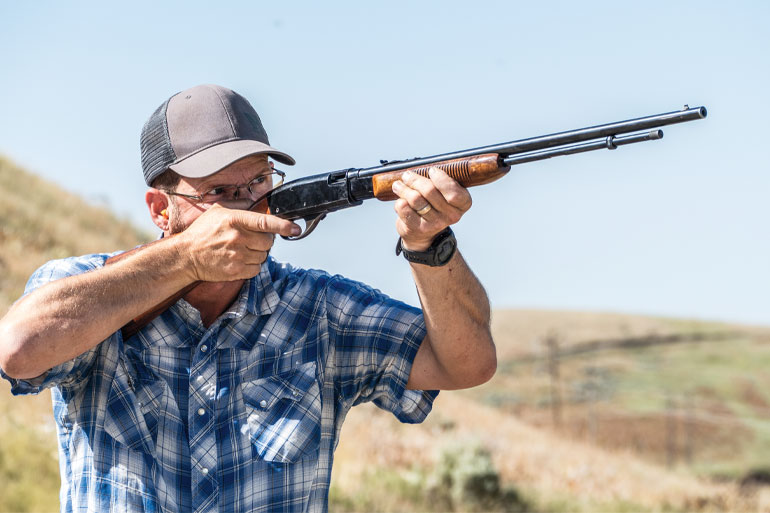


We all pray that we never have to discharge our firearms in defense of our lives or the lives of someone else. Hell, most of us pray we never even have to draw our firearms. Unfortunately, I’ve had to a couple of times, though you have no idea how thankful I am that I didn’t have to pull the trigger either time.
In both cases, I was anything but cool and calm. Not internally, anyway. I had a million thoughts running through my head and my heart was racing. I was scared that everything was going to blow up in my face and someone I cared about would end up dead, even me.
I could stand to have a little more calmness should, God forbid, I’m ever there again.
Which is why this piece about a Tacoma police officer’s armed encounter, and the nature of comments about how calm the officer was, may be more important than you might think.
Thousands of officers have viewed footage of Officer Chris Munn in the midst of a gunfight, exhibiting extraordinary calm during this deadly encounter. It leaves viewers reasonably asking: “How did he do that?”
To understand the how of it, you have to hear the story of Chris Munn.
This is not just a story about one officer’s composure under fire. It is a reminder that calm in a crisis is rarely accidental. It is built long before the call comes, through training, mental rehearsal and repeated exposure to high-risk decision-making.
The author sets the stage, describing the whole encounter, which is useful to understand, but then we get to what I think is the meat of the piece.
It talks about how Munn was able to be so calm.
I had to point out to Officer Munn that many who have viewed the footage of his officer-involved shooting have commented on how extraordinarily calm Chris was throughout the gunfight. I asked him if he had anything he could share to prepare others for the dangers they have yet to face.
Chris shared these valuable insights:
- Preparation is imperative.
- Risk assessment training is also important.
- Stress inoculation training is critical for staying calm in a crisis. You will perform better if you have been pre-trained to control your emotions.
- Train yourself to a high level. Since there will be a degradation of skills when they are transferred to street application, you want a high-quality reservoir of skills to draw from.
- Effective communication is key in calls like this, where officers were clear and concise. The communication of the officers on scene put me in the best spot to effectively intervene.
- Practice forecasting as you approach scenes. Mentally prepare yourself for what you physically are going to have to do. This mental practice is tremendously helpful.
- Pre-practice your high-risk team arrest tactics. They will come into play during calls like this.
Now, some of this has little application to the armed citizen. We won’t be doing arrests at all, so team arrest tactics aren’t really something we need to concern ourselves about.
Yet some, such as effective communication, can be valuable if for no other reason than to direct your family or bystanders to go somewhere safe, to call the police, or any number of other things that might be needed in that moment.
Still, the first four are absolutely critical for anyone who carries a gun. You need to be prepared, both physically and mentally. You need to know you can pull that trigger should you be forced to, and you need to have a plan on how to deal with that. Some people have been there via the wars in Iraq and Afghanistan, and might be a bit better equipped to deal with taking a life, but a lot of us aren’t, and that’s something we should be ready for.
To say nothing of being well-trained in how to use our guns, both accurately–as noted, skill degradation is real, so be sure you’re a lot better than you figure you need to be–and in stressful situations. Stress inoculation is something far too many people overlook in their own training. They might shoot drills and probably work on basic accuracy, but when the balloon goes up, it’s different. It’s very different.
I’d also point out that, if there’s a way you can do it, look into force-on-force training. It’s a good way to get some of that stress inoculation training, and it will also highlight any other deficiencies you might have that won’t show up on the static range, even if you’re running drills with a timer to ramp up the stress level as much as possible.
Point six, though, is something that I suspect even fewer people do. Wargame everything. When you walk into a restaurant, don’t just look for the exits, but look at where a would-be mass killer might begin his rampage. Forecast, as it’s framed above, what you’ll have to do and mentally ready yourself to do it, even if there’s no obvious threat. Don’t make a thing of it, because then you’re “that guy” in all the wrong ways, but be prepared just the same.
Mostly, though, understand that in a lot of this piece, with my commentary, I’m talking as much to myself, if not more, than I am to you guys, because I know I need to work on all of this better.
Still, it’s a place to start if nothing else.
Editor’s Note: The radical Left will stop at nothing to enact their radical gun control agenda and strip us of our Second Amendment rights.
Help us continue to report on and expose the Democrats’ gun control policies and schemes. Join Bearing Arms VIP and use promo code FIGHT to receive 60% off your membership.
Read the full article here




![Illegals Get IDs, Education, and Free Meals, You Get the Bill [WATCH]](https://www.lifezette.com/wp-content/uploads/2026/09/2026.09.20-05.49-lifezette-6aaf73cde8e9d.jpg "Illegals Get IDs, Education, and Free Meals, You Get the Bill [WATCH]")
![Admiral Brad Cooper Announces Major Milestone in Strait of Hormuz Security Operations [WATCH]](https://www.lifezette.com/wp-content/uploads/2026/09/2026.09.20-05.39-lifezette-6aaf71a5e2a91.jpg "Admiral Brad Cooper Announces Major Milestone in Strait of Hormuz Security Operations [WATCH]")