


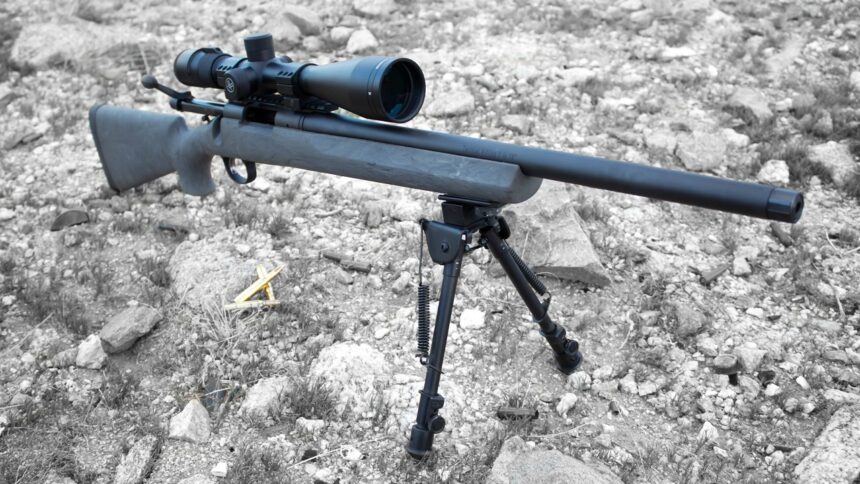

The Remington 700: America’s Rifle, A Senior Citizen But Still Worthy – No bolt-action rifle in America has been built, sold, rebuilt, and argued about more than the Remington 700. Hunters carry it into elk country. Snipers took it to war. Gunsmiths have built entire careers around it. And for the better part of a decade, the company that makes it has been fighting for its life. The 700 was renowned for exceptional out-of-the-box accuracy, a massive aftermarket ecosystem for custom parts and chassis upgrades, and a widely replicated action standard (“Remington style”).
Remington 700: The Action That Built An Industry
The Model 700 arrived in 1962, but its roots go back to 1947. According to American Rifleman, Remington engineer Mike Walker designed the Model 721 and 722 after World War II as a cheaper alternative to Winchester’s Model 70. The 700 kept the best parts of Walker’s earlier work in a cleaner package with much tighter tolerances.
The design’s claim to fame is the “three rings of steel.” The recessed bolt face surrounds the case head, the barrel breech surrounds the bolt nose, and the receiver ring surrounds the barrel.
That’s a strong, simple, and inexpensive way to contain a high-pressure cartridge. The round receiver was easy to machine, true, and embed into a stock.
That simplicity is the real reason the 700 still matters. Its footprint has become the industry standard for bolt-action rifles. Stock makers, chassis builders, trigger companies, and custom action manufacturers all build around it.
If you own a 700, there are more aftermarket parts for it than you could spend money on in a lifetime. The rifle became a platform long before anyone used that word about an AR-15.
The 700 Went To War As A Sniper Weapon
The military noticed early. The Marine Corps adopted the M40 in 1966, a 700-action rifle chambered in 7.62 NATO, and took it to Vietnam. Legendary Marine scout sniper Carlos Hathcock used mainly a Winchester 70, but also used a Remington 700 chambered in .308 with a Redfield 3-9x scope.
The Army followed in 1988 with the M24 Sniper Weapon System, built on the long action so it could be rechambered for bigger cartridges down the road. SOFREP has covered how the 700P became standard issue for police tactical units across the country.
For a couple of generations of snipers and marksmen, the 700 was simply what a precision rifle looked like. That’s quite a résumé for a hunting rifle designed to beat Winchester on price.
M24 Sniper Rifle. Image Credit: Creative Commons.
Remington’s 700 Trigger Problem
However, there’s no honest way to write about the Remington 700 without talking about the trigger. The original Walker Fire Control used a trigger connector, and lawsuits alleged the design could, under certain conditions, fire the rifle without anyone pulling the trigger.
Remington always denied the trigger was defective. It settled a class action anyway, covering roughly 7.5 million rifles across a dozen models, including the 700, Model Seven, 721, and 722, according to Pew Pew Tactical’s breakdown of the settlement.
The replacement didn’t end the story. The X-Mark Pro trigger, which was supposed to fix the problem, was recalled in 2014 over its own issues. Under the settlement, owners could get a free retrofit, a voucher, or a refund if they had already swapped triggers.
If you inherited your grandfather’s 700 and it still has the original Walker trigger, have it checked before taking it to the range. That isn’t paranoia. It’s common sense.
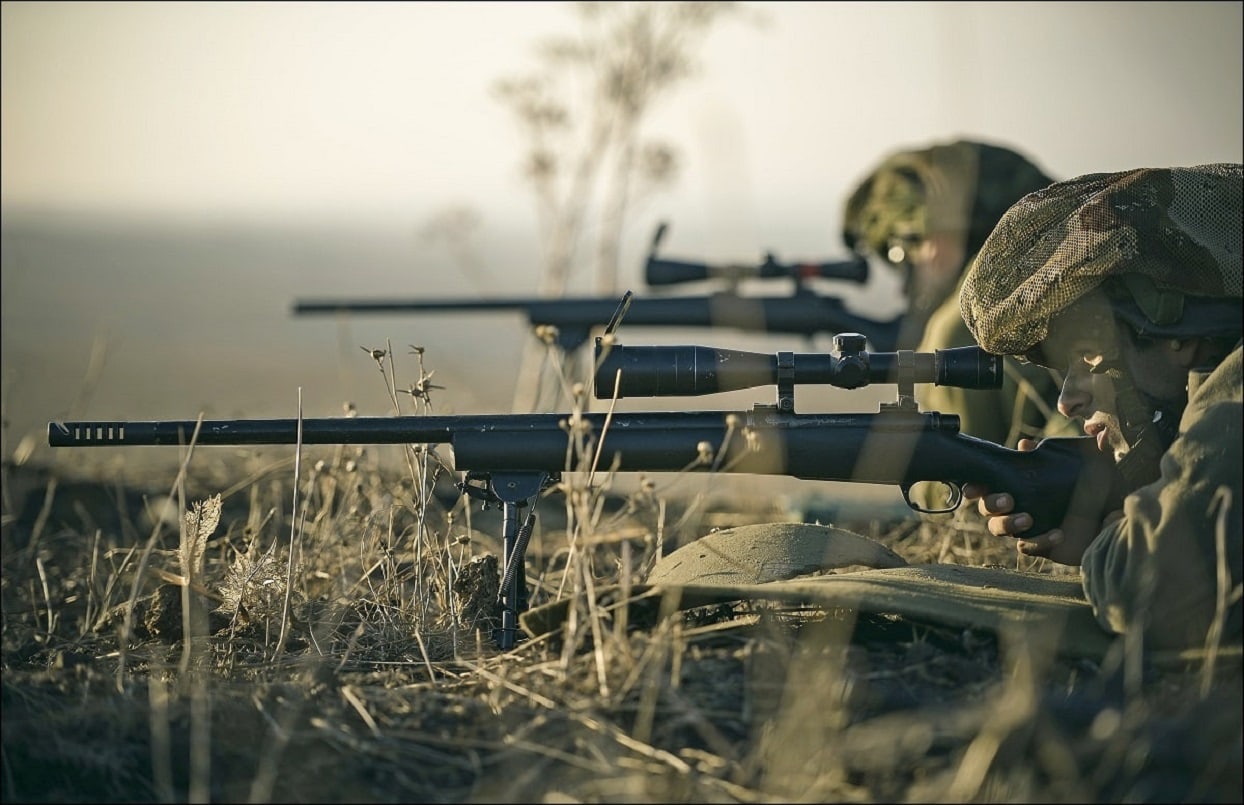
Image: Creative Commons.
The Company Is In Rough Financial Shape
The rifle’s biggest problem today isn’t the design. It’s the company behind it. Remington Outdoor went bankrupt in 2020, and the firearms business was sold off as RemArms.
The historic Ilion, New York, plant, which had been making guns for more than two centuries, closed in 2024, and production moved to LaGrange, Georgia. Quality took a beating in the years leading up to the bankruptcy, and plenty of shooters still haven’t forgiven the brand.
To RemArms’ credit, it has made some smart moves. According to Remington’s own site, every newly built 700 ships with a factory-installed Timney trigger, a major upgrade and a direct answer to the brand’s biggest black eye. The Model 700 Long Range comes with a heavy 5R barrel, an HS Precision stock, and chamberings like 7mm PRC.
However, the business side remains shaky. In May, WTVM reported that the $100 million LaGrange headquarters project was facing foreclosure, with more than 200 creditors unpaid. The Outdoor Wire put the unpaid total at more than $11 million. For a rifle with this much history, that’s a hard thing to read.
Is A 700 Still Worth Buying?
In my opinion, yes, with conditions. A used 700 with a known history and an updated trigger is still one of the best values in bolt-action rifles. SOFREP pegged used prices around $450 and new ones at $700 and up. If you’re buying new, look for the current Timney-equipped production and inspect the rifle before you pay.
Personally, I’ve always thought the best argument for the 700 is that you can’t really outgrow it. Start with a factory hunting rifle, and ten years later it can be a precision rig with a new barrel, stock, and trigger, all built around that same 1962 action.
Having fired the M24, I can say that Remington’s action has a well-deserved reputation.
The 700 has been built, sold, rebuilt, and argued about for more than 60 years.
Whatever happens to Remington, the rifle will outlast the arguments.
About the Author: Steve Balestrieri
Steve Balestrieri is a 19FortyFive National Security Columnist. He served as a US Army Special Forces NCO and Warrant Officer. In addition to writing for 19FortyFive, he covers the NFL for PatsFans.com and is a member of the Pro Football Writers of America (PFWA). His work was regularly featured in many military publications.

![Why This ‘Inevitable’ Democrat Midterm Sweep Isn’t So Inevitable [WATCH]](https://www.rvmnews.com/wp-content/uploads/2026/09/2026.09.23-14.51-rvmnews-6ab3e775b2f93.jpg "Why This ‘Inevitable’ Democrat Midterm Sweep Isn’t So Inevitable [WATCH]")




![Royal Navy Scores Historic First With U.S. Mk 48 Launch From Uncrewed Submersible [WATCH]](https://www.commondef.com/wp-content/uploads/2026/09/2026.09.23-12.52-commondefense-6ab3cb86daa8a.jpg "Royal Navy Scores Historic First With U.S. Mk 48 Launch From Uncrewed Submersible [WATCH]")