



There are plenty of reasons for an electric car company to fail.
Maybe the car is badly engineered. Maybe the range disappoints. Maybe the software is a mess. Maybe buyers simply don’t like the product.
There are only so many Americans willing and able to spend close to six figures on an electric vehicle.
Lucid has a more troubling problem: It makes an excellent car.
Driver’s ‘Dream’
I’ve driven Lucids, including the spectacular Air Dream Edition, and there is very little to complain about from behind the wheel. The Air is fast, beautifully finished, extraordinarily efficient, and capable of the kind of range that makes most other electric vehicles look dated.
Yet the company behind it is once again confronting the brutal economics of building cars.
Lucid announced this week that it is embarking on what management calls an “operational reset,” with plans to cut costs by roughly $1.4 billion this year. The company is reducing spending and inventory while delaying the launch of its more affordable midsize vehicles until the second half of 2027.
That delay may be the most important part of the story.
Lucid desperately needs a vehicle ordinary luxury-car buyers can afford. Instead, it remains heavily dependent on expensive models at precisely the moment the upper end of the EV market is getting harder to crack.
Pulling a Tesla?
Lucid’s problem isn’t really its product. That’s unusual among struggling EV start-ups.
Fisker had serious product and execution problems. Other newcomers have arrived with cars that felt unfinished, badly priced, or both.
The Lucid Air is different. It demonstrated from the beginning that a start-up could challenge Tesla on efficiency, range, performance, and luxury.
But engineering a great car and building a sustainable car company are very different skills.
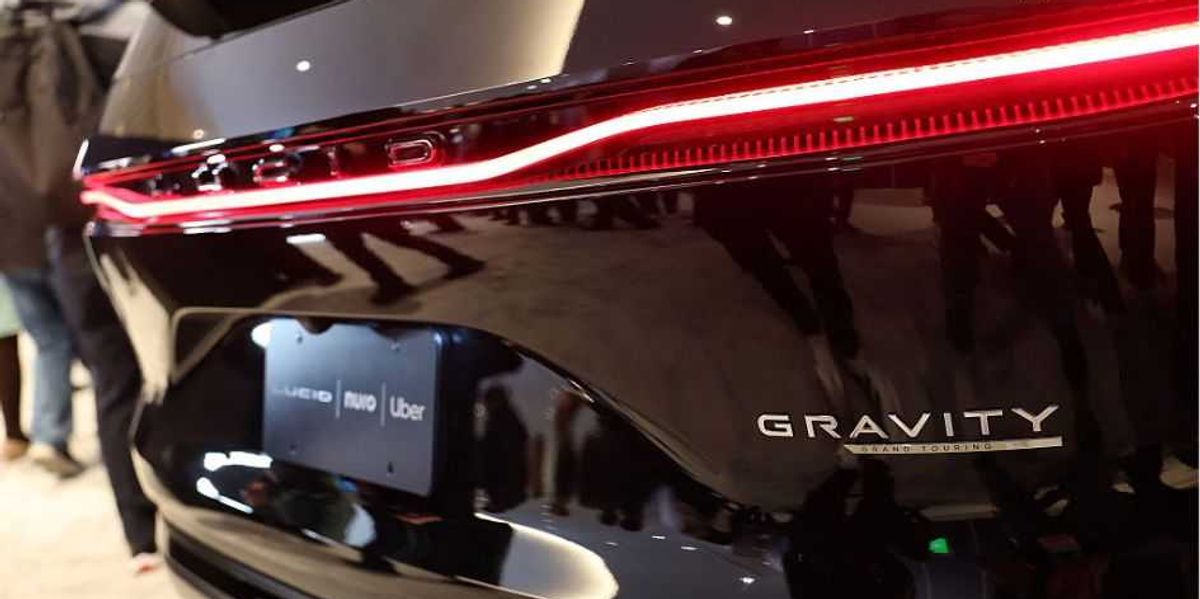
Lucid entered the market primarily with expensive sedans, then followed with the Gravity SUV. That gives the company impressive halo vehicles, but it limits the pool of potential customers.
There are only so many Americans willing and able to spend close to six figures on an electric vehicle.
Tesla confronted this problem years ago by moving down-market after establishing itself with expensive cars. Lucid has been trying to do something similar, but the cheaper model it needs keeps getting pushed further into the future.
Lucid now says those midsize vehicles won’t arrive until the latter half of 2027.
That’s a long time when you’re burning cash.
Changing market
Lucid isn’t dealing only with its own growing pains.
The entire electric vehicle industry has gone through a reset.
Automakers that once talked about replacing nearly their entire gasoline-powered lineups with EVs have pulled back investments, delayed factories, canceled models, and rediscovered hybrids.
The problem isn’t that Americans don’t buy electric cars. Millions do.
The problem is that demand never followed the straight upward line many executives and government planners assumed it would.
The affluent early adopters were relatively easy to reach. The next group of buyers is much more price-sensitive and much less willing to change how they drive simply because an automaker wants to sell them something electric.
That matters enormously for Lucid because the company remains concentrated near the expensive end of the market. At some point, you saturate the group of buyers who can afford a six-figure vehicle.
That’s precisely why a $40,000 or $50,000 Lucid could be transformative — if the company can survive long enough to build one.
RELATED: FIRST LOOK New York International Auto Show: Cool cars, but drivers still face sticker shock
VIEW Press/Getty Images
No second mover
Automotive executives love saying they want to “do what Tesla did.”
That is much harder than it sounds.
Tesla had something no new EV company can recreate: years in which it essentially owned the premium electric car category.
The Model S arrived before almost anybody else had a credible answer. Tesla built an enormous base of customers, developed a charging network, became a cultural phenomenon, and had Elon Musk turning every product announcement into news.
Whether you love Tesla or hate it, that position cannot simply be duplicated by making another good EV.
Today’s start-ups aren’t entering an empty market. They’re fighting Tesla, Hyundai, Kia, BMW, Mercedes-Benz, General Motors, Ford, Rivian, and an increasingly formidable group of Chinese companies around the world.
Lucid built a technically brilliant car. It didn’t build it in a vacuum.
Deep pockets
Lucid does have one enormous advantage over many failed start-ups: financial backing from Saudi Arabia’s Public Investment Fund.
That support has given the company a lifeline other manufacturers could only dream of.
But outside investment doesn’t repeal economics.
A manufacturer eventually has to produce cars at a sustainable cost and sell enough of them at a sustainable price. Constant infusions of capital can buy time, but time has to lead somewhere.
Lucid’s current plan involves cost reductions, the Gravity SUV, a future midsize platform, autonomous-vehicle partnerships, and increased manufacturing in Saudi Arabia. Reuters reported that the company still expects those initiatives to provide a path forward, despite continued losses and weaker-than-expected deliveries.
Holding the bag
Maybe they will.
I hope so, because the automotive industry is better when companies like Lucid force everybody else to improve.
But consumers should understand the risk when buying from a young automaker.
If the company disappears, the vehicle doesn’t disappear with it. You still own the car. You still need replacement parts, software support, warranty work, body panels, service technicians, and somebody maintaining all those cloud-connected features.
Fisker owners already learned what happens when the company behind a highly computerized automobile suddenly isn’t there anymore.
Grind behind the glamour
For years, Silicon Valley treated automobile manufacturing as though Detroit had simply failed to understand software.
Build a better battery. Hire good programmers. Raise enough venture capital. Disrupt the dinosaurs.
The reality has turned out to be far less glamorous.
Cars require factories, suppliers, repair networks, inventories, regulatory compliance, financing, parts distribution, warranty reserves, and enormous amounts of capital long before the manufacturer knows whether buyers will show up.
Lucid has already proved it can build a remarkable automobile.
Now it has to prove something harder: that it can build a viable company around it.
Read the full article here